 Printable Scholar
Tornado Book for Kids: The EF Scale
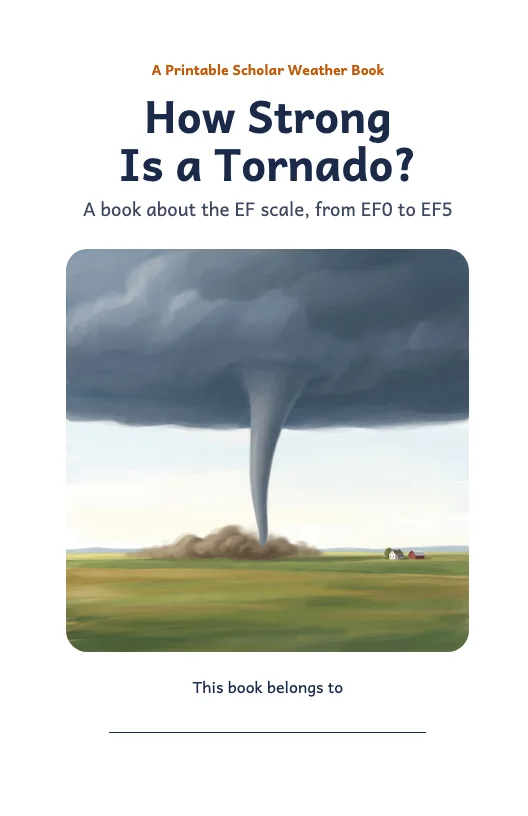
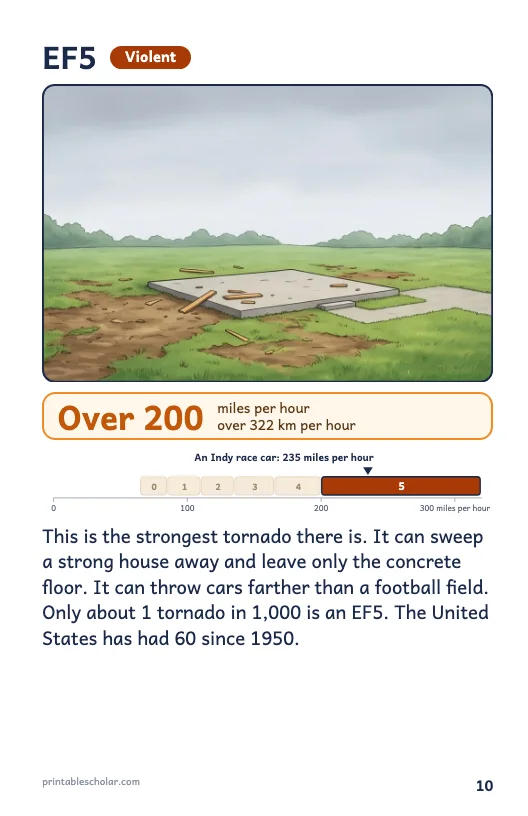
How strong is a tornado? This free printable book climbs the EF scale one step at a time. Each page shows the same house, tree and car after a stronger tornado, from a few lost shingles at EF0 to a bare concrete floor at EF5.
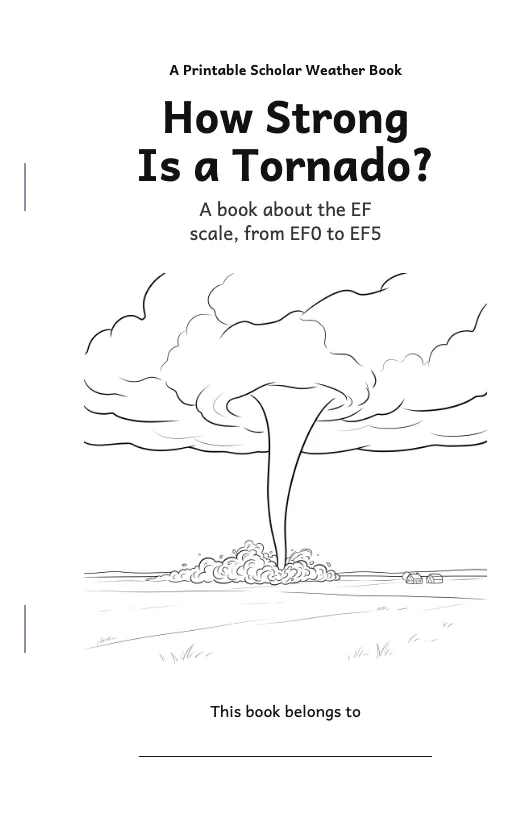
Black and white
Line art that uses far less ink. Kids can color it in, and it photocopies cleanly.
Download in black and white (PDF)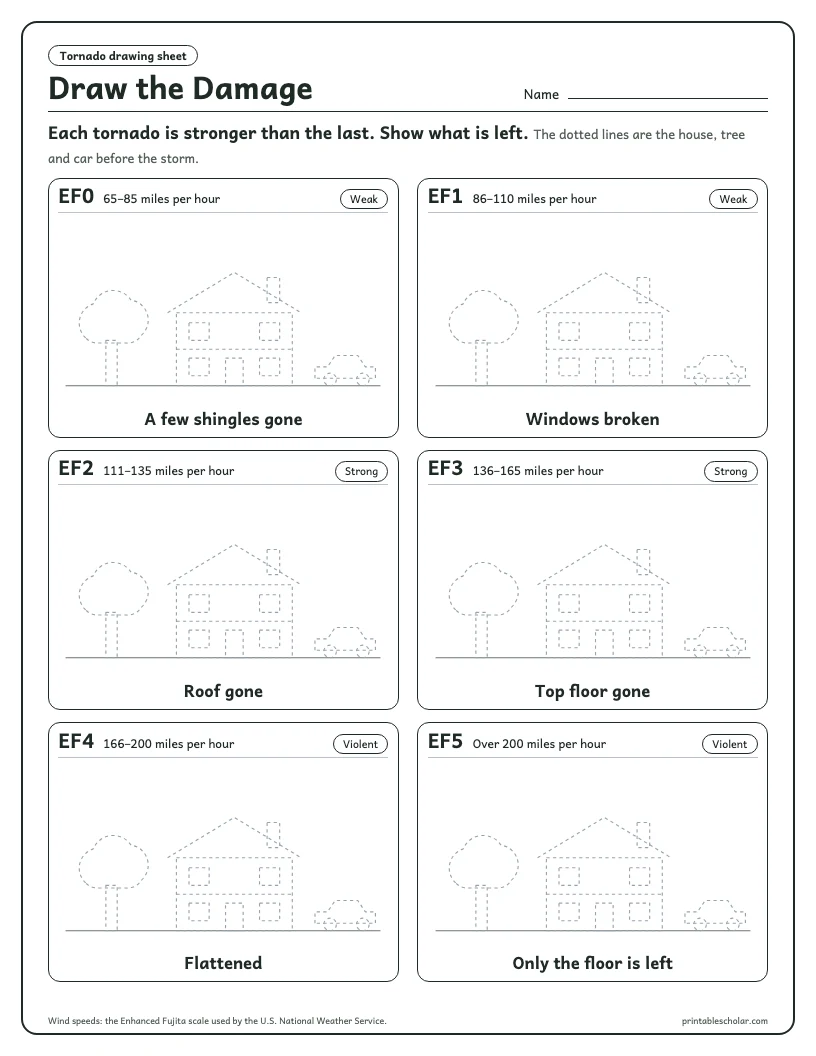
Draw the Damage
A full-page worksheet. Six boxes show the same house in dotted lines; kids draw what each tornado, from EF0 to EF5, leaves standing.
Get the worksheet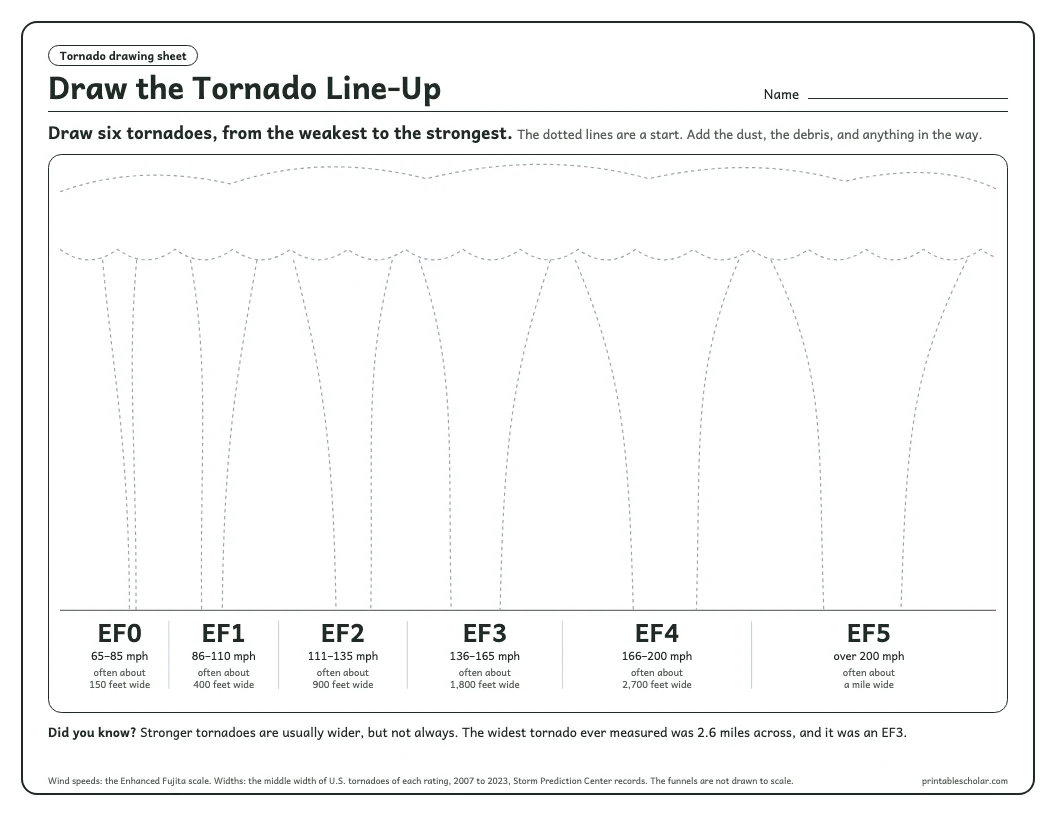
Draw the Tornado Line-Up
A full-page drawing sheet. Six dotted funnels stand side by side under one storm cloud, from EF0 to EF5; kids draw each tornado bigger than the last.
Get the worksheet
Tornado Alley Map
Where tornadoes touch down in the United States, shaded from 30 years of real tornado records. The blank version gives each state’s count for kids to color.
Get the mapWhat is in the book
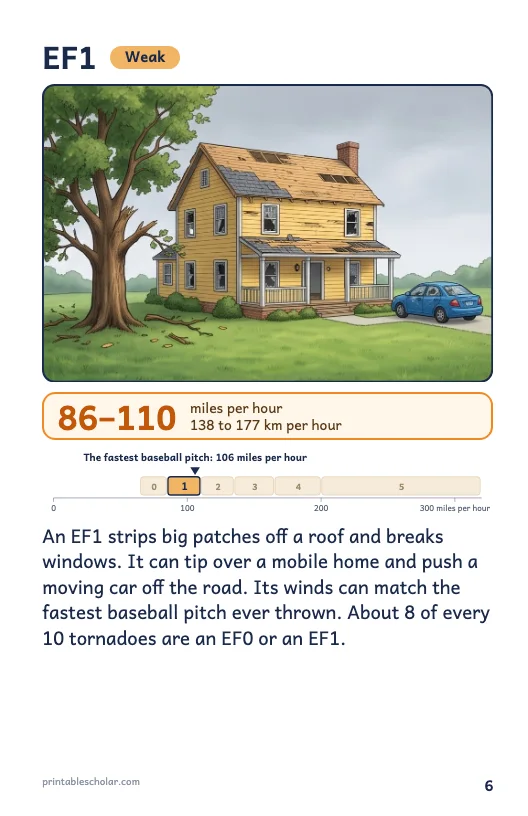
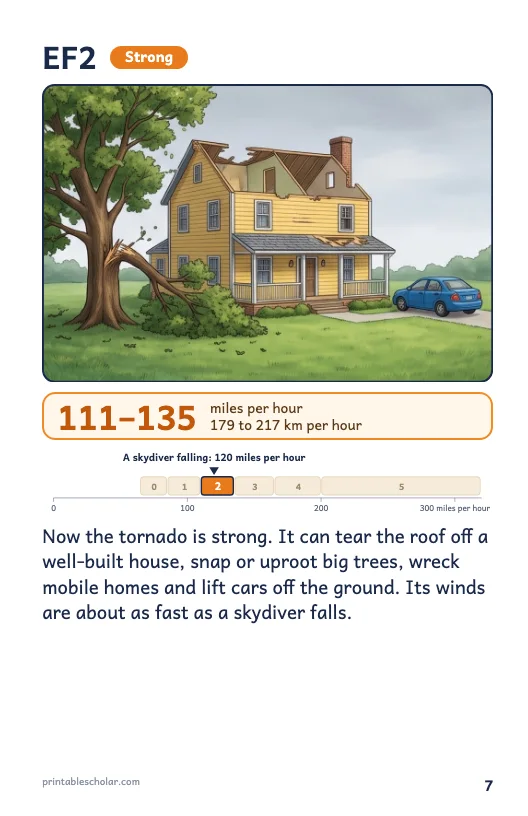
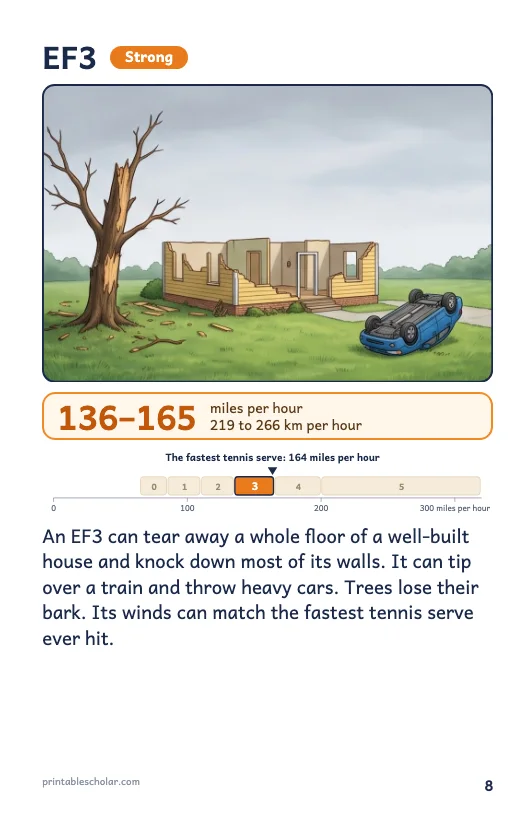
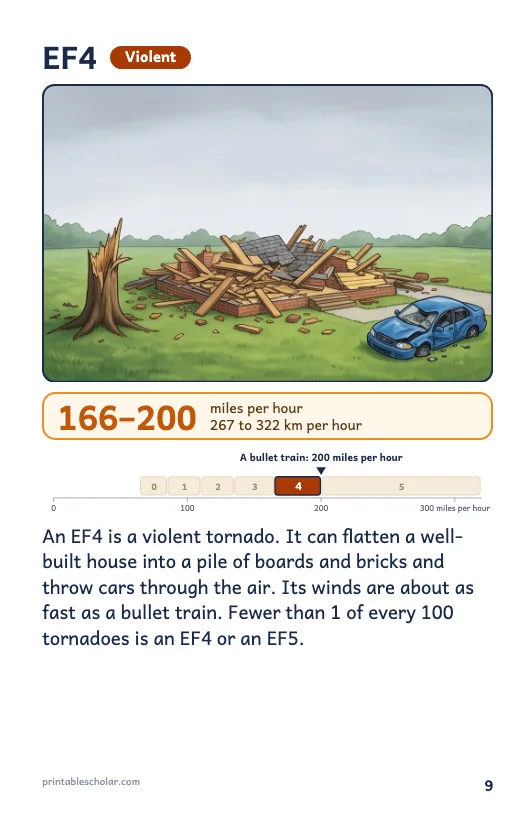
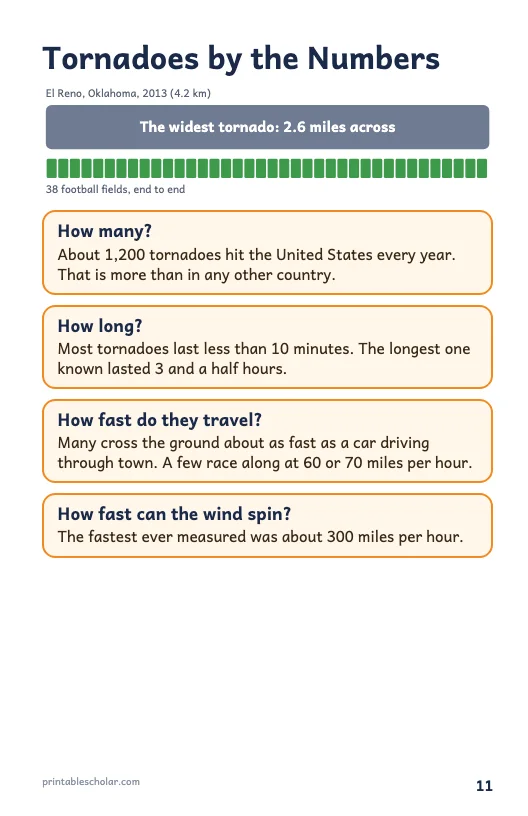
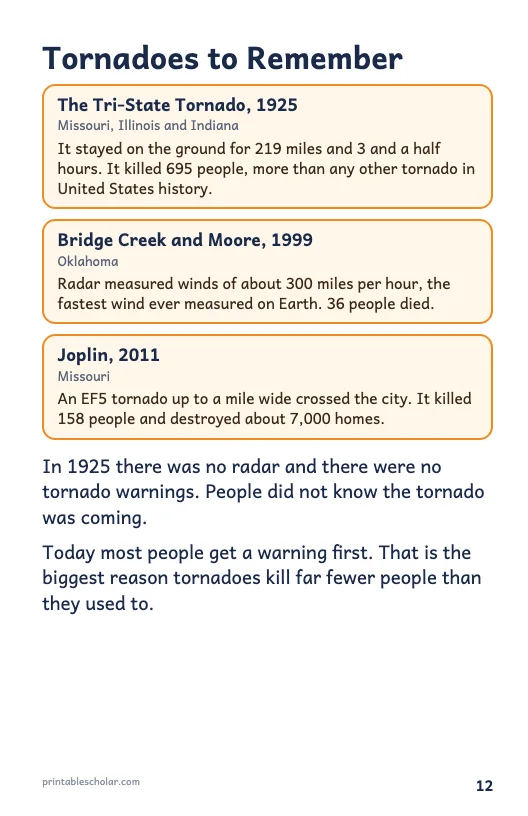
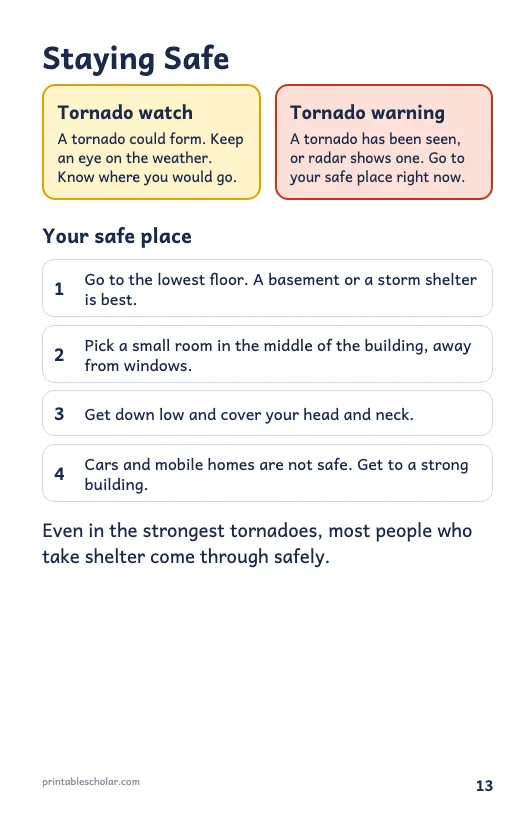
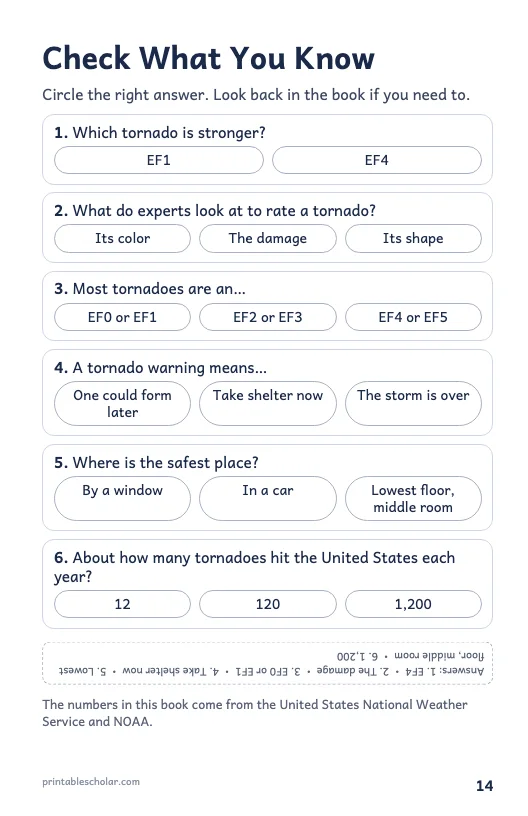
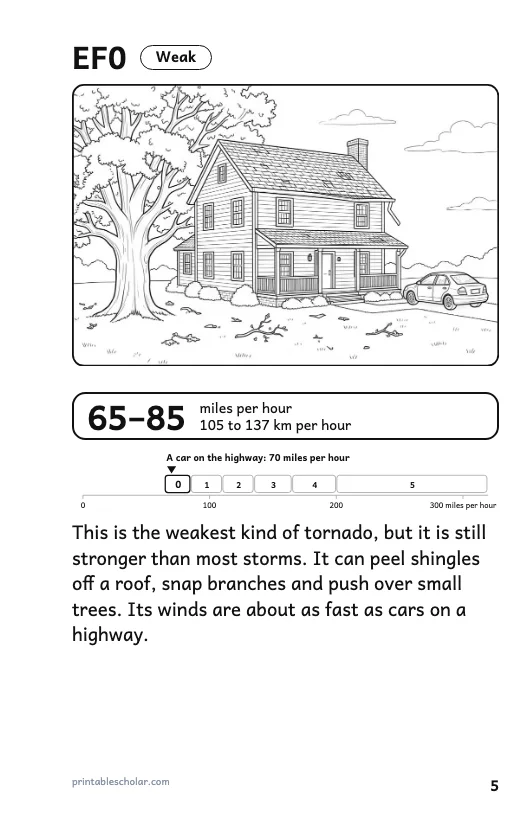
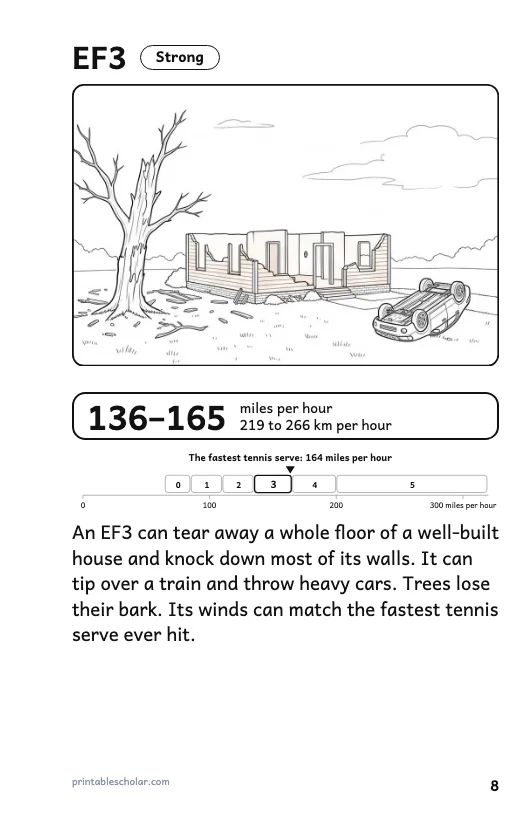
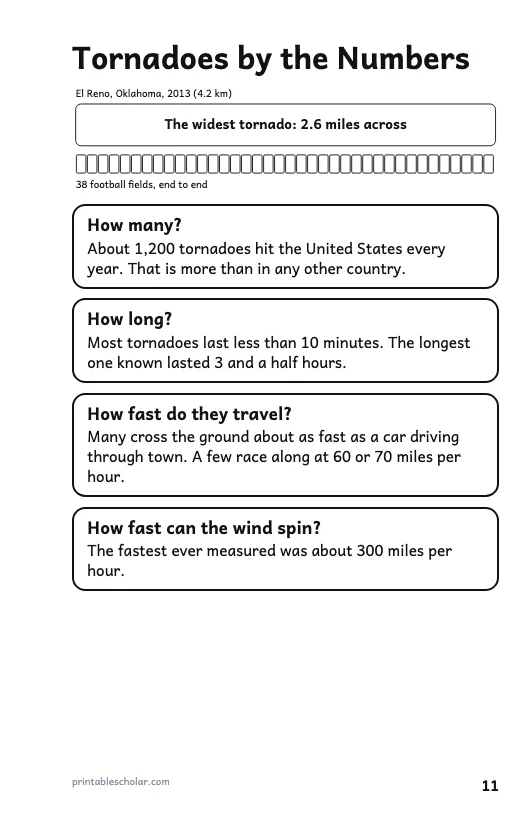
The book starts with what a tornado is and how one forms. Then it gives each level of the EF scale its own page, with the wind speed, a wind meter and something a child already knows that moves that fast. It ends with tornado records, three real tornadoes, a page on staying safe and a short quiz.
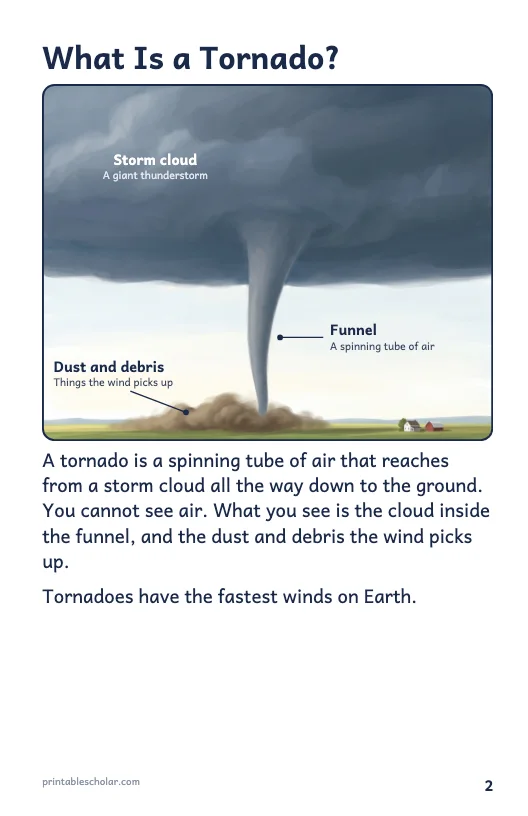
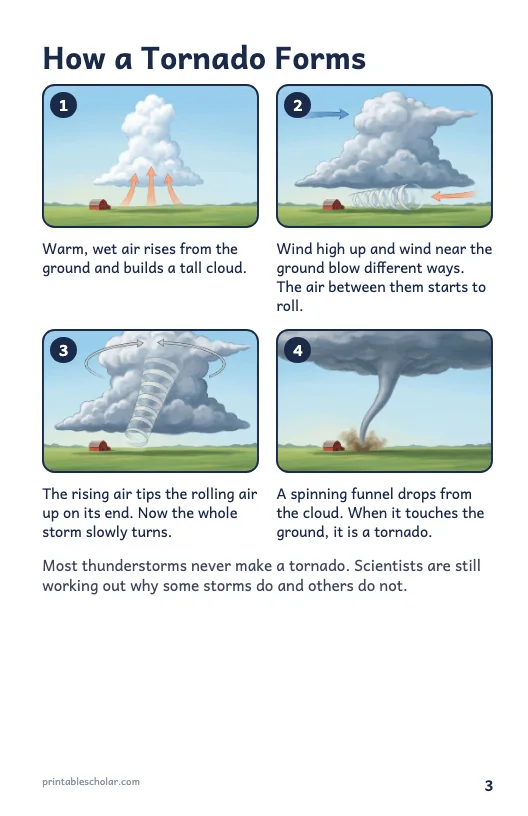
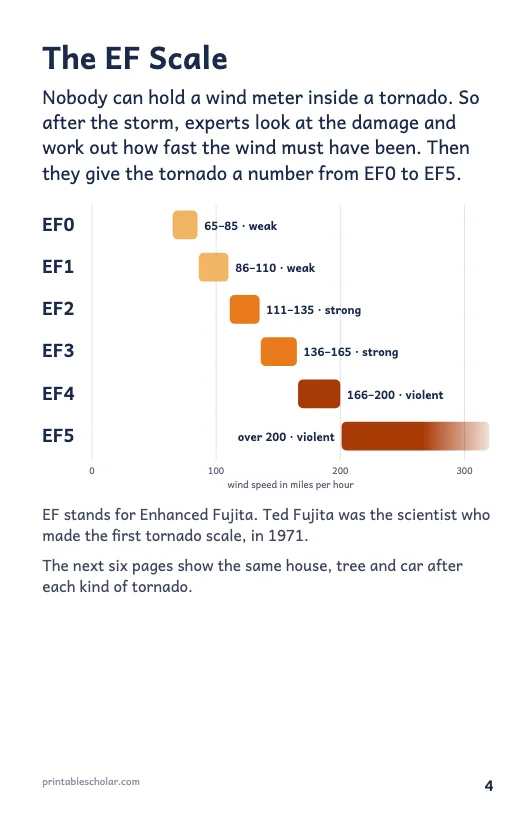
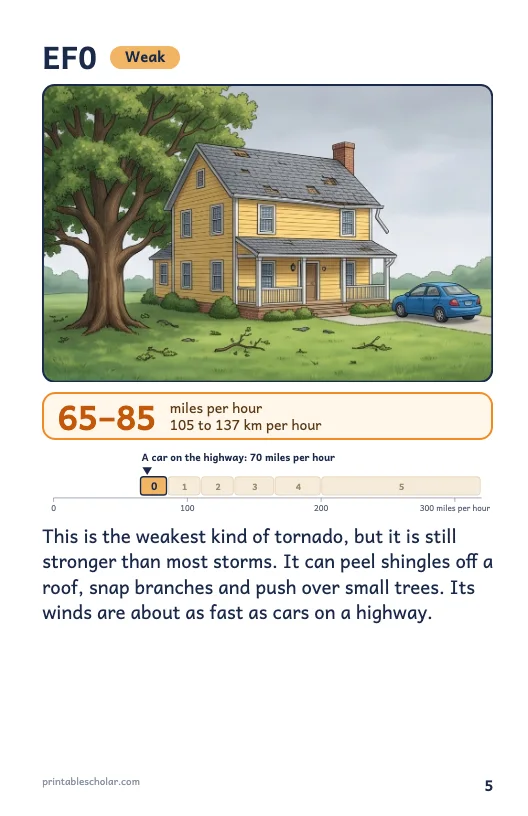
The black and white book
The black and white book has the same pages, words and numbers. The pictures are redrawn as outlines of the same scenes, and the charts are outline only.
How to make the book
- Print the 7 sheets on one side.
- Cut each sheet in half on the dashed line.
- Stack the pages in order, with the cover on top.
- Staple down the left side.
EF scale chart
These are the wind speeds used in the book. A tornado gets its rating after the storm, from the damage it left.
| Rating | Wind speed | What it can do |
|---|---|---|
| EF0Weak | 65–85 mph105–137 km/h | Peels shingles, snaps branches |
| EF1Weak | 86–110 mph138–177 km/h | Strips roofs, breaks windows, tips mobile homes |
| EF2Strong | 111–135 mph179–217 km/h | Tears off roofs, uproots big trees, lifts cars |
| EF3Strong | 136–165 mph219–266 km/h | Destroys whole floors of houses, tips trains |
| EF4Violent | 166–200 mph267–322 km/h | Flattens well-built houses, throws cars |
| EF5Violent | over 200 mphover 322 km/h | Sweeps houses off their foundations |
A note for teachers and parents
This book is honest about what tornadoes do. The EF pages show a house being damaged and then destroyed, with no people in the pictures. One page names three real tornadoes and says how many people each one killed. The page after it is about warnings and where to take shelter.
Where the numbers come from
Wind speeds are the Enhanced Fujita scale used by the United States National Weather Service. The count of 60 tornadoes rated F5 or EF5 since 1950 follows the Storm Prediction Center list and includes the 2025 tornado near Enderlin, North Dakota. Tornado counts, shares and travel speeds are from NOAA’s National Severe Storms Laboratory.
Figures for the 1925 Tri-State Tornado, the 1999 Bridge Creek and Moore tornado, the 2011 Joplin tornado and the 2013 El Reno tornado are from National Weather Service records. The 1999 radar reading was first worked out as 301 miles per hour and later as 321, so the book says about 300.