Tornado Drawing Worksheet
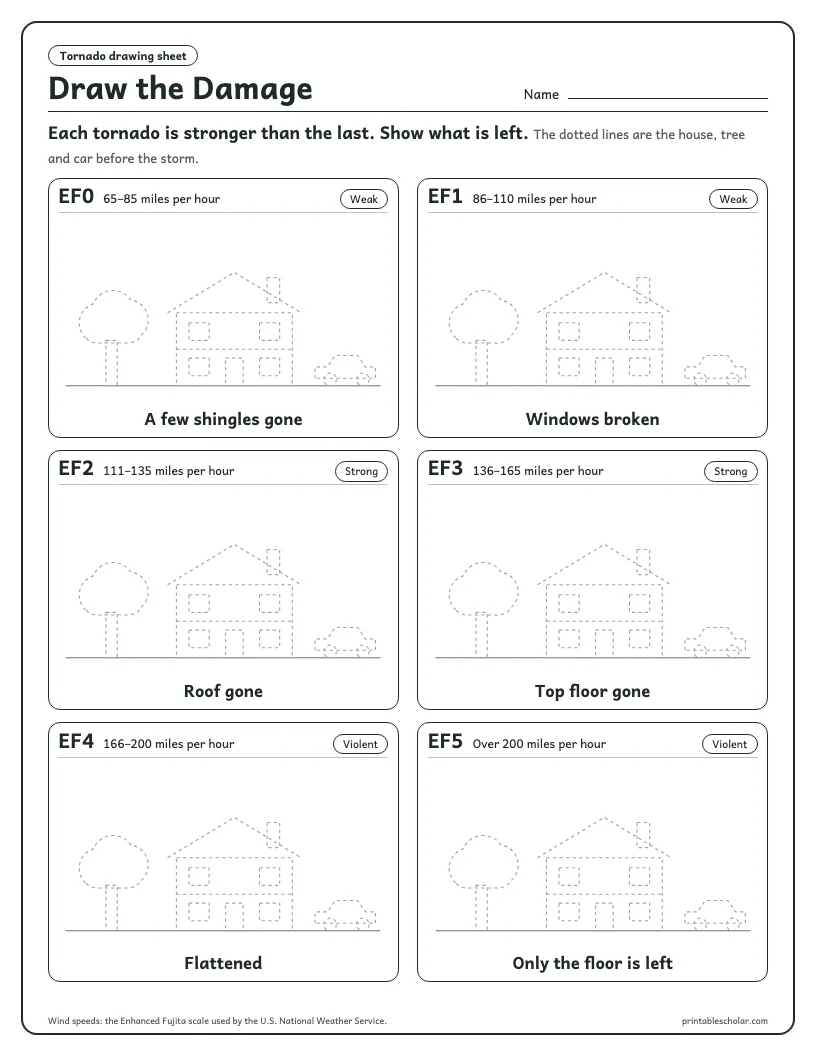
Six boxes show the same house, tree and car in dotted lines. A stronger tornado hits each one, from EF0 to EF5, and students draw what is left standing.
Download the worksheet (PDF)What students do
- See the wind speed for each rating on the EF scale, with a few words on what that tornado does.
- Draw over the dotted lines for the parts still standing, and leave out what the tornado took.
- Use the open sky in each box to draw the storm itself.
- End up with six drawings side by side, each one worse than the last, from a few lost shingles to a bare concrete floor.
How to use it
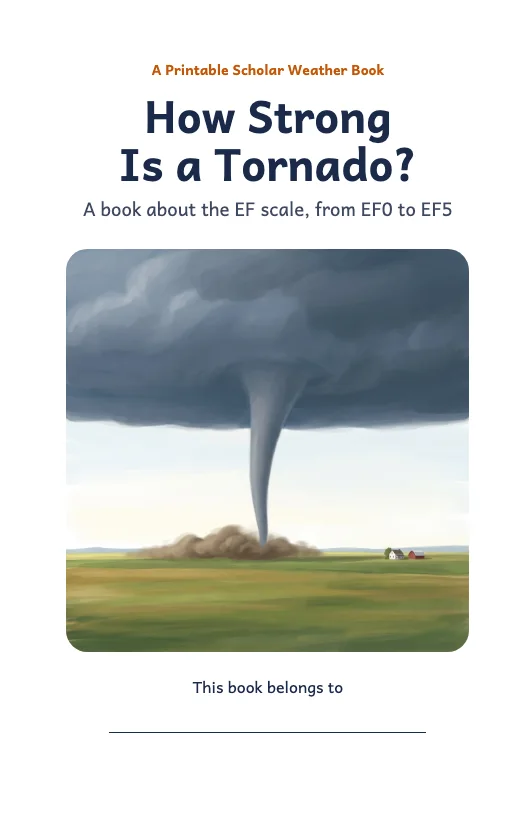
The dotted lines are the house, tree and car before the storm. Each box has only a few words, on purpose: children take the idea from drawing six houses in a row, each worse than the last. The fuller description for each rating is in the list below. There is no single right drawing, so there is no answer key. To compare, look at the same rating in the tornado EF scale book, which shows one house after every level of tornado.
What each tornado really does
- EF0 (65 to 85 miles per hour): A few shingles are gone. Small branches are down. The car is fine.
- EF1 (86 to 110 miles per hour): Big patches of the roof are gone. Windows are broken. The tree has lost big limbs.
- EF2 (111 to 135 miles per hour): The roof is torn off. The tree is snapped. The car has been pushed.
- EF3 (136 to 165 miles per hour): The top floor is gone and most walls are down. The tree is bare. The car is flipped.
- EF4 (166 to 200 miles per hour): The house is flattened into a pile. Only a stump is left. The car has been thrown.
- EF5 (over 200 miles per hour): Only the concrete floor is left. The tree and the car are gone.
Where the numbers come from
Wind speeds are the Enhanced Fujita scale used by the United States National Weather Service. The damage in each box follows the Weather Service’s descriptions for that rating.
The book that goes with it