Hurricane Book for Kids: Categories 1 to 5
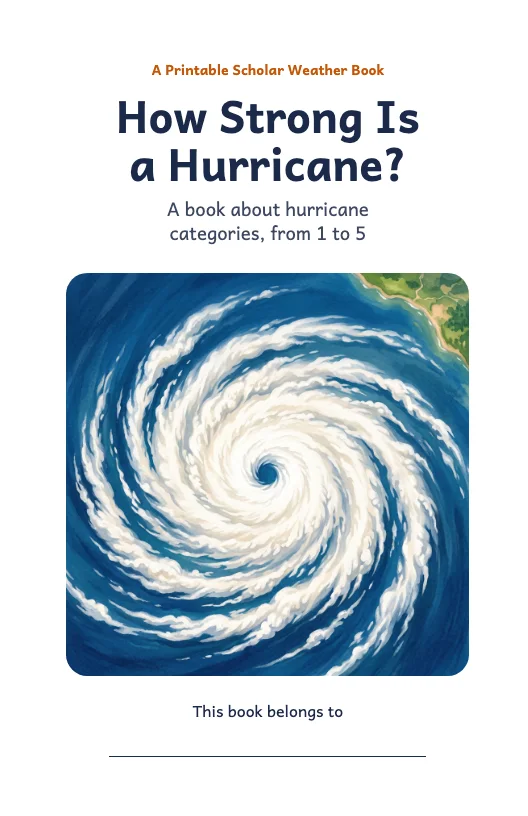
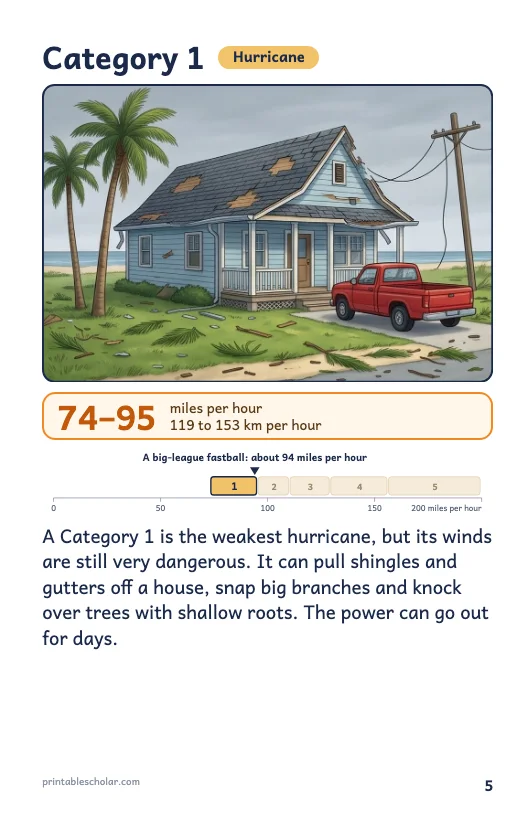
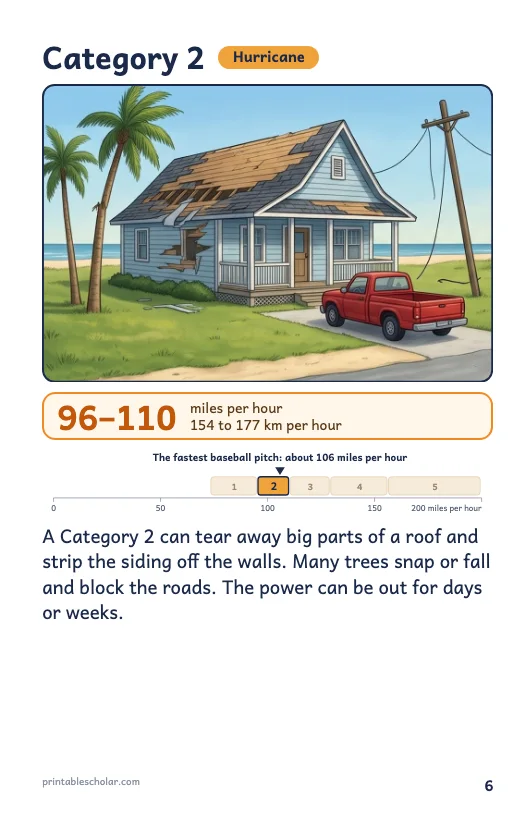
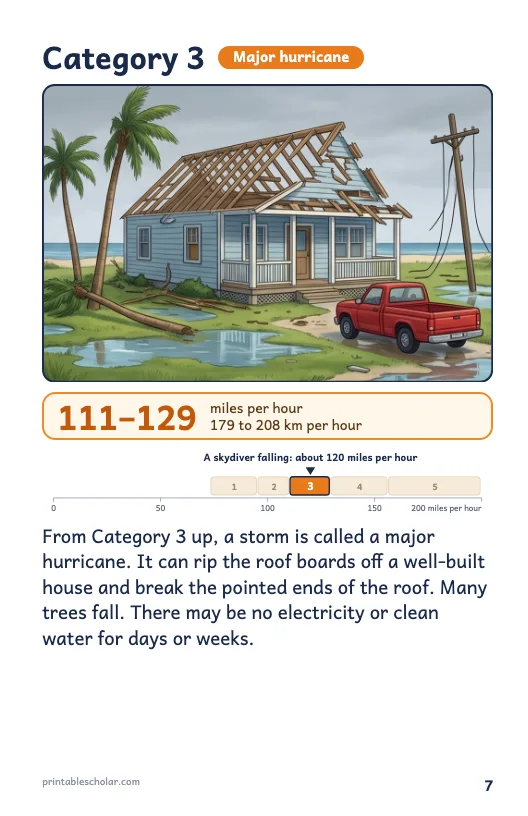
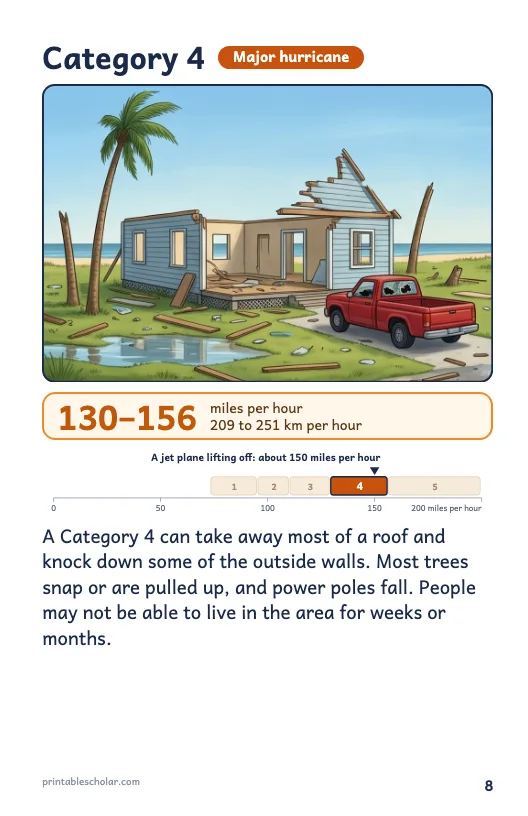
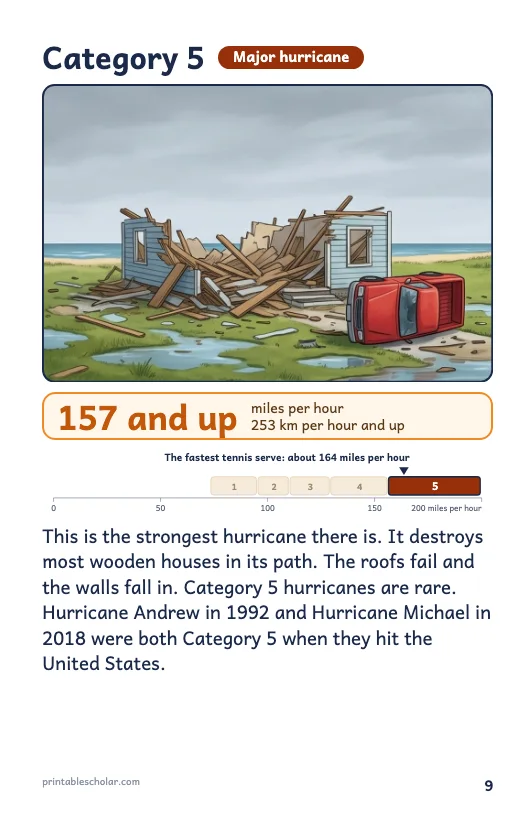
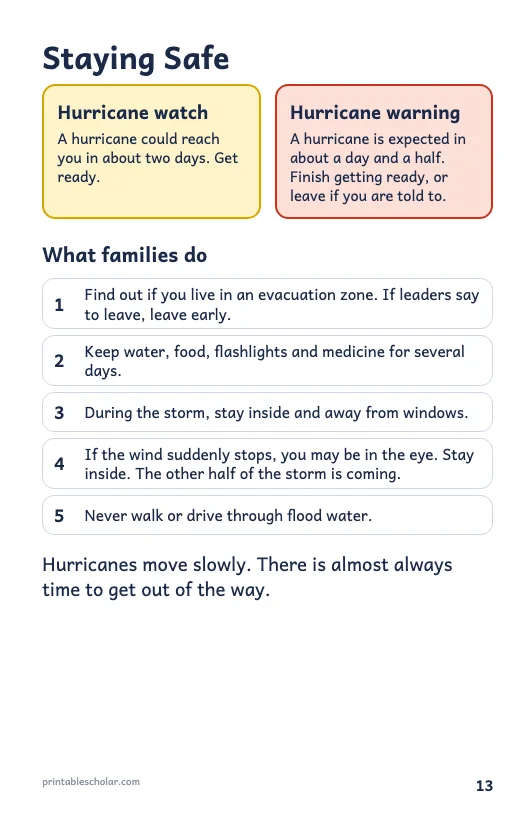
How strong is a hurricane? This free printable book climbs the hurricane scale one step at a time. Each page shows the same house after a stronger storm, from a few lost shingles at Category 1 to a pile of boards at Category 5.
Download the book (PDF)What is in the book
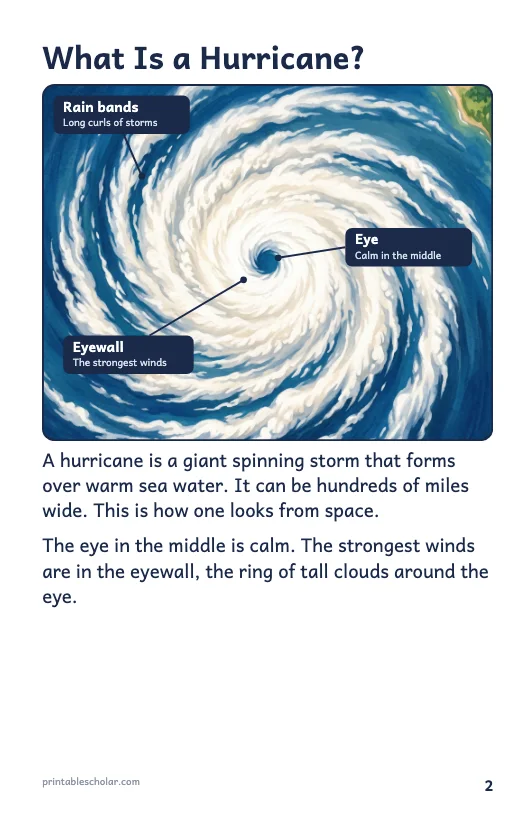
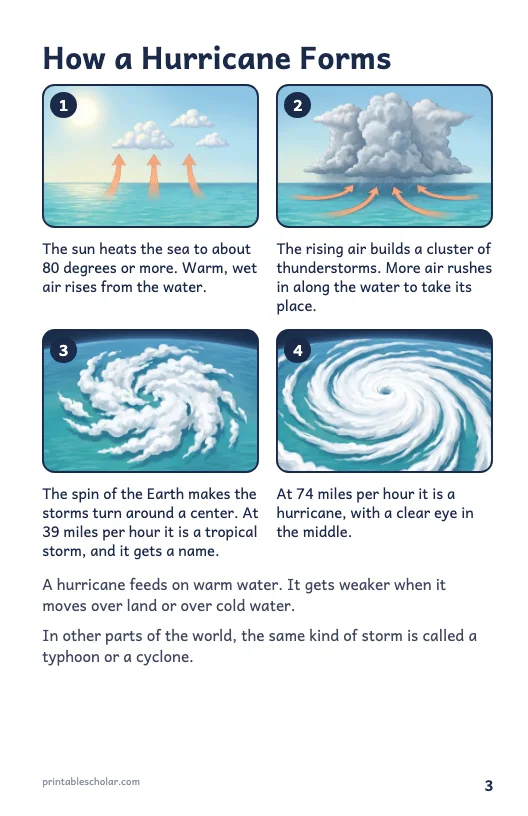
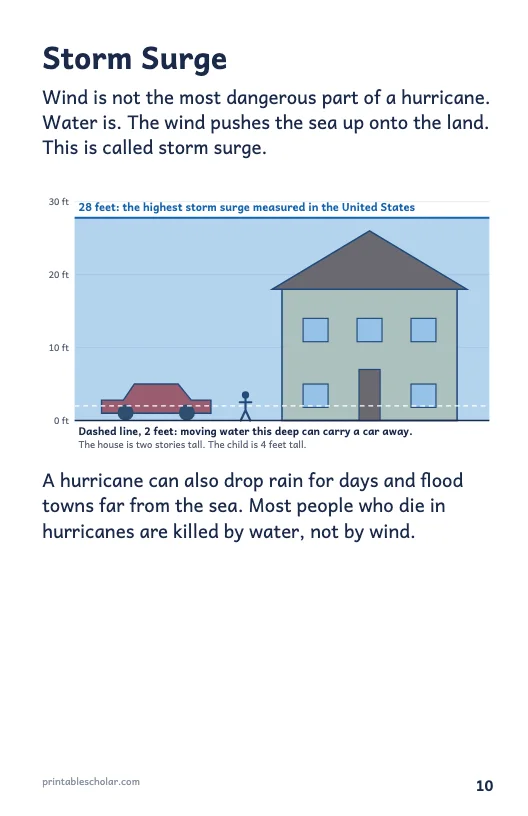
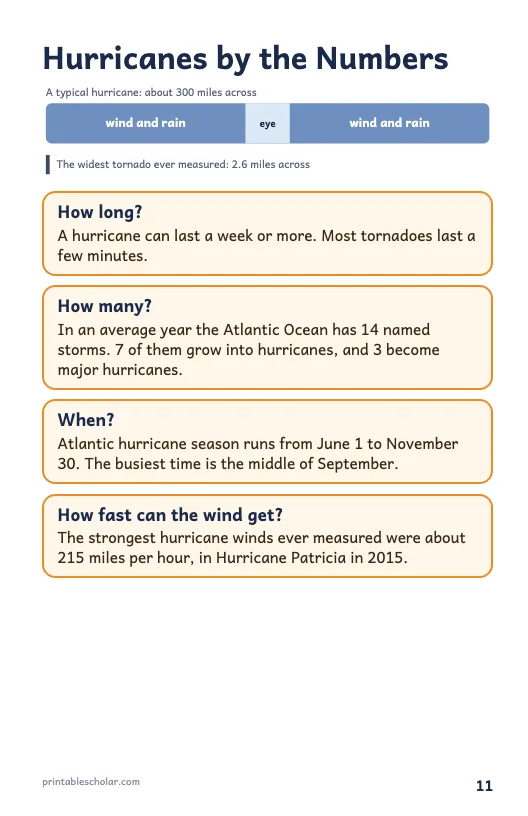
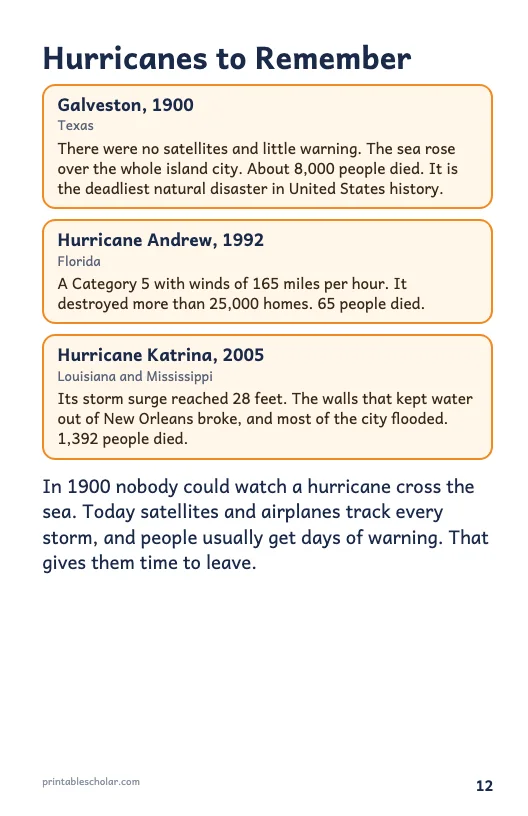
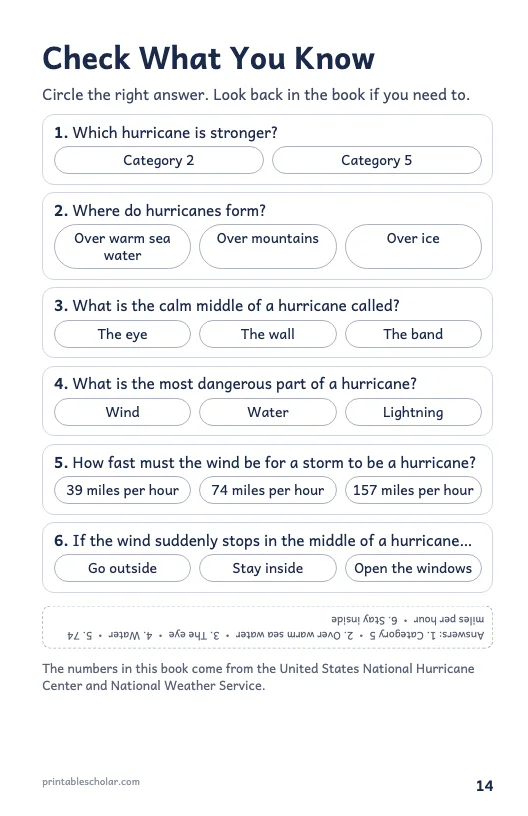
The book starts with what a hurricane is and how one forms. Then it gives each category its own page, with the wind speed, a wind meter and something a child already knows that moves that fast. After that come a storm surge page drawn to scale, hurricane numbers, three real hurricanes, a page on staying safe and a short quiz.
How to make the book
- Print the 7 sheets on one side, in color. Black and white works too.
- Cut each sheet in half on the dashed line.
- Stack the pages in order, with the cover on top.
- Staple down the left side.
Hurricane category chart
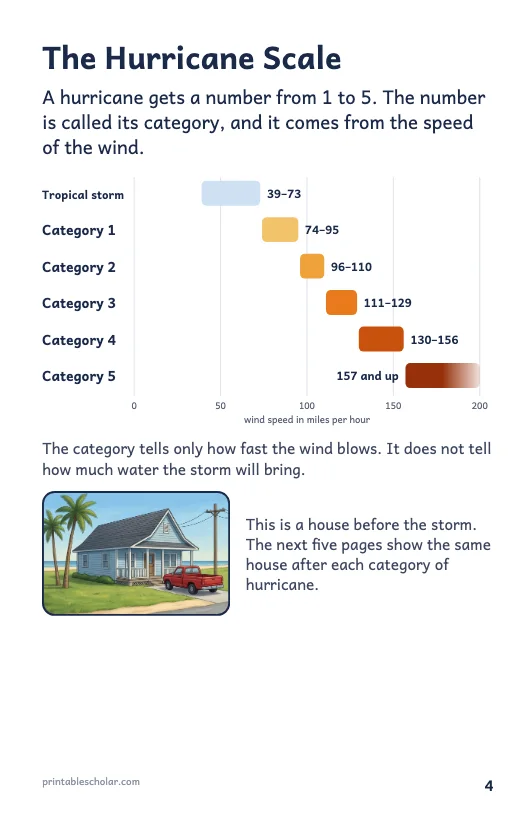
These are the wind speeds used in the book. A storm is named when its winds reach 39 miles per hour, and it becomes a hurricane at 74.
| Category | Wind speed | What the wind can do |
|---|---|---|
| Category 1Hurricane | 74–95 mph119–153 km/h | Pulls off shingles and gutters, snaps big branches |
| Category 2Hurricane | 96–110 mph154–177 km/h | Tears away parts of roofs and siding, fells many trees |
| Category 3Major hurricane | 111–129 mph179–208 km/h | Rips off roof boards, breaks gable ends |
| Category 4Major hurricane | 130–156 mph209–251 km/h | Removes most of a roof and some outside walls |
| Category 5Major hurricane | 157 and up mph253 km/h and up | Destroys most wooden houses in its path |
A note for teachers and parents
This book is honest about what hurricanes do. The category pages show a house being damaged and then destroyed, with no people in the pictures. One page names three real hurricanes and says how many people each one killed. The page after it is about warnings, leaving early and staying safe.
Where the numbers come from
Wind speeds are the Saffir-Simpson Hurricane Wind Scale used by the United States National Hurricane Center. The scale measures wind only, which is why the book gives storm surge its own page. Season averages are the Atlantic figures for 1991 to 2020. The size of a typical hurricane and its eye are from the National Weather Service.
The storm surge of 27.8 feet was measured at Pass Christian, Mississippi, after Hurricane Katrina. The Katrina death toll of 1,392 is the National Hurricane Center’s revised count. Estimates for Galveston in 1900 run from 6,000 to 12,000, so the book says about 8,000. The count for Hurricane Andrew includes deaths after the storm.