About the Skip Counting Worksheets
Skip counting is counting by a number bigger than one: 2, 4, 6, 8, or 5, 10, 15, 20. It is quicker than counting one at a time, and it is the first step toward multiplication. A child who can count by 5s already knows the answers in the 5 times table.
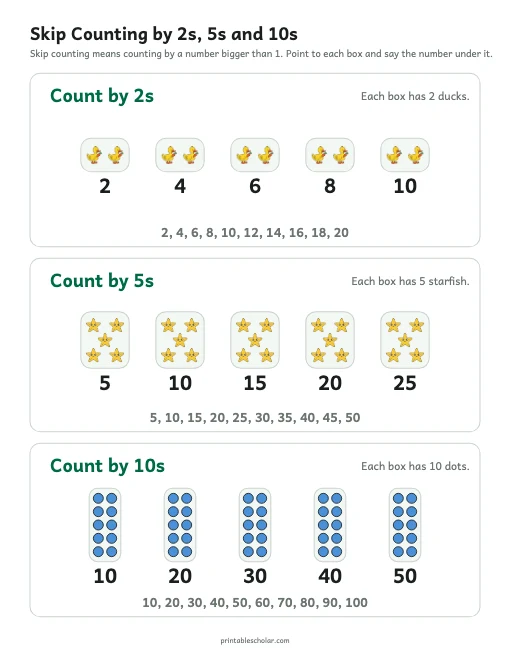
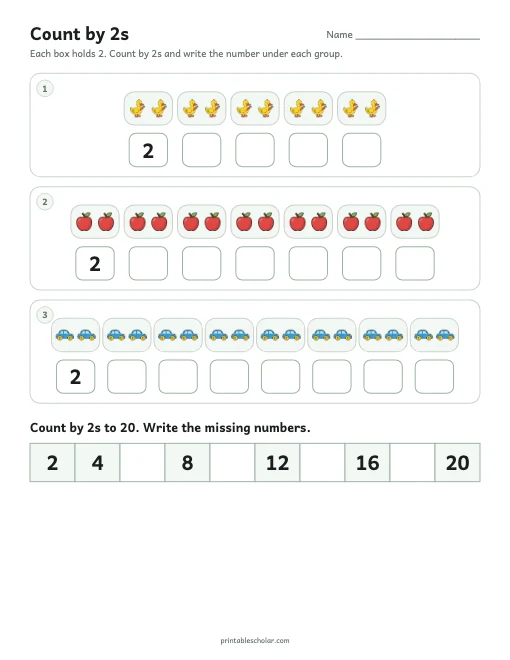
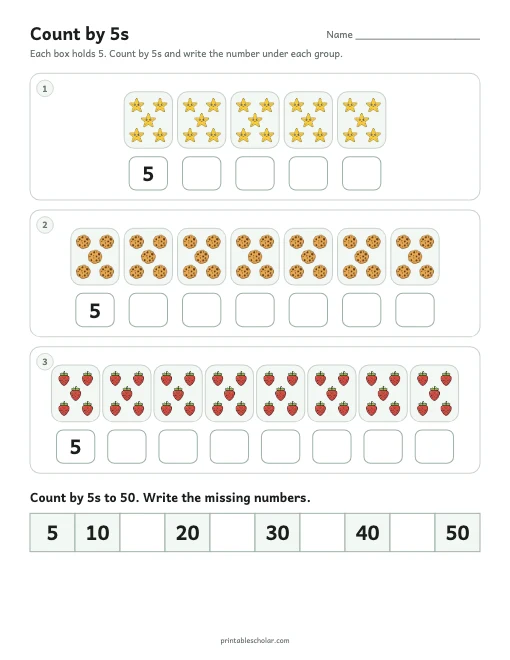
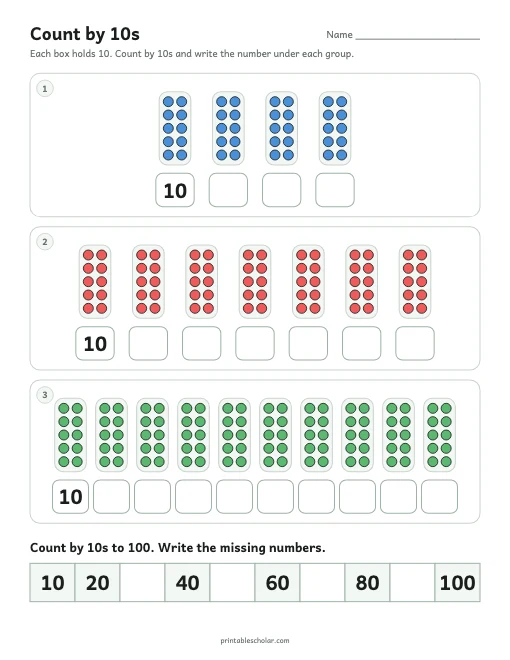
The trap is that skip counting can be learned as a chant, with no idea what the numbers mean. That is why Count by 2s, Count by 5s and Count by 10s all start with groups. Each box holds two ducks, five starfish or ten dots, so saying "2, 4, 6" is tied to adding one more pair each time.
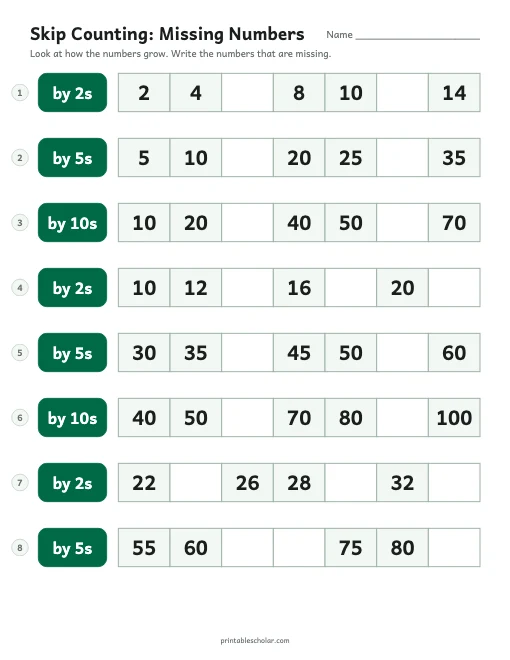
Once the groups make sense, the number strips take them away. Missing Numbers mixes all three kinds of counting, and half its rows start in the middle of a sequence, such as 30, 35, 40. That is harder than starting at the beginning, and it shows whether a child knows the pattern or only the chant.
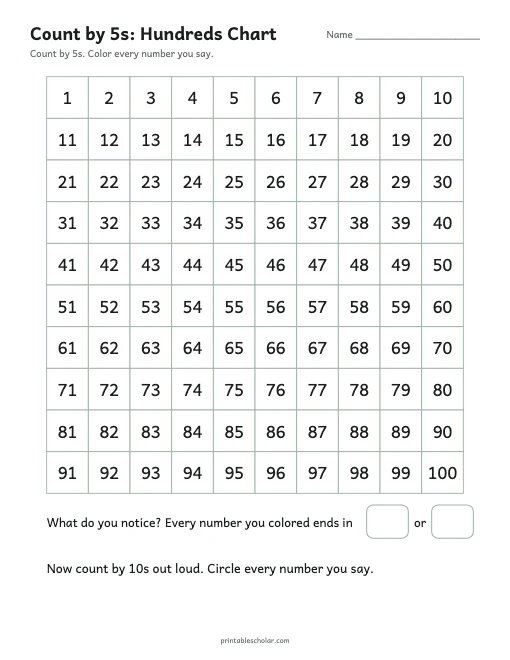
The hundreds chart sheet shows the patterns as shapes: the 5s make two straight columns and the 10s make one. Every worksheet has an answer key on its second page. A blank or filled hundreds chart is a good partner for these sheets, and the multiplication charts are where skip counting leads.
Frequently Asked Questions
What is skip counting?
Skip counting is counting forward by a number other than one, such as by 2s (2, 4, 6, 8), by 5s (5, 10, 15, 20) or by 10s (10, 20, 30, 40). You skip over the numbers in between.
What grade learns skip counting?
Counting by 10s to 100 is taught in kindergarten. Counting by 2s and 5s is practiced in 1st grade, and by 2nd grade children skip count by 5s, 10s and 100s up to 1,000.
Which should be taught first: 2s, 5s or 10s?
Most children find 10s the easiest, because the pattern matches the counting numbers: 10, 20, 30 sounds like 1, 2, 3. Then 5s, then 2s. These sheets are numbered by size, but you can use them in any order.
How does skip counting help with multiplication?
Multiplying is counting equal groups. Four groups of 5 is the fourth number you say when counting by 5s: 5, 10, 15, 20. A child who skip counts well has a way to work out any times table fact they have not memorized yet.
My child can chant the numbers but gets stuck starting from the middle. What helps?
That is common, and it means the sequence is memorized as a song. Go back to the picture groups and count them starting from the third or fourth group. The Missing Numbers sheet has rows that begin partway through for exactly this.