About the More and Fewer Worksheets
Comparing groups is the step after counting. A child who can count five apples and three bananas still has to work out that five is the bigger amount. These sheets practice that with pictures before any symbols such as > or < appear.
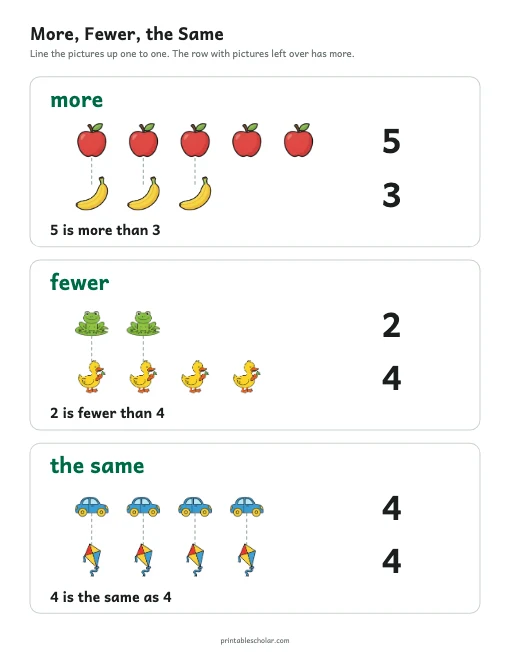
The chart shows the idea that makes comparing make sense: line the two groups up one to one. Every banana gets an apple, and the apples left over are why five is more than three. It is worth doing this with real objects first, such as spoons and forks.
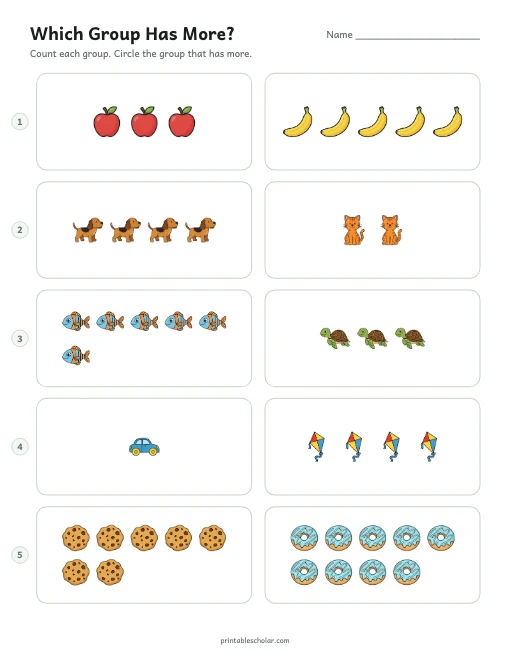
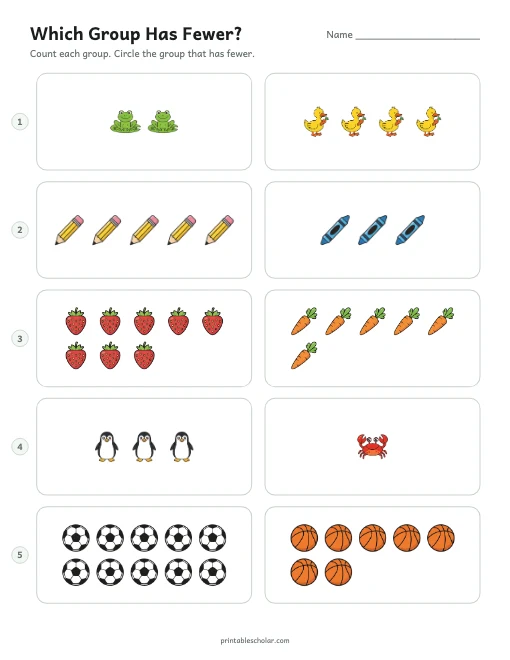
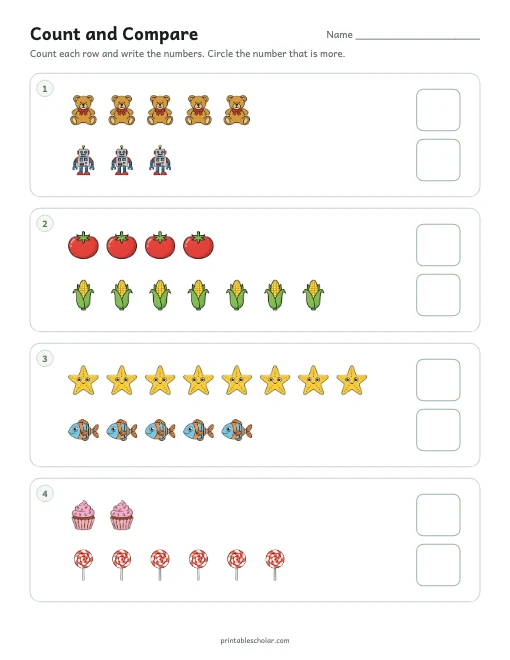
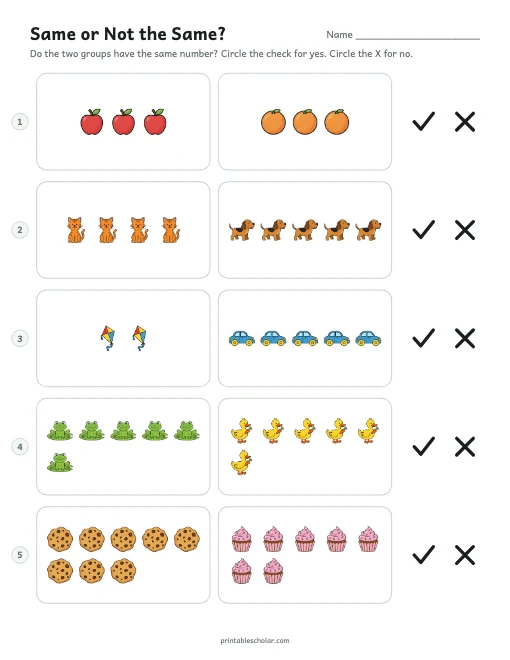
Which Group Has More? and Which Group Has Fewer? are kept as separate sheets on purpose. Young children learn "more" well before "fewer," and mixing the two questions on one page causes mistakes that have nothing to do with counting. Count and Compare adds writing the numbers, and Same or Not the Same? introduces equal groups.
Every worksheet has an answer key on its second page. If counting itself is still shaky, start with the counting to 10 worksheets. Older children who are ready for symbols can move on to comparing numbers.
Frequently Asked Questions
What is the difference between fewer and less?
Fewer is used for things you can count, such as fewer apples. Less is used for amounts you do not count one by one, such as less water. Kindergarten math uses fewer for groups of objects, so these sheets do too.
What age are more and fewer worksheets for?
Ages 4 to 6. Most children understand "more" by age 3 or 4. "Fewer" and "the same" usually come during kindergarten.
How do I teach more and fewer?
Use real objects and line them up one to one. Put a cup next to each plate, and see which has some left over. Say the sentence out loud: there are more cups than plates. Then try the same thing with the pictures on the chart.
My child can count both groups but still picks the wrong one. Why?
Counting and comparing are separate skills. Have your child write the two numbers, then ask which number comes later when counting. The number said later is the bigger one. The Count and Compare sheet practices exactly this.
What comes after comparing groups?
Comparing written numbers, then the greater than and less than symbols in 1st grade. Picture addition is also a good next step, because it uses the same counting skills.