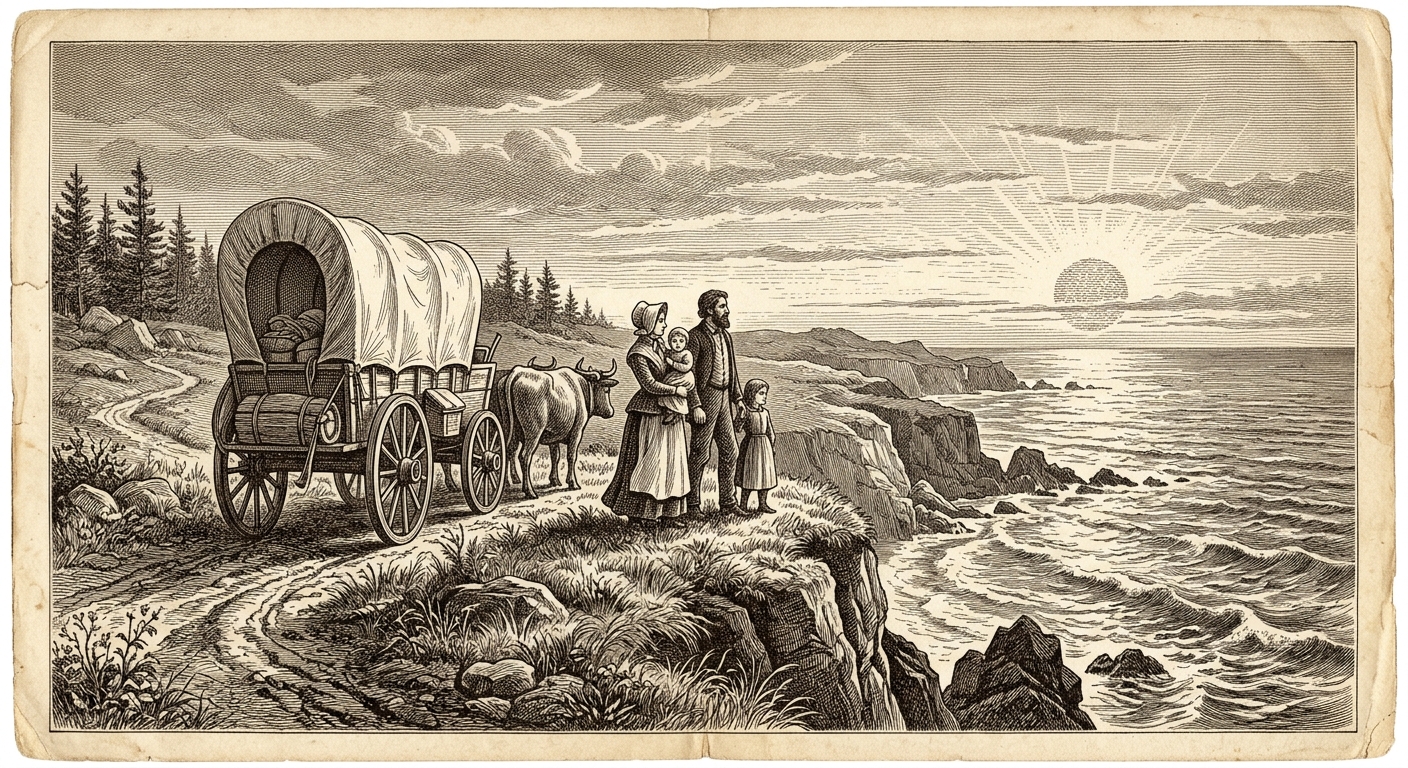
Manifest Destiny Timeline
Manifest Destiny was the 19th-century American belief that the United States was destined to expand across the entire North American continent, shaping half a century of territorial growth through diplomacy, war, and settlement.
When the United States was founded, it occupied a narrow strip of land along the Atlantic coast. By 1853, it stretched from sea to shining sea. This transformation — one of the most dramatic territorial expansions in modern history — was driven by the belief that Americans were destined by God or by fate to spread democracy across the continent. The phrase Manifest Destiny was coined in 1845, but the idea had already shaped US policy for decades. It justified the Louisiana Purchase, the annexation of Texas, and the Mexican-American War. It inspired hundreds of thousands of settlers to cross the plains in covered wagons. And it came at a heavy cost to the Native American nations and Mexican citizens who already lived on the land Americans were so determined to claim.
- 1803
Louisiana Purchase
The United States buys the Louisiana Territory from France, doubling the size of the country and giving the US control of the Mississippi River.
Why it mattered: The Louisiana Purchase opened a vast western territory and set in motion the process of continental expansion — but also raised the question of whether slavery would spread into the new lands.
- 1819
Adams-Onis Treaty
Spain cedes Florida to the United States and agrees on the western boundary of the Louisiana Purchase territory.
Why it mattered: The US now controlled the entire eastern seaboard — and gained a clearer western claim that pointed toward the Pacific.
- 1836
Republic of Texas
American settlers in Mexican Texas rebel against Mexican rule and win independence, establishing the Republic of Texas.
Why it mattered: Texas independence created a new nation on the US border that wanted to join the Union — though its admission would intensify the crisis over the expansion of slavery.
- 1845
Manifest Destiny Coined
Journalist John L. O'Sullivan writes that it is the United States' manifest destiny to overspread and possess the whole continent for the free development of our yearly multiplying millions.
Why it mattered: O'Sullivan gave a name to what millions of Americans already believed — that God or fate had destined them to spread democracy across the continent, whatever stood in the way.
- 1845
Texas Annexed
The United States annexes the Republic of Texas as its 28th state despite Mexico's insistence that Texas still belongs to Mexico.
Why it mattered: Texas annexation brought the US into direct conflict with Mexico over the southern border — a conflict that quickly escalated into war.
- 1846
Oregon Treaty
The United States and Britain settle their long-running dispute over the Oregon Territory, fixing the border with Canada at the 49th parallel.
Why it mattered: The Oregon Treaty gave the US the Pacific Northwest — including the future states of Oregon, Washington, and Idaho — through diplomacy rather than war.
- 1846–48
Mexican-American War
The US goes to war with Mexico; American forces capture Mexico City and seize California, New Mexico, Arizona, and other territories in a decisive victory.
Why it mattered: The Mexican-American War added over 500,000 square miles to the United States — the entire American Southwest — but intensified the crisis over slavery by creating new territories where its fate was uncertain.
- 1848
Treaty of Guadalupe Hidalgo
Mexico cedes California, New Mexico, Arizona, Nevada, Utah, and parts of other states to the US in exchange for $15 million, ending the war.
Why it mattered: The US had reached the Pacific — from sea to shining sea — but the question of slavery in the new territories would tear the country apart within a decade.
- 1848
California Gold Rush
Gold is discovered at Sutter's Mill; within two years, 300,000 people pour into California from around the world.
Why it mattered: The Gold Rush transformed California from a sparsely populated territory into a state within two years, demanding immediate political decisions about how the new territories would be governed.
- 1853
Gadsden Purchase
The United States buys a strip of land from Mexico along the southern border in present-day Arizona and New Mexico.
Why it mattered: The Gadsden Purchase completed the continental United States in its current form — the land area of the lower 48 states was now fixed, and Manifest Destiny had been achieved.
Manifest Destiny Quiz
Check what you learned — read on screen, or use the Printable quiz button above for a worksheet version with an answer key.
What did journalist John L. O'Sullivan mean by Manifest Destiny in 1845?
- A) That the US had a duty to free enslaved people throughout the Americas
- B) That God or fate had destined the United States to expand across the entire North American continent
- C) That the US should focus on improving existing territory before expanding further
- D) That American democracy would eventually spread to Europe
What did the Louisiana Purchase do in 1803?
- A) Gave the US control of Florida and the entire Gulf Coast
- B) Doubled the size of the United States and gave the US control of the Mississippi River
- C) Added Texas to the United States as its 28th state
- D) Settled the border dispute with Britain over the Oregon Territory
Why was Texas annexation in 1845 controversial?
- A) Texas had previously been a French colony
- B) Mexico disputed US ownership of Texas and annexation intensified the crisis over slavery expansion
- C) Texas did not actually want to join the United States
- D) The annexation violated the terms of the Adams-Onis Treaty
What did the Oregon Treaty of 1846 settle?
- A) The terms of Mexico's surrender after the Mexican-American War
- B) The southern border of the United States with Mexico
- C) The long-running dispute with Britain over Oregon Territory, fixing the US-Canada border at the 49th parallel
- D) The annexation of Texas into the United States
What territory did the US gain from the Mexican-American War?
- A) Only Texas, which Mexico agreed to surrender
- B) Florida, Alabama, and Mississippi from Spain
- C) Over 500,000 square miles including California, New Mexico, and Arizona
- D) The Oregon Territory, which Britain surrendered
What did the Treaty of Guadalupe Hidalgo accomplish?
- A) It ended the Civil War and freed enslaved people
- B) It settled the border between the US and Canada
- C) Mexico ceded California, New Mexico, and other territories to the US, ending the Mexican-American War
- D) It gave the US control of Florida from Spain
How did the California Gold Rush affect westward expansion?
- A) It slowed expansion by concentrating settlers in California
- B) It drew 300,000 people west in two years, rapidly transforming California from territory to state
- C) It caused a second war with Mexico over the gold fields
- D) It proved that California was too sparsely populated to join the Union
What did the Gadsden Purchase of 1853 complete?
- A) The annexation of Alaska from Russia
- B) The acquisition of the Oregon Territory from Britain
- C) The current boundaries of the lower 48 states by adding a strip along the Mexican border
- D) The final removal of Native Americans from the Eastern United States
Show answer key
1. B · 2. B · 3. B · 4. C · 5. C · 6. C · 7. B · 8. C
Related timelines
 Westward Expansion Timeline — Westward expansion is the period when the United States grew across the continent, as settlers, trails, and railroads pushed toward the Pacific. Open →
 Trail of Tears Timeline — The Trail of Tears was the forced removal of Native American nations from their homelands in the southeastern United States to territory west of the Mississippi River, resulting in the deaths of thousands. Open →
How to print
Choose Download PDF for a ready-to-print timeline that fits US Letter paper (8.5 × 11"). The blank fill-in version keeps the dates and gives students empty lines to write each event — great for review and quizzes.
Frequently asked questions
What was Manifest Destiny?
Manifest Destiny was the 19th-century American belief that the United States was destined — by God or by fate — to expand across the entire North American continent from the Atlantic to the Pacific. The phrase was coined by journalist John L. O'Sullivan in 1845, but the idea had driven US territorial expansion for decades. It was used to justify the Louisiana Purchase, the annexation of Texas, the Mexican-American War, and the settlement of the Pacific Northwest.
What were the consequences of Manifest Destiny?
Manifest Destiny completed the continental United States in its current shape and fulfilled the American vision of a country stretching from the Atlantic to the Pacific. But it came at enormous cost: the forced removal and destruction of Native American nations across the continent, the conquest of half of Mexico's territory through war, and the expansion of slavery into new territories that intensified the sectional crisis leading to the Civil War.
What paper size should I print this on?
The timeline is sized for standard US Letter paper (8.5 × 11 in.). The Download PDF button gives you a print-ready file that fits the page automatically.