Free Subject-Verb Agreement Worksheets
A one-page lesson on making the verb match its subject, then guided and independent practice with action verbs and with is, are, was, were, has and have.
A one-page lesson on making the verb match its subject, then guided and independent practice with action verbs and with is, are, was, were, has and have.
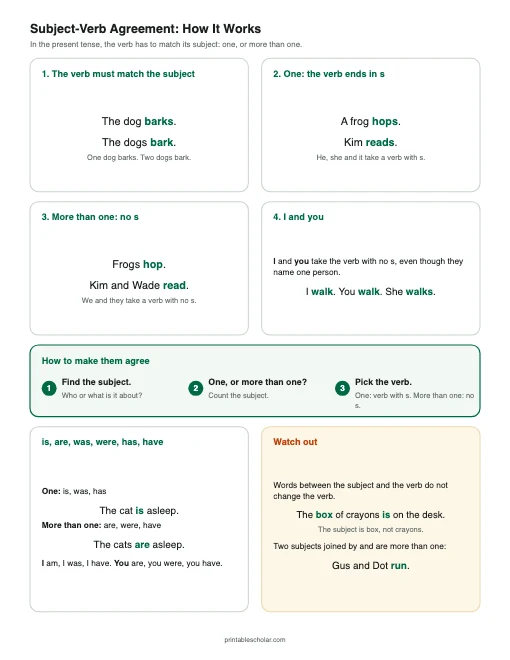
A one-page explanation of matching the verb to a subject that is one or more than one, with examples, three steps to follow and a "watch out" box.
Download PDF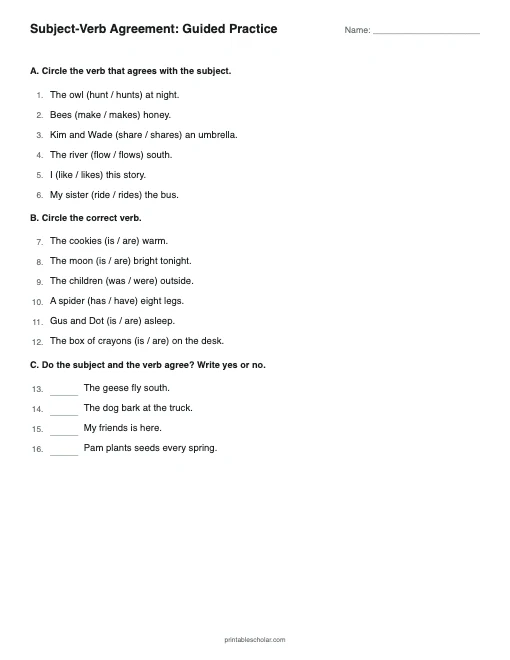
Short sections that build one skill at a time, starting with the easiest. Answer key on page 2.
Download PDF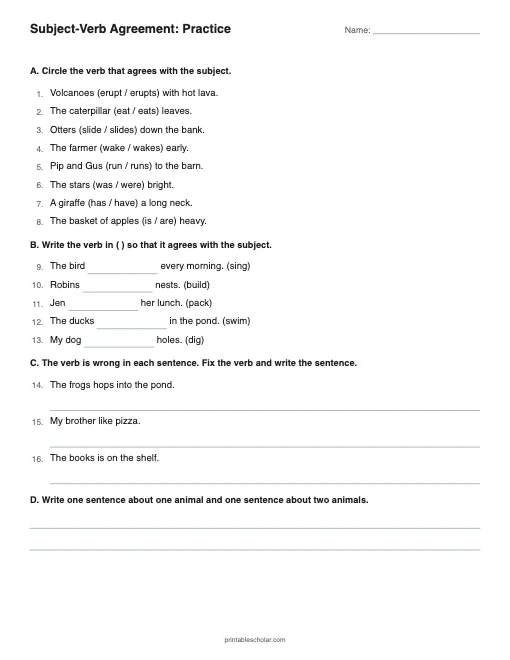
Independent practice that mixes the skills and ends with the student writing. Answer key on page 2.
Download PDFSubject-verb agreement means the verb matches its subject: one dog barks, two dogs bark. The lesson sheet covers singular and plural subjects, I and you, the verbs is, are, was, were, has and have, and subjects with words in between.
Students choose the verb that agrees, write the correct form, and fix sentences that have a mistake.