Free Number Tracing Worksheets

Number tracing for preschool and kindergarten. Trace the numbers 1 to 10 and 11 to 20 a row at a time, then write them with no tracing at all. Three number pages show how to write 1, 2 and 3 with numbered stroke arrows. Six free sheets, black and white.

Want a page like Number 1 for every number? The Print Handwriting Workbook has 83 pages for $7.

Number Tracing 1 to 10 worksheet preview 1 to 10

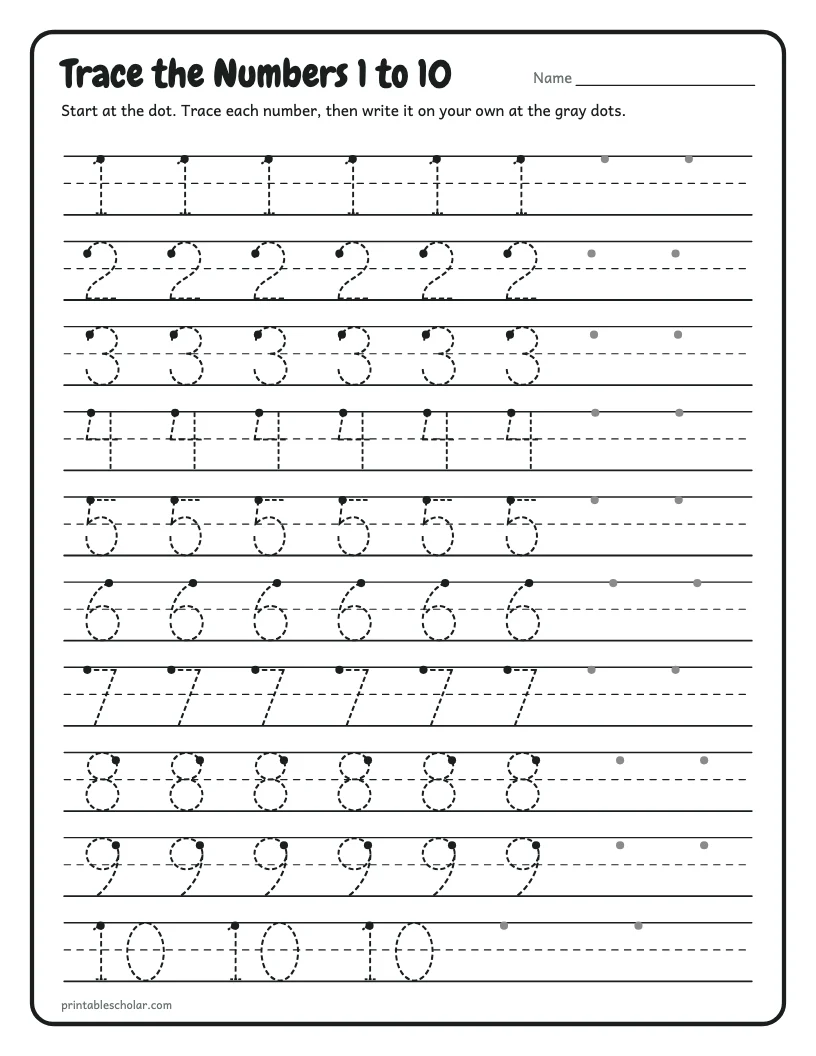
Number Tracing 1 to 10

A row for each number from 1 to 10: trace it six times from the start dot, then write it twice on your own.

Download PDF
Number Tracing 11 to 20 worksheet preview 11 to 20

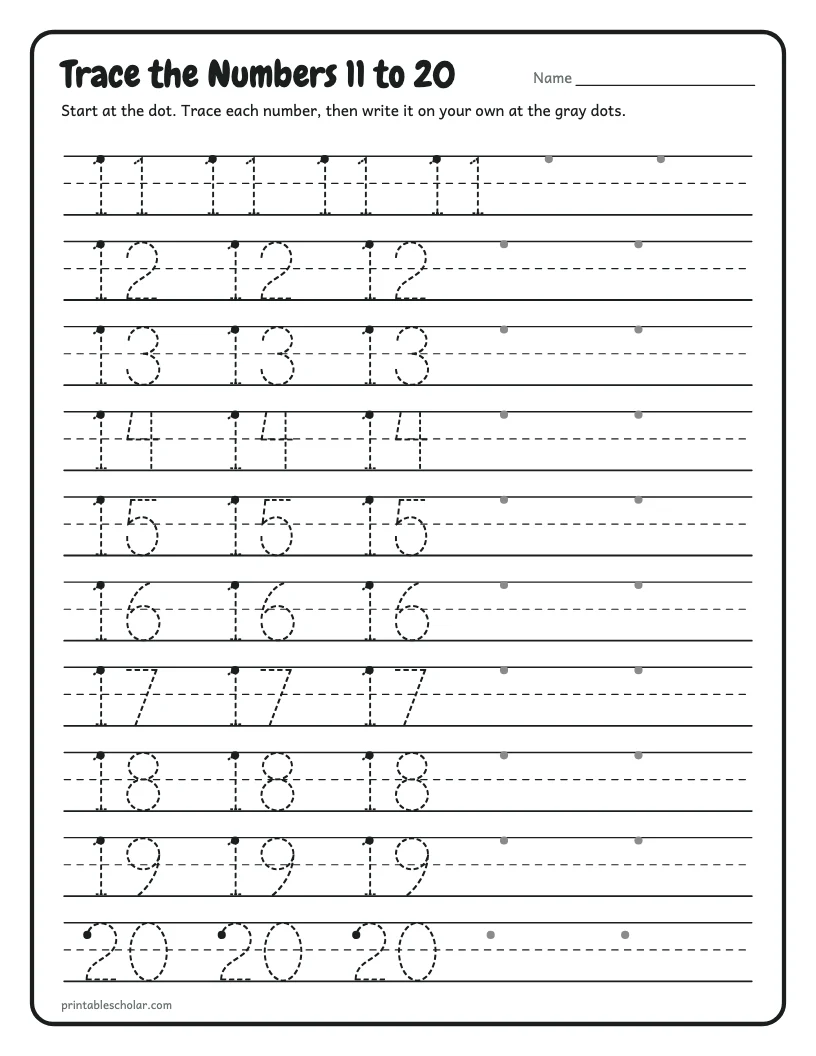
Number Tracing 11 to 20

The two-digit numbers from 11 to 20, a row each: trace, then write on your own at the gray dots.

Download PDF
Write the Numbers 1 to 10 worksheet preview Write

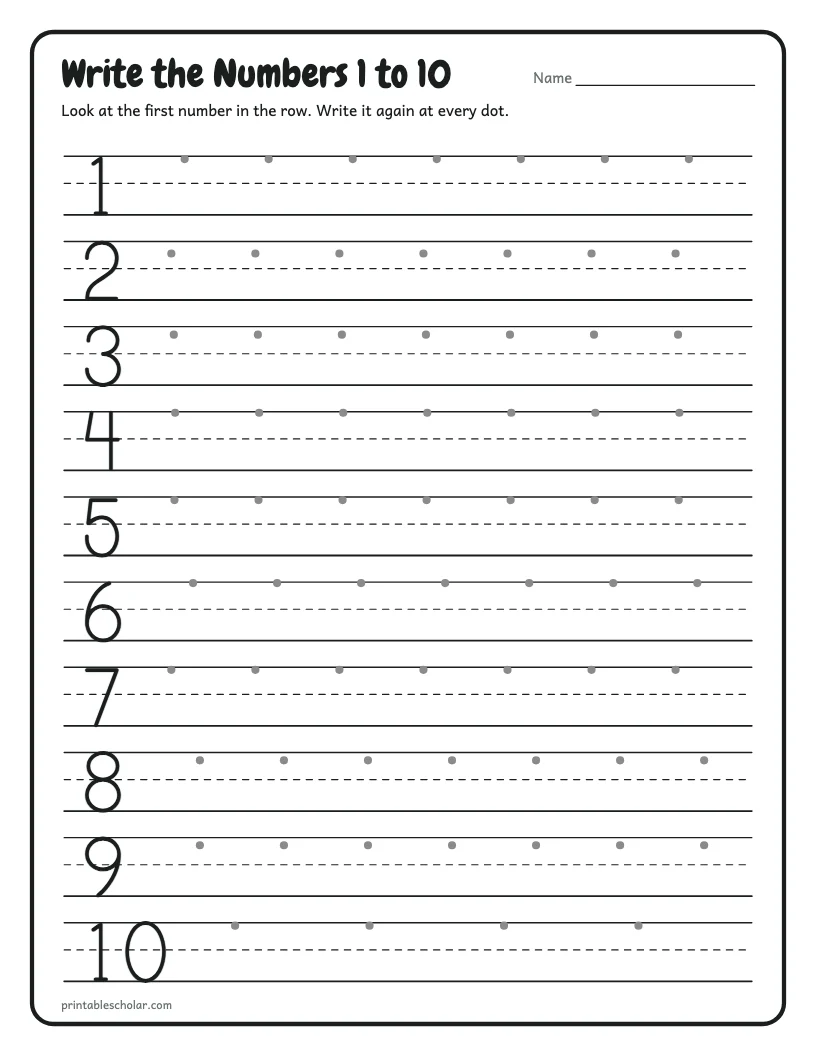
Write the Numbers 1 to 10

Number writing practice with no tracing: each row shows the number once, then start dots to write it on your own.

Download PDF
Number 1 worksheet preview Number 1

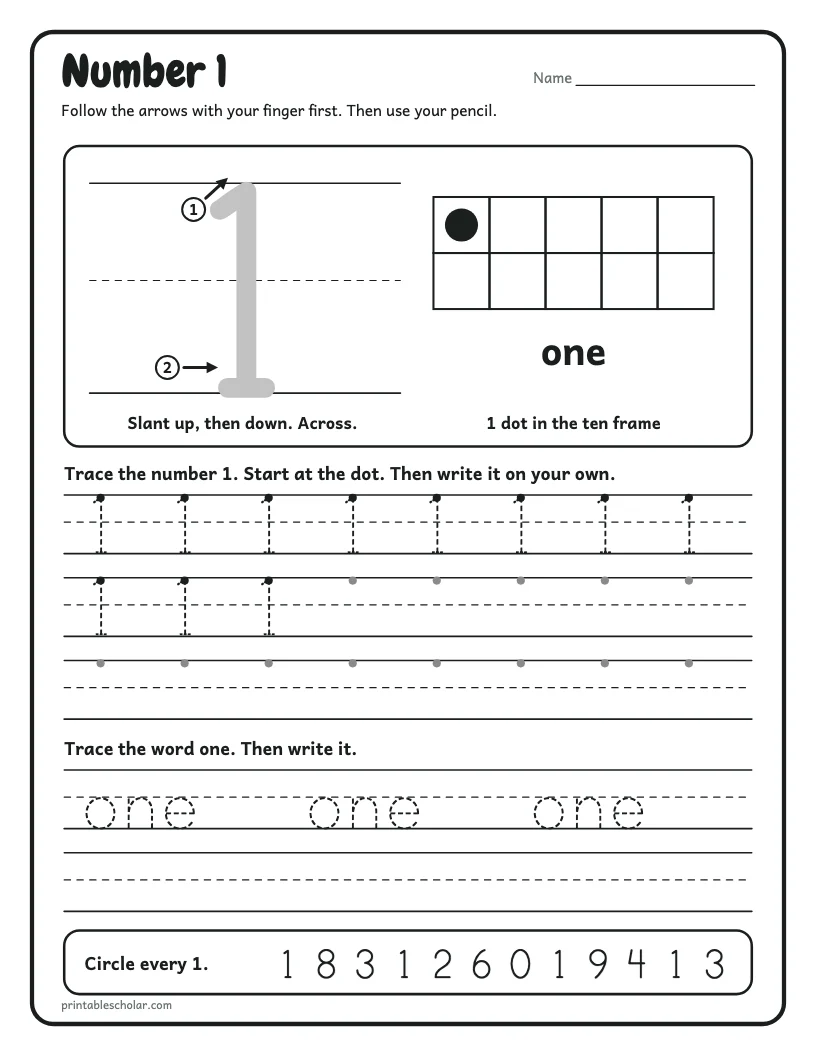
Number 1

How to write 1, with numbered stroke arrows, three rows to trace and write, the word one, 1 in a ten frame and a number hunt.

Download PDF
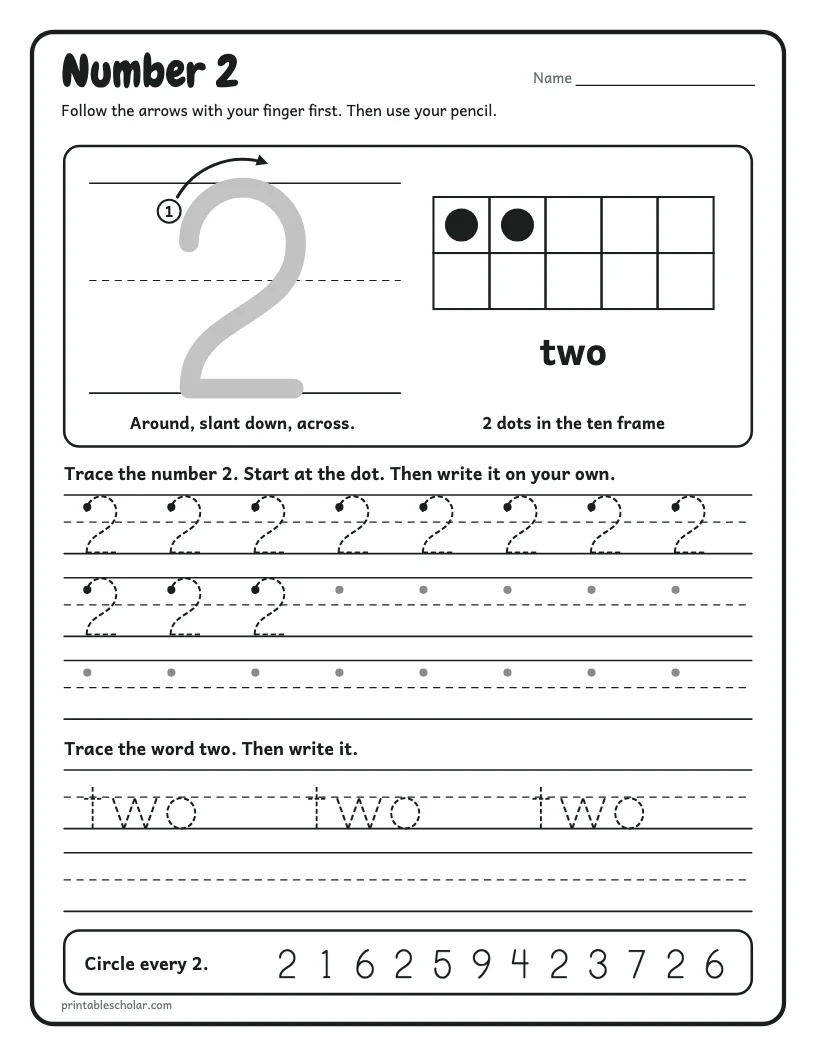
Number 2 worksheet preview Number 2

Number 2

How to write 2, with numbered stroke arrows, three rows to trace and write, the word two, 2 in a ten frame and a number hunt.

Download PDF
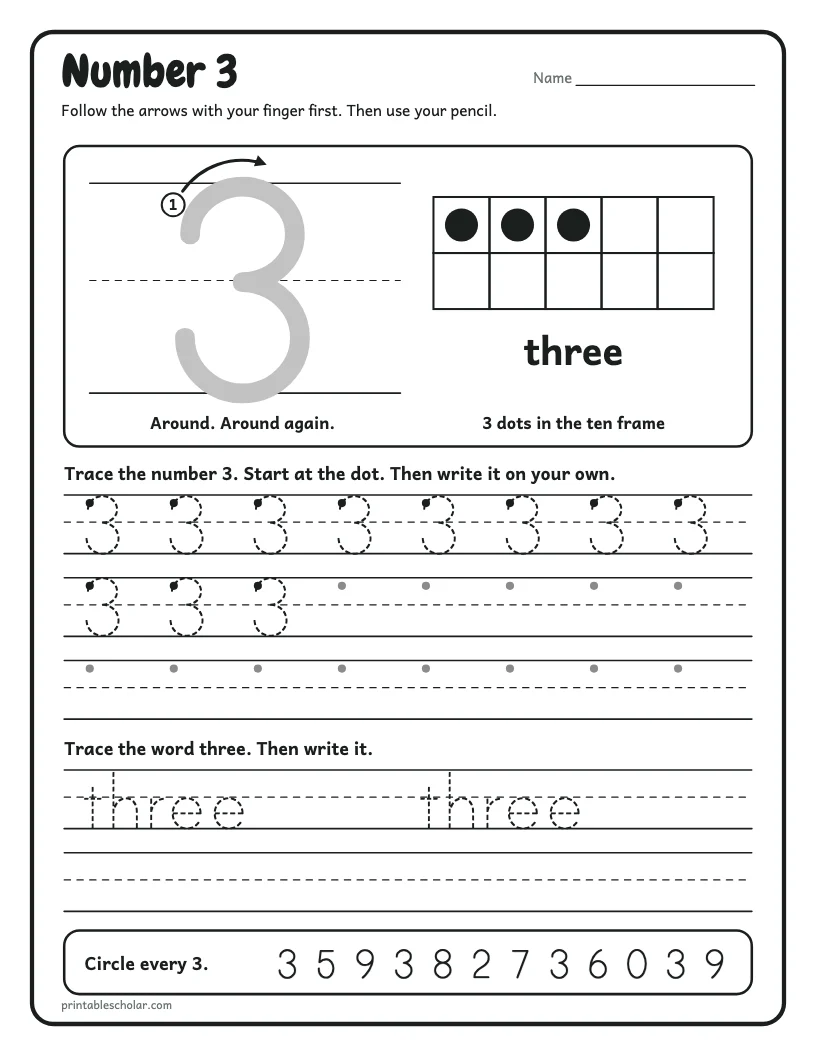
Number 3 worksheet preview Number 3

Number 3

How to write 3, with numbered stroke arrows, three rows to trace and write, the word three, 3 in a ten frame and a number hunt.

Download PDF
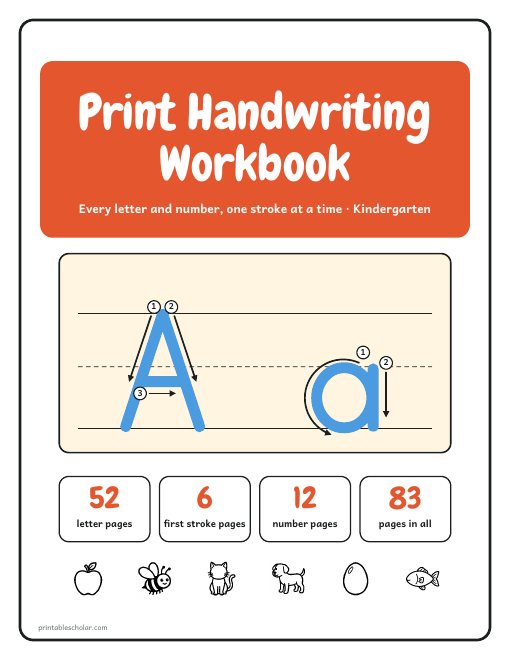
Print Handwriting Workbook cover
Full workbook · Kindergarten

Every number to 20 and the whole alphabet, one stroke at a time

Numbers 1, 2 and 3 above are pages from the workbook. The workbook has a page like them for every number from 0 to 9, two pages for 10 to 20, and two pages for every letter from A to Z.

  • Two pages for each of the 26 letters: stroke arrows and tracing rows, then picture words, a sentence and a letter hunt
  • Six first strokes pages: lines down, lines across, slanted lines, humps and cups, circles and shapes
  • Numbers 0 to 20, with a ten frame and the number word for 0 to 9
  • A formation chart for every letter and number, a letter tracker and a page for the grown-up
  • Review pages and a certificate for the last day
  • 83 pages in one PDF, black and white inside
Get the workbook for $7 One-time purchase. Instant download. Secure checkout by Stripe.
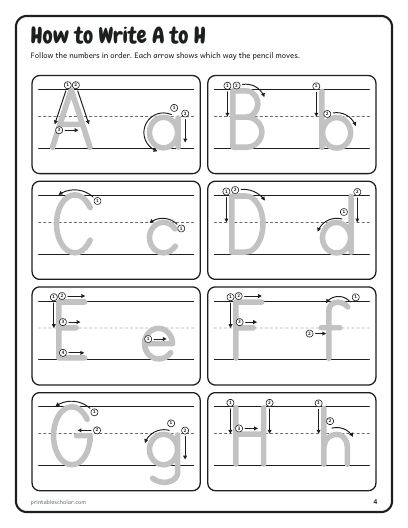
Formation chart: a sheet from the Print Handwriting Workbook
Formation chart
A first strokes page: a sheet from the Print Handwriting Workbook
A first strokes page
A letter page: a sheet from the Print Handwriting Workbook
A letter page
A number page: a sheet from the Print Handwriting Workbook
A number page
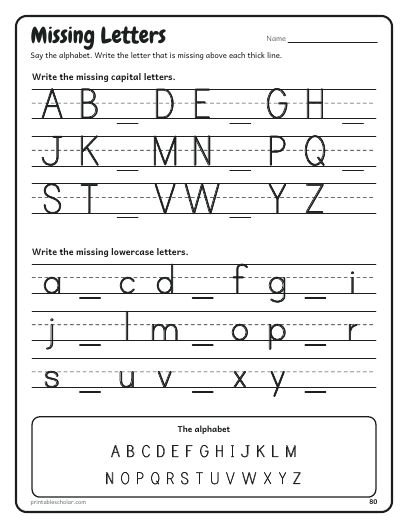
A review page: a sheet from the Print Handwriting Workbook
A review page

Get all 83 pages for $7

How to use the set

Start with the number pages if the child has not written numbers before. Children who know the shapes can go straight to the rows.

  1. Step 1Finger firstOn the Number 1, 2 and 3 pages, trace the big gray number with a finger, following the arrow. Say the words under it out loud.
  2. Step 2Trace 1 to 10Every number to trace has a dot where the pencil starts. The last two places in each row have only the dot: the child writes those alone.
  3. Step 3Write 1 to 10The same numbers with no tracing. The child looks at the number at the start of the row and writes it at every dot.
  4. Step 4Go on to 20The teen numbers have two digits. Write the 1, then the second digit, close together.

About these number tracing worksheets

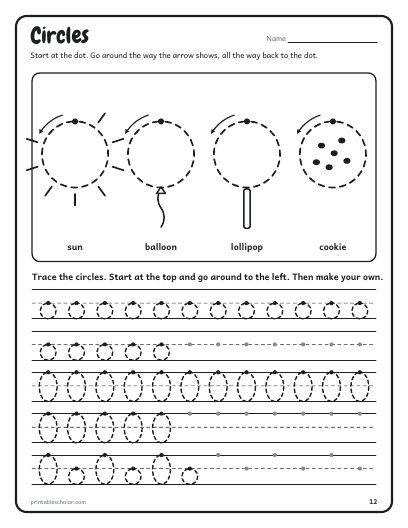
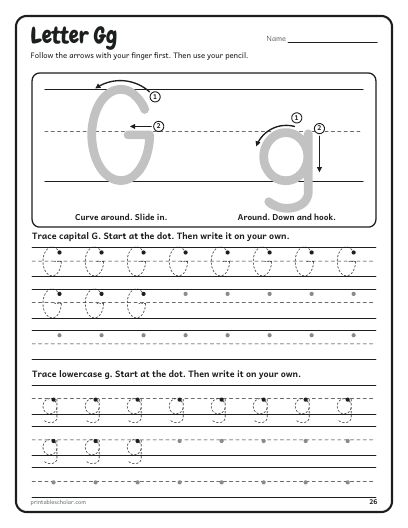
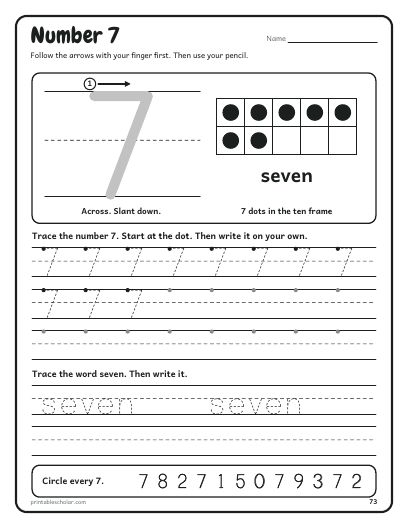
Most number tracing sheets give a child dashed numbers to go over. That helps only if the child starts in the right place. Every number on these sheets has a dot where the pencil starts, and the number pages show the strokes in order with arrows, so the child learns one way to write each number and keeps it.

The rows are 5/8 inch, the kindergarten size, with a top line, a dashed middle line and a bottom line. Numbers sit on the bottom line and reach the top line, the same height as capital letters. The numbers to trace are the same print font as the letter formation worksheets, so letters and numbers look alike.

For a quick review of every number on one page, the tracing worksheets have ready-made 0 to 9 and 0 to 20 sheets and a generator. To connect the numbers to counting, see the ten frame worksheets and the kindergarten math worksheets.

More for writing: letter formation worksheets (kindergarten), tracing lines and cutting practice worksheets (grades PreK–K), draw and write worksheets (kindergarten), sentence writing worksheets (grades K–1), picture writing prompts (grades 1–2), handwriting practice worksheets (grades 1-2), topic sentence worksheets (grades 3–5), graphic organizers for planning, grammar worksheets, and the rest of the writing printables.

Frequently Asked Questions

What age are number tracing worksheets for?

Preschool and kindergarten, from about age 3 to 6, once a child can hold a pencil. The 11 to 20 sheet is usually a kindergarten skill.

Which numbers should a child learn to write first?

Many teachers start with the numbers made of straight lines, 1, 4 and 7, then move to the ones with curves. Counting order works too, as long as the child starts each number at the dot.

Why does my child write numbers backwards?

Reversed numbers, especially 2, 3, 5, 7 and 9, are normal up to about age 7. Starting at the right place fixes most of them, which is why every number here has a start dot. The number pages show the stroke direction with an arrow.

How do I print these worksheets?

Each card downloads a PDF. Print it on US Letter paper at 100 percent (actual size) so the rows stay the kindergarten size. They are black and white.

Do these worksheets have answer keys?

No. There is nothing to mark right or wrong. Ask the child to circle their best number on each row.