Free Tracing Lines and Cutting Practice Worksheets

Pencil and scissor practice for preschool and kindergarten, before letters. Six tracing sheets build pencil control: straight lines, circles, dotted patterns and curvy paths to stay inside. Three cutting sheets go from straight lines to zigzags, waves and steps. Nine free sheets, black and white.

Ready for letters? The Print Handwriting Workbook has 83 pages for $7.

Tracing Lines: Down worksheet preview Tracing lines

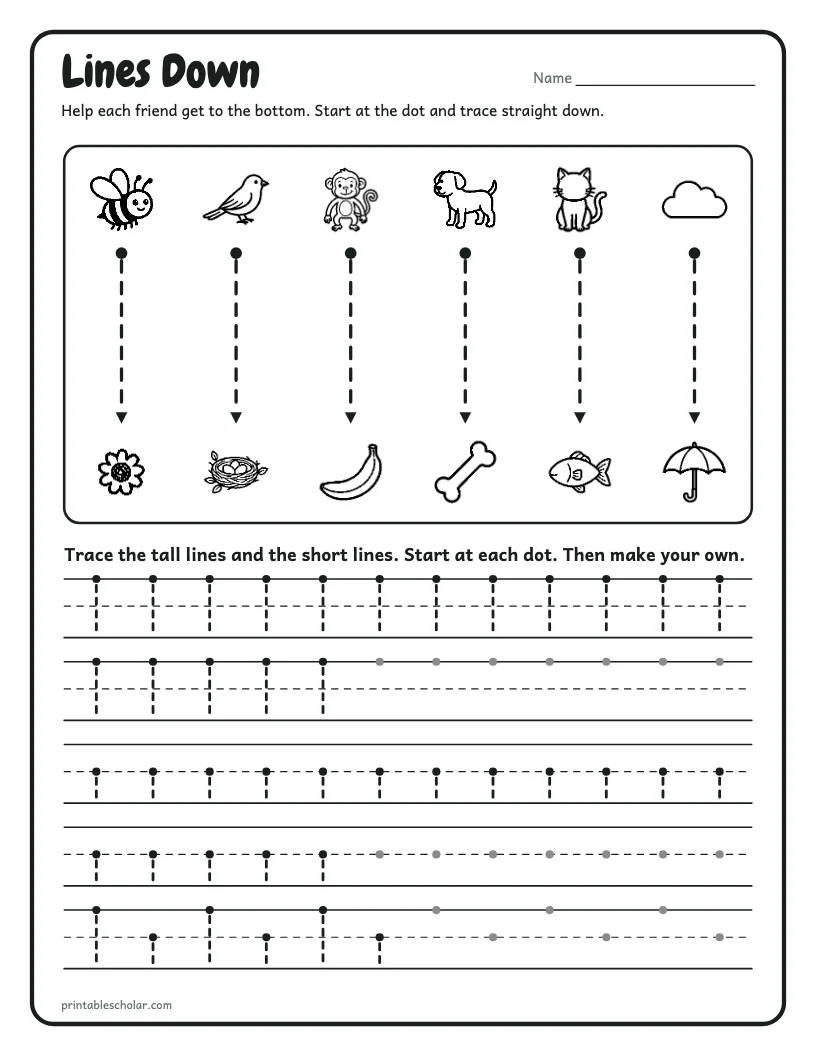
Tracing Lines: Down

Help each animal get to the bottom, then trace tall and short lines from the start dot. The first stroke of most letters.

Download PDF
Tracing Circles worksheet preview Tracing lines

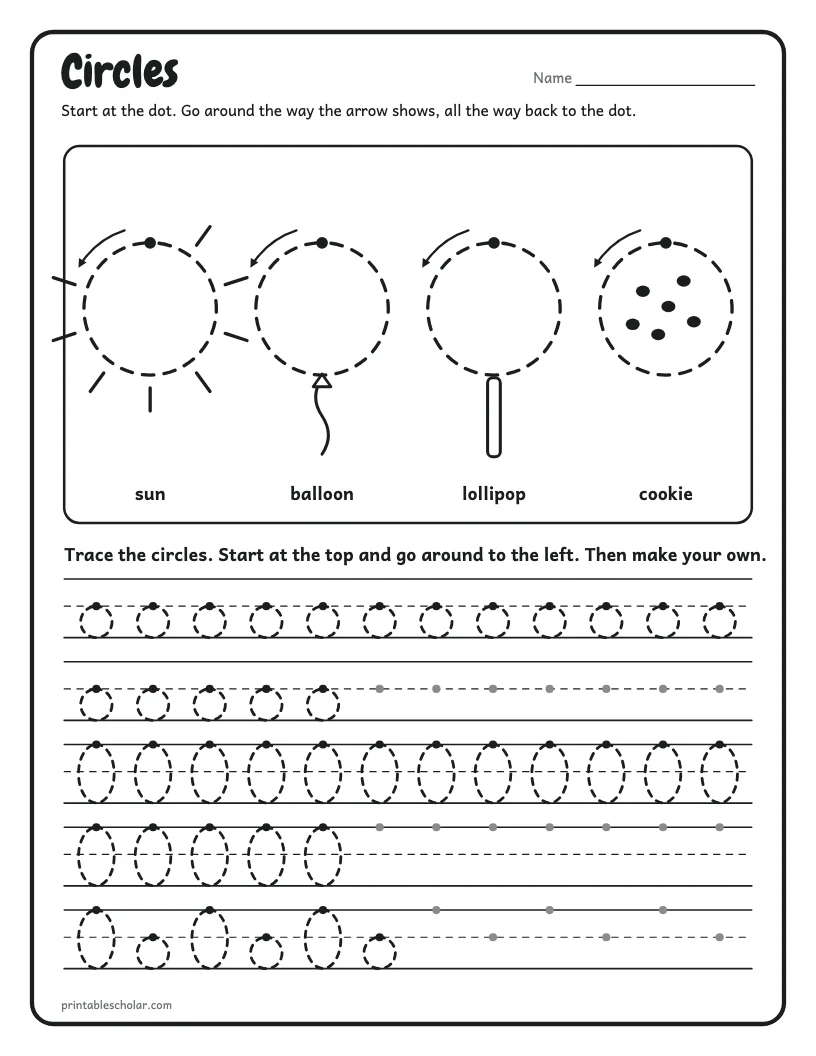
Tracing Circles

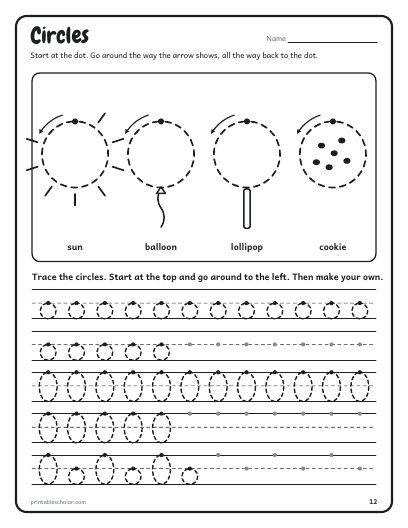
Go around from the top the way the arrow shows: rings, then ovals, then your own. The stroke for a, c, d, g, o and q.

Download PDF
Pencil Tracers worksheet preview Tracing lines

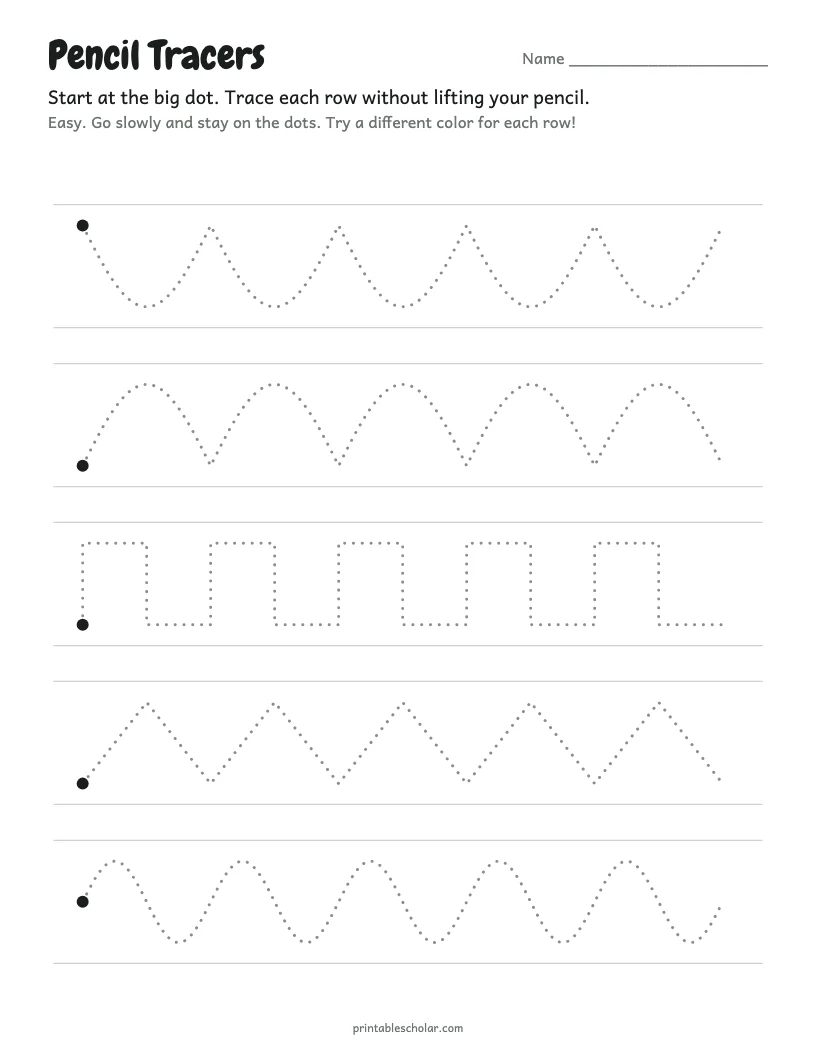
Pencil Tracers

Rows of dotted waves, zigzags, loops and bumps to trace from the big dot without lifting the pencil.

Download PDF
Pencil Tracers: Harder worksheet preview Tracing lines

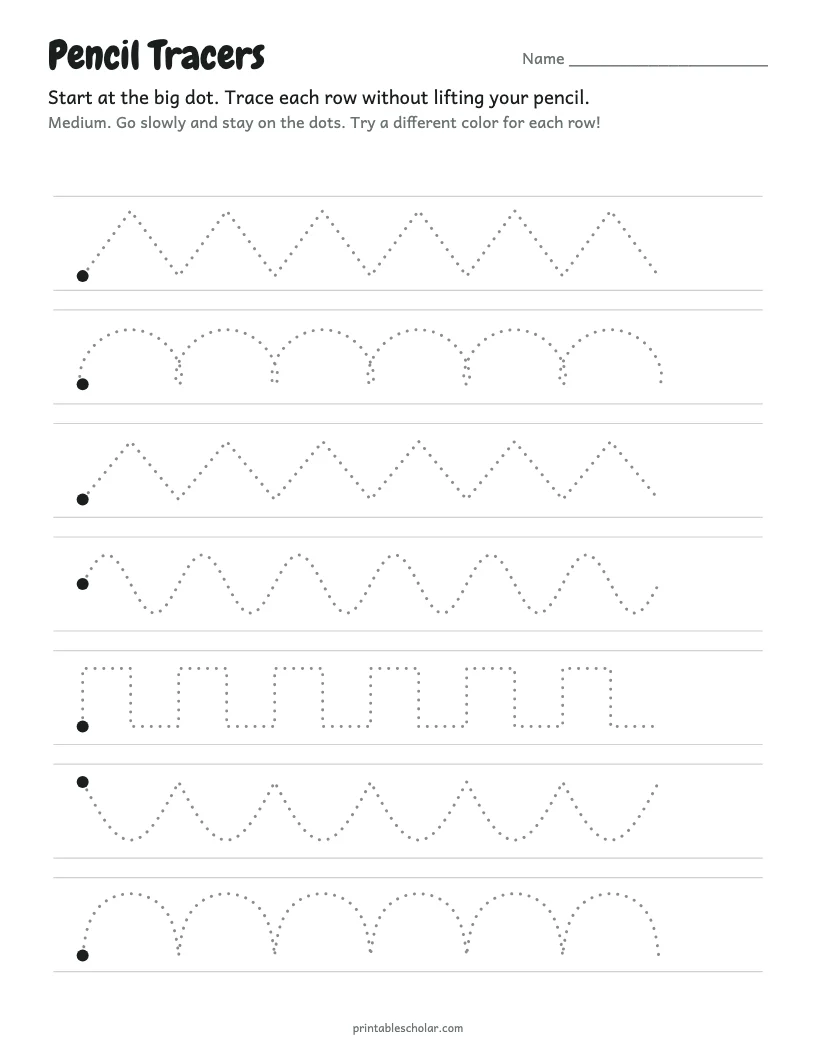
Pencil Tracers: Harder

More rows and tighter patterns, for a child who can already follow the easy rows.

Download PDF
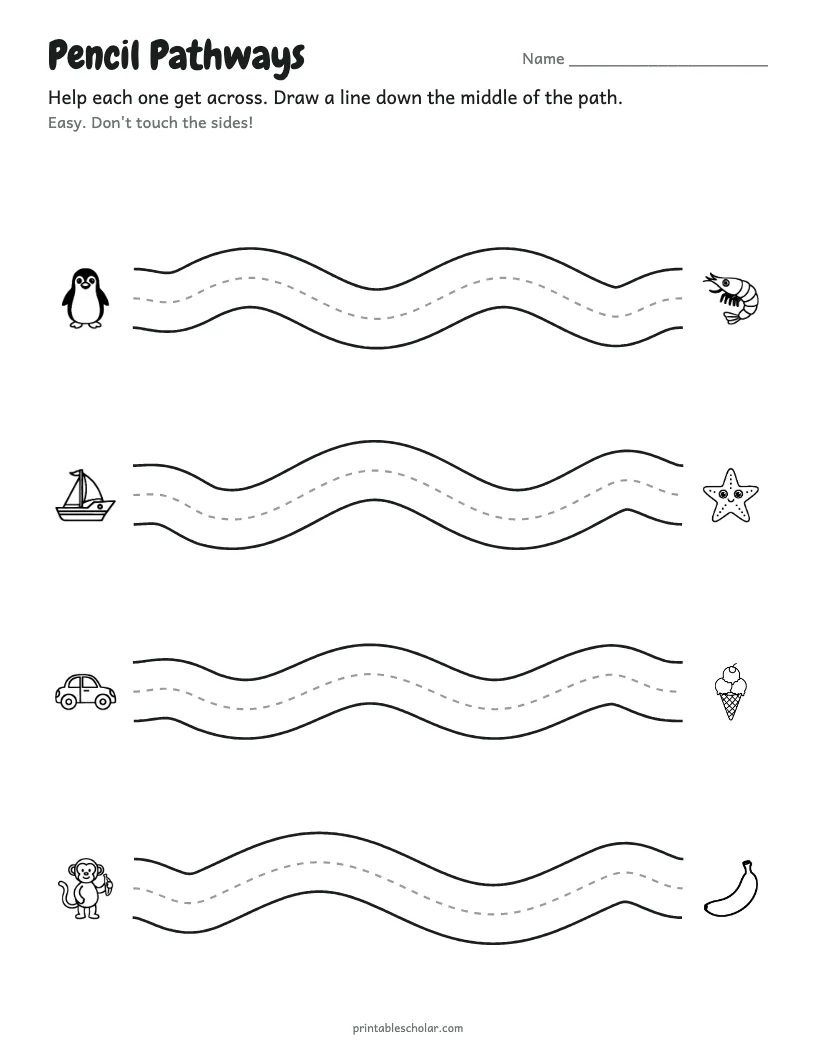
Pencil Pathways worksheet preview Tracing lines

Pencil Pathways

Draw a line down the middle of each wide, curvy lane to bring the animal its snack, without touching the sides.

Download PDF
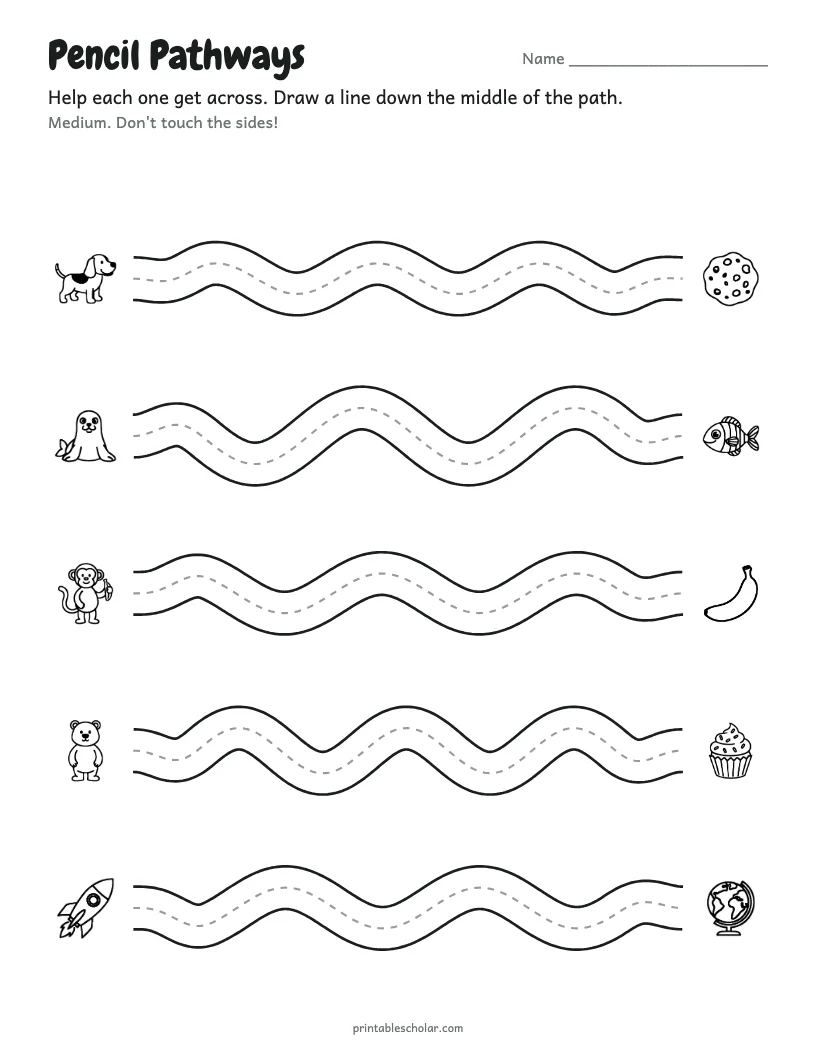
Pencil Pathways: Narrow worksheet preview Tracing lines

Pencil Pathways: Narrow

Narrower lanes with more bends. Stay inside the lines all the way across.

Download PDF
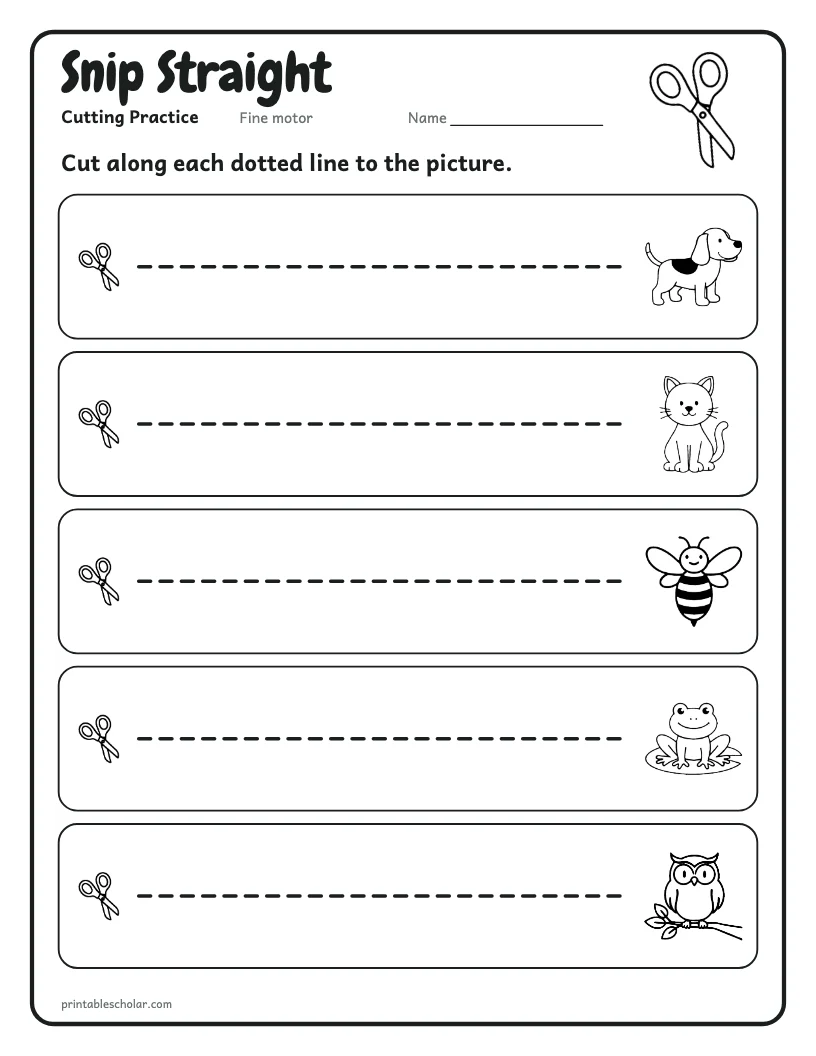
Cutting Practice: Straight Lines worksheet preview Cutting

Cutting Practice: Straight Lines

Five straight dotted lines from the scissors to a picture. The first cutting sheet for a child new to scissors.

Download PDF
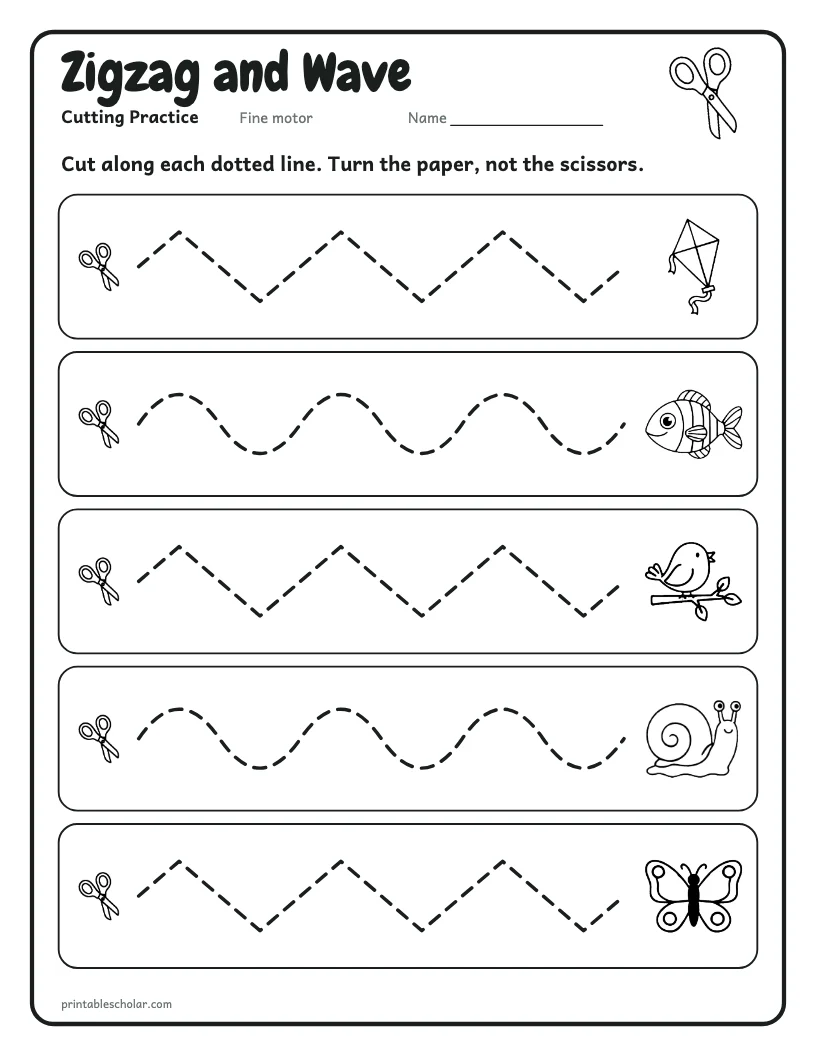
Cutting Practice: Zigzags and Waves worksheet preview Cutting

Cutting Practice: Zigzags and Waves

Zigzag and wavy lines to cut. The child turns the paper with the helper hand at each bend.

Download PDF
Cutting Practice: Mixed Lines worksheet preview Cutting

Cutting Practice: Mixed Lines

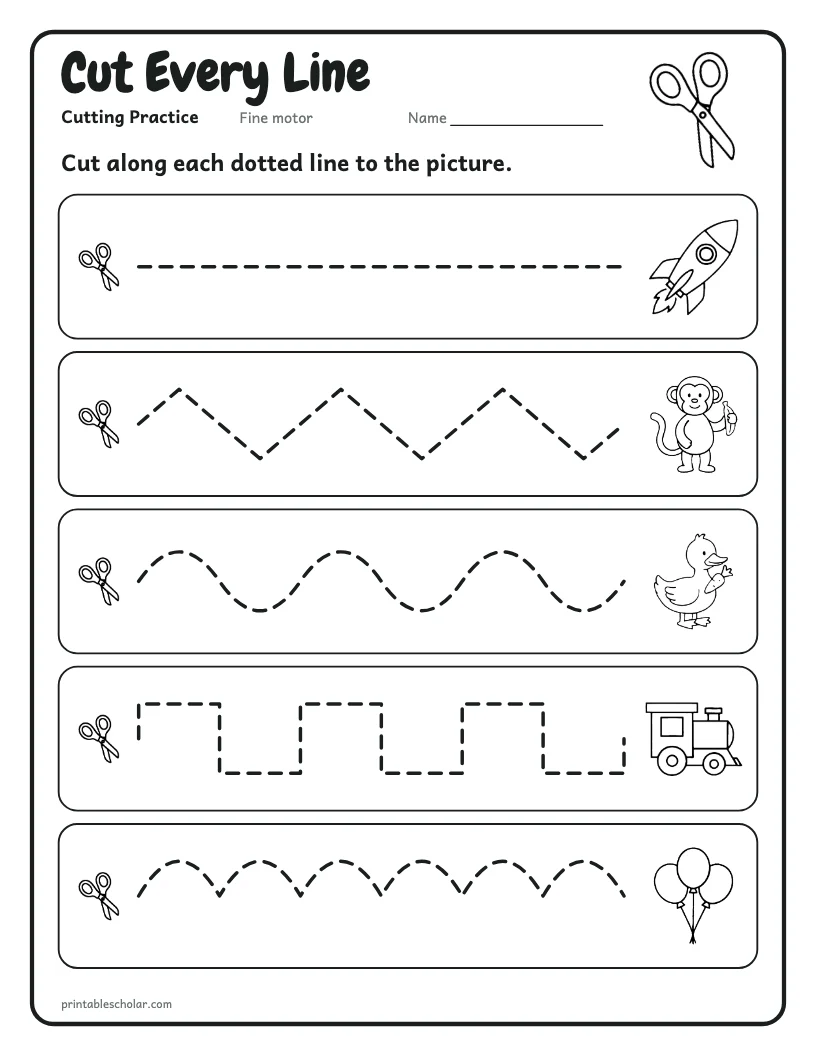
One of each: straight, zigzag, wave, steps and hills, the hardest cutting sheet in the set.

Download PDF
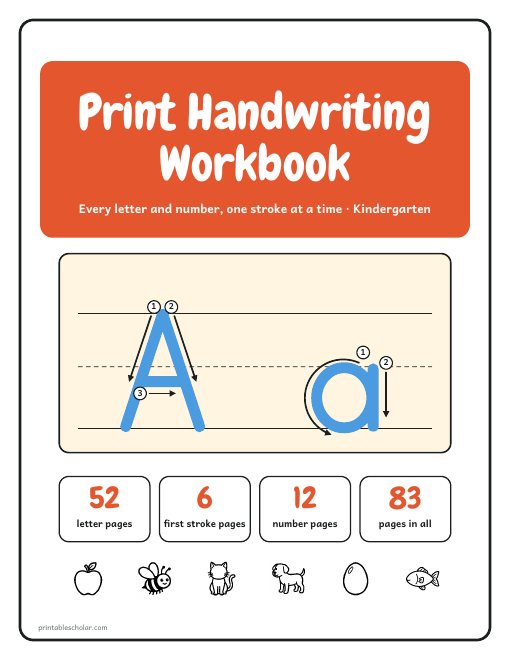
Print Handwriting Workbook cover
Full workbook · Kindergarten

From first strokes to every letter and number

Tracing Lines: Down and Tracing Circles above are pages from the workbook. The workbook starts with six first-strokes pages (lines down, lines across, slanted lines, humps and cups, circles, shapes), then uses those strokes to teach every letter and number.

  • Two pages for each of the 26 letters: stroke arrows and tracing rows, then picture words, a sentence and a letter hunt
  • Six first strokes pages: lines down, lines across, slanted lines, humps and cups, circles and shapes
  • Numbers 0 to 20, with a ten frame and the number word for 0 to 9
  • A formation chart for every letter and number, a letter tracker and a page for the grown-up
  • Review pages and a certificate for the last day
  • 83 pages in one PDF, black and white inside
Get the workbook for $7 One-time purchase. Instant download. Secure checkout by Stripe.
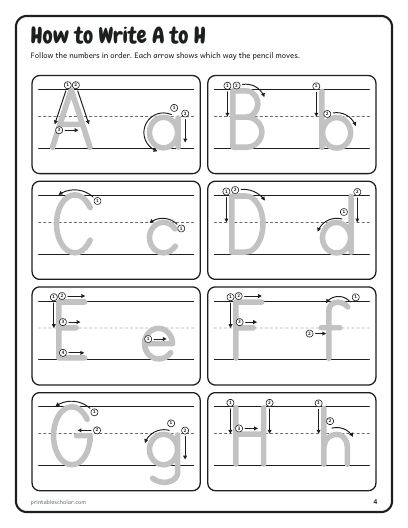
Formation chart: a sheet from the Print Handwriting Workbook
Formation chart
A first strokes page: a sheet from the Print Handwriting Workbook
A first strokes page
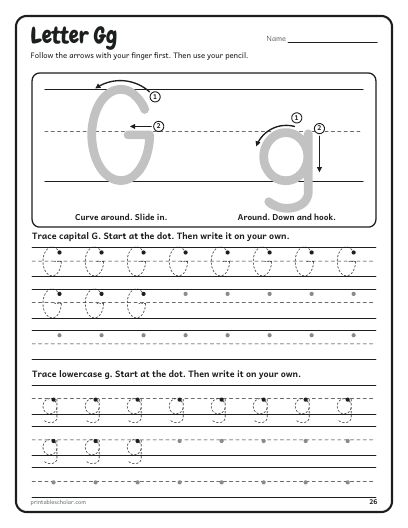
A letter page: a sheet from the Print Handwriting Workbook
A letter page
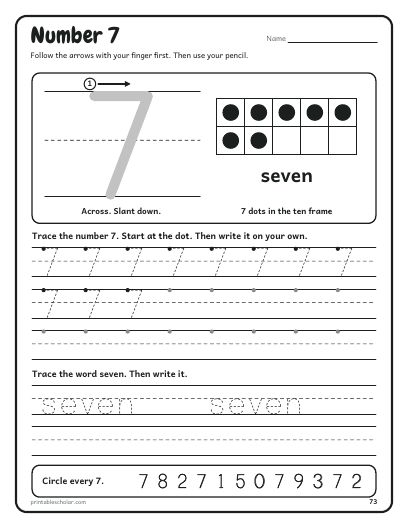
A number page: a sheet from the Print Handwriting Workbook
A number page
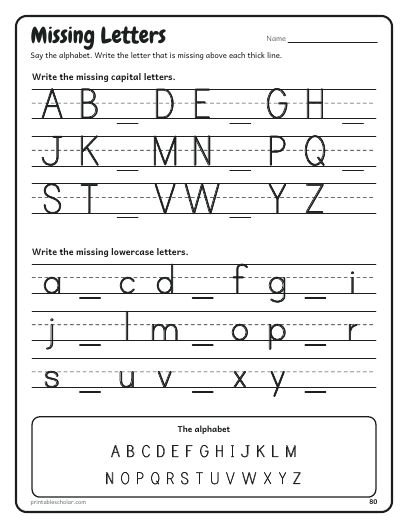
A review page: a sheet from the Print Handwriting Workbook
A review page

Get all 83 pages for $7

How to use the set

Mix one pencil sheet and one scissor sheet a day. Stop while the child still wants more.

  1. Step 1Big strokesStart with Tracing Lines: Down and Tracing Circles. Trace the big lines in the picture panel with a finger, then with a pencil from the dot.
  2. Step 2PatternsPencil Tracers: follow each dotted row from the big dot to the end without lifting the pencil. A different crayon for each row makes it a game.
  3. Step 3Stay insidePencil Pathways: draw one line down the middle of each lane. Wide lanes first, then the narrow sheet.
  4. Step 4ScissorsCut along the dotted lines, straight lines first. The thumb stays on top, and the helper hand turns the paper at each bend.

About these tracing lines and cutting practice worksheets

Before a child can write letters, the hand has to make a few strokes on purpose: a line down, a line across, a circle, a curve. Tracing lines practises those strokes on their own, with a dot to show where the pencil starts, so that when letters come the strokes are already there.

Cutting works the same small muscles of the hand. A child who can cut along a line can usually control a pencil better too. The cutting sheets start with straight lines and end with steps and hills, where the paper has to turn.

The two stroke pages come from the Print Handwriting Workbook, which teaches every letter with the same strokes. When the strokes are easy, move on to the letter formation worksheets and the number tracing worksheets. For alphabet rows and a generator, see the tracing worksheets; for scissor work with letters and pictures, see the cut and paste worksheets.

More for writing: letter formation worksheets (kindergarten), number tracing worksheets (kindergarten), draw and write worksheets (kindergarten), sentence writing worksheets (grades K–1), picture writing prompts (grades 1–2), handwriting practice worksheets (grades 1-2), topic sentence worksheets (grades 3–5), graphic organizers for planning, grammar worksheets, and the rest of the writing printables.

Frequently Asked Questions

What are pre-writing strokes?

They are the lines and shapes letters are made of: straight lines down and across, slanted lines, circles and curves, and crosses. Children practise them before writing letters, starting at a dot and going in one direction.

What age are these worksheets for?

About 3 to 5, preschool and kindergarten. The tracing sheets work as soon as a child can hold a crayon. The cutting sheets need child-safe scissors and a grown-up nearby.

How do I teach my child to cut with scissors?

Thumb on top, fingers underneath, and elbow close to the body. Open and close the scissors with the cutting hand while the other hand holds the paper and turns it. Start with straight lines and short snips before curves.

Should children use a pencil or a crayon?

Either. Thick crayons and short pencils are easier for small hands to grip. The dotted rows are drawn thick enough for a crayon.

Do these worksheets have answer keys?

No. There is nothing to mark right or wrong. Praise a steady line and a careful cut more than speed.