Free Handwriting Practice Worksheets
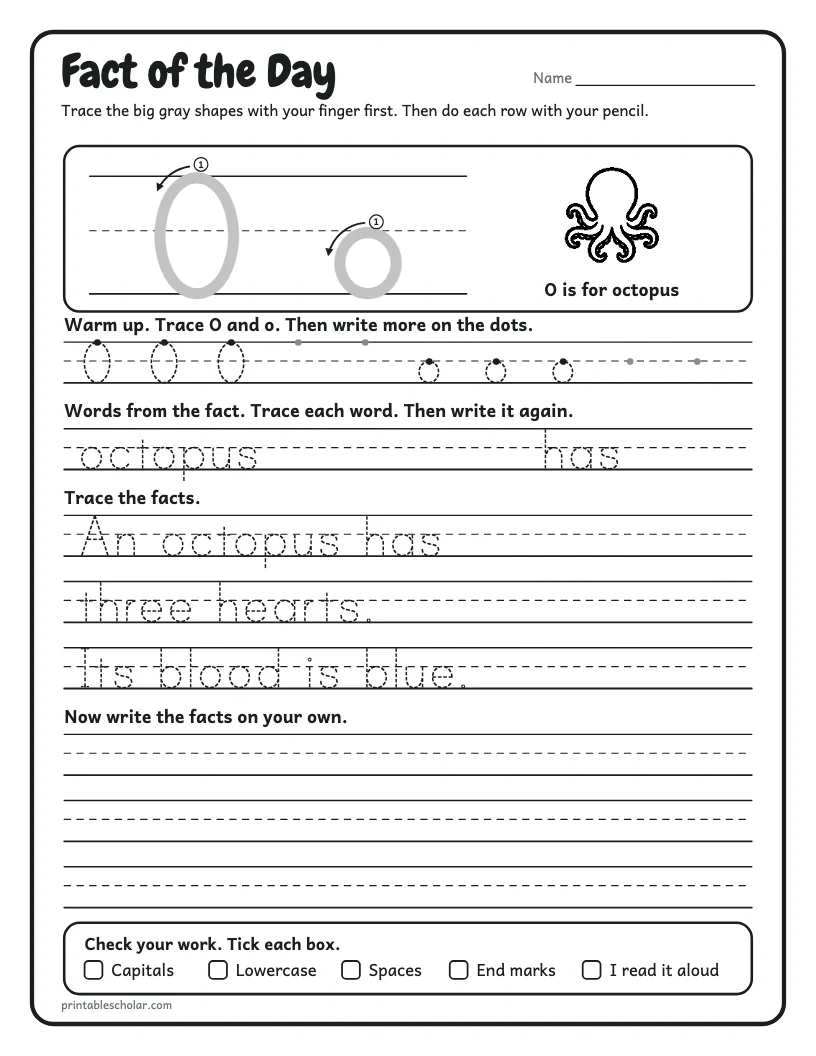
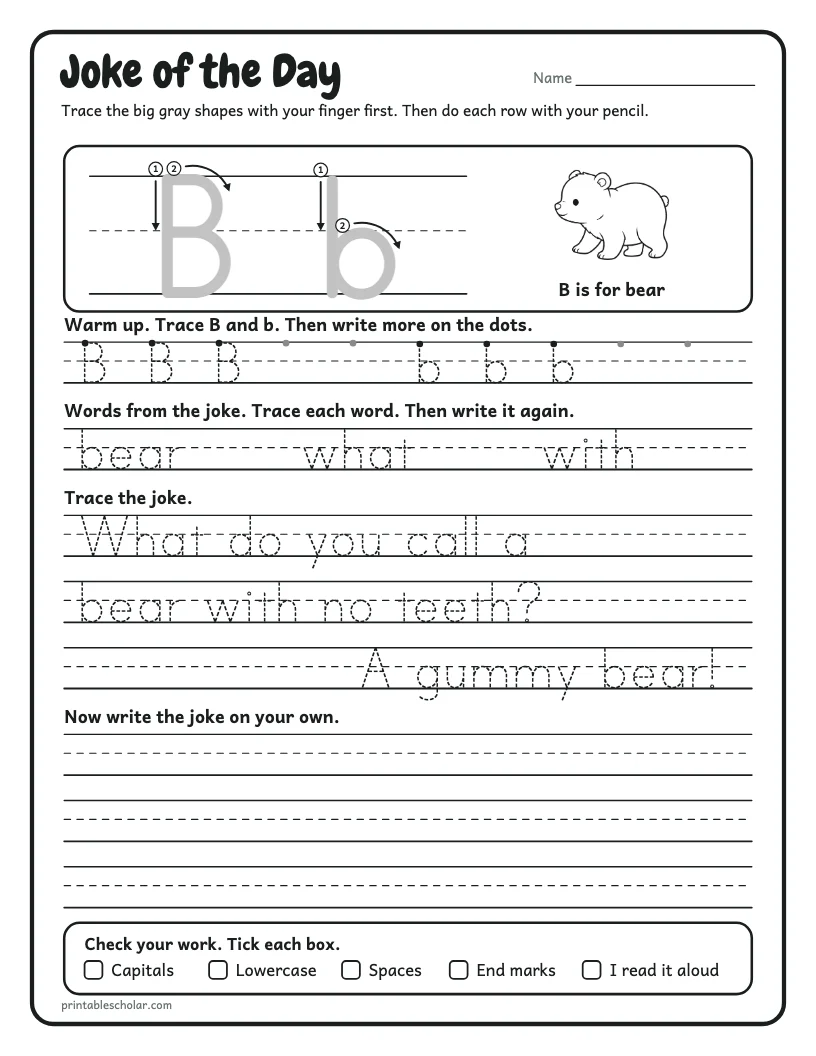
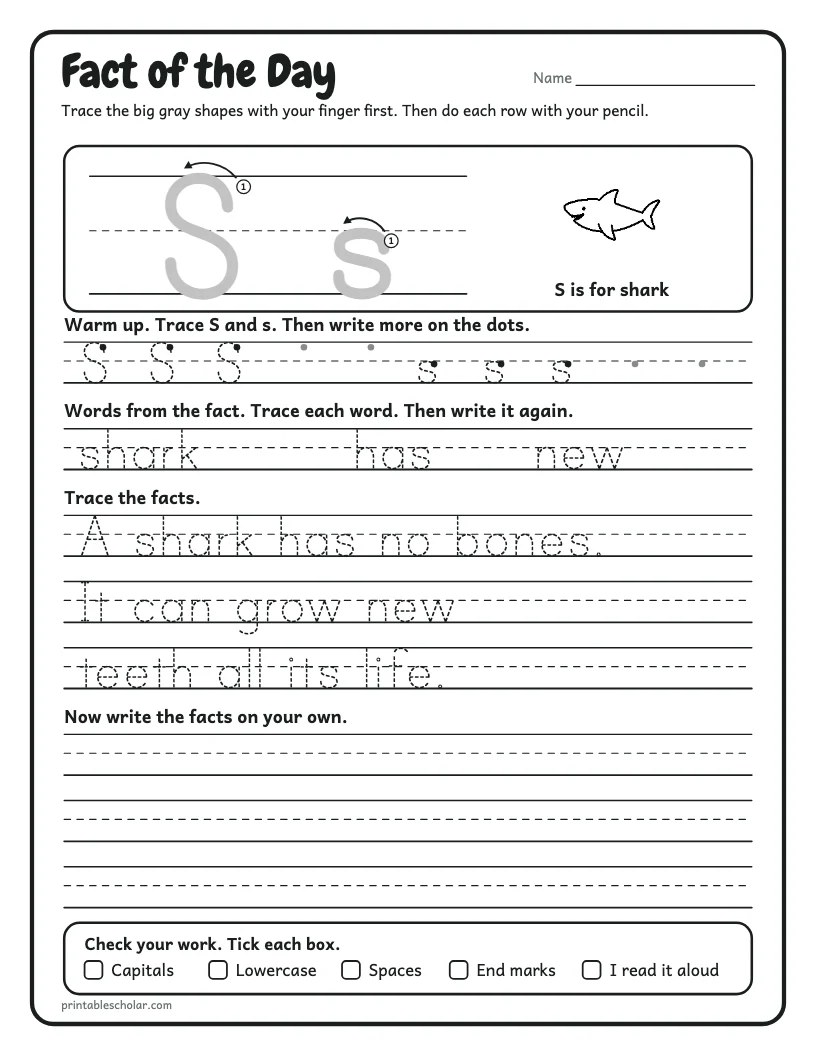
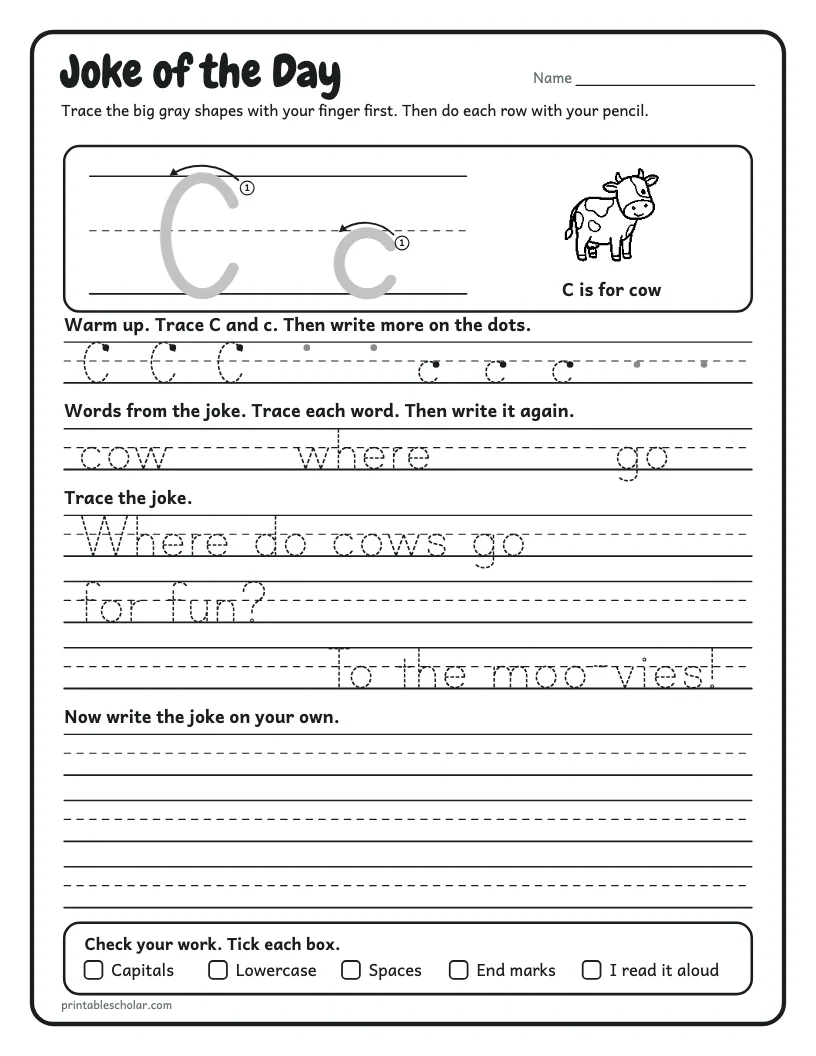
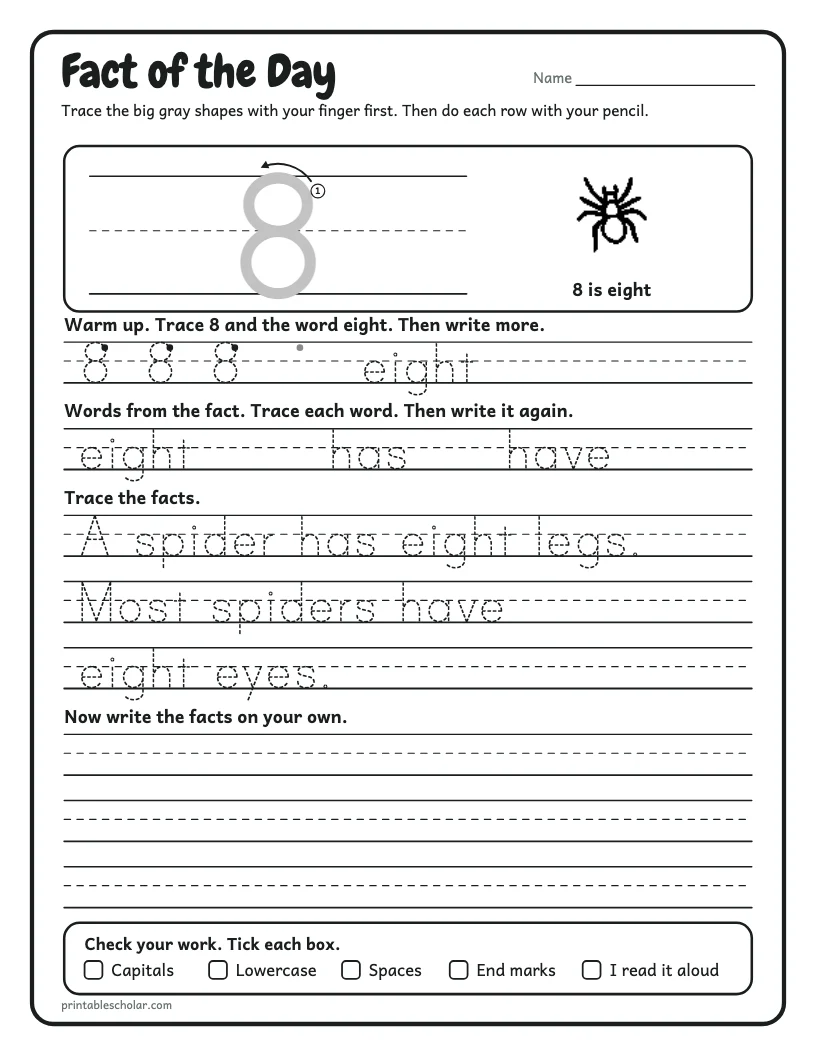
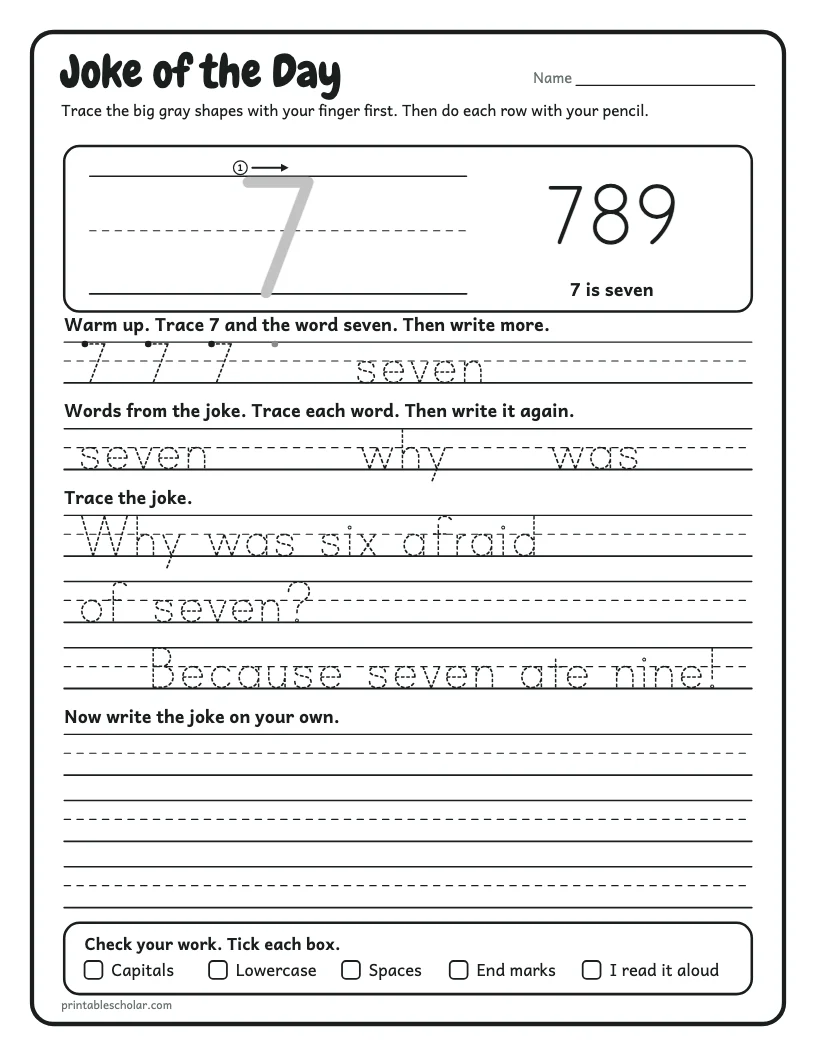
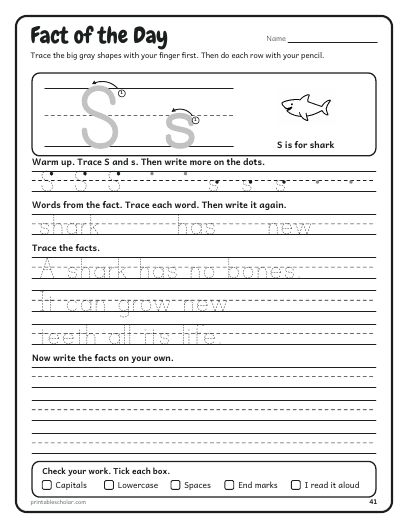
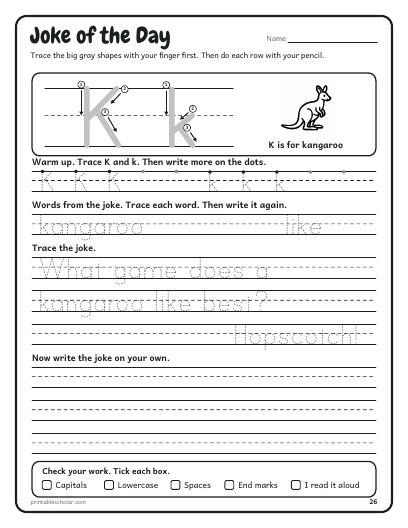
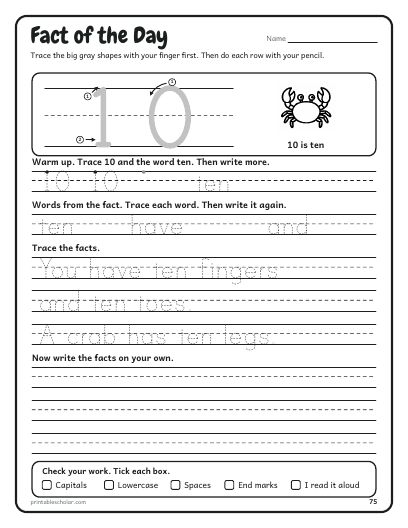
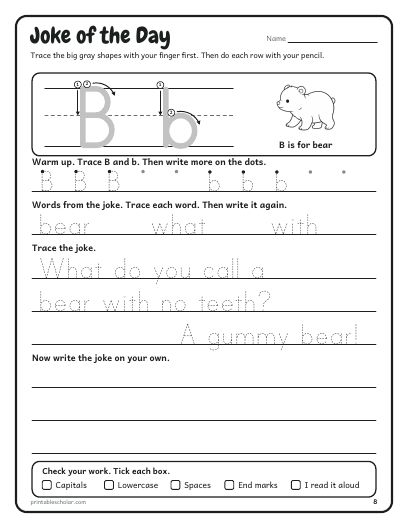
Handwriting practice for first and second grade, a page a day. Each page is built around a joke or a fun fact: the child warms up with the day’s letter or number, traces a few words, traces the joke or the fact, then copies it on empty rows. Six free pages, black and white.
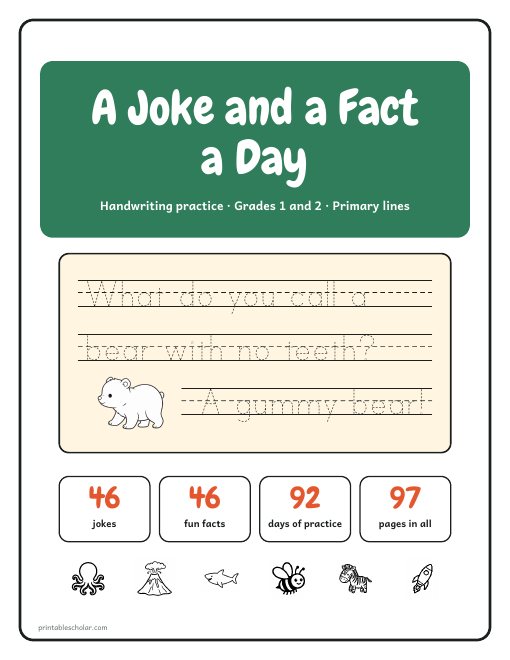
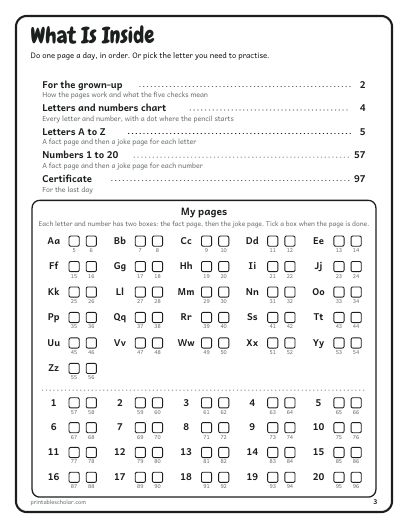
Want every letter and number? The full book has 97 pages for $7.
About these handwriting practice worksheets
By first grade most children know how each letter is made. What they need next is stamina for whole sentences: even letter size, spaces between words, a capital at the start and a mark at the end. Rows of single letters do not practise that, and children who know their letters find them babyish.
So each page here gives the child something worth writing. A fact page has two short facts (an octopus has three hearts, and its blood is blue). A joke page has a question and its punchline, set to the right so it lands. The day’s letter starts the subject: O is for octopus, B is for bear. Number pages use the number word in the sentence.
The rows are 7/16 inch with a top line, a dashed middle line and a bottom line, a step smaller than kindergarten rows. The check box at the bottom has the child look for capitals, lowercase letters, spaces and end marks, then read the writing aloud. For a child who is still learning the letters, start with the letter formation worksheets. For whole-alphabet sheets and a generator see the print handwriting worksheets.
More for writing: letter formation worksheets (kindergarten), draw and write worksheets (kindergarten), sentence writing worksheets (grades K–1), picture writing prompts (grades 1–2), topic sentence worksheets (grades 3–5), graphic organizers for planning, grammar worksheets, and the rest of the writing printables.
Frequently Asked Questions
What grade are these handwriting worksheets for?
First and second grade. They are for children who already know how to form the letters and are ready to write whole sentences. The rows are 7/16 inch, a step smaller than kindergarten rows.
How is this different from letter tracing?
Letter tracing teaches how each letter is made. These pages practise writing sentences: keeping letters the same size, leaving spaces between words, starting with a capital and ending with a period, question mark or exclamation mark.
How long does one page take?
About ten minutes. One page a day works well as morning work, at a writing centre or as homework.
Are the facts checked?
Yes. Every fact was checked against a source such as NASA, NOAA, the Smithsonian or Britannica. Words like “most” are there on purpose: most spiders have eight eyes, and a few kinds have six.
Is there a version on single lines?
The free pages are on primary lines, with a dashed middle line. The full book comes as two PDFs, one on primary lines and one on single lines for children who have moved on from the dashed line.
Do these worksheets have answer keys?
No. There is nothing to mark right or wrong. The child checks their own work with the five boxes at the bottom of the page.