Free 4th Grade Reading Comprehension Worksheets

Fiction and nonfiction passages of about 280 words for fourth graders, each with a question page and an answer key. 12 passages, sorted by skill.

Main Idea

Fourth grade texts are longer, and the main idea has to be put together from several paragraphs. These passages are about 280 words of nonfiction, and the questions ask students to find the main idea of the text and of single paragraphs, write supporting details, and spot the one detail that does not belong.

Start with the chart, then 4 free passages. 16 more in the Main Idea pack ($5) ·
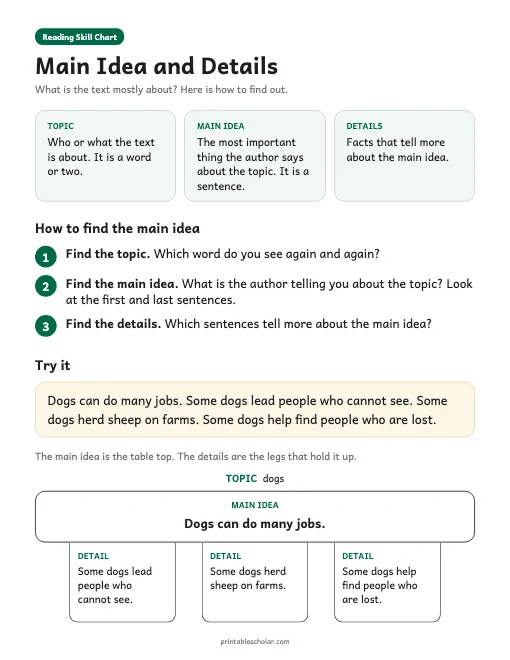
Main Idea and Details Chart printable preview

Main Idea and Details Chart

Start here

Topic, main idea and details on one page, with three steps and a worked example. Read it together first.

Download PDF
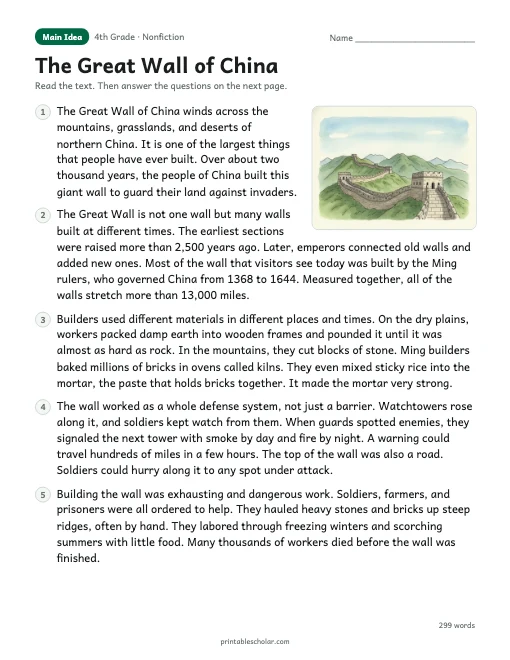
The Great Wall of China reading passageThe Great Wall of China comprehension questions

The Great Wall of China

Nonfiction

A nonfiction passage of 299 words with 6 questions. Answer key on page 3.

Download PDF
How Bats See With Sound reading passageHow Bats See With Sound comprehension questions

How Bats See With Sound

Nonfiction

A nonfiction passage of 284 words with 6 questions. Answer key on page 3.

Download PDF
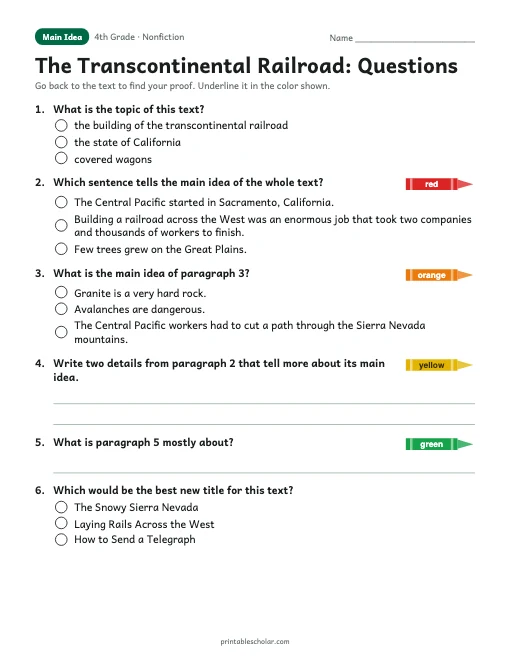
The Transcontinental Railroad reading passageThe Transcontinental Railroad comprehension questions

The Transcontinental Railroad

Nonfiction

A nonfiction passage of 298 words with 6 questions. Answer key on page 3.

Download PDF
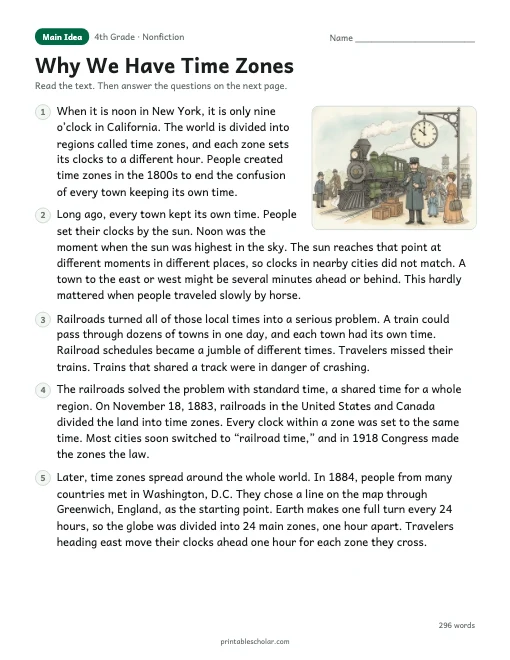
Why We Have Time Zones reading passageWhy We Have Time Zones comprehension questions

Why We Have Time Zones

Nonfiction

A nonfiction passage of 296 words with 6 questions. Answer key on page 3.

Download PDF
4th Grade Main Idea Reading Passages Pack cover

16 more passages in the Main Idea pack

Pack

20 passages, 2 tests, answer keys. 70 pages.

Or get it for $5

Inference

By 4th grade, authors stop telling readers everything. Each story below shows what is going on without saying it, and every question asks for an inference and the clue in the text that proves it. A guess without a clue is not an answer. New to inferring? Inference Pictures practice the same thinking with drawn scenes first.

Start with the chart, then 4 free passages. 16 more in the Inference pack ($5) ·
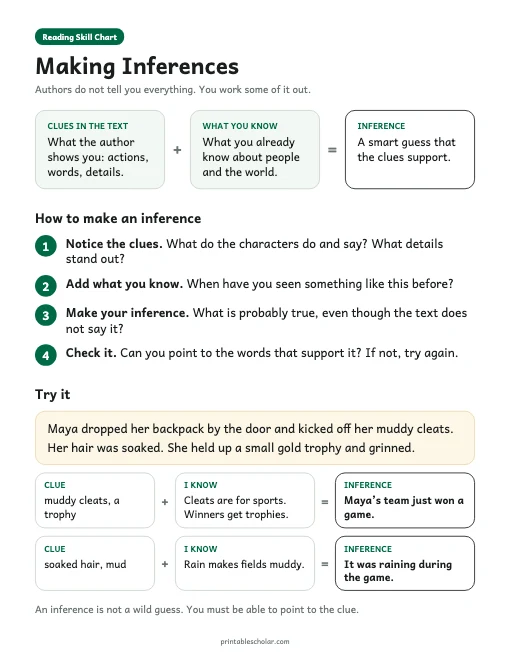
Making Inferences Chart printable preview

Making Inferences Chart

Start here

Clues plus what you know equals an inference: four steps and a worked example. Read it together first.

Download PDF
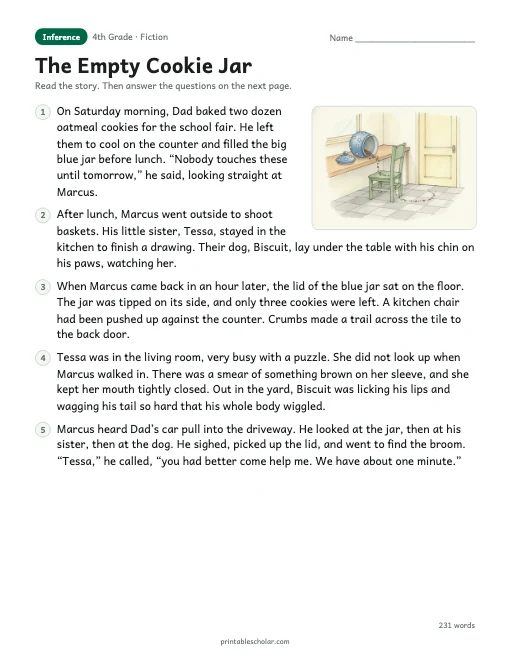
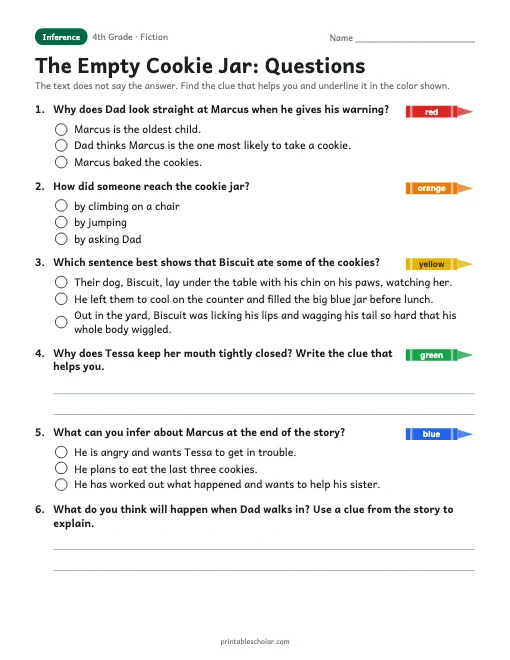
The Empty Cookie Jar reading passageThe Empty Cookie Jar comprehension questions

The Empty Cookie Jar

Fiction

A story of 231 words with 6 questions. Answer key on page 3.

Download PDF
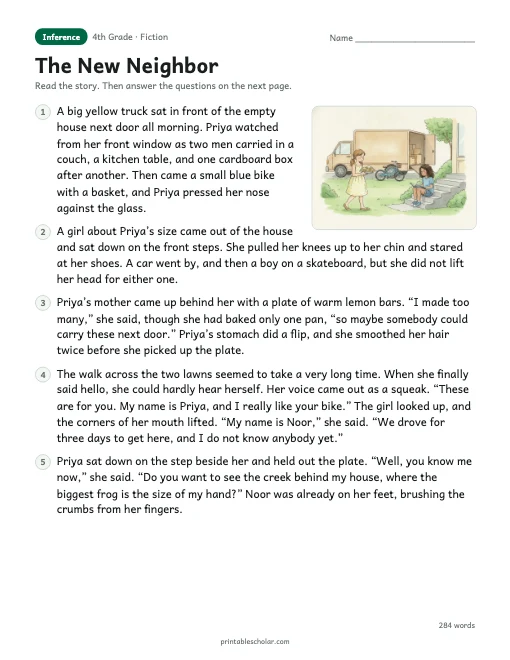
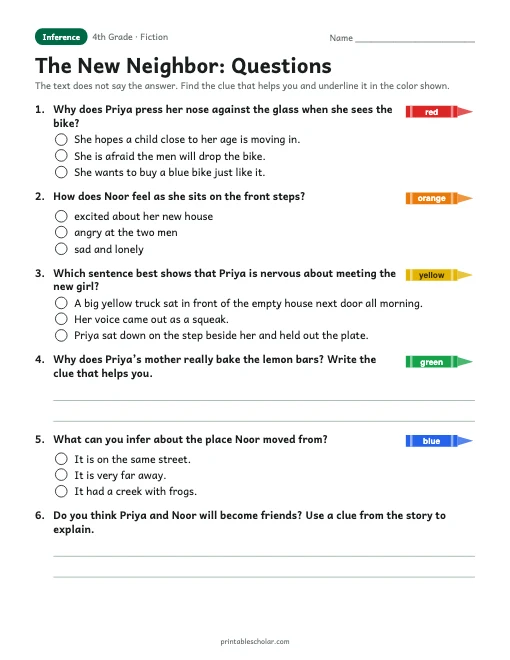
The New Neighbor reading passageThe New Neighbor comprehension questions

The New Neighbor

Fiction

A story of 284 words with 6 questions. Answer key on page 3.

Download PDF
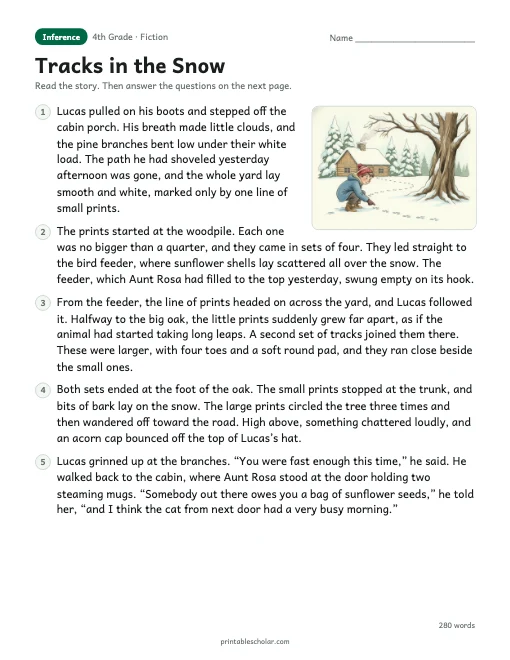
Tracks in the Snow reading passageTracks in the Snow comprehension questions

Tracks in the Snow

Fiction

A story of 280 words with 6 questions. Answer key on page 3.

Download PDF
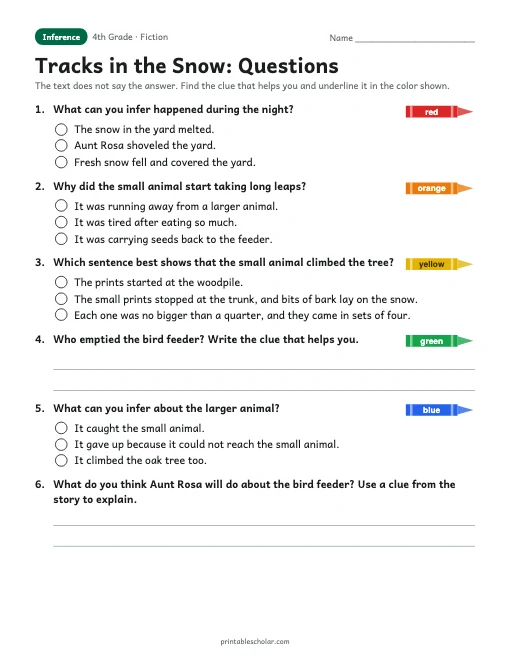
The Quiet Classroom reading passageThe Quiet Classroom comprehension questions

The Quiet Classroom

Fiction

A story of 268 words with 6 questions. Answer key on page 3.

Download PDF
4th Grade Inference Reading Passages Pack cover

16 more passages in the Inference pack

Pack

20 passages, 2 tests, answer keys. 70 pages.

Or get it for $5

Figurative Language

Fourth graders meet similes, metaphors and idioms in nearly everything they read. Each story below has at least three kinds in bold, in context, and the questions ask what each phrase really means and which kind it is. The last question has students write one of their own.

Start with the chart, then 4 free passages. 16 more in the Figurative Language pack ($5) ·

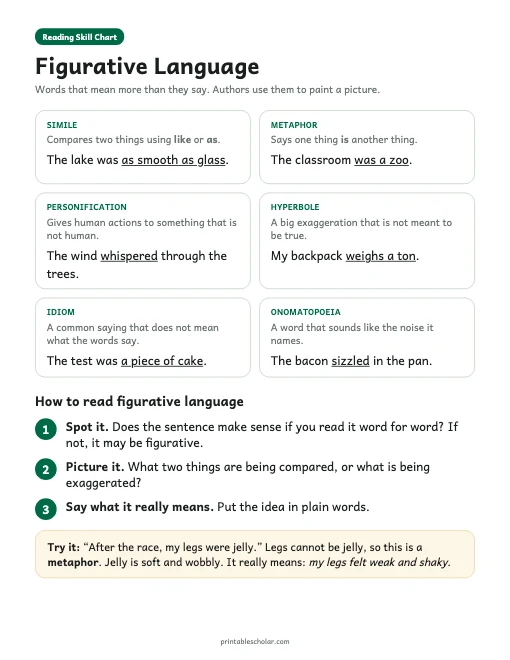
Figurative Language Chart printable preview

Figurative Language Chart

Start here

Simile, metaphor, personification, hyperbole, idiom and onomatopoeia, each with a definition and an example.

Download PDF
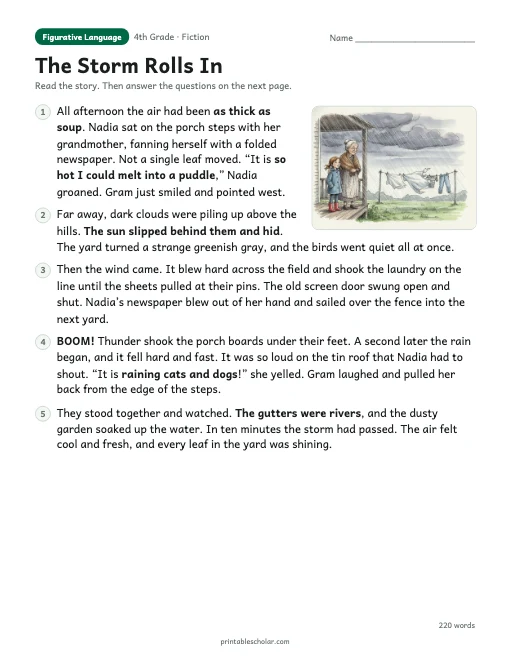
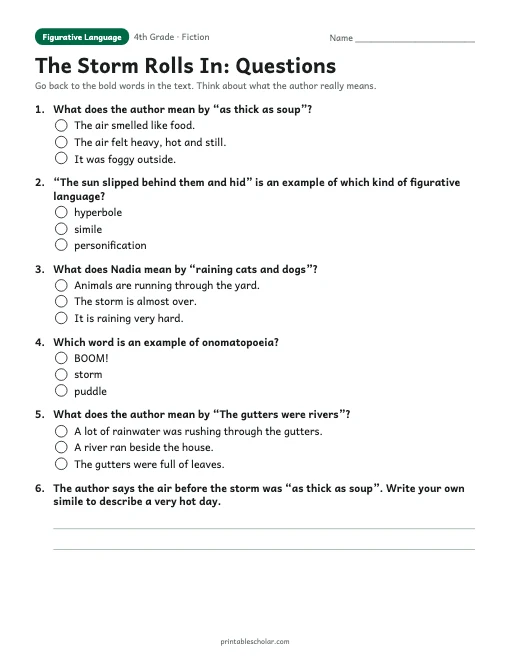
The Storm Rolls In reading passageThe Storm Rolls In comprehension questions

The Storm Rolls In

Fiction

A story of 220 words with 6 questions. Answer key on page 3.

Download PDF
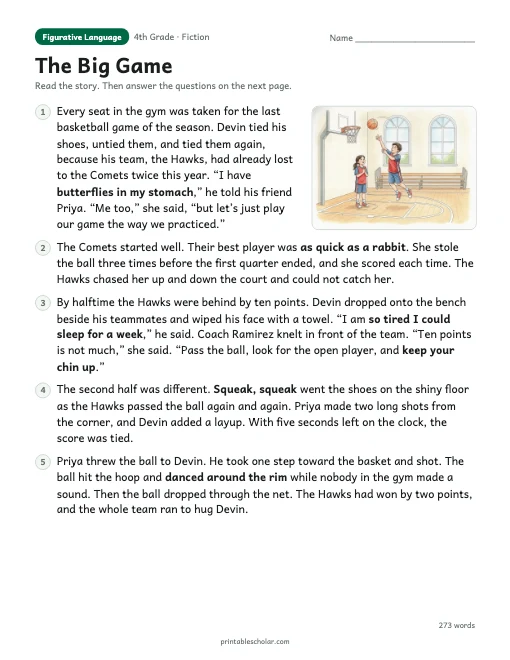
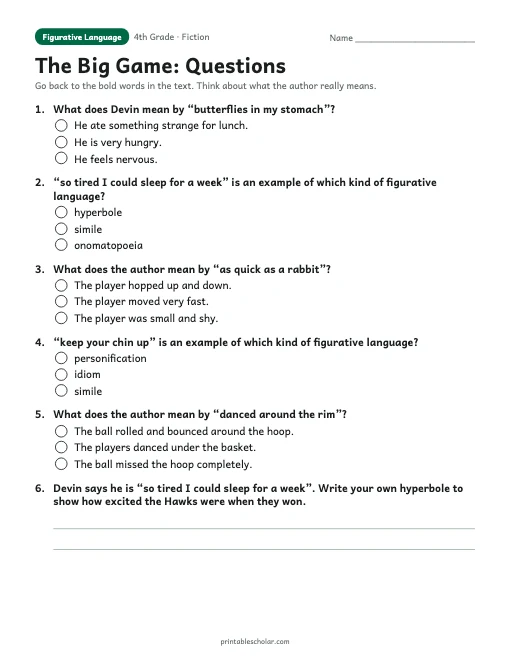
The Big Game reading passageThe Big Game comprehension questions

The Big Game

Fiction

A story of 273 words with 6 questions. Answer key on page 3.

Download PDF
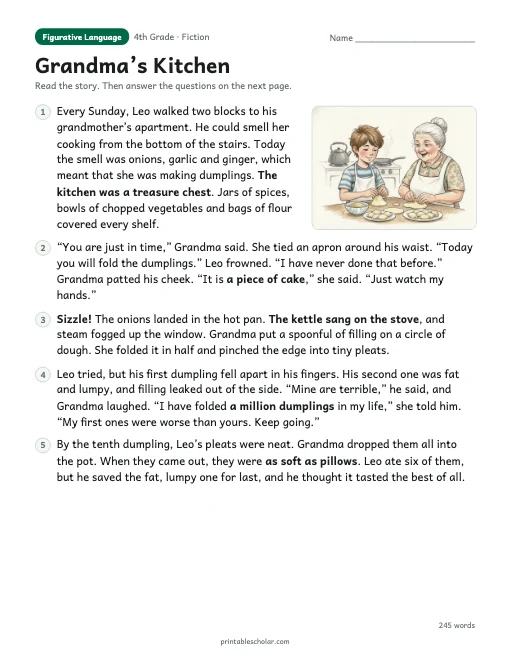
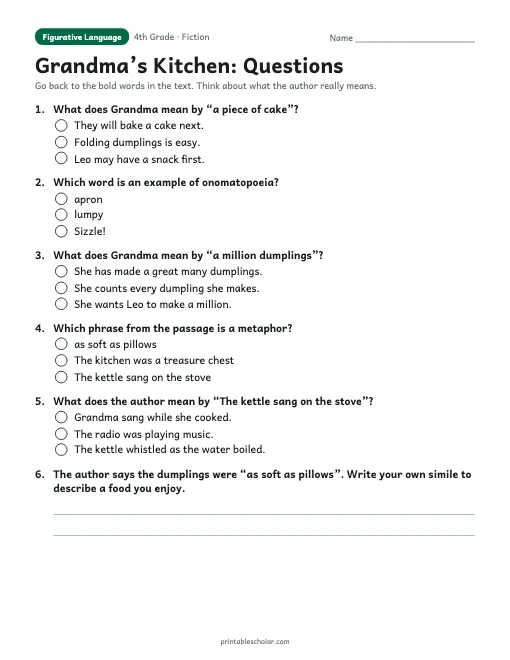
Grandma’s Kitchen reading passageGrandma’s Kitchen comprehension questions

Grandma’s Kitchen

Fiction

A story of 245 words with 6 questions. Answer key on page 3.

Download PDF
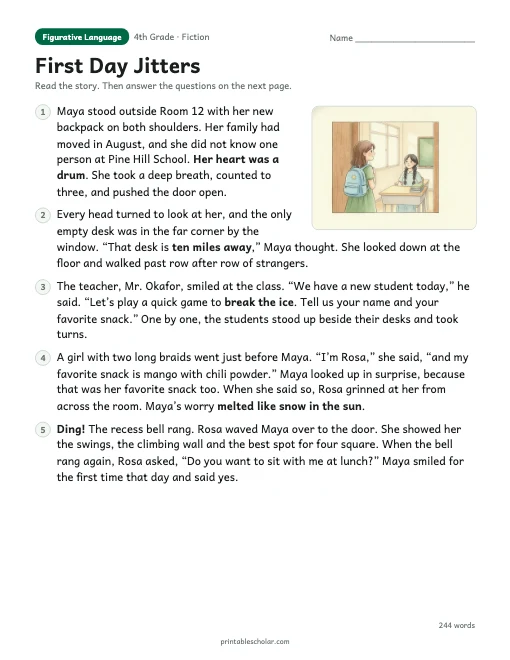
First Day Jitters reading passageFirst Day Jitters comprehension questions

First Day Jitters

Fiction

A story of 244 words with 6 questions. Answer key on page 3.

Download PDF
4th Grade Figurative Language Reading Passages Pack cover

16 more passages in the Figurative Language pack

Pack

20 passages, 2 tests, answer keys. 70 pages.

Or get it for $5

4th Grade Main Idea Reading Passages Pack cover4th Grade Inference Reading Passages Pack cover4th Grade Figurative Language Reading Passages Pack cover
Complete pack

Get the Complete 4th Grade Reading Comprehension Pack

All 3 skill packs together: the 12 free passages on this site, plus 48 more that are only in the packs.

Get all 3 packs for $10

Or one skill for $5: Main Idea · Inference · Figurative Language

Look inside:
One-time purchase. Instant download. Secure checkout by Stripe.

Reading comprehension in 4th grade

Fourth graders read longer texts and are asked to think past what the words say. These passages are about 280 words on one page, with six questions that send the student back to the text for evidence.

Each passage practices one skill: finding the main idea and its supporting details, making an inference from clues, or working out what figurative language really means. The stories are about school, family and friends; the nonfiction covers science, history and geography.

Frequently Asked Questions

How long are the 4th grade passages?
About 220 to 300 words, in four numbered paragraphs with one picture. Most children read one in a few minutes.
What comes with each passage?
A question page and an answer key. Each PDF is three pages: the passage, four to six questions, and a key that shows the answer and where to find it in the text.
What are the crayons next to the questions for?
They ask for proof. The child underlines the sentence in the passage that shows the answer, using the crayon color printed beside the question.