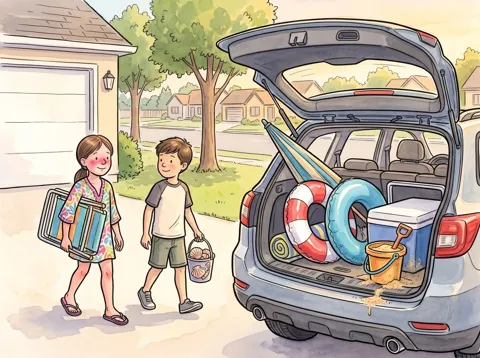
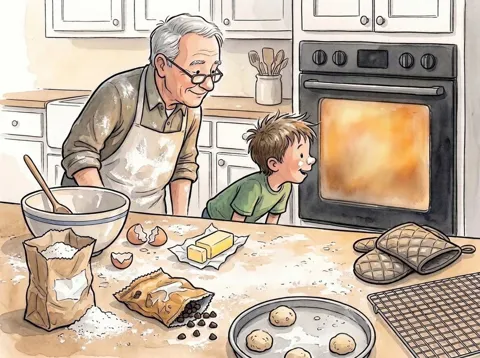
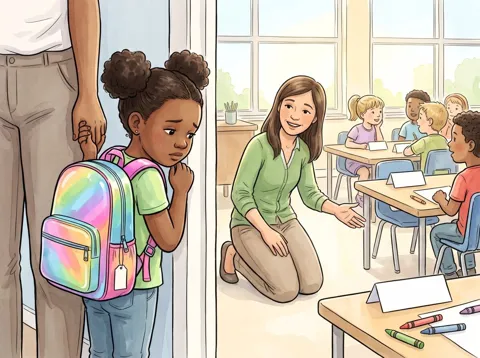
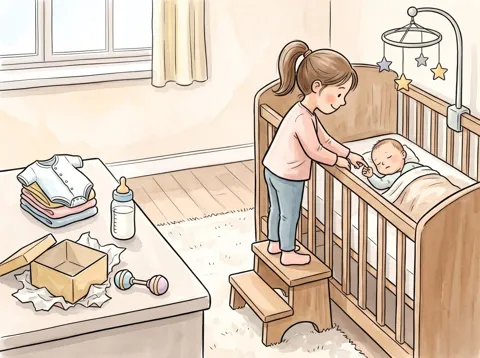
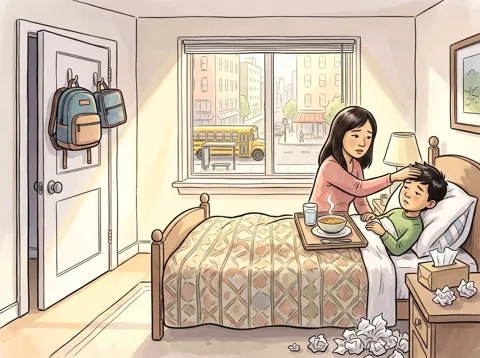
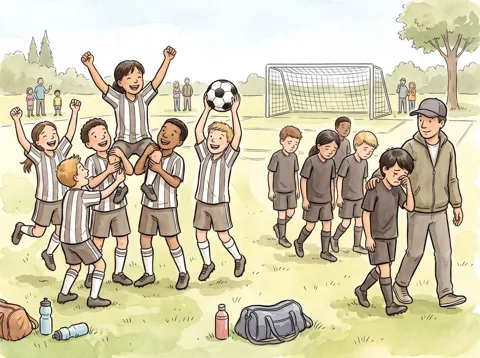
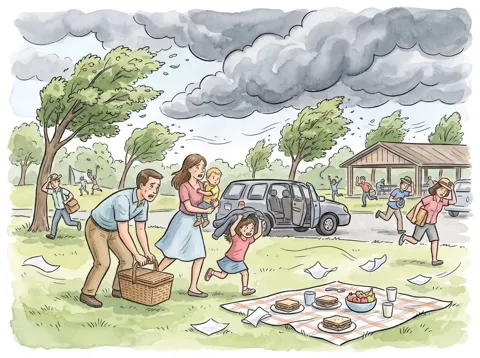
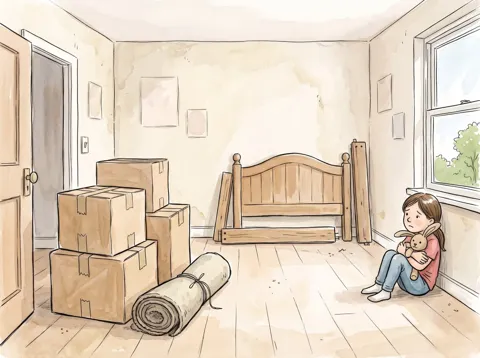
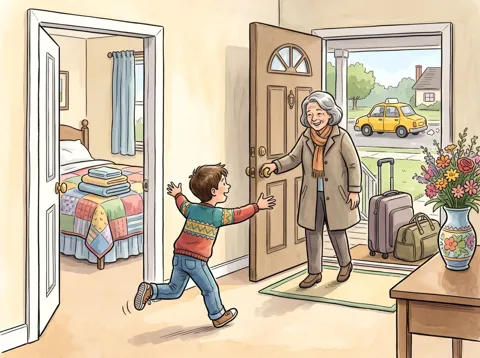
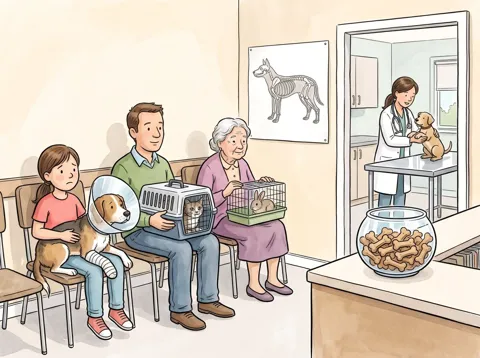
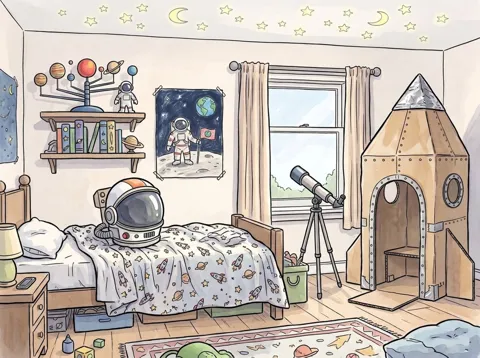
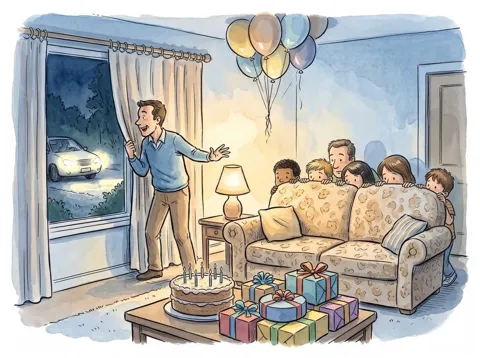
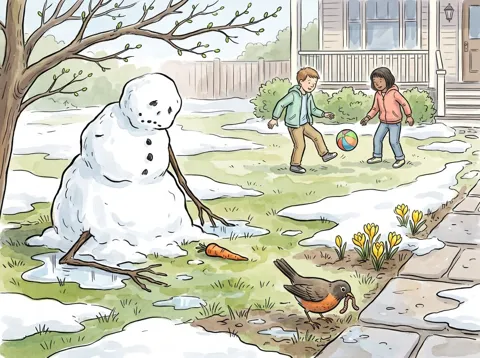
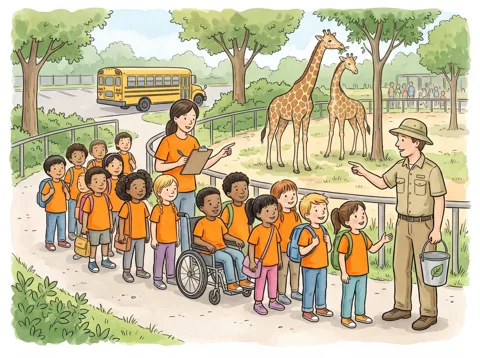
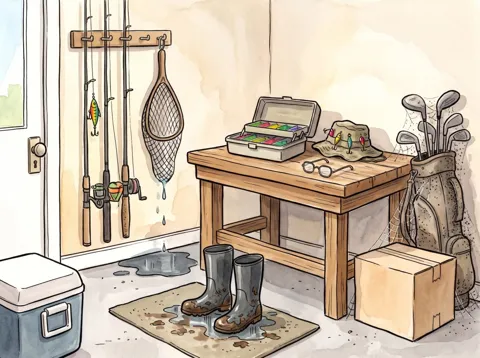
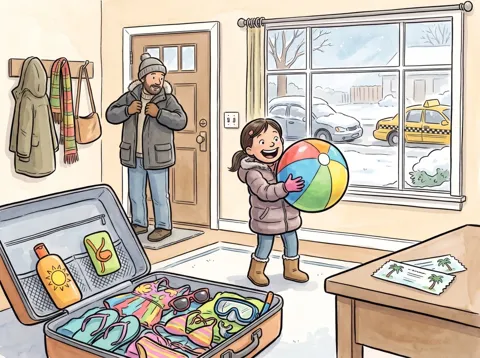
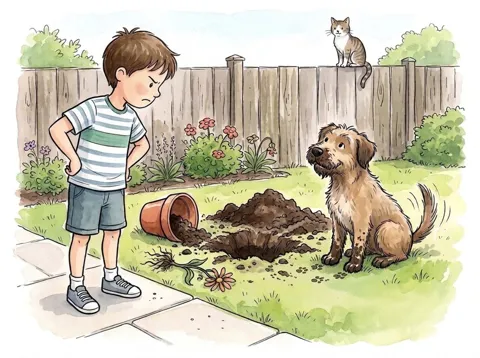
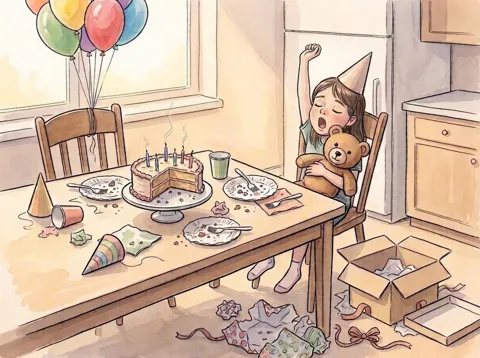
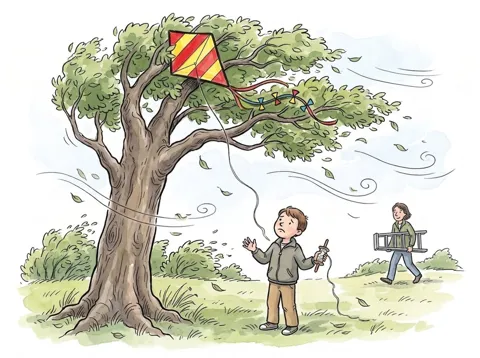
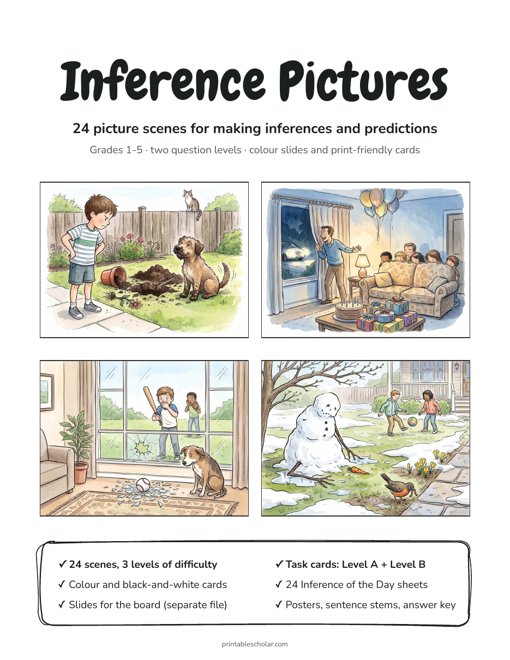
24 drawn scenes, each built around clues. Kids look closely, find the clues and work out what the picture doesn't show: who dug the hole, why the family is rushing, what season is coming.
Two question levels on every picture, color slides for the board and black-and-white sheets for the copier.
24 scenes in three steps: one clue, clues together, and red herrings
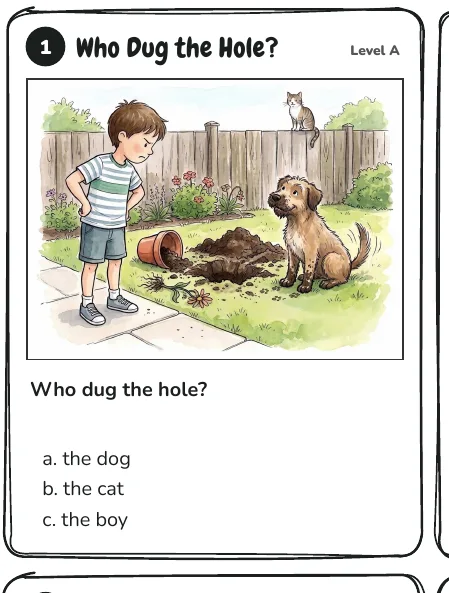
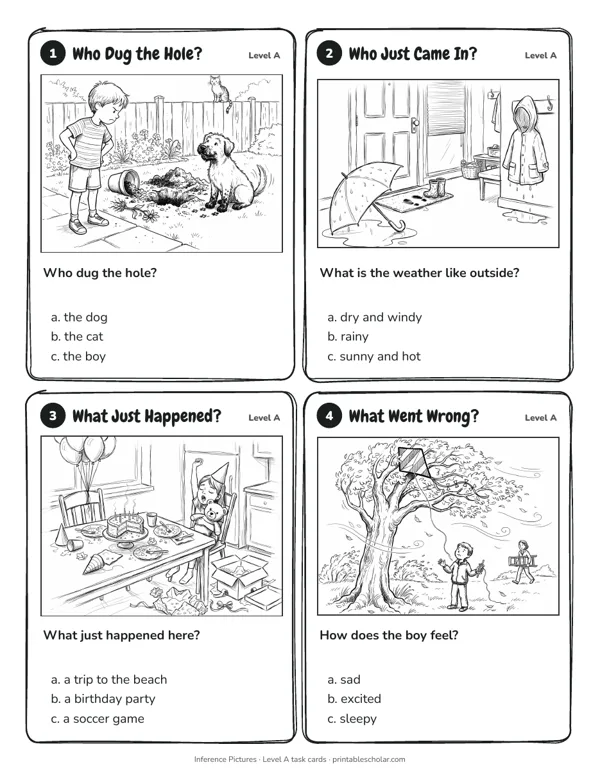
Task cards for Level A (grades 1-2) and Level B (grades 3-5), in color and black and white
Slides for the board: the picture alone, then the picture with the questions
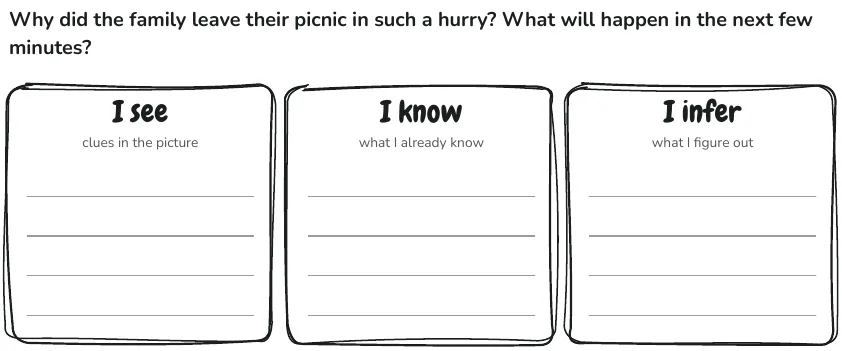
24 Inference of the Day sheets with a predict box
Two posters, sentence stems, recording sheets, teacher notes and a full answer key
68-page PDF (US Letter and A4) + 49 slides
Get the set for $7One-time purchase. Instant download. Secure checkout by Stripe.
SlidesLevel B cardsBlack and whiteRecording sheetPosterAnswer key
All 24 scenes
From one-step clues to scenes where one clue points the wrong way.
Scenes 1-8One clue leads the way
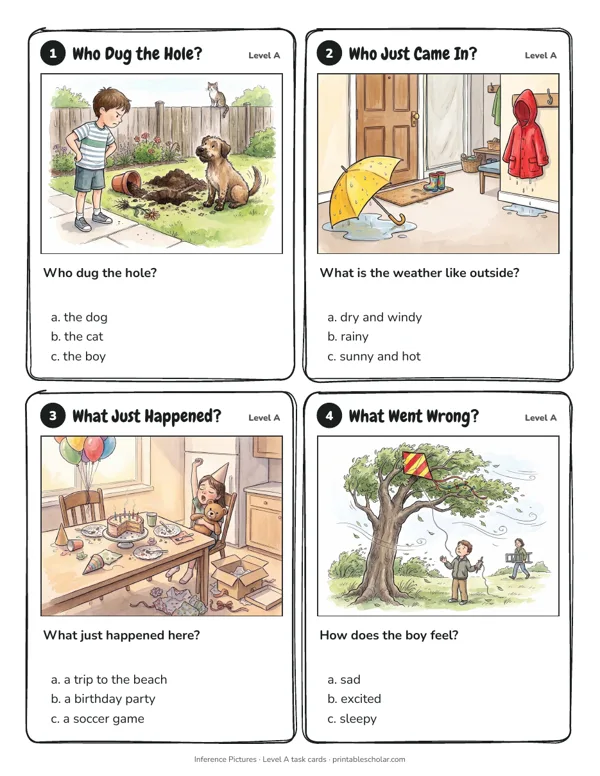
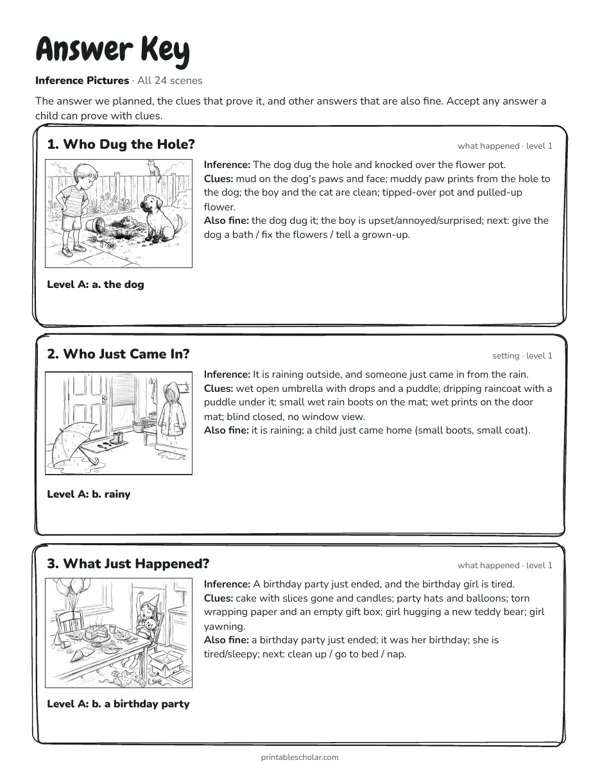
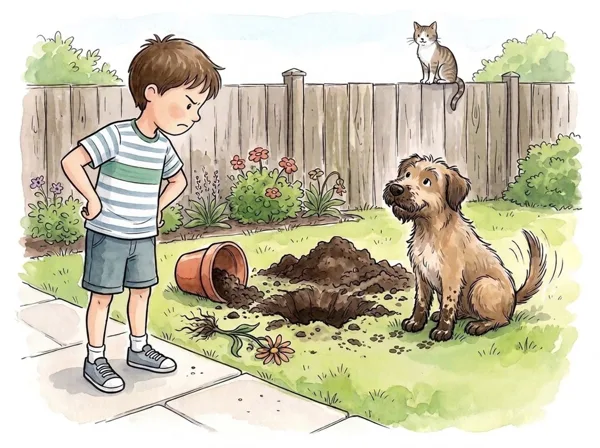
1. Who Dug the Hole?what happened2. Who Just Came In?setting3. What Just Happened?what happened4. What Went Wrong?feelings5. Where Have They Been?setting6. What Are They Making?what is happening7. Ready for School?feelings8. Who Is This?relationships
Scenes 9-16Put clues together
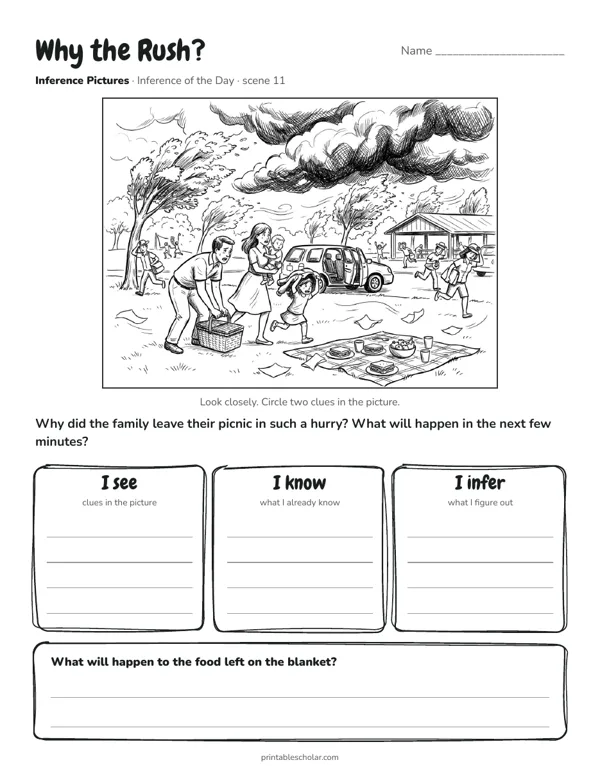
9. Why Is He Home?what is happening10. Who Won?what happened11. Why the Rush?prediction12. What Is Happening Here?feelings13. Who Just Arrived?relationships14. Where Are They?setting15. Whose Room Is This?character16. What Is About to Happen?prediction
Scenes 17-24Watch for a red herring
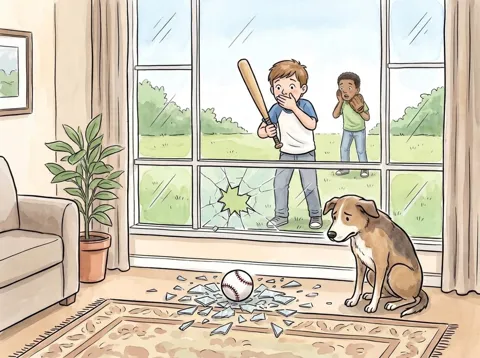
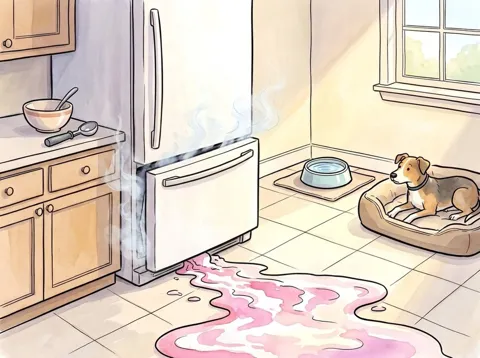
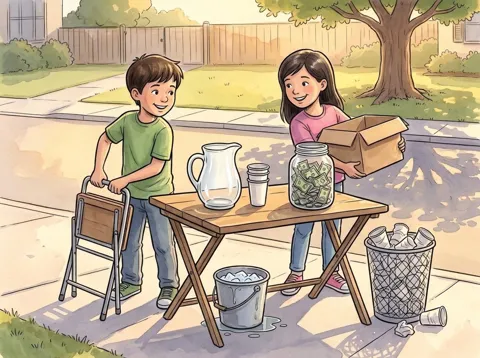
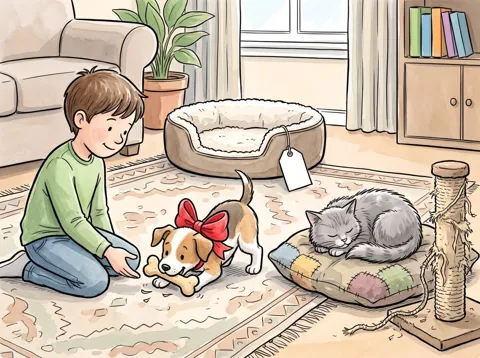
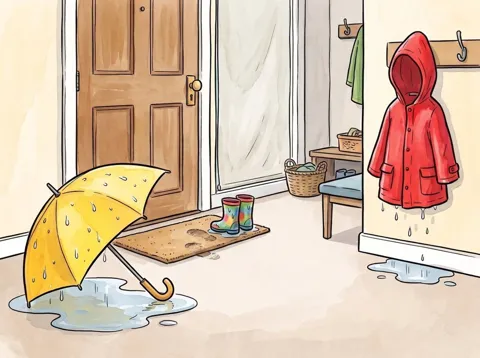
17. Who Broke the Window?what happened18. What Made the Puddle?cause and effect19. Spilled or Sold?what happened20. Which Pet Is New?what happened21. What Season Is Coming?setting22. Who Is in Charge?relationships23. Whose Garage Is This?character24. Where Are They Going?setting
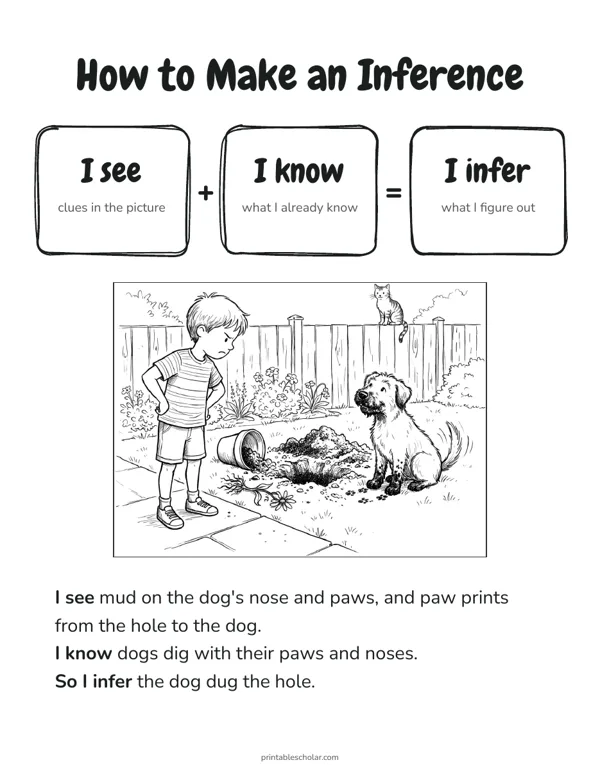
To make an inference is to work out something that isn't shown or said, using clues plus what you already know. Pictures are the easiest place to start: there is nothing to decode, so every child in the class can join in, and the habit of naming the clue carries straight over to reading.
Each scene was planned clue by clue before it was drawn, so there is one answer a child can prove. The answer itself is never in the picture. Later scenes add a red herring, an obvious suspect that another clue rules out, which is where older students have to slow down and check their thinking.
Frequently Asked Questions
What are inference pictures?
Pictures that hold clues to something the picture does not show. Kids look closely, find the clues and work out the answer, like who dug the hole or what season is coming. It is the same skill as inferring from a story, without the reading load, so it is a good way to teach inference before moving to text.
What grades are they for?
Grades 1 to 5. Every scene has two questions: Level A (grades 1 and 2) has three choices and asks for one clue, and Level B (grades 3 to 5) asks for a written answer with the clues that prove it. The scenes also get harder, from one-step clues to scenes with a red herring.
What is the difference between an observation and an inference?
An observation is something you can see in the picture: the dog has mud on its nose. An inference is something you work out from what you see plus what you already know: the dog dug the hole. The pictures never show the answer itself, so kids have to infer it.
Are the pictures in color or black and white?
Both. Color pictures for the board and color task cards, and black-and-white versions of the cards and the daily sheets that print well on a school copier.
What is in the free sample?
Four complete scenes: the How to Make an Inference poster, task cards for both levels in color and black and white, four Inference of the Day sheets and the answer key. The full set has all 24 scenes, the slides, recording sheets, the second poster and sentence stems.
 Printable Scholar
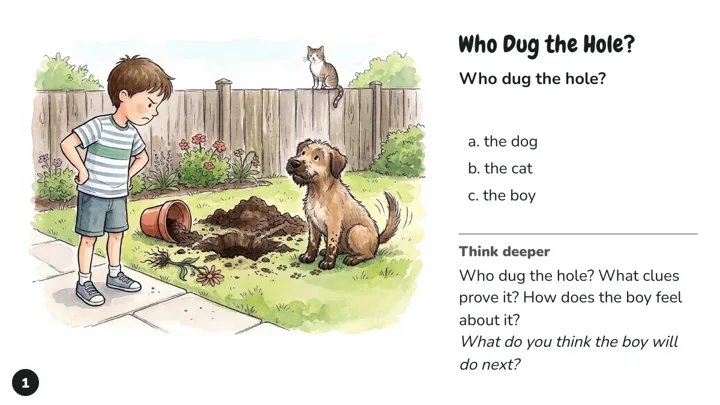 Slides
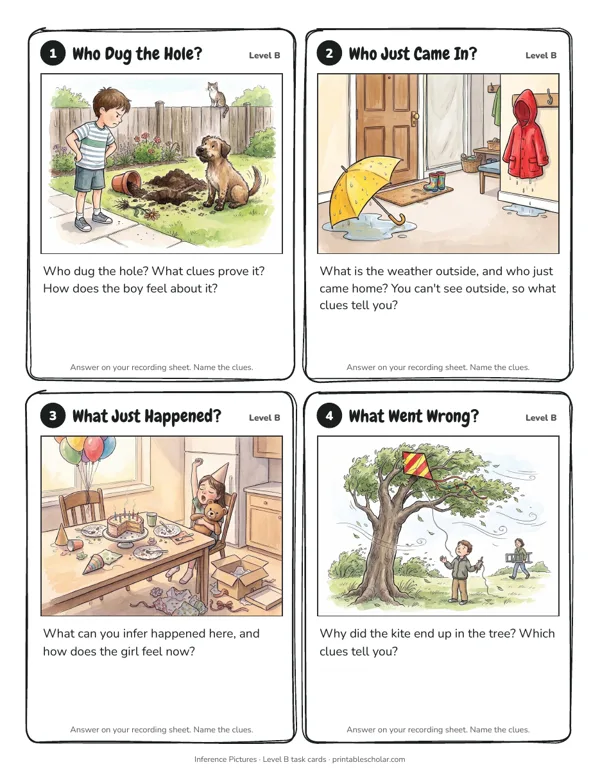 Level B cards
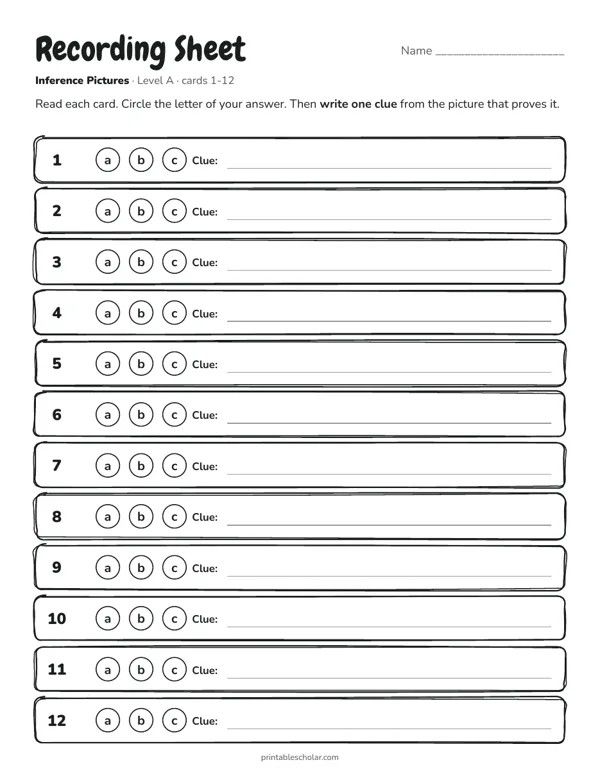 Recording sheet