 Printable Scholar
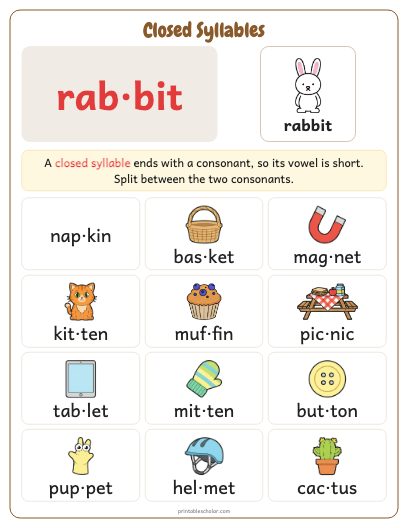
1 Closed syllable
Ends in a consonant. The consonant "closes in" the vowel, so the vowel is short.
cătdŏgjŭmprăb·bĭtnăp·kĭnbăs·kĕt
Mark it: Mark the vowel short (ă) and write c under the syllable.
Every syllable in English is one of six types, and the type tells you what the vowel says. A child who can spot the type can read long words they have never seen. Each type below has examples with the usual marking code, a free poster, and worksheets and decodable readers to practice it.
1. Closed2. Open3. Silent e4. Vowel team5. R-controlled6. Consonant-leOpen vs closedSplitting words
Ends in a consonant. The consonant "closes in" the vowel, so the vowel is short.
Mark it: Mark the vowel short (ă) and write c under the syllable.
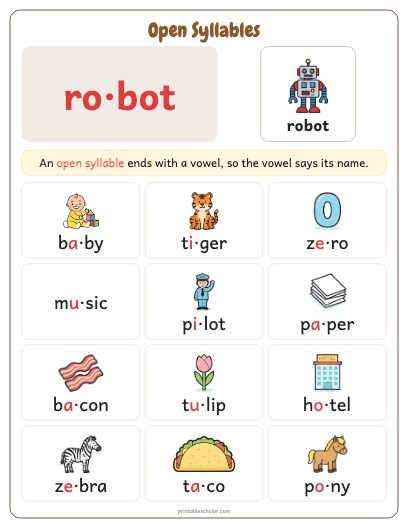
Ends in a vowel. Nothing closes it in, so the vowel is long and says its name.
Mark it: Mark the vowel long (ā) and write o under the syllable.
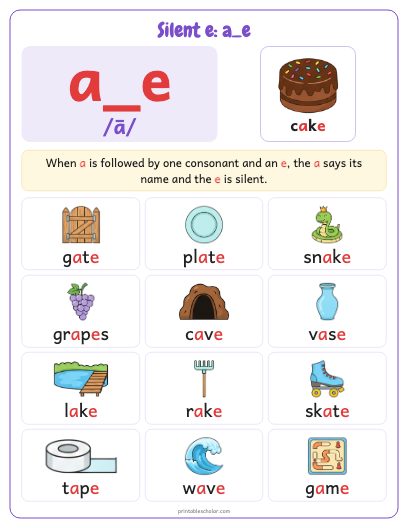
A vowel, one consonant, then an e. The e is silent and makes the vowel long.
Mark it: Mark the vowel long and cross out the e.
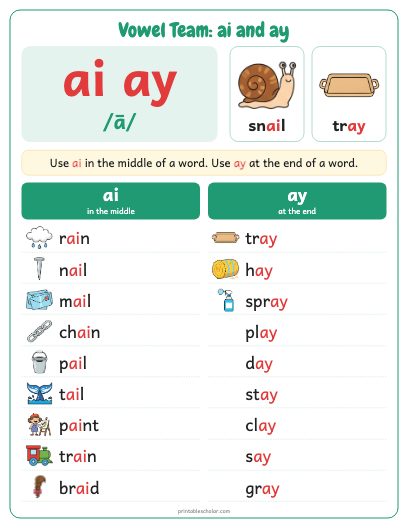
Two letters work together to make one vowel sound: ai, ay, ee, ea, oa, ow, igh and more.
Mark it: Underline the team.
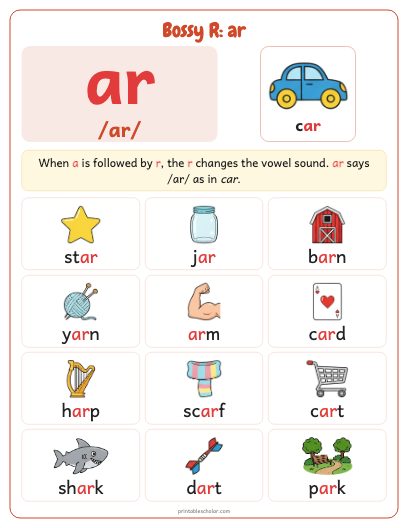
A vowel followed by r. The r changes the vowel sound: ar, or, er, ir, ur.
Mark it: Draw an arch over the vowel and the r.
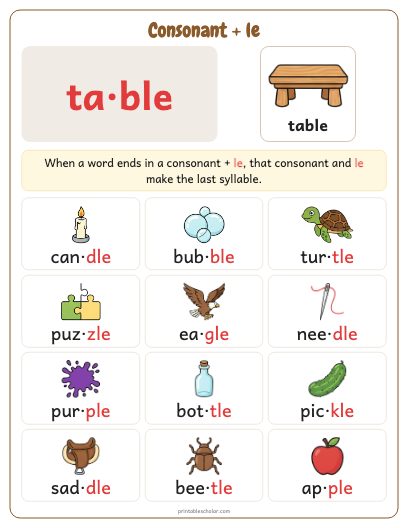
At the end of a word: a consonant + le. The e is silent; the syllable says /ul/ (/bul/, /dul/).
Mark it: Bracket the last three letters.
These two come first because they explain most short and long vowels. Add or take away one consonant and the vowel sound flips.
Ends in a consonant.
Ends in a vowel.
Find the vowels, then look at the consonants between them.
rab·bit nap·kin bas·ketti·ger ro·bot. If that doesn't make a real word, split after it and make it closed. cab·in lem·onta·ble pud·dle bub·blerain·bow teach·er gar·denSyllable types are part of most structured literacy and Orton-Gillingham programs, where children mark up words with the codes above before they read them. The marking slows a guesser down and makes the rule visible, which is why the approach is used so widely with children who have dyslexia. Closed and silent e syllables come in 1st grade; the full set, and splitting longer words, in 2nd and 3rd grade.
Each type matches skills in our phonics worksheets, with decodable readers that use the same pattern, and every type has a free poster in the phonics rules posters.
Closed (cat), open (go), silent e or VCe (cake), vowel team (rain), r-controlled (car) and consonant-le (table). The type tells you what sound the vowel makes, so a child who can spot it can read words they have never seen.
A closed syllable ends in a consonant and its vowel is short: hot, rab-bit. An open syllable ends in a vowel and its vowel is long: ho-tel, ti-ger. Compare go and got, me and met, hi and hit.
Find the vowels first. Two consonants between them: split between the consonants (rab-bit, nap-kin). One consonant: try splitting before it to make an open syllable (ti-ger); if that does not make a real word, split after it (cab-in). A word ending in consonant-le: split before the consonant (ta-ble).
Yes. Orton-Gillingham and other structured literacy programs teach the six types directly, often with the marking codes on this page, because they help children with dyslexia read long words by rule instead of by guessing. They help every reader in 2nd and 3rd grade.
Closed and silent e come first, alongside 1st grade phonics. The full set and splitting longer words are usually taught in 2nd and 3rd grade, once vowel teams and r-controlled vowels are known.