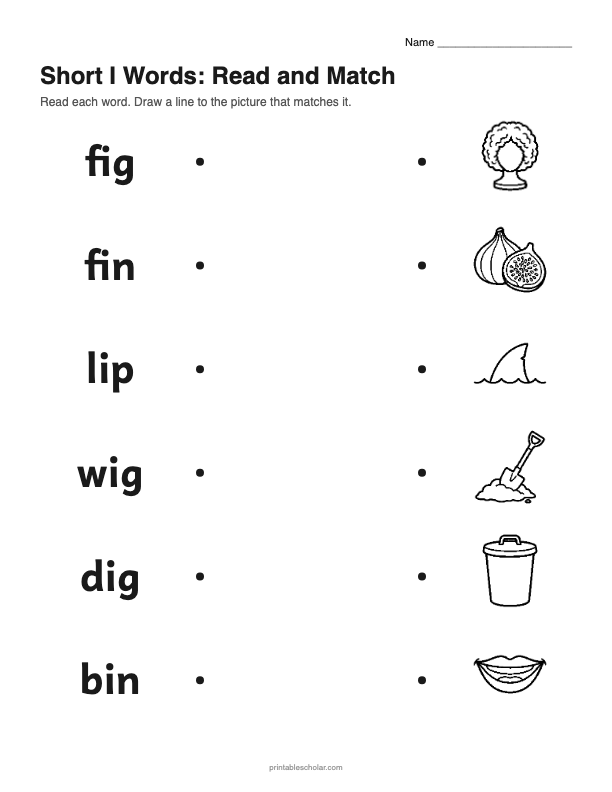
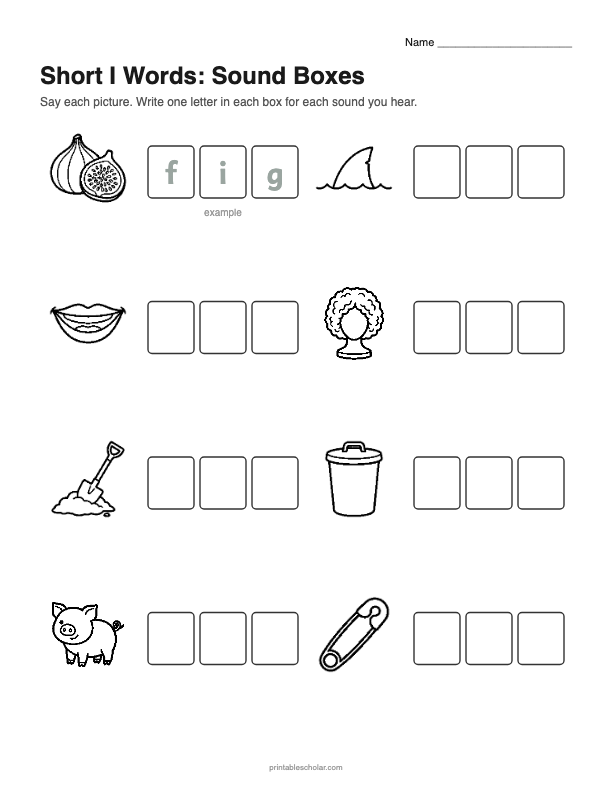
Free printable short i phonics worksheets. Six practice activities: decodable passage, picture words, word sort, phrasing cards, rapid naming chart, and word search.
Grade: KPhase 1: FoundationsPattern: CVC with short i
sithitbitfitkitpigbigdigwigfigpinwin
1 Decodable Reading Passage
A short, decodable story embedding short i words. Students read the passage then highlight all the target words.
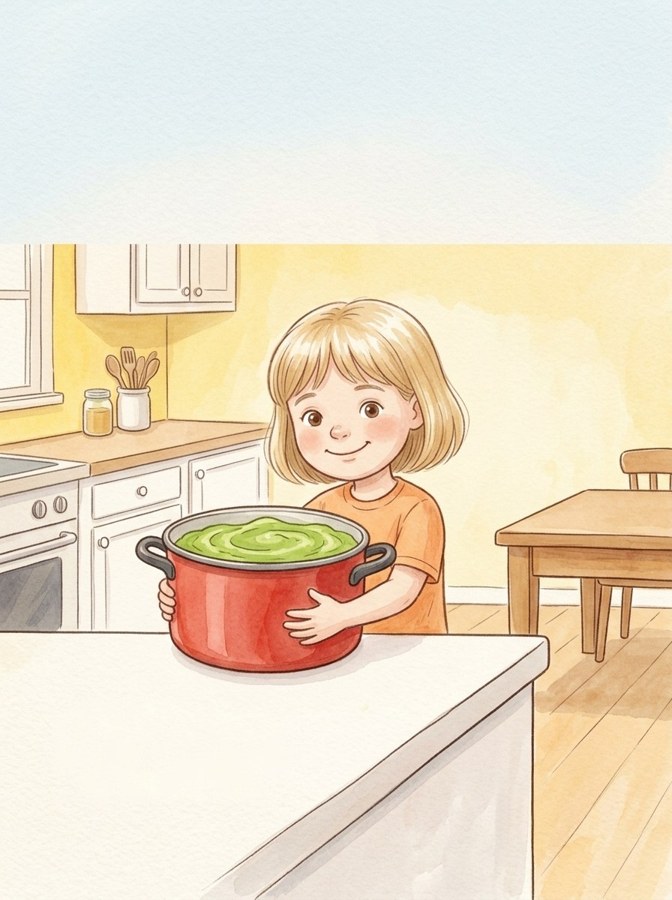
Val's Big Dip
Skill: Short I • Sight Words: the, is, a, and, to, was, it, on, his, her
Illustrated mini-book
Val had a big pot of dip. She got a tin.
But the tin was not big. The dip did not fit in it.
"I must get a big tub," Val said.
Val ran to get a tub. She put the dip in the tub. It fit well!
The short 'i' sound, as heard in words like "sit" and "pig," is a crucial foundational phonics pattern for kindergarteners, often introduced after short 'a'. This CVC (consonant-vowel-consonant) structure is essential for early decoding. A common challenge with short 'i' is its close proximity in articulation to short 'e' and short 'u'. Young learners might confuse "pin" with "pen" or "bin" with "bun" due to subtle mouth position differences. They might also over-articulate, adding an extra schwa sound, making "dig" sound like "di-guh." Emphasizing the quick, crisp sound, almost like a tiny "ih," helps distinguish it from other vowels and prevents these common mispronunciations as they begin to read words like "kit" and "lip."
Our short 'i' worksheets provide targeted practice to build fluency and accuracy. Begin with the decodable passage from "Pip's Big Fig," guiding your student to sound out each word, focusing on that distinct 'ih' sound. The word sort activity helps them categorize words like "win" and "rip," reinforcing the pattern visually and phonetically. Use the phrasing cards to practice reading short 'i' words in meaningful groups, improving reading rhythm and comprehension. Finally, the Rapid Automatic Naming (RAN) chart is excellent for building speed and automaticity with our target words such as "tin," "zip," and "fig," allowing students to recognize these high-frequency short 'i' words instantly.