Comparing sizes for kindergarten, before any ruler. Children circle the taller, longer, heavier or bigger one, then put three things in order. Start with the words chart, and read each direction aloud.
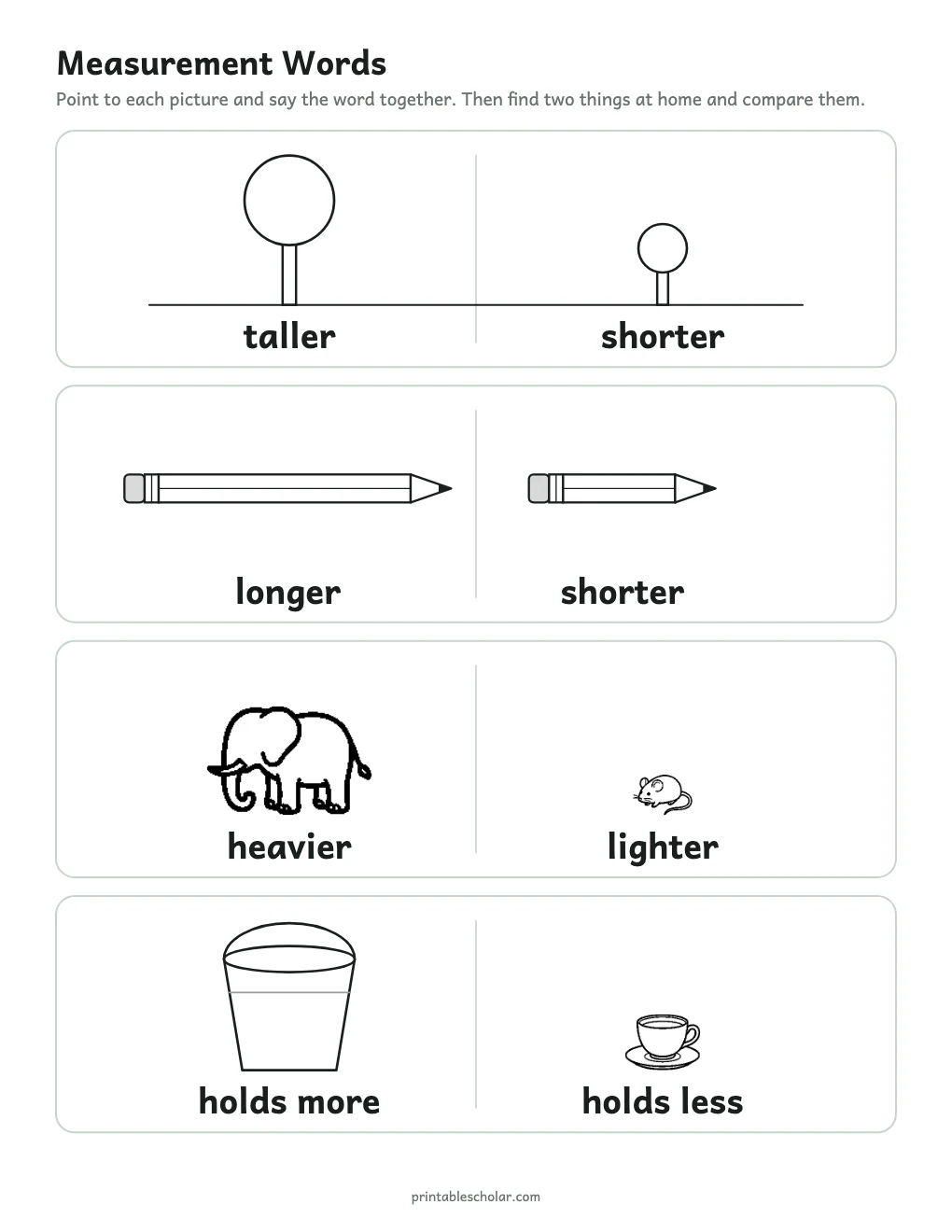
Taller and shorter, longer and shorter, heavier and lighter, holds more and holds less, each with a picture.
Download PDF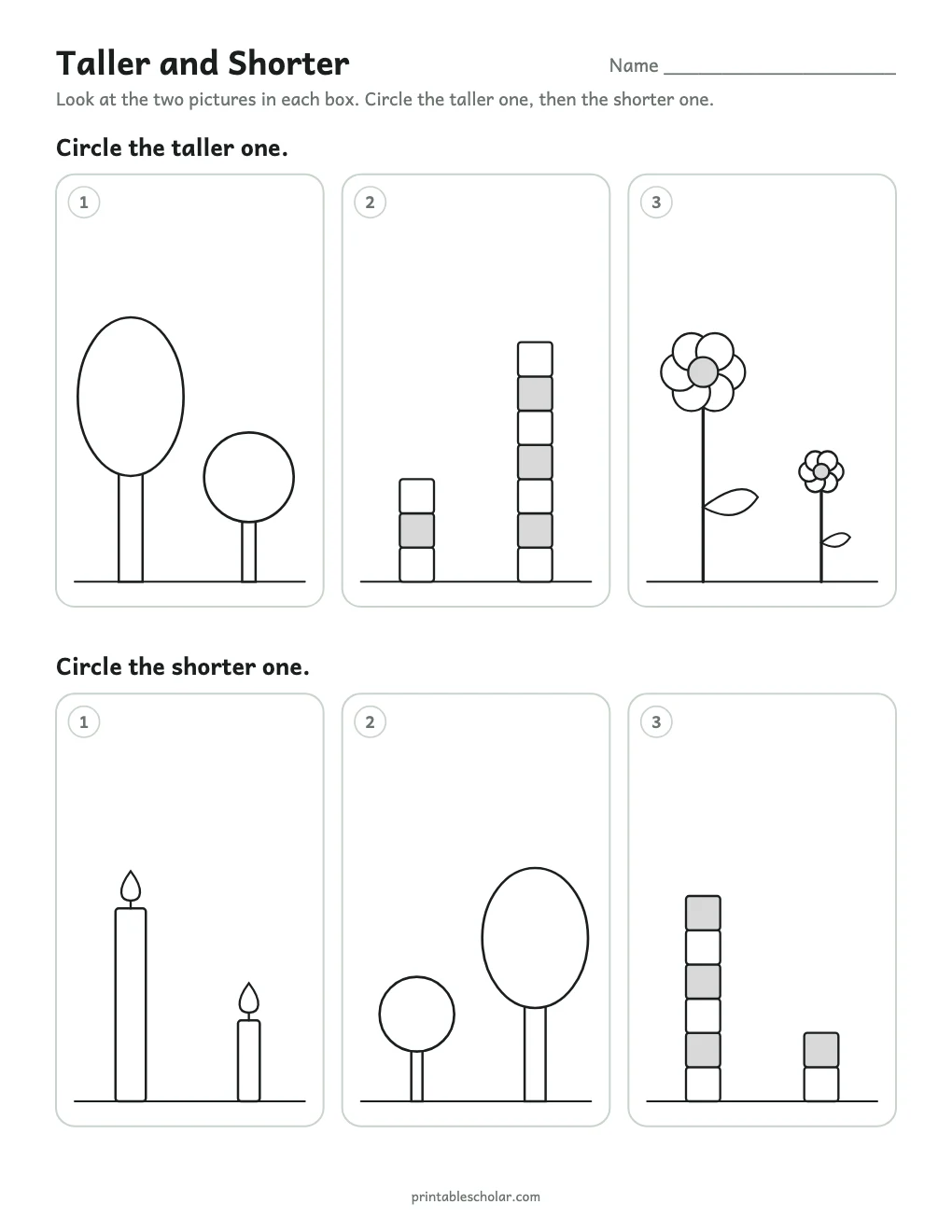
Trees, towers, flowers and candles. Circle the taller one, then the shorter one.
Download PDF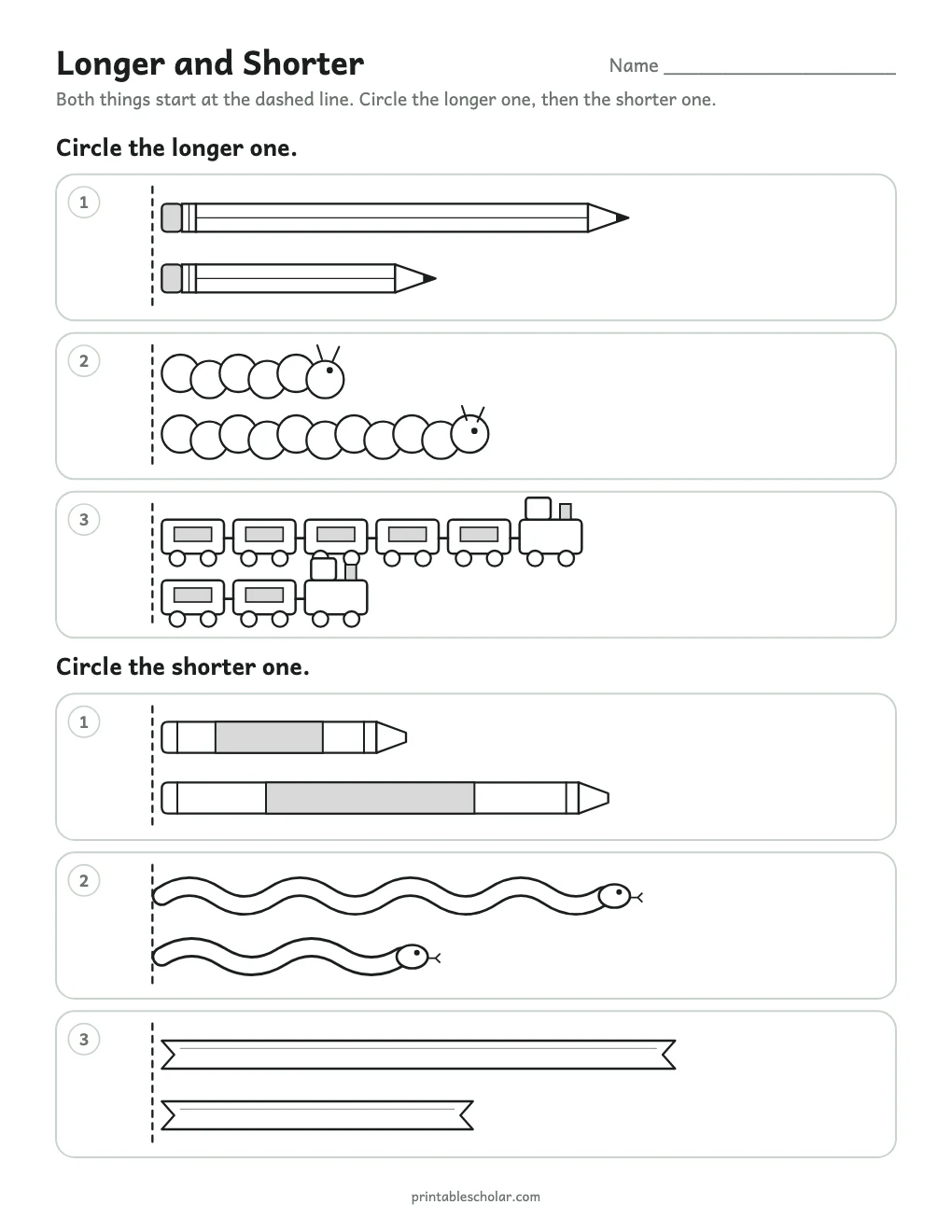
Pencils, trains, crayons and snakes lined up at one start line. Circle the longer or shorter one.
Download PDF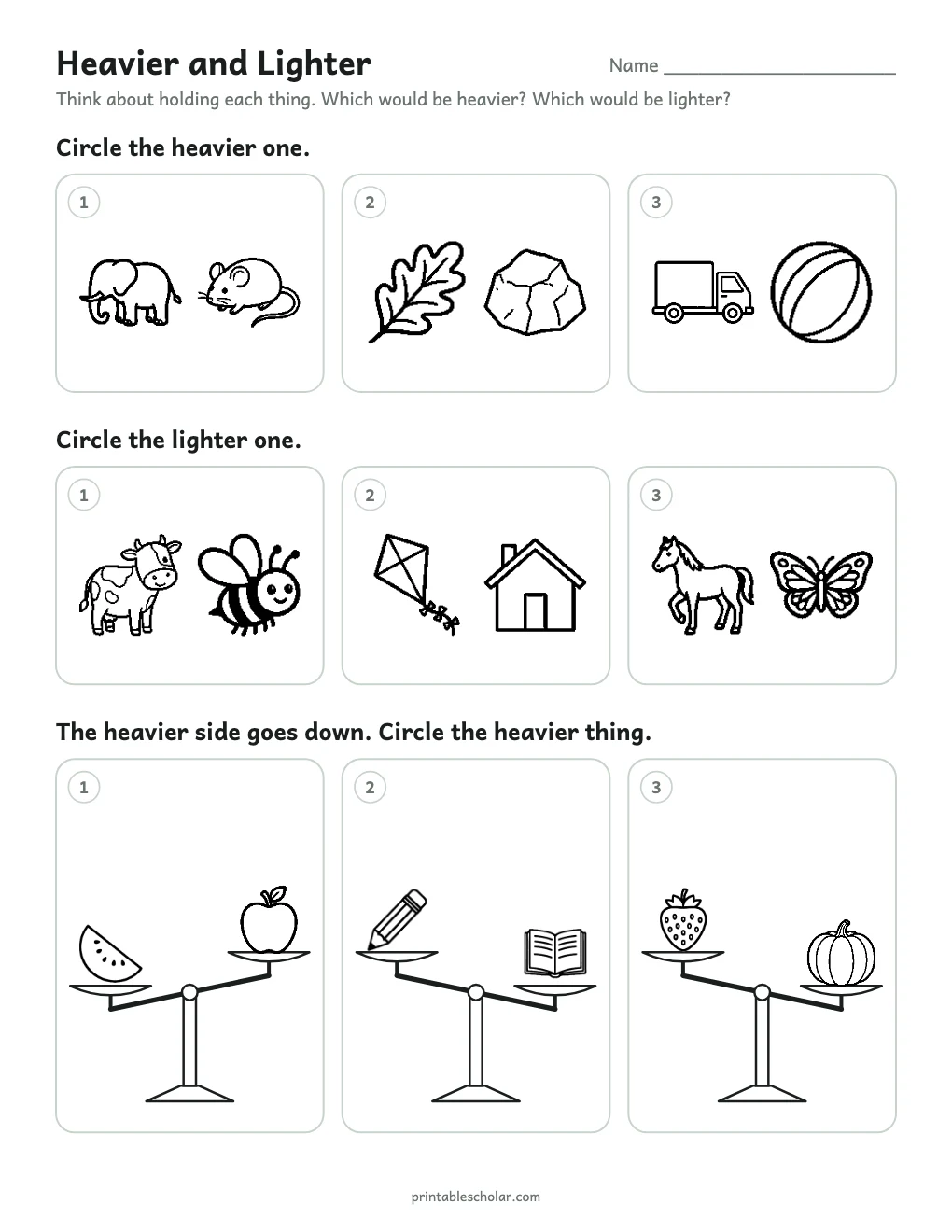
Circle the heavier or lighter of two everyday things, then read three pan balances.
Download PDF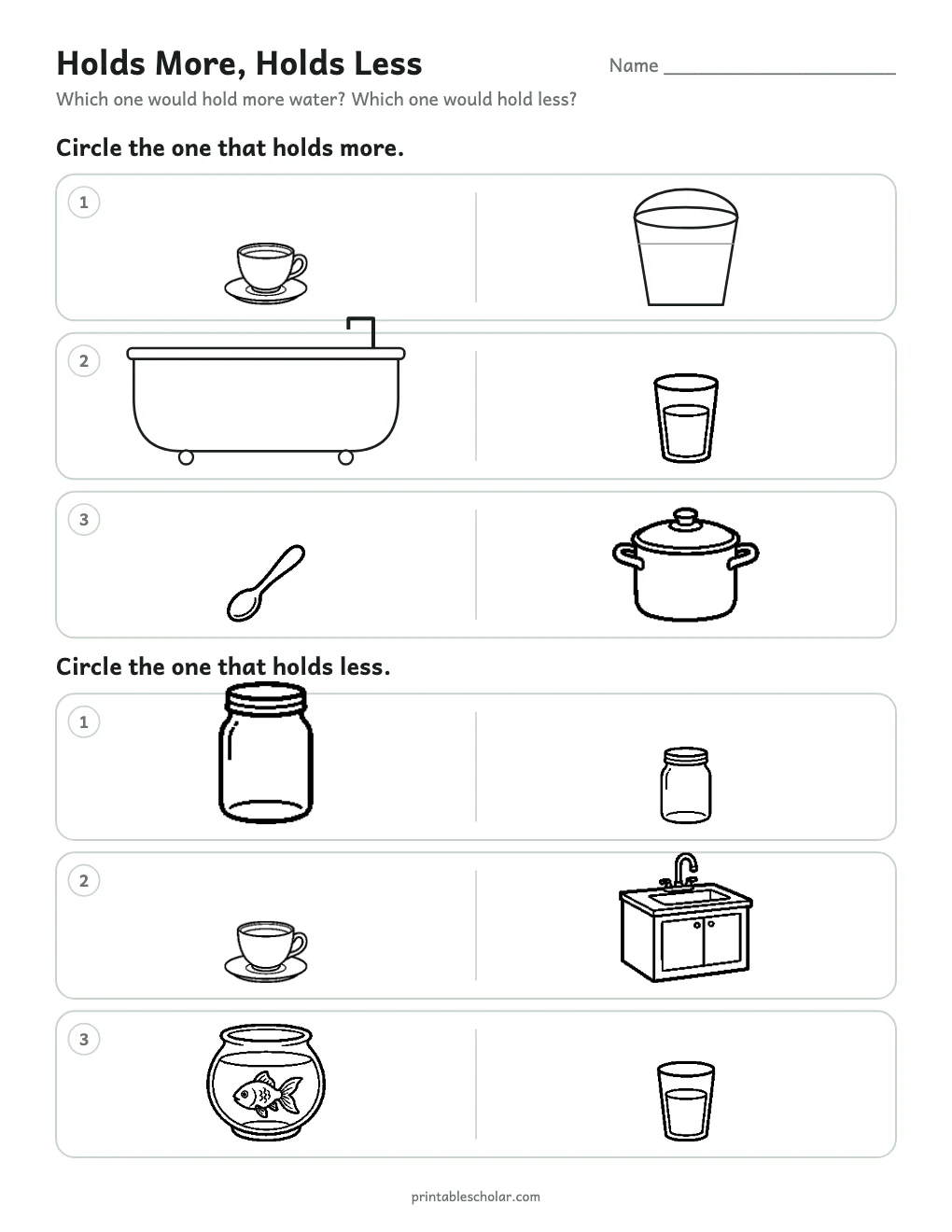
A bucket and a cup, a bathtub and a glass. Circle the one that holds more, then less.
Download PDF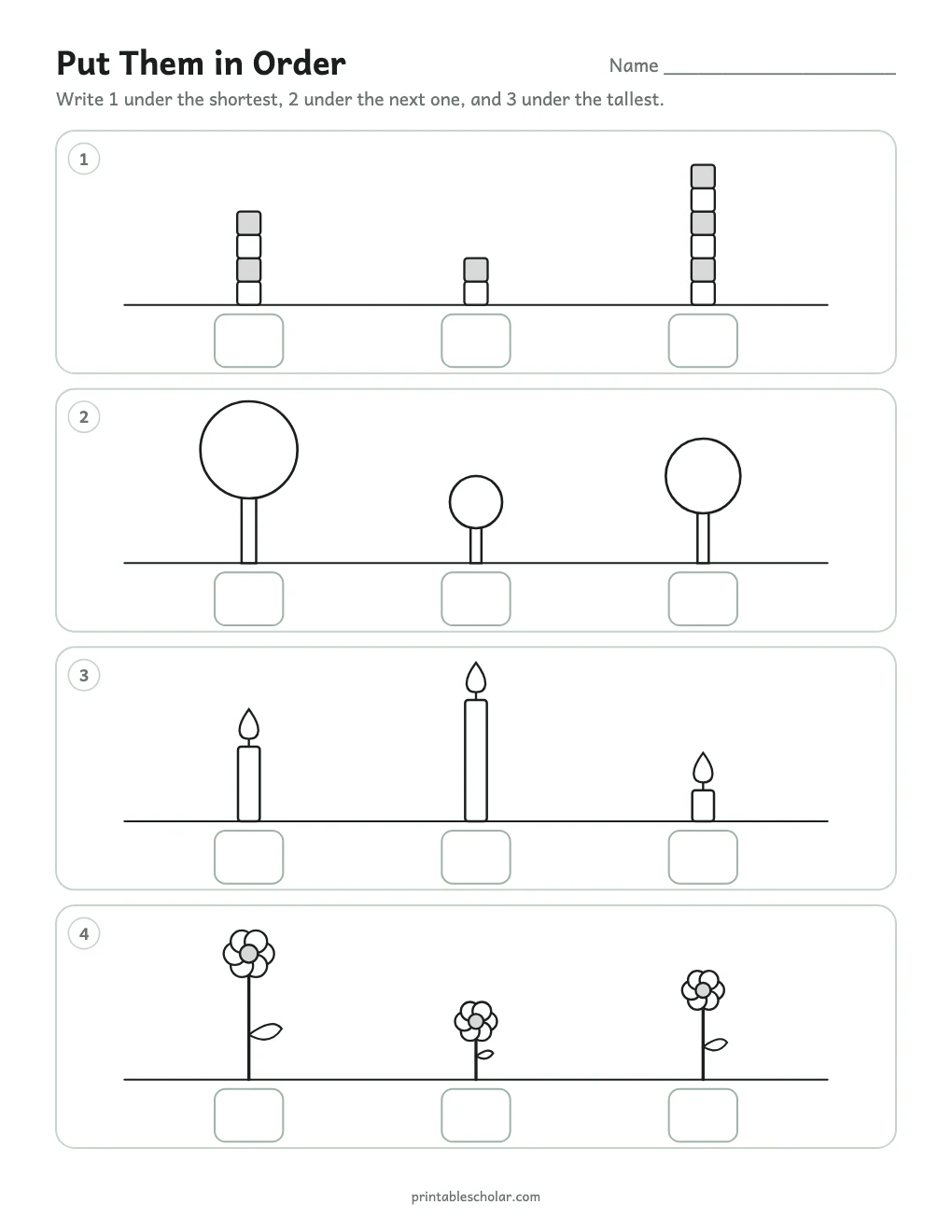
Number three towers, trees, candles and flowers from shortest to tallest.
Download PDFKindergarten measuring is comparing. Before children use a ruler, they learn to look at two things and say which is taller, longer, heavier or which holds more. The words matter as much as the answer, so the chart puts each pair of words next to a picture to point at and say together.
Longer and Shorter starts both things at the same dashed line. That is the habit that makes comparing lengths fair: line up the ends first, then look at the other end. It is worth doing with two real pencils on a table before the sheet.
Heavier and Lighter uses pairs nobody argues about, such as an elephant and a mouse, then three pan balances where the heavier side sits lower. Holds More, Holds Less works the same way with containers. Water play in the bath or the sink, pouring a cup into a bucket, teaches this better than anything on paper.
Put Them in Order compares three things at once, which is harder than two. Every worksheet has an answer key on its second page. For measuring with blocks and rulers in 1st grade and up, see the measurement worksheets, and the rest of the year is on the kindergarten math page.
 Printable Scholar