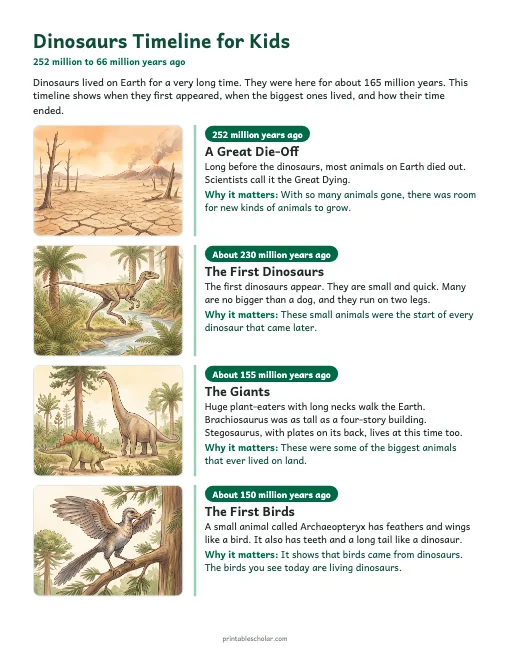
Dinosaurs Timeline for Kids
Dinosaurs lived on Earth for a very long time. They were here for about 165 million years. This timeline shows when they first appeared, when the biggest ones lived, and how their time ended.
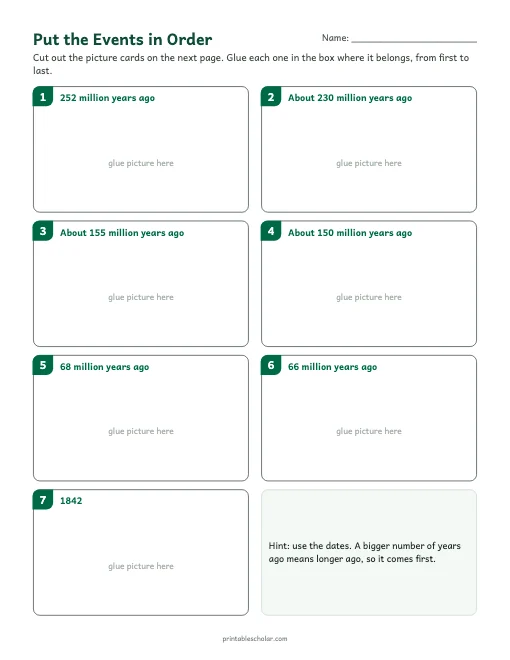
Cut and Order Activity
Cut out the seven picture cards and glue them in order on the timeline.
Download PDF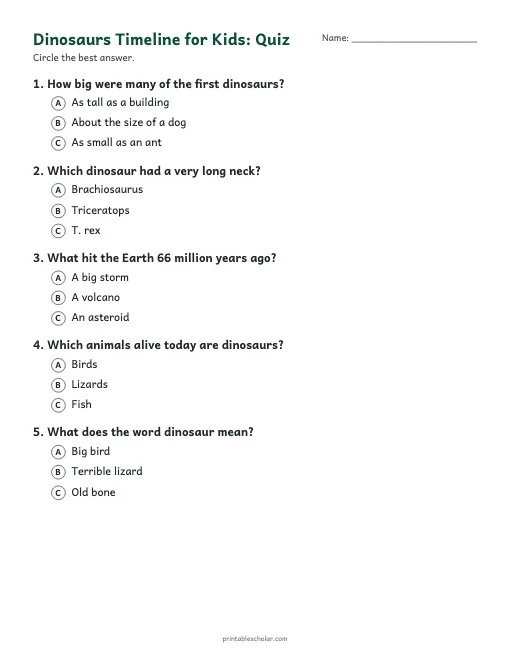
The timeline
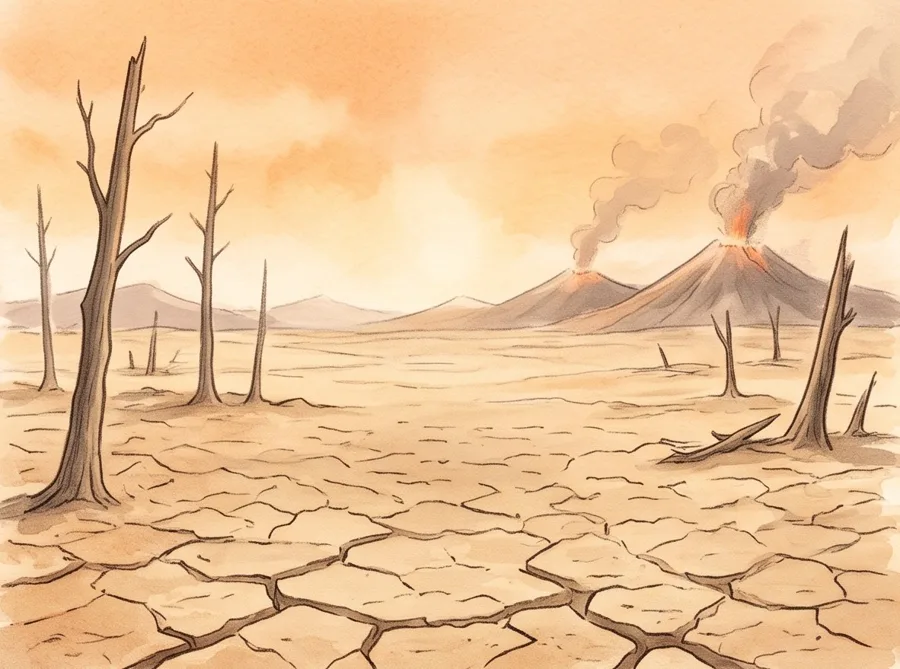 252 million years ago
A Great Die-Off
Long before the dinosaurs, most animals on Earth died out. Scientists call it the Great Dying.
Why it matters: With so many animals gone, there was room for new kinds of animals to grow.
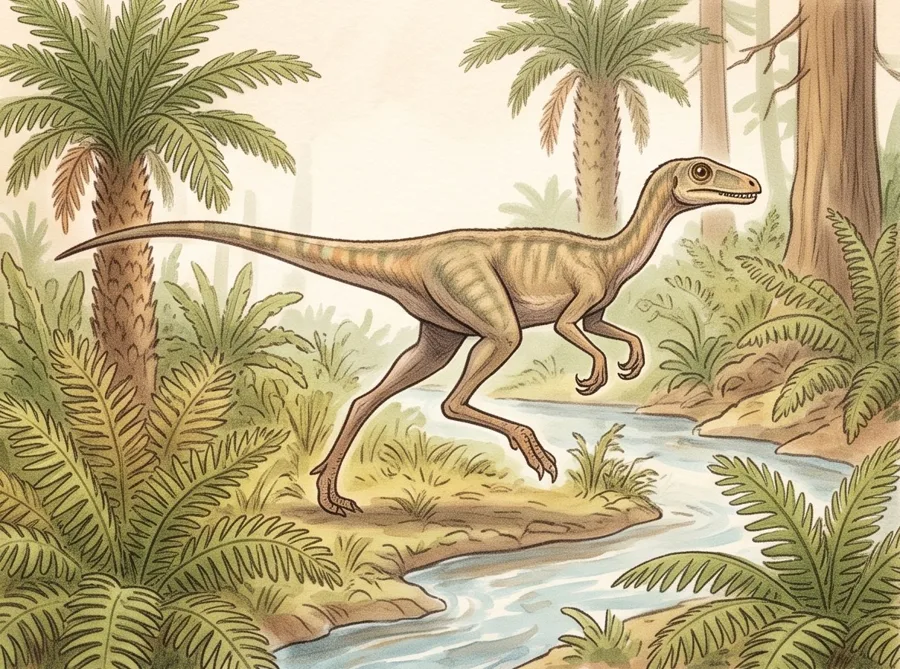 About 230 million years ago
The First Dinosaurs
The first dinosaurs appear. They are small and quick. Many are no bigger than a dog, and they run on two legs.
Why it matters: These small animals were the start of every dinosaur that came later.
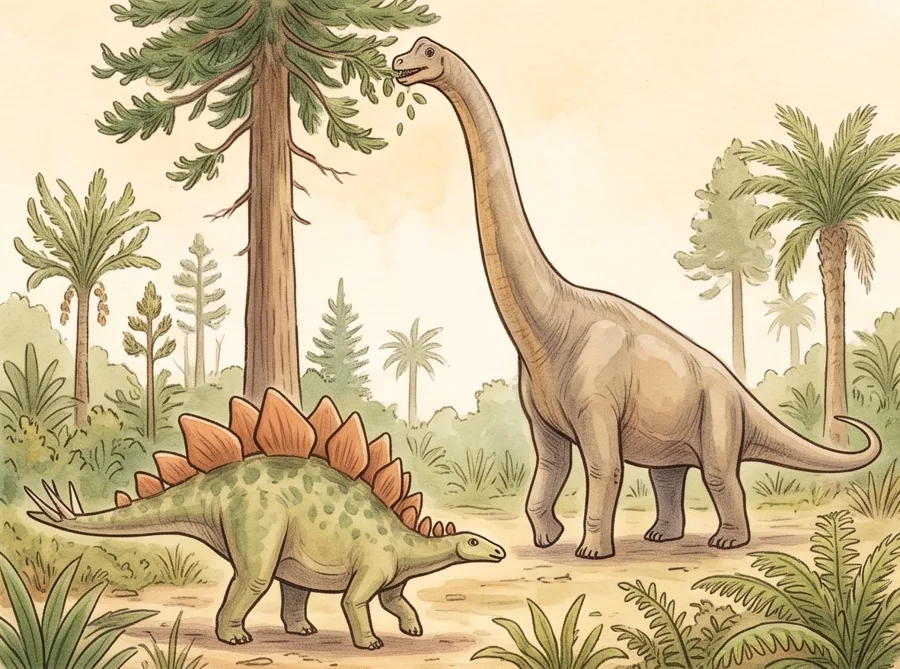 About 155 million years ago
The Giants
Huge plant-eaters with long necks walk the Earth. Brachiosaurus was as tall as a four-story building. Stegosaurus, with plates on its back, lives at this time too.
Why it matters: These were some of the biggest animals that ever lived on land.
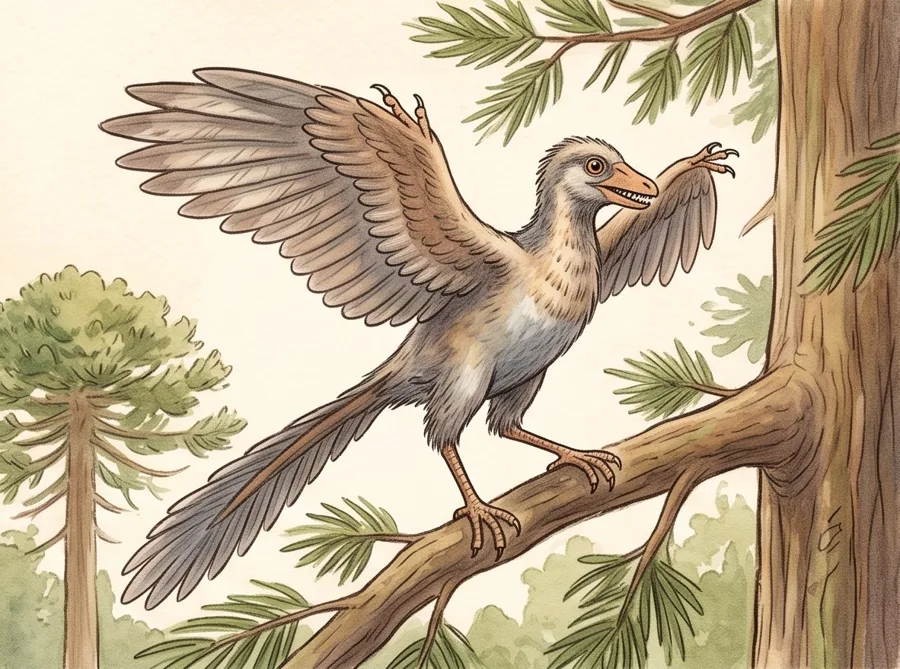 About 150 million years ago
The First Birds
A small animal called Archaeopteryx has feathers and wings like a bird. It also has teeth and a long tail like a dinosaur.
Why it matters: It shows that birds came from dinosaurs. The birds you see today are living dinosaurs.
 68 million years ago
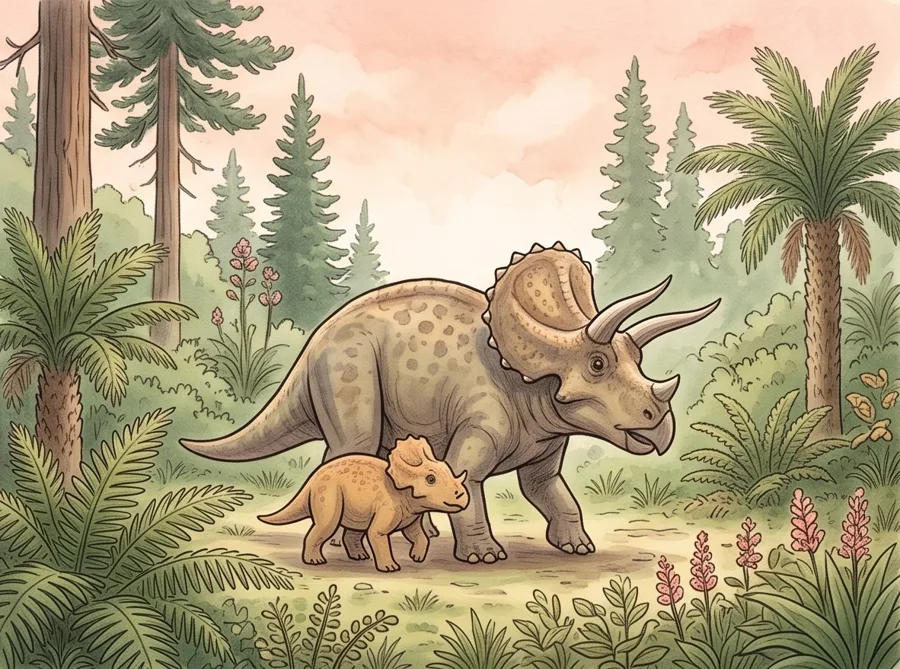
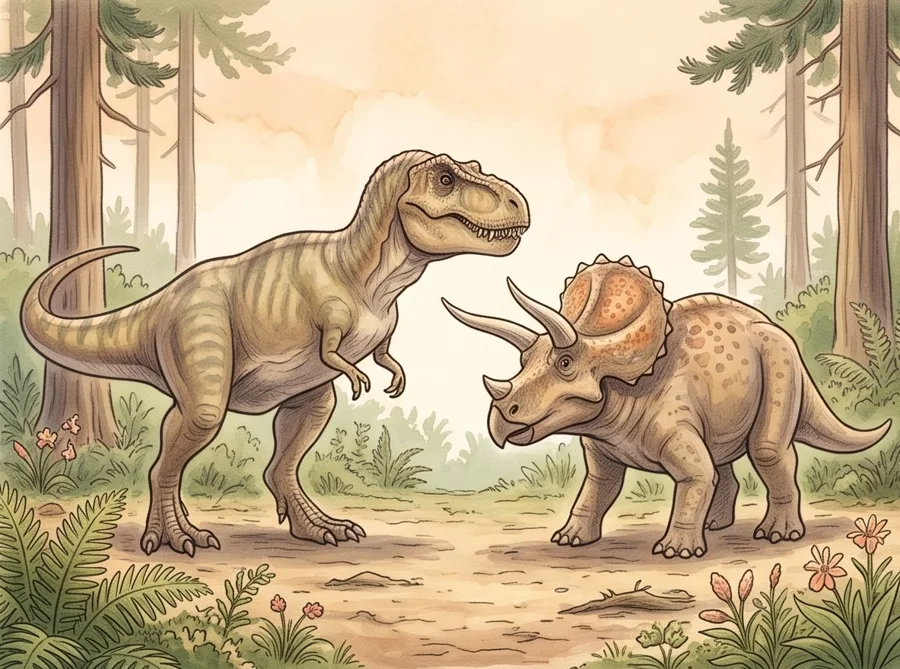
T. rex and Triceratops
Tyrannosaurus rex hunts in what is now North America. Triceratops, with three horns, lives in the same place.
Why it matters: These are two of the last dinosaurs, and two of the most famous.
 66 million years ago
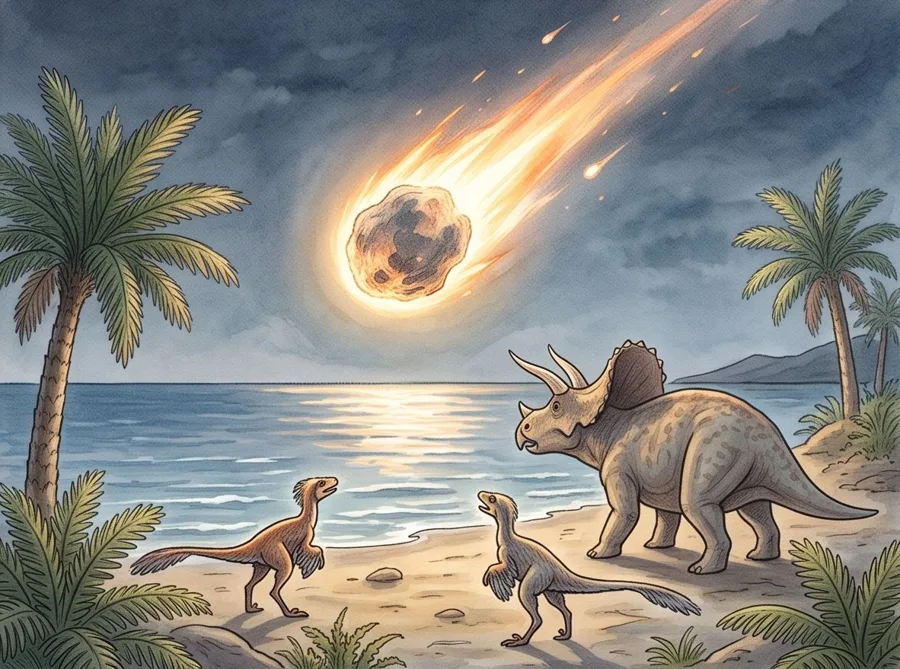
The Asteroid
A giant rock from space hits the Earth near Mexico. Dust fills the sky and blocks the sun. Plants die, and then the animals that eat them.
Why it matters: All the dinosaurs die out except the birds. After that, mammals begin to grow bigger.
 1842
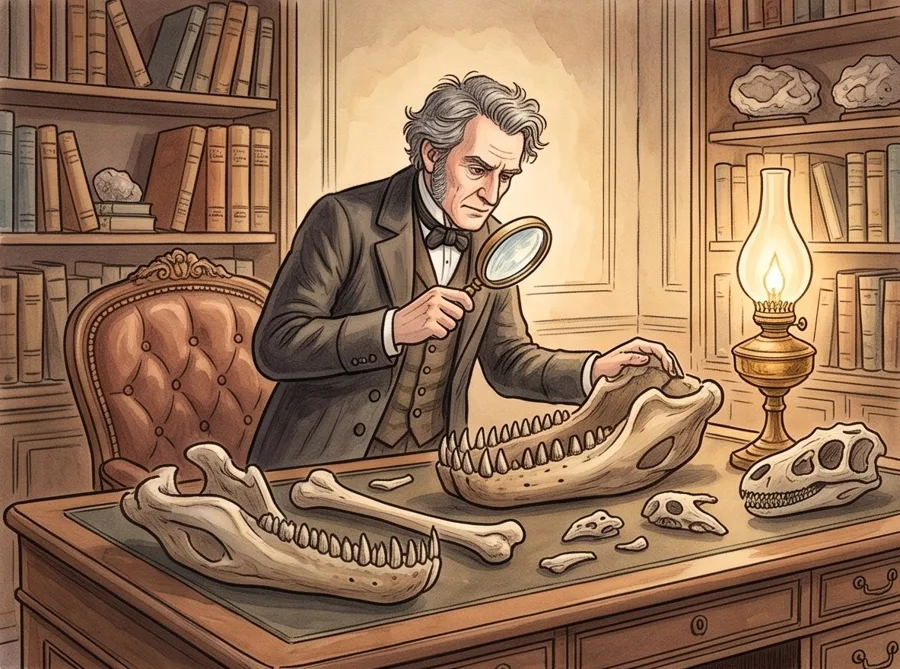
1842Dinosaurs Get Their Name
A scientist named Richard Owen studies big fossil bones. He names the animals dinosaurs. The word means terrible lizard.
Why it matters: People now knew that giant animals lived long ago, and they began to hunt for more fossils.
Words to know
- fossil: what is left of a plant or animal from long ago, turned to stone
- extinct: when every animal of one kind has died
- asteroid: a big rock that travels through space
- plant-eater: an animal that eats only plants
- mammal: an animal with fur or hair that feeds milk to its babies
Quiz
- How big were many of the first dinosaurs?
A. As tall as a building B. About the size of a dog C. As small as an ant - Which dinosaur had a very long neck?
A. Brachiosaurus B. Triceratops C. T. rex - What hit the Earth 66 million years ago?
A. A big storm B. A volcano C. An asteroid - Which animals alive today are dinosaurs?
A. Birds B. Lizards C. Fish - What does the word dinosaur mean?
A. Big bird B. Terrible lizard C. Old bone
Show answers
1. B (About the size of a dog) 2. A (Brachiosaurus) 3. C (An asteroid) 4. A (Birds) 5. B (Terrible lizard)
The pictures are illustrations made for this timeline. They show what scientists think these animals and places looked like.