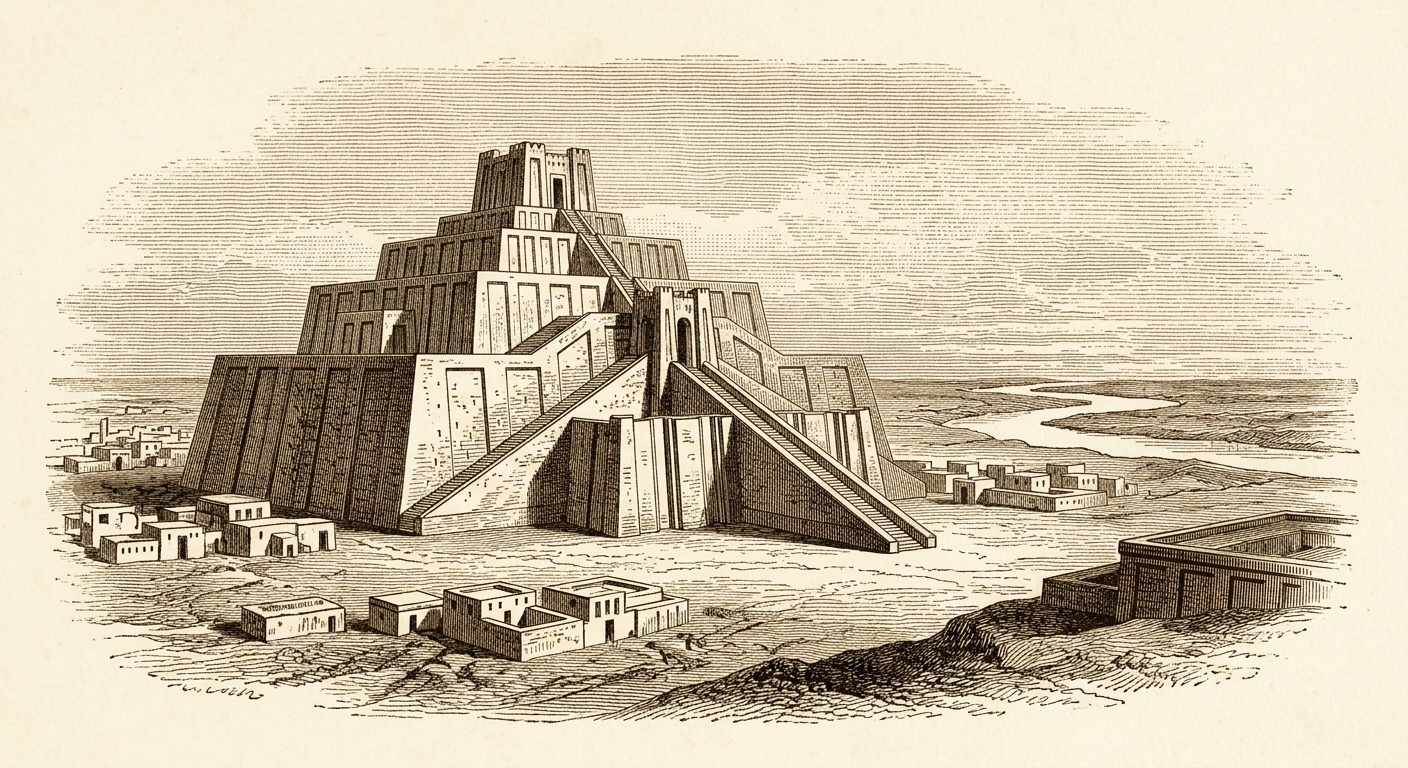
Ancient Mesopotamia Timeline
Ancient Mesopotamia — the land between the Tigris and Euphrates rivers in present-day Iraq — is called the cradle of civilization, home to the world's first cities, first writing, and first law codes.
Between two great rivers — the Tigris and the Euphrates — in the region we now call Iraq, human beings built the world's first cities more than 5,000 years ago. The Sumerians of ancient Mesopotamia invented writing to keep track of grain and trade. They organized the world's first governments, wrote the first literature, and codified the first laws. For three thousand years, one great civilization followed another in the same river valleys — Sumerians, Akkadians, Babylonians, Assyrians — each building on what came before. Their ideas about law, astronomy, mathematics, and literature spread across the ancient world, leaving a legacy that runs through every civilization that followed.
- ~3500 BC
The First Cities
Sumerian people build the world's first true cities — including Uruk, Ur, and Eridu — in the river valleys of southern Mesopotamia.
Why it mattered: Cities required organized government, specialized workers, and record-keeping — the foundations of civilization as we know it.
- ~3200 BC
Writing Invented
Sumerian scribes develop cuneiform — pressing wedge-shaped marks into clay tablets — to keep track of temple goods and trade transactions.
Why it mattered: Writing was one of humanity's most transformative inventions — for the first time, knowledge, laws, and stories could be recorded and passed down across generations without relying on memory.
- ~2330 BC
Sargon of Akkad
Sargon of Akkad conquers the Sumerian city-states and creates the world's first empire — the Akkadian Empire — ruling from the Persian Gulf to the Mediterranean.
Why it mattered: Sargon was the first empire-builder in recorded history, proving that a single ruler could unite and govern many different peoples across a vast territory.
- ~2100 BC
Third Dynasty of Ur
The Sumerian city of Ur under King Ur-Nammu creates one of history's earliest law codes and builds a great temple tower called a ziggurat.
Why it mattered: Ur-Nammu's law code — predating Hammurabi's by 300 years — shows that early civilizations understood the need for written, public laws to govern complex societies fairly.
- ~1792–1750 BC
Hammurabi's Code
Babylonian king Hammurabi creates one of history's most complete early law codes — 282 laws carved into a stone pillar covering wages, property, trade, and injury.
Why it mattered: Hammurabi's Code established that laws should be written down, publicly visible, and apply to everyone — a foundational idea for all later legal systems.
- ~1600 BC
Hittites Sack Babylon
The Hittites from Anatolia (modern Turkey) sack the city of Babylon using iron weapons and war chariots, ending the Old Babylonian Kingdom.
Why it mattered: The Hittites demonstrated the decisive military advantage of iron technology — their conquests helped spread iron-working across the ancient world.
- ~900–600 BC
The Assyrian Empire
The Assyrians build the most powerful empire the ancient world had yet seen, stretching from Egypt to Persia, known for their terror tactics and sophisticated military.
Why it mattered: The Assyrian Empire's methods of warfare, mass deportation of conquered peoples, and administrative systems influenced how later empires were organized and governed.
- 612 BC
Fall of Nineveh
A coalition of Babylonians and Medes destroys the Assyrian capital of Nineveh, ending the Assyrian Empire in a matter of weeks.
Why it mattered: The sudden, total collapse of the world's most powerful empire showed how quickly even the mightiest powers could fall — a lesson repeated throughout history.
- ~605–562 BC
Nebuchadnezzar II's Babylon
Babylonian king Nebuchadnezzar II rebuilds Babylon into one of the ancient world's greatest cities, complete with massive walls, the Ishtar Gate, and legendary Hanging Gardens.
Why it mattered: Nebuchadnezzar's Babylon was a marvel of the ancient world — its size, wealth, and beauty were unsurpassed, and its walls were considered impregnable.
- 539 BC
Cyrus Conquers Babylon
Persian king Cyrus the Great captures Babylon without a major battle, incorporating Mesopotamia into the vast Persian Empire.
Why it mattered: Mesopotamian civilization — the cradle of the ancient world — had come to an end as an independent force. But its ideas about writing, law, astronomy, and literature had already spread across the world.
Ancient Mesopotamia Quiz
Check what you learned — read on screen, or use the Printable quiz button above for a worksheet version with an answer key.
Where was Mesopotamia located?
- A) In the Nile River valley in Egypt
- B) In the river valleys between the Tigris and Euphrates in present-day Iraq
- C) In the Indus River valley in South Asia
- D) Along the coasts of the Aegean Sea in Greece and Turkey
What was cuneiform?
- A) One of the world's first writing systems, developed by Sumerian scribes using wedge-shaped marks on clay tablets
- B) A system of counting that introduced the concept of zero
- C) The name of the first Mesopotamian law code
- D) A type of ancient Mesopotamian religious architecture
Who was Sargon of Akkad?
- A) The Sumerian king who invented writing
- B) The Babylonian king who wrote the most famous law code
- C) The first empire-builder in recorded history, who conquered the Sumerian city-states around 2330 BC
- D) The last king of Babylon before the Persian conquest
What was significant about Hammurabi's Code?
- A) It was the only law code in the entire ancient world
- B) It introduced democracy to Mesopotamia
- C) It established that laws should be written, publicly visible, and apply to everyone — influencing all later legal systems
- D) It was the first law code to ban slavery
What were the Assyrians known for?
- A) Building the Hanging Gardens of Babylon
- B) Peaceful trade networks across the ancient Near East
- C) A feared empire that used brutal military tactics and sophisticated administration to rule from Egypt to Persia
- D) Inventing the alphabet that spread across the Mediterranean world
What ended the Assyrian Empire?
- A) A Persian invasion from the east
- B) A coalition of Babylonians and Medes destroyed the Assyrian capital Nineveh in 612 BC
- C) A massive flood that destroyed the cities of Mesopotamia
- D) A slave revolt that overthrew the Assyrian government
What was Nebuchadnezzar II's Babylon famous for?
- A) Being the site where cuneiform writing was invented
- B) Its massive walls, the Ishtar Gate, and the legendary Hanging Gardens — a marvel of the ancient world
- C) Defeating the Persian army of Cyrus the Great in battle
- D) Creating the alphabetic writing system that spread across the world
Why is Mesopotamia called the cradle of civilization?
- A) Because it had the world's best farmland
- B) Because it produced the world's first cities, writing, law codes, and organized government
- C) Because it was the birthplace of all major world religions
- D) Because its armies conquered and unified all of the ancient world
Show answer key
1. B · 2. A · 3. C · 4. C · 5. C · 6. B · 7. B · 8. B
Related timelines
 Ancient Egypt Timeline — Ancient Egypt was one of the world's first great civilizations, ruled by pharaohs along the Nile River for more than 3,000 years. Open →
 Ancient India Timeline — Ancient India was home to one of the world's first urban civilizations — the Indus Valley Civilization — and later gave rise to Hinduism, Buddhism, Jainism, and the Maurya Empire, one of the largest empires of the ancient world. Open →
How to print
Choose Download PDF for a ready-to-print timeline that fits US Letter paper (8.5 × 11"). The blank fill-in version keeps the dates and gives students empty lines to write each event — great for review and quizzes.
Frequently asked questions
What was Mesopotamia?
Mesopotamia (from Greek, meaning land between the rivers) was the region between the Tigris and Euphrates rivers, in present-day Iraq. It is called the cradle of civilization because it was home to the world's first cities, one of the first writing systems, the earliest formal law codes, and some of the earliest literature — including the Epic of Gilgamesh. Major civilizations that developed there include the Sumerians, Akkadians, Babylonians, and Assyrians.
What did Mesopotamia contribute to the modern world?
Mesopotamia's contributions run through the foundations of modern civilization: writing itself began here, the concept of written law codes, early mathematics using a base-60 system (which is why we have 60 seconds in a minute, 60 minutes in an hour, and 360 degrees in a circle), astronomical observations that laid groundwork for later astronomy, and some of the world's earliest literature. The wheel was also first developed in Mesopotamia.
What paper size should I print this on?
The timeline is sized for standard US Letter paper (8.5 × 11 in.). The Download PDF button gives you a print-ready file that fits the page automatically.