 Printable Scholar
How a Medieval Manor Worked
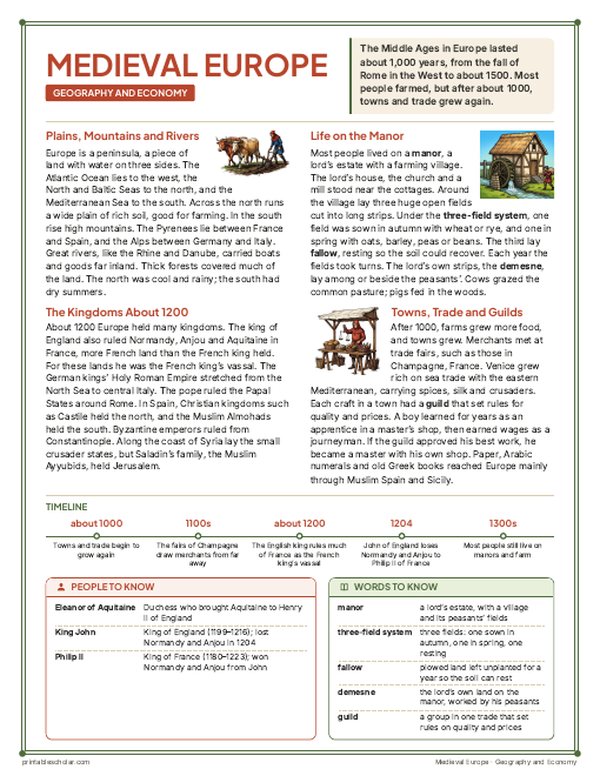
Most people in medieval Europe lived on a manor: a lord’s estate with a village of peasants who farmed it. The fields were farmed under the three-field system, so each year one field was sown in autumn, one in spring, and one rested. These free pages show a manor about 1250, labeled, and the same picture blank with a word bank for students to label.
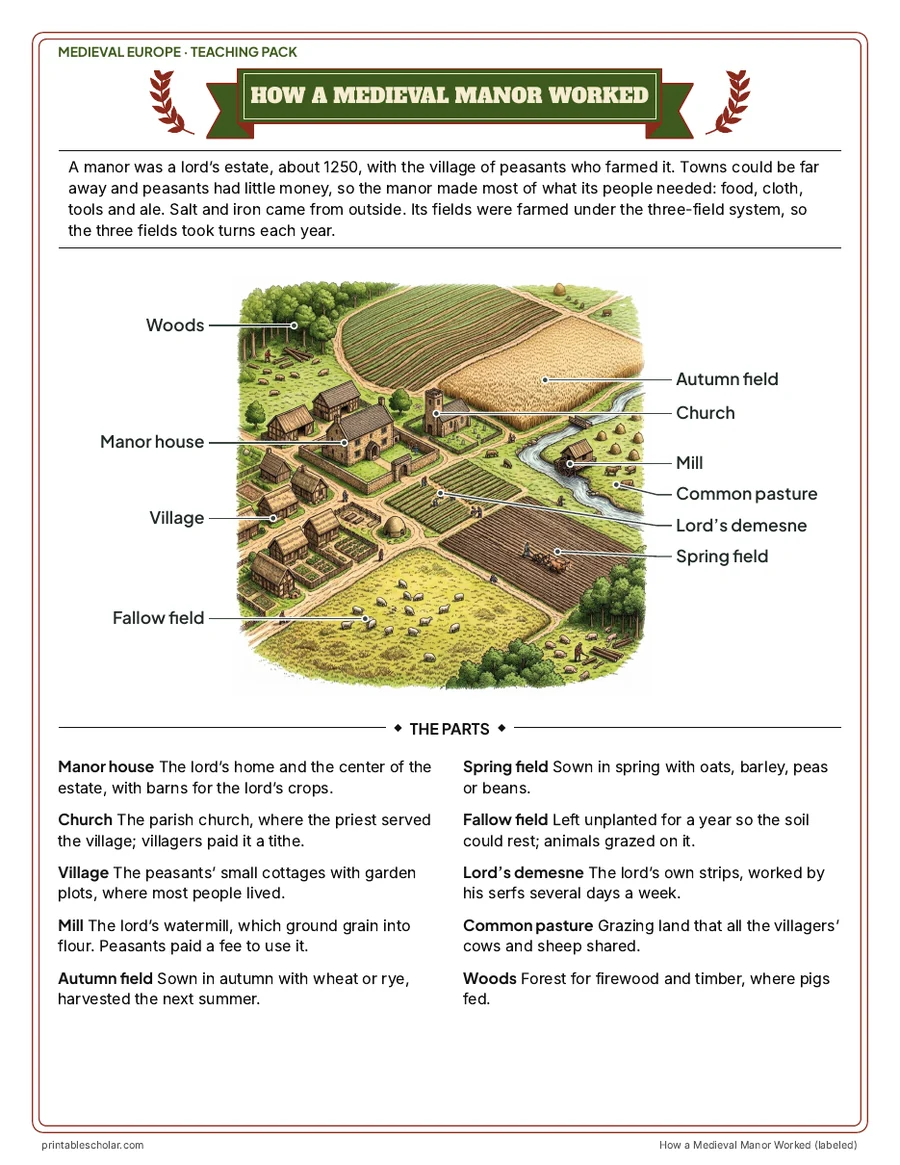
Free to print
A labeled manor, and a blank one to label
PDFs sized for US Letter paper, in color and black and white.
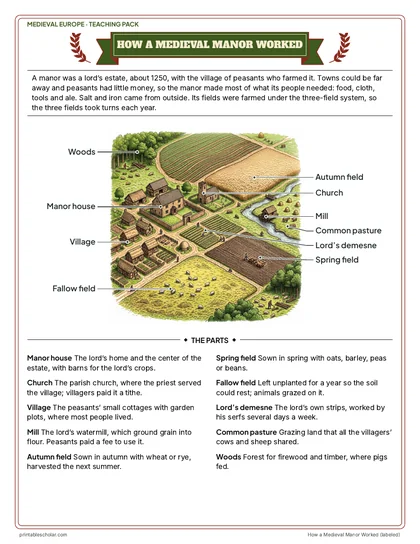
How a Medieval Manor Worked, labeled
A bird’s-eye manor about 1250 with ten parts labeled and what each one was for.
Download PDF Black and white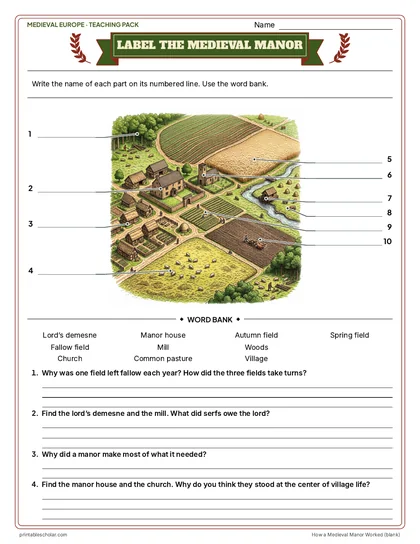
Label the Medieval Manor
The same picture with numbered blank labels, a word bank and questions.
Download PDF Black and white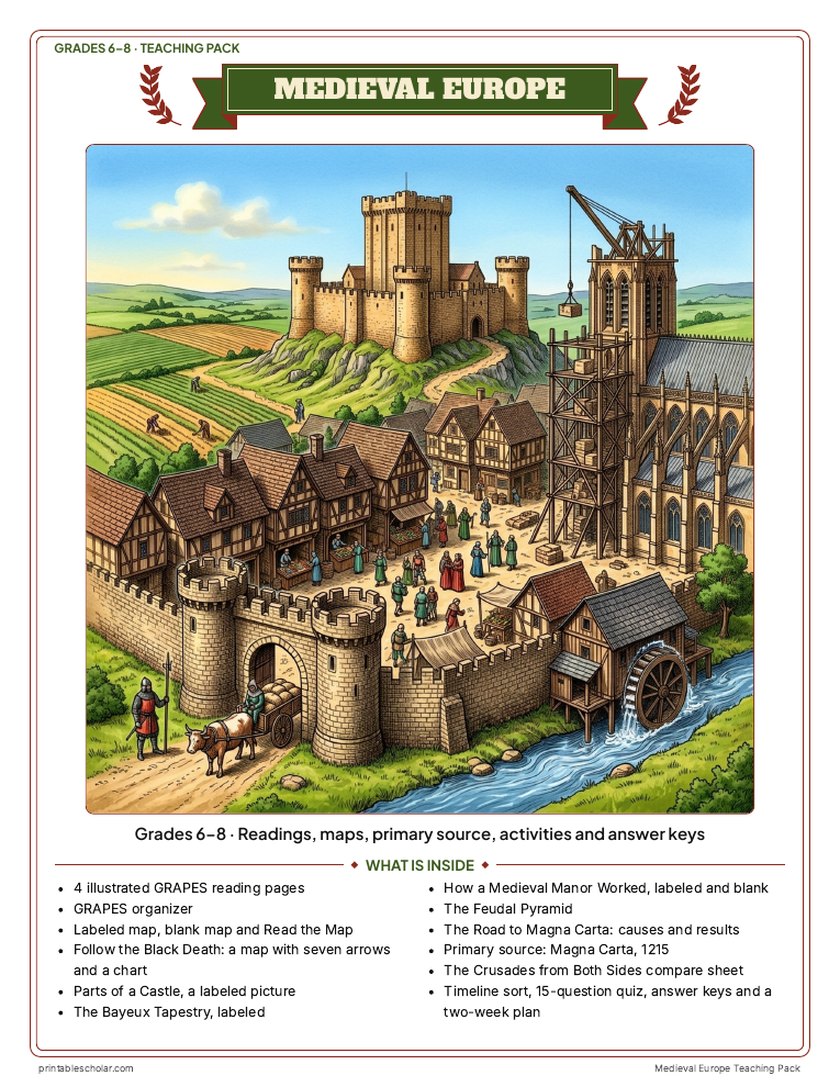
Teaching pack · Grades 6–8
Teaching Medieval Europe? The whole unit, ready to teach.
Two weeks of lessons in one download: slides to present, notes for students to fill in, and printable pages that use these maps and pictures.
Every slide comes with teacher notes: what to say, what to ask, and sample answers.
- 47 lesson slides (PowerPoint you can edit) and 2 pages of guided notes
- 4 illustrated reading pages and a GRAPES organizer
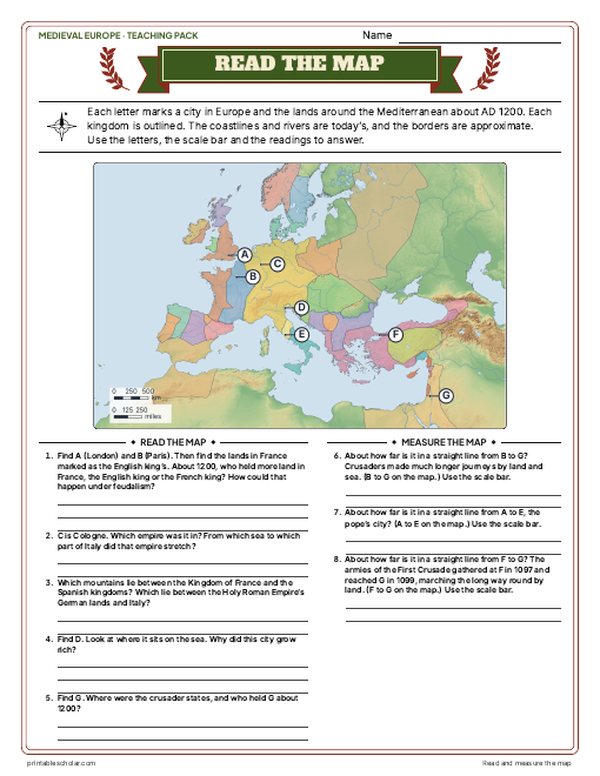
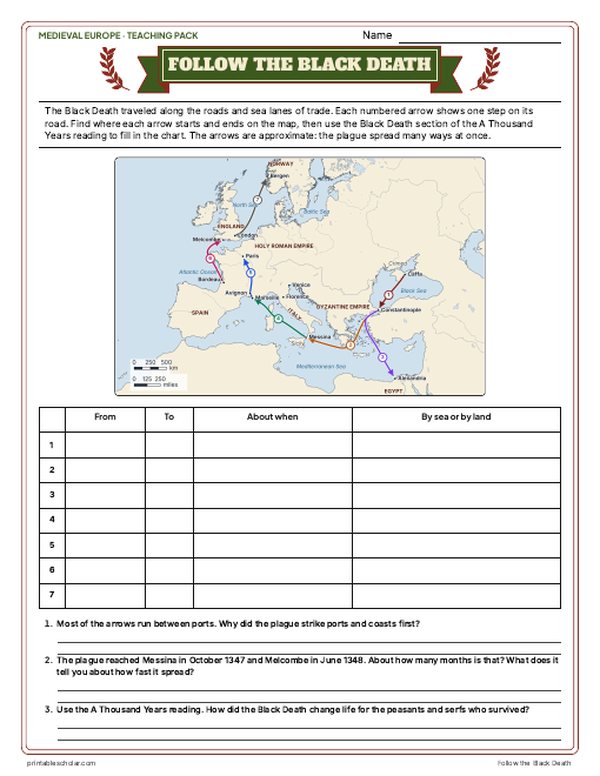
- Maps: Europe about 1200 labeled and blank, Read and Measure the Map, and "Follow the Black Death": trace the plague from Caffa to Bergen on a real map and fill in the chart
- Activities: Parts of a Castle (labeled), the real Bayeux Tapestry, how a medieval manor worked (labeled and blank), the feudal pyramid, the road to Magna Carta, Magna Carta as a primary source, the Crusades from both sides, and a timeline sort
- A 15-question quiz, a teacher guide with a two-week plan, and answer keys for everything
Every answer is in the pack. The readings, slides, maps and pictures teach everything the sheets and quiz ask, so no textbook is needed.
Get the Medieval Europe pack for $7Teaching more than one? Get all five medieval world packs (West Africa, the Silk Road, the Byzantines, Medieval Europe and the Ottomans) for $24, with a bonus chart comparing all five: about ten weeks of lessons.
Get all 5 packs for $24See all five packsOr get every history pack (19) in one download:Get all 19 for $49
One-time purchase. Instant download. Color and ink-saving black-and-white editions. Secure checkout by Stripe.
The parts of a manor
Manor house and church
The lord’s home sat at the center of the estate beside the parish church, where villagers paid a tithe.
The village
Peasants lived in small cottages with garden plots. Many were serfs, bound to the manor.
The three-field system
One field was sown in autumn with wheat or rye, one in spring with oats, barley, peas or beans, and one was left fallow so the soil could rest. Each year the fields took turns.
The lord’s demesne
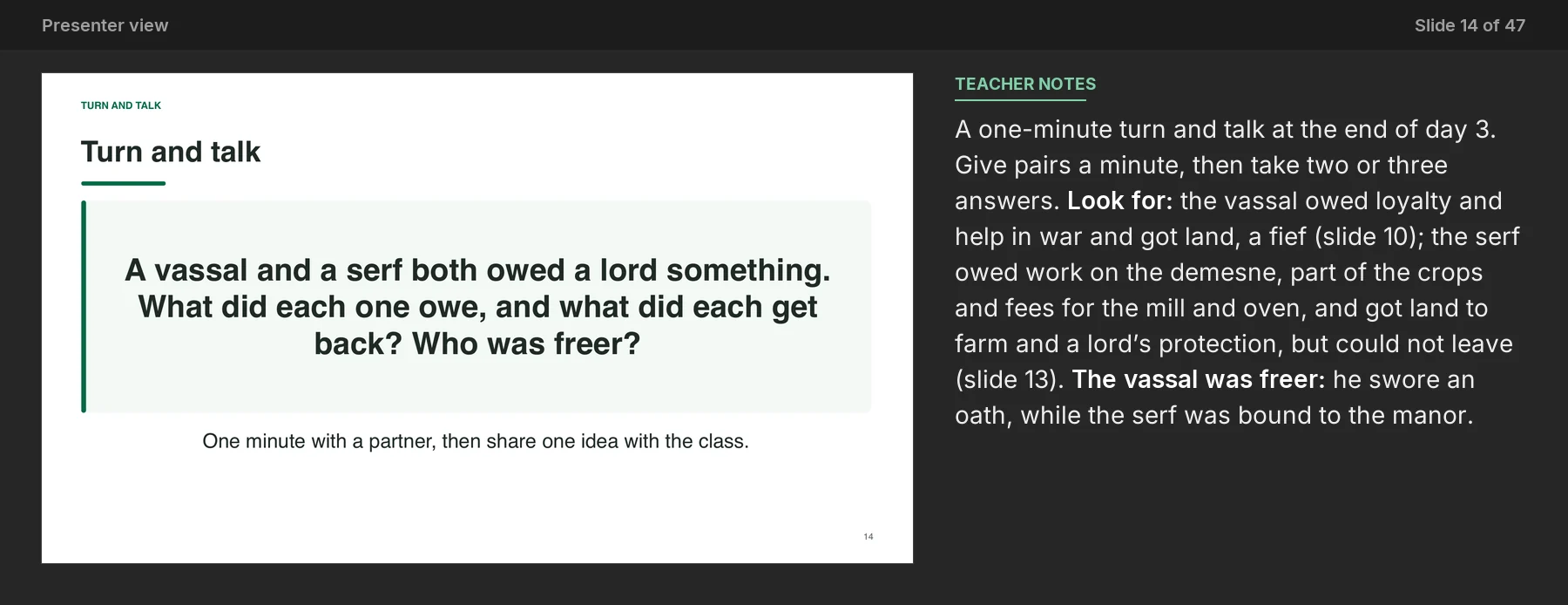
The lord’s own strips. His serfs worked them several days a week before their own.
Mill, pasture and woods
Peasants paid a fee to use the lord’s mill. Their animals shared the common pasture, and the woods gave firewood, timber and food for pigs.
Almost everything at home
Towns could be far away and peasants had little money, so the manor made most of what its people needed. Salt and iron came from outside.
Frequently asked questions
What was a medieval manor?
A lord’s estate with a village of peasants who farmed it, a church, a mill and fields, pasture and woods. Most people in medieval Europe lived on one.
What was the three-field system?
A way of farming in three large fields: one sown in autumn, one in spring, and one left fallow to rest. The fields took turns each year, so the soil stayed rich.
What did serfs owe the lord?
Work on the lord’s own land, the demesne, several days a week; part of their crops; and fees to use his mill and oven. They could not leave the manor without his permission.
What was the demesne?
The lord’s own land on the manor, worked by his serfs for him.