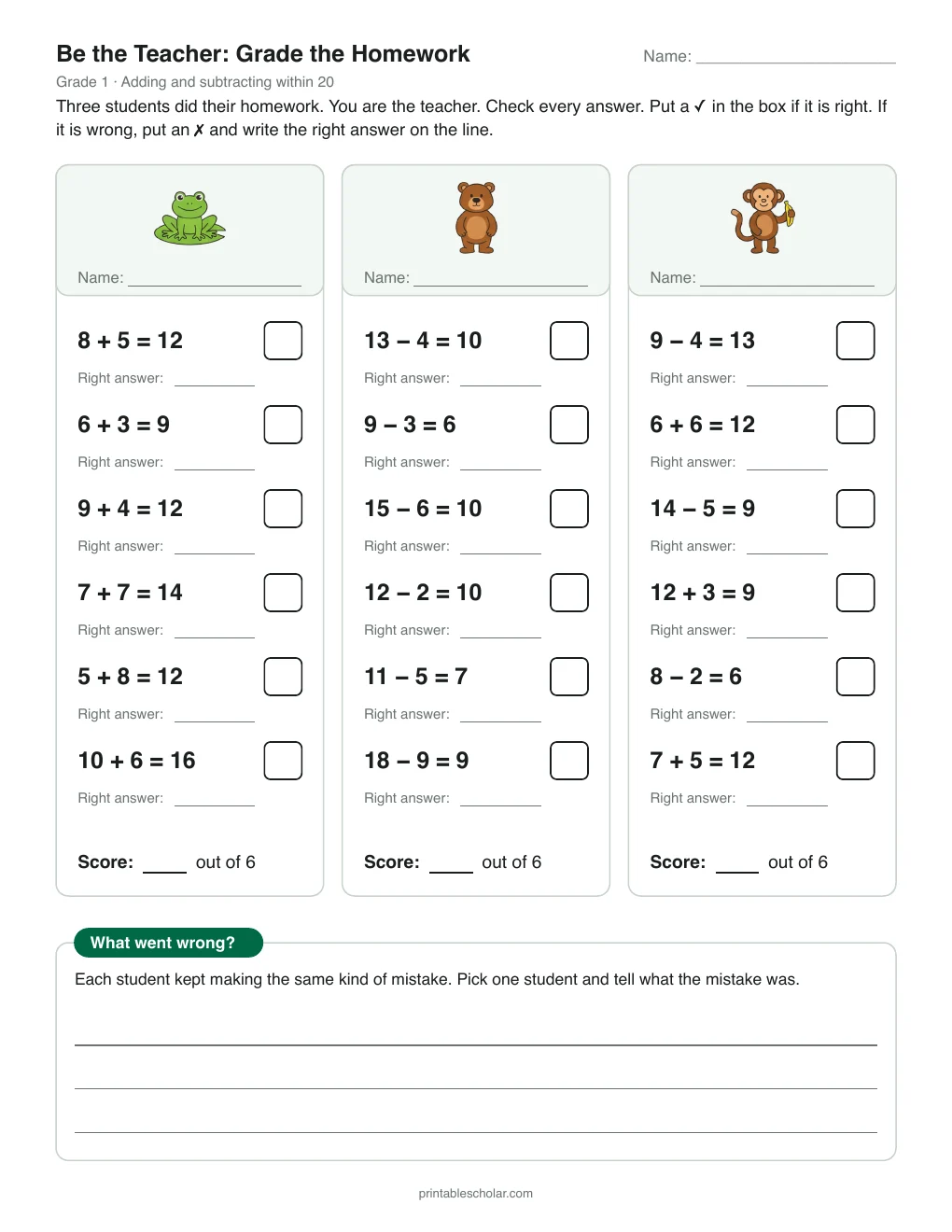
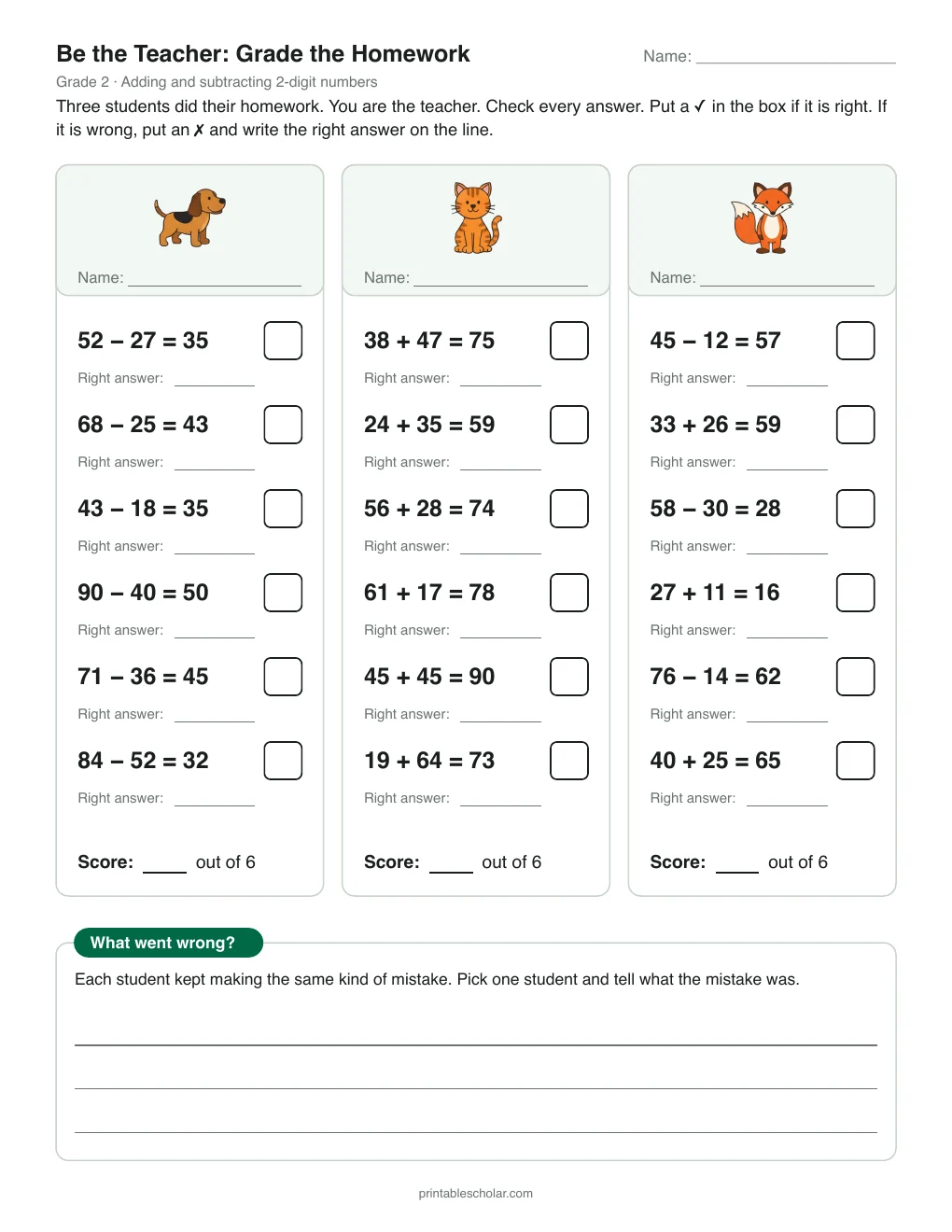
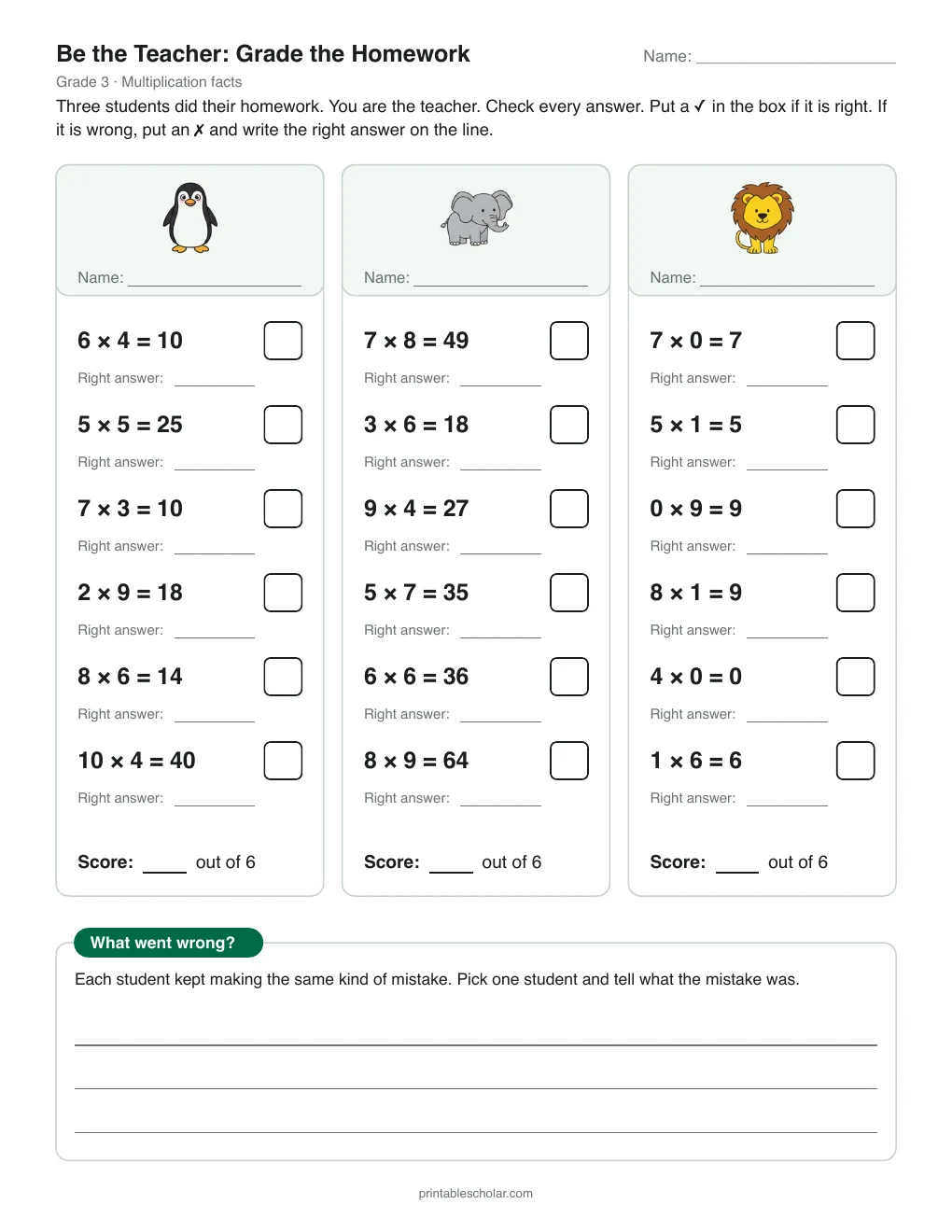
About the Find the Mistake Worksheets
Finding someone else's mistake is harder than getting the answer yourself. A student has to work the problem, compare, and then explain the difference. Teachers call this error analysis, and it is one of the quickest ways to see whether a child really understands a method.
The wrong answers here are not random. Each student makes one kind of mistake again and again, the kind children really make: taking the smaller digit from the bigger one when a problem needs regrouping, forgetting to carry a ten, or adding when the sign says multiply. Once a child can name the mistake, they are much less likely to make it.
Each column has both right and wrong answers, so every problem has to be checked. The answer key shows the marks, the corrections, the scores and the mistake each student made.
Frequently Asked Questions
What is an error analysis worksheet?
A sheet of worked problems, some of them wrong. The student finds the wrong ones, corrects them and explains the mistake. It builds checking habits and a deeper understanding of the method.
What grades are these for?
Grades 1 to 3. Grade 1 covers adding and subtracting within 20, grade 2 covers 2-digit adding and subtracting, and grade 3 covers multiplication facts.
How many answers are wrong?
Two or three in each column of six. The student does not know which, so every answer has to be checked.
Do the worksheets have answer keys?
Yes. Page 2 of each PDF shows the marks, the right answers, the scores and what each student did wrong.