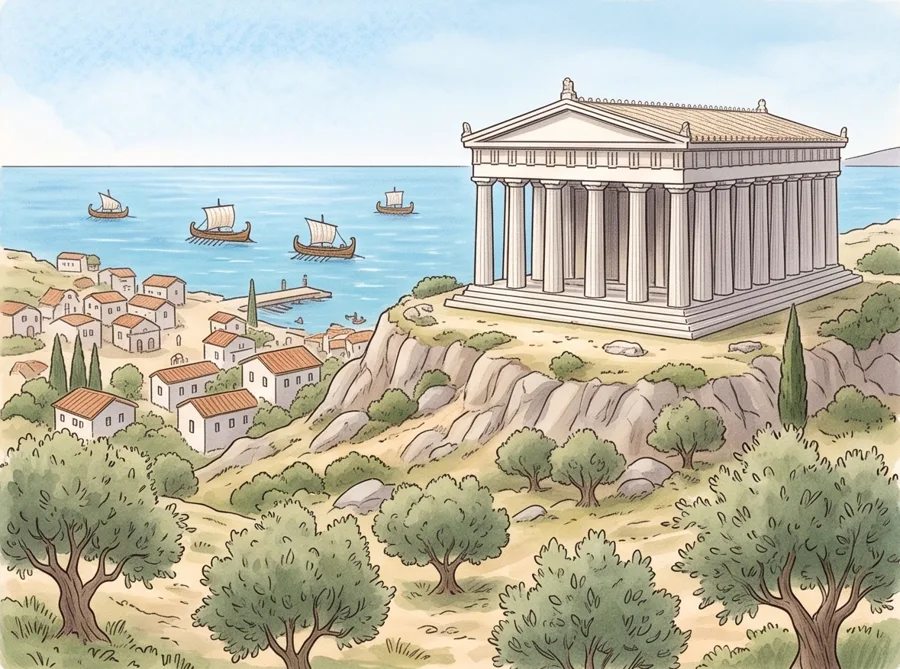
Ancient Greece Timeline for Kids
Long ago, the people of Greece lived in small cities beside the sea. They gave the world the Olympic Games, plays, and the idea that people can vote. This timeline shows some of the great moments of ancient Greece.
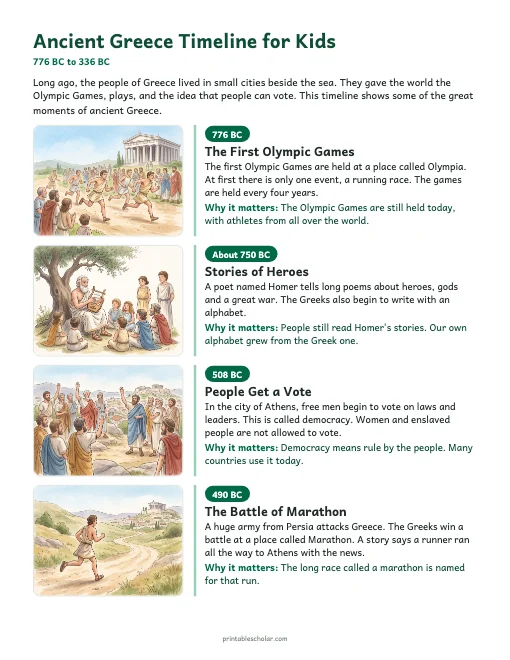
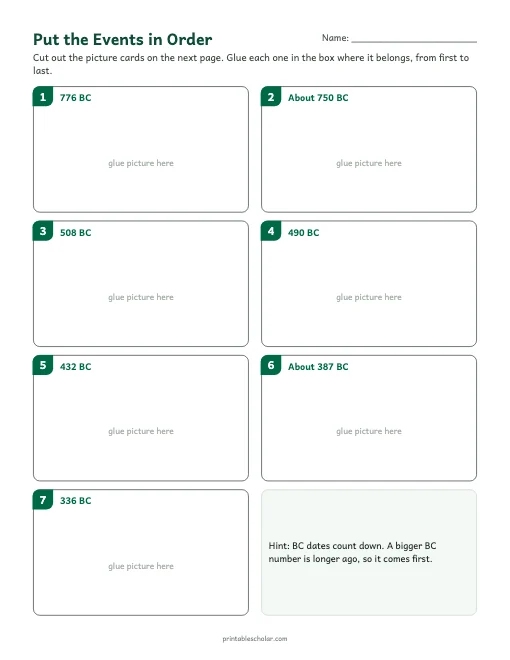
Cut and Order Activity
Cut out the seven picture cards and glue them in order on the timeline.
Download PDF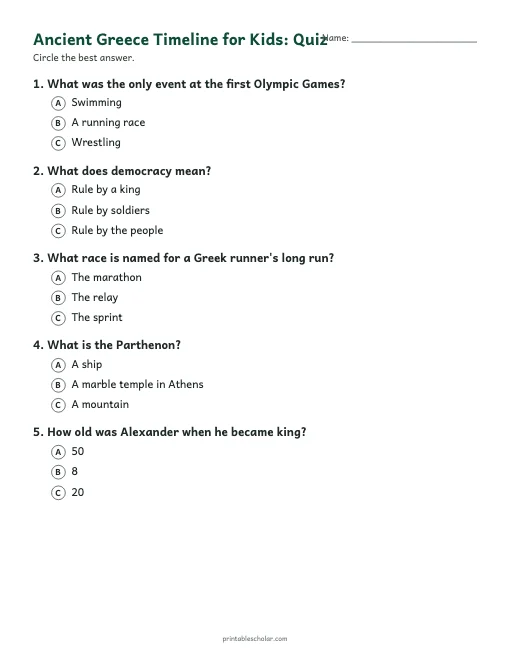
The timeline
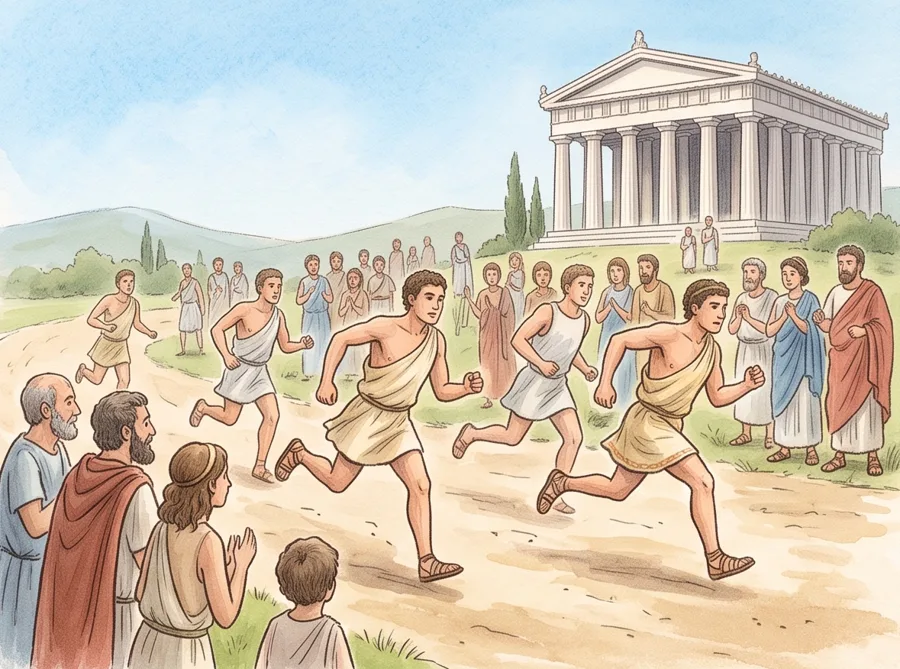 776 BC
The First Olympic Games
The first Olympic Games are held at a place called Olympia. At first there is only one event, a running race. The games are held every four years.
Why it matters: The Olympic Games are still held today, with athletes from all over the world.
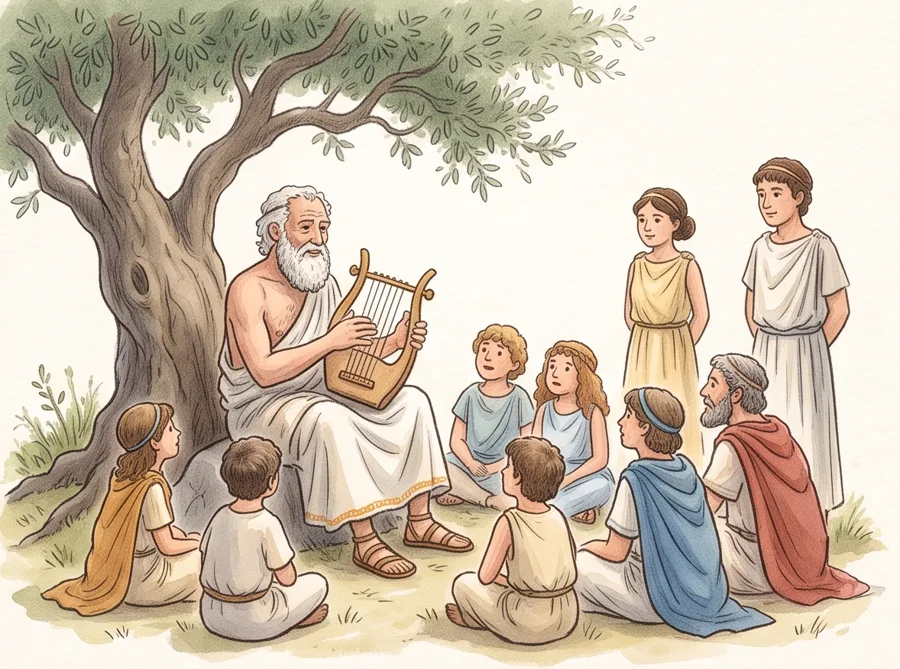 About 750 BC
Stories of Heroes
A poet named Homer tells long poems about heroes, gods and a great war. The Greeks also begin to write with an alphabet.
Why it matters: People still read Homer's stories. Our own alphabet grew from the Greek one.
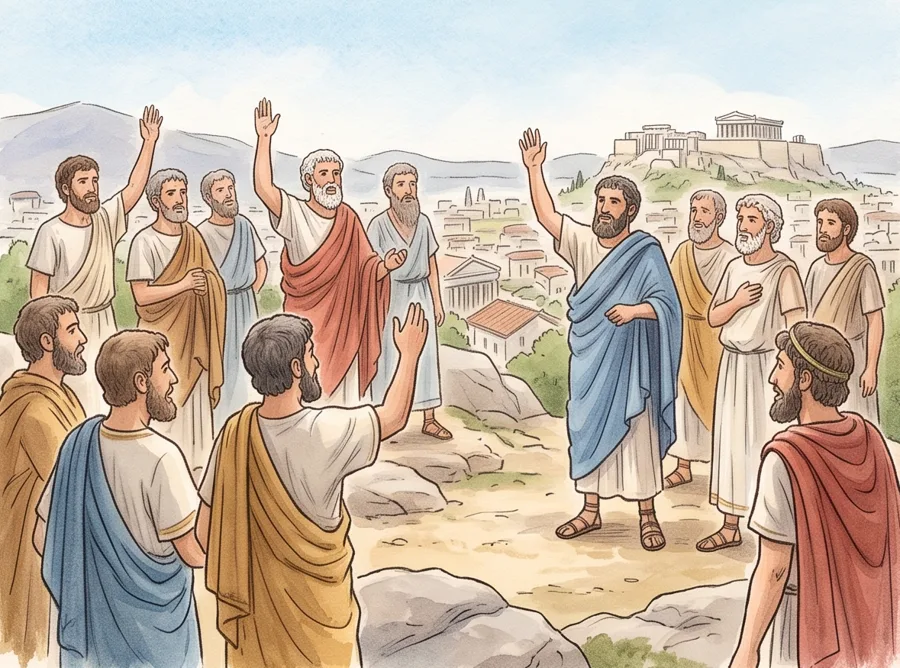 508 BC
People Get a Vote
In the city of Athens, free men begin to vote on laws and leaders. This is called democracy. Women and enslaved people are not allowed to vote.
Why it matters: Democracy means rule by the people. Many countries use it today.
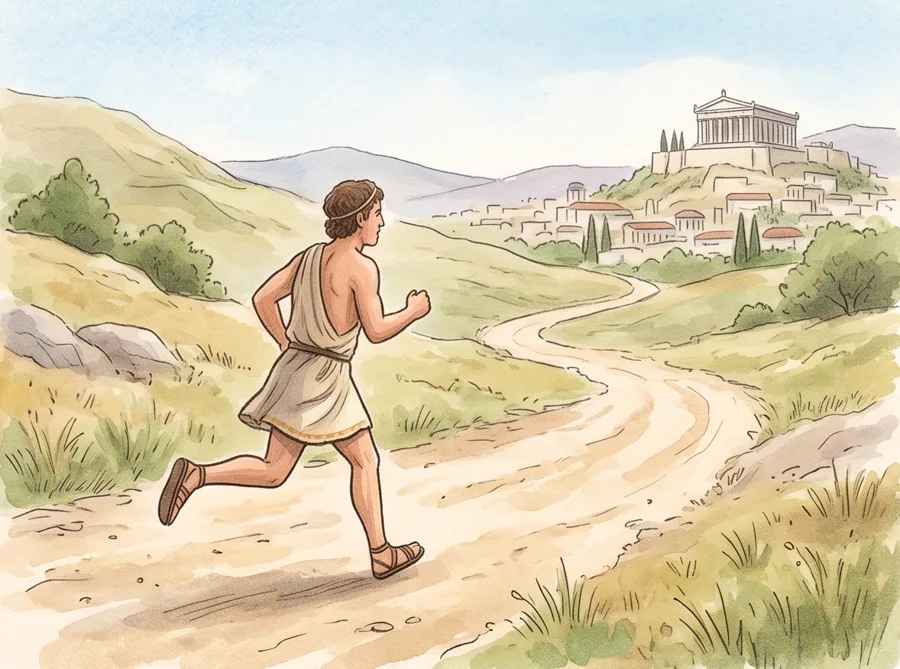 490 BC
The Battle of Marathon
A huge army from Persia attacks Greece. The Greeks win a battle at a place called Marathon. A story says a runner ran all the way to Athens with the news.
Why it matters: The long race called a marathon is named for that run.
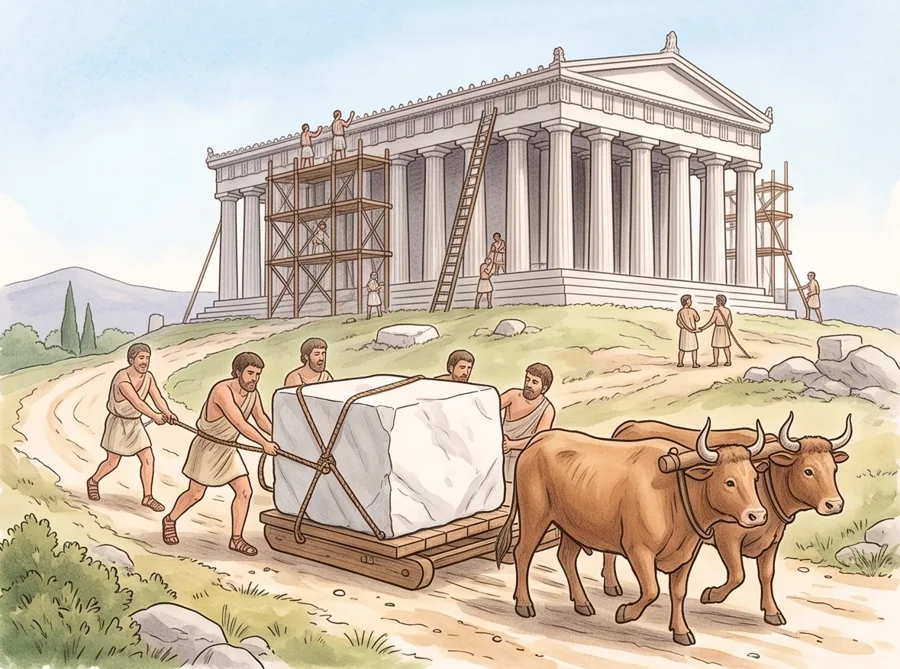 432 BC
The Parthenon
The people of Athens finish a great marble temple on a hill. It is called the Parthenon. It took 15 years to build.
Why it matters: The Parthenon still stands in Athens. It is one of the most famous buildings in the world.
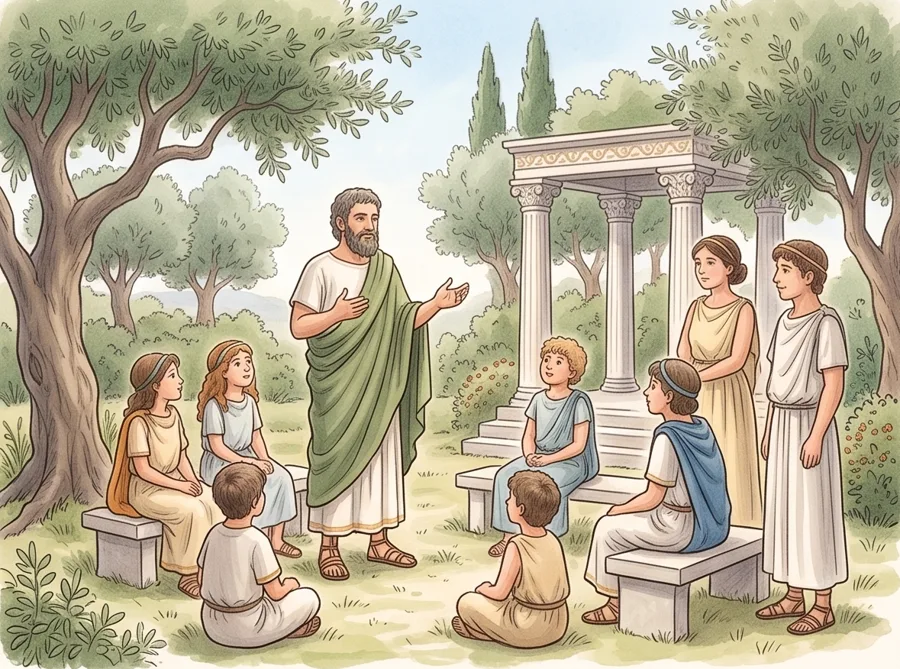 About 387 BC
A Famous School
A thinker named Plato opens a school in Athens. Students come to talk about big questions, like what is fair and what is true.
Why it matters: Greek thinkers changed the way people study math, science and ideas.
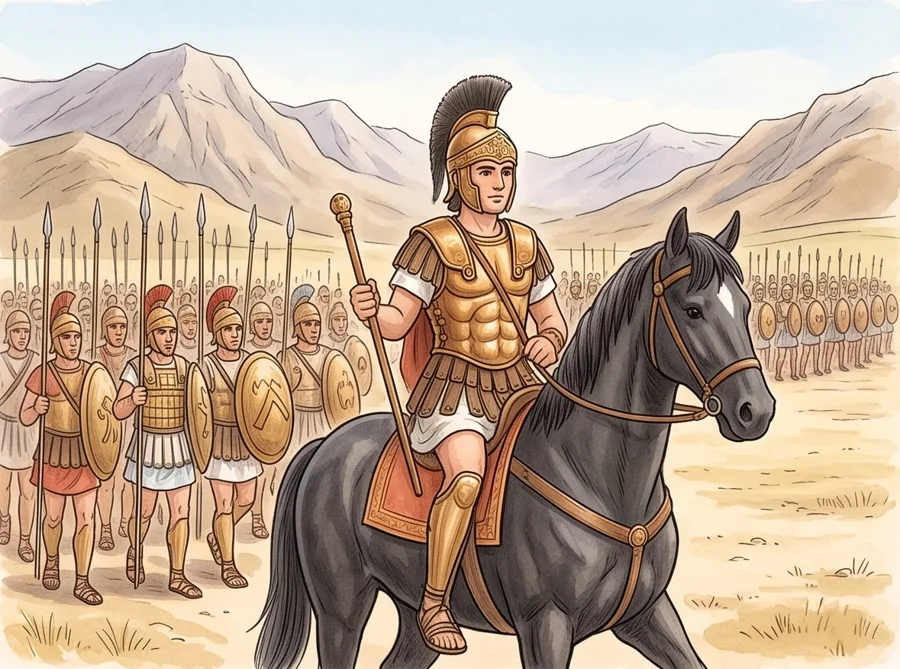 336 BC
Alexander the Great
Alexander becomes king at age 20. He leads his army east and builds a huge empire. It reaches all the way to India.
Why it matters: Greek language and ideas spread to many lands.
Words to know
- Olympic Games: sports contests first held in ancient Greece
- democracy: a kind of government where people vote
- temple: a building made for worship
- empire: many lands ruled by one leader
Quiz
- What was the only event at the first Olympic Games?
A. Swimming B. A running race C. Wrestling - What does democracy mean?
A. Rule by a king B. Rule by soldiers C. Rule by the people - What race is named for a Greek runner's long run?
A. The marathon B. The relay C. The sprint - What is the Parthenon?
A. A ship B. A marble temple in Athens C. A mountain - How old was Alexander when he became king?
A. 50 B. 8 C. 20
Show answers
1. B (A running race) 2. C (Rule by the people) 3. A (The marathon) 4. B (A marble temple in Athens) 5. C (20)
The pictures are illustrations made for this timeline. They show what these people and places may have looked like.