 Printable Scholar
Tenochtitlan: The Aztec City on the Lake
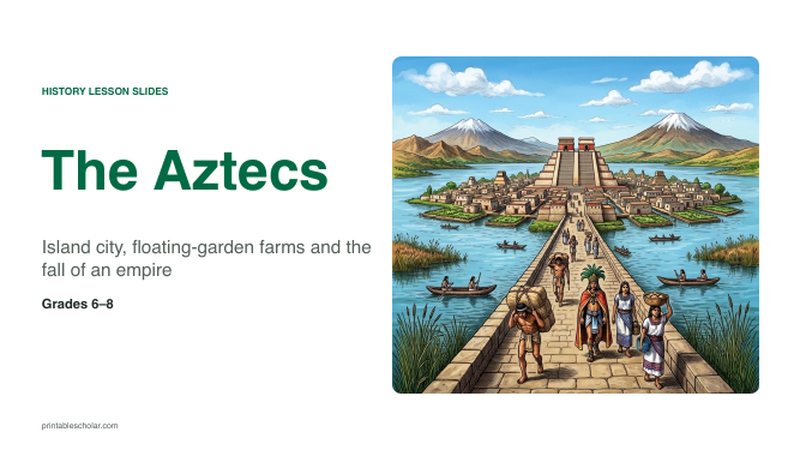
Tenochtitlan was the capital of the Mexica, the people we call the Aztecs. They founded it about 1325 on a small, swampy island in Lake Texcoco, and by 1519 about 200,000 people lived there, more than in almost any city in Europe then. Three causeways joined the island to the shore, canals crossed it like streets, chinampa fields fed it, and an aqueduct brought fresh water from Chapultepec hill. At its heart stood the Templo Mayor. After the Spanish conquest in 1521, Mexico City was built on its ruins.
Free to print
Labeled and blank Tenochtitlan picture
PDFs sized for US Letter paper, in color and black and white.
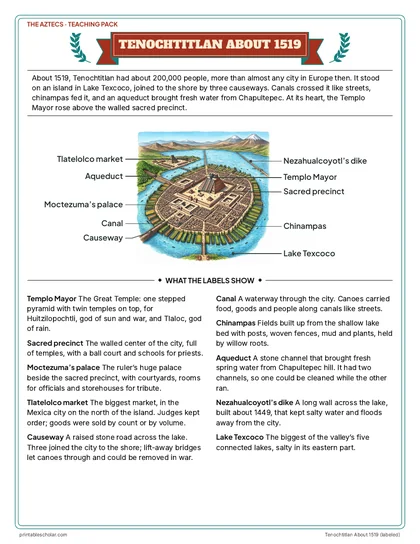
Tenochtitlan About 1519, labeled
A bird’s-eye picture of the island city with ten places labeled and what each one was.
Download PDF Black and white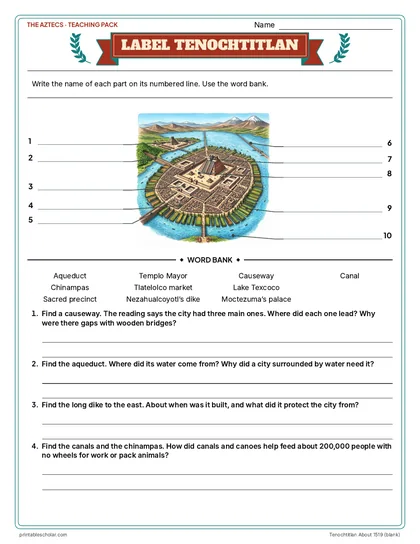
Label Tenochtitlan
The same picture with numbered blank labels, a word bank and four questions.
Download PDF Black and white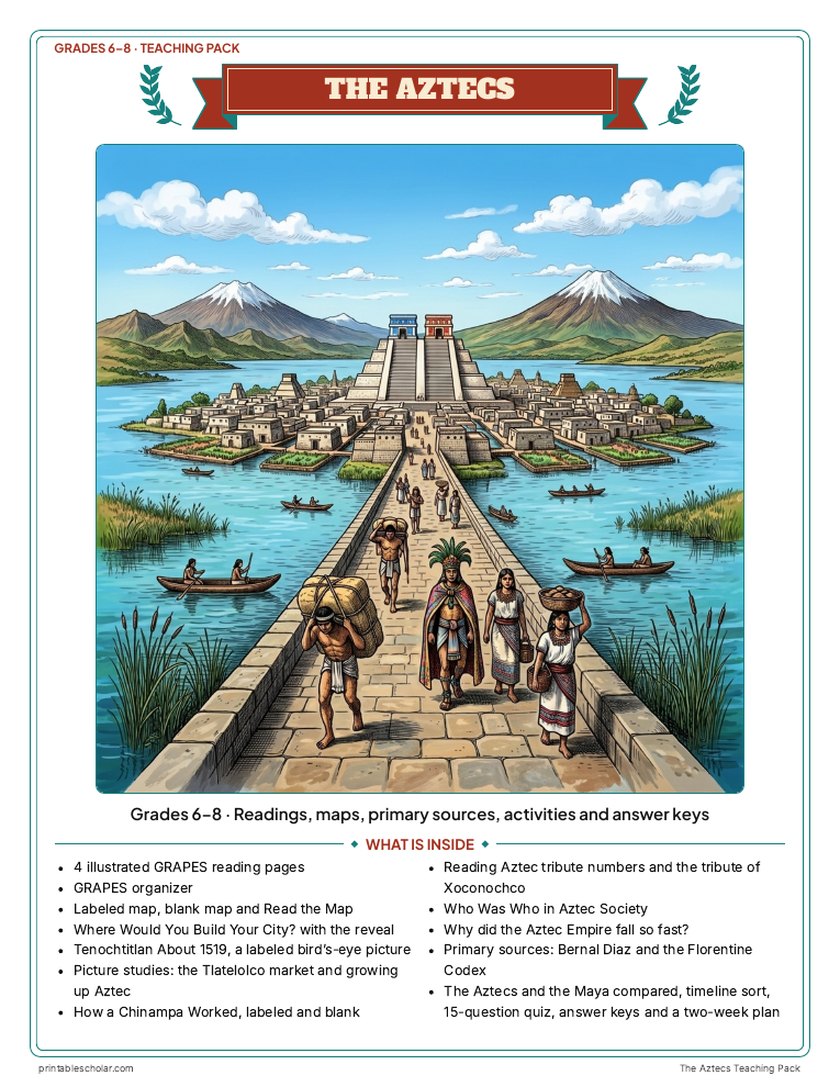
Teaching pack · Grades 6–8
Teaching the Aztecs? The whole unit, ready to teach.
Two weeks of lessons in one download: slides to present, notes for students to fill in, and printable pages that use these maps and pictures.
- 42 lesson slides (PowerPoint you can edit, teacher notes on every slide) and 2 pages of guided notes
- 4 illustrated reading pages and a GRAPES organizer
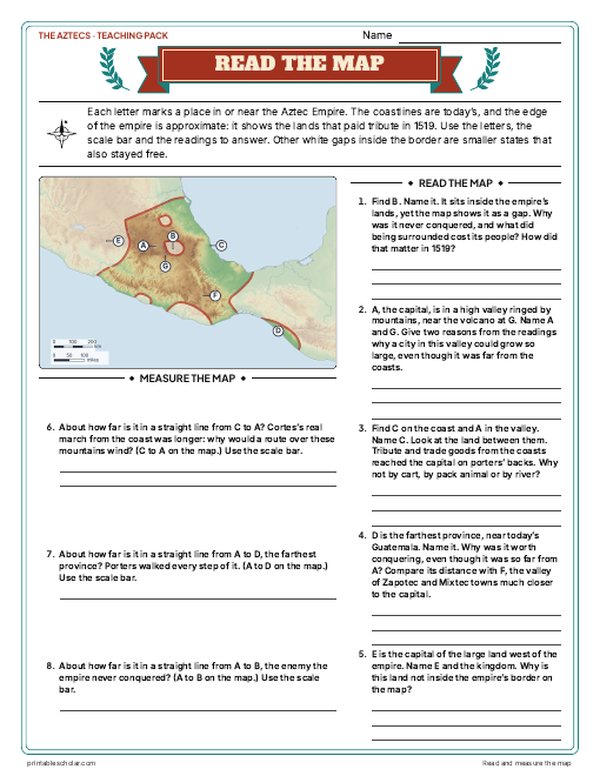
- Maps: labeled, blank, Read and Measure the Map, and a "Where would you build your city?" decision on the Valley of Mexico lakes with the reveal
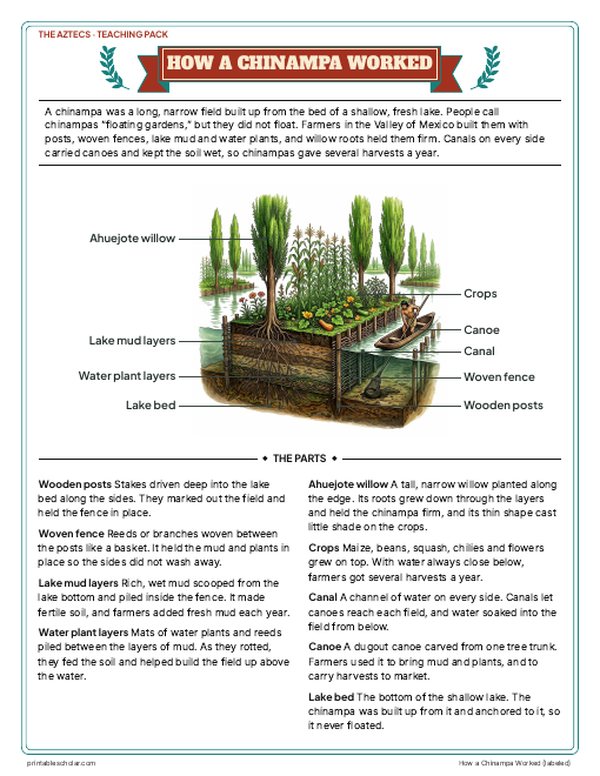
- Activities: a labeled bird's-eye picture of Tenochtitlan, picture studies of the Tlatelolco market and growing up Aztec, how a chinampa worked (labeled and blank), Aztec tribute numbers and the tribute of Xoconochco, who was who, why the empire fell so fast, Bernal Diaz and the Florentine Codex, the Aztecs and the Maya compared, and a timeline sort
- A 15-question quiz, a teacher guide with a two-week plan, and answer keys for everything
Every answer is in the pack. The readings, slides, maps and pictures teach everything the sheets and quiz ask, so no textbook is needed.
Get the Aztecs pack for $7One-time purchase. Instant download. Color and ink-saving black-and-white editions. Secure checkout by Stripe.
What made Tenochtitlan work
Causeways
Three raised stone roads crossed the lake to the north, west and south shores. Bridges in them could be lifted away, which let canoes pass and made the city hard to attack.
Canals and canoes
Canals ran through the city like streets. Canoes carried food, tribute, building stone and people, since the Mexica had no wheels for work and no pack animals.
Fresh water
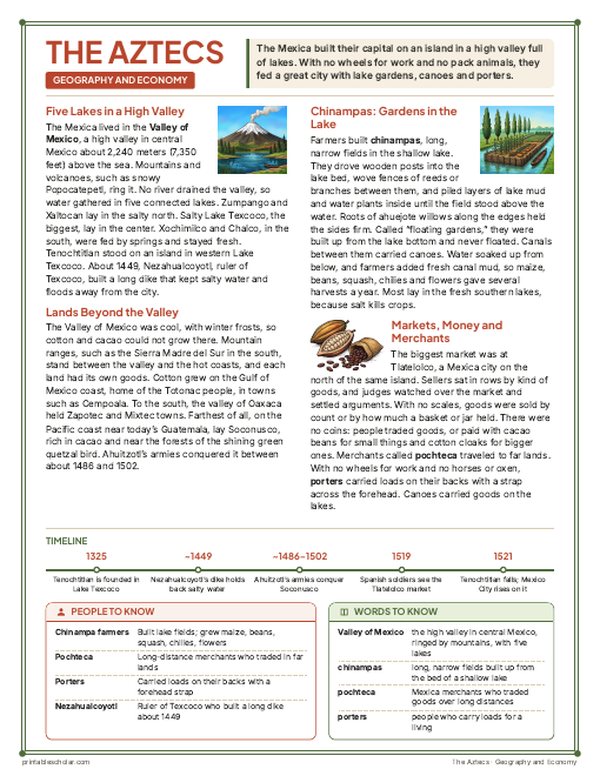
The lake around the city was partly salty. A stone aqueduct with two channels brought spring water from Chapultepec hill, and Nezahualcoyotl’s dike, built about 1449, held back salty water and floods.
The Templo Mayor
The Great Temple stood in the walled sacred precinct: one stepped pyramid with twin temples on top, for Huitzilopochtli, god of sun and war, and Tlaloc, god of rain.
Frequently asked questions
How big was Tenochtitlan?
About 200,000 people lived there around 1519, more than in almost any European city at the time.
Why was Tenochtitlan built on a lake?
The Mexica arrived late in the Valley of Mexico, and stronger neighbors held the good land. They settled on an island nobody wanted, then made it strong with chinampas, canoes, causeways and an aqueduct.
What happened to Tenochtitlan?
Spanish soldiers and tens of thousands of Indigenous allies besieged it in 1521, and it fell on August 13. Mexico City was built on its ruins, and the Templo Mayor’s remains can be seen there today.