 Printable Scholar
Roman Social Classes and How the Republic Was Run
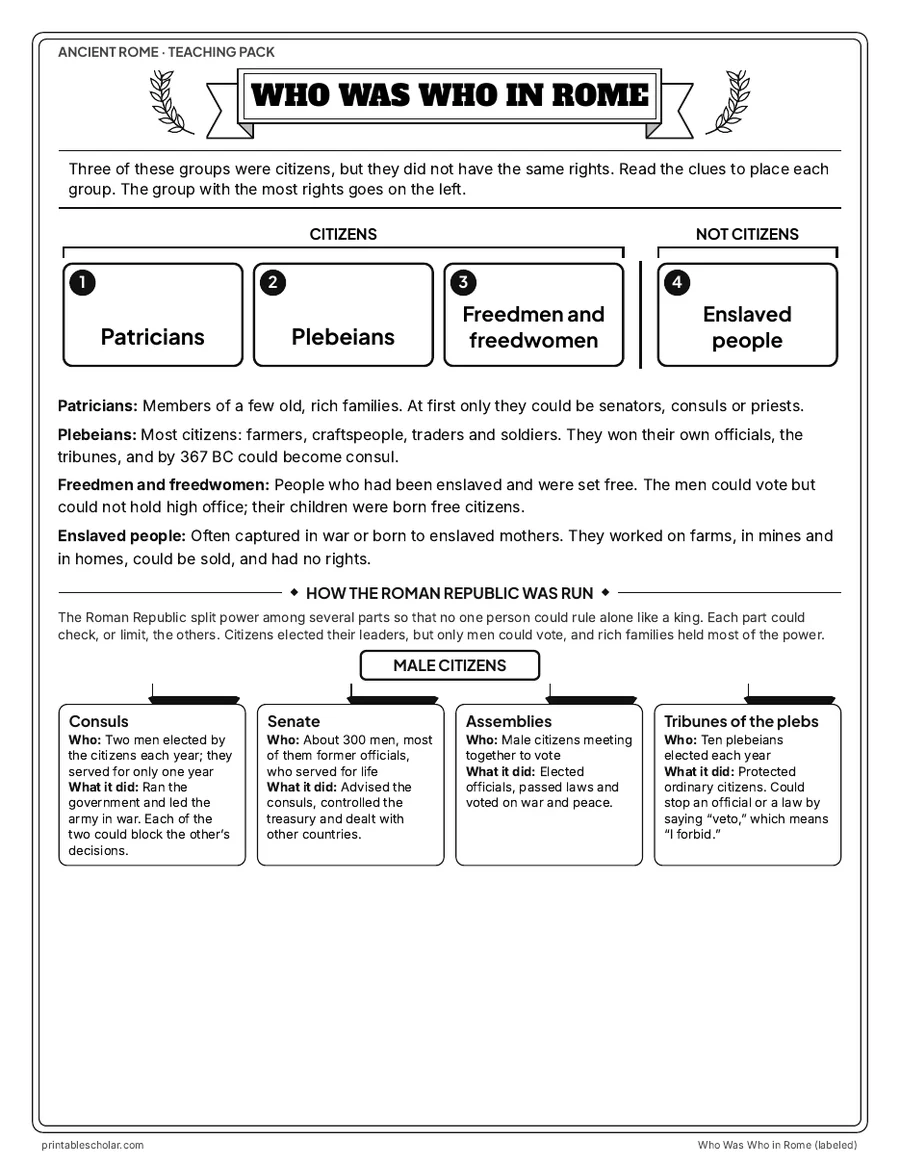
Roman society was split by birth and by freedom. A few old rich families, the patricians, held most power at first; most citizens were plebeians; freed people had some rights; enslaved people had none. The Roman Republic split power among several parts so that no one person could rule alone like a king. Each part could check, or limit, the others. Citizens elected their leaders, but only men could vote, and rich families held most of the power.
Free to print
A filled-in chart, and a blank one to complete
PDFs sized for US Letter paper, in color and black and white.
Who Was Who in Rome, filled in
The four groups in order of their rights, and the Republic’s four parts of government with who served and what each did.
Download PDF Black and white
Who Was Who in Rome: fill it in
Place the four groups from the clues, match each part of the government to its job, and answer three questions.
Download PDF Black and white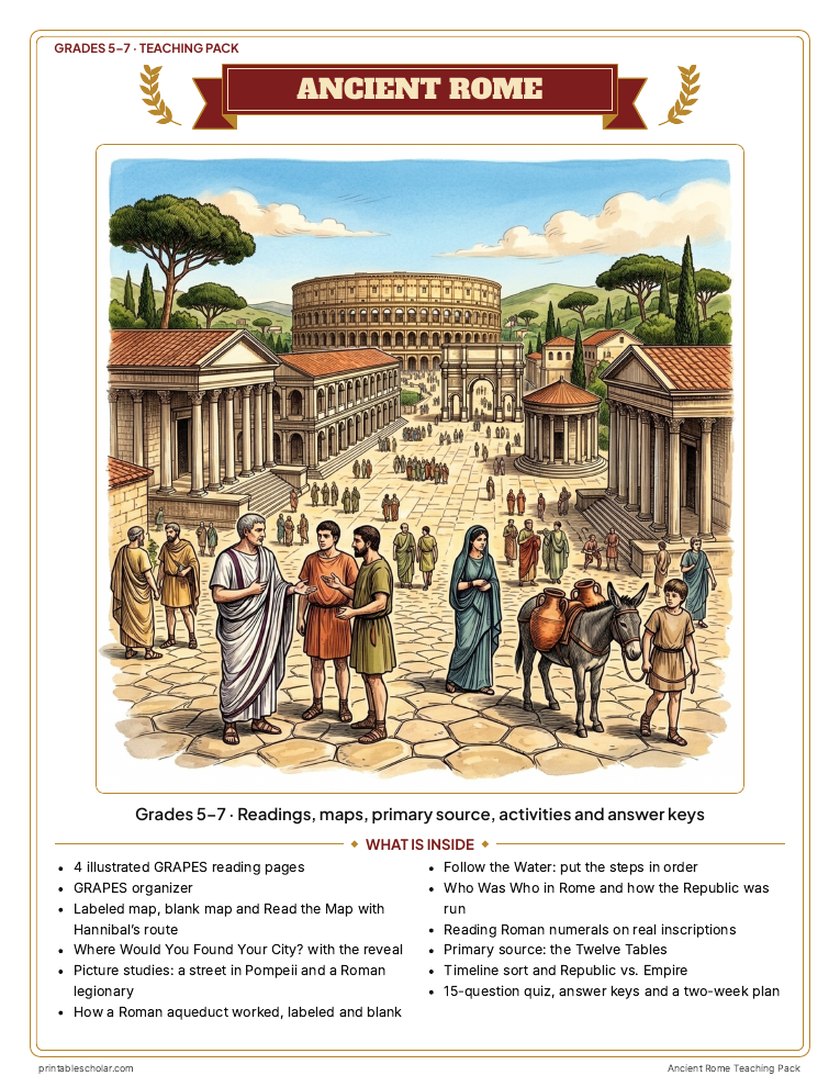
Teaching pack · Grades 5–7
Teaching Ancient Rome? The whole unit, ready to teach.
Two weeks of lessons in one download: slides to present, notes for students to fill in, and printable pages that use these maps and pictures.
- 20 lesson slides (PowerPoint you can edit, teacher notes on every slide) and 2 pages of guided notes
- 4 illustrated reading pages and a GRAPES organizer
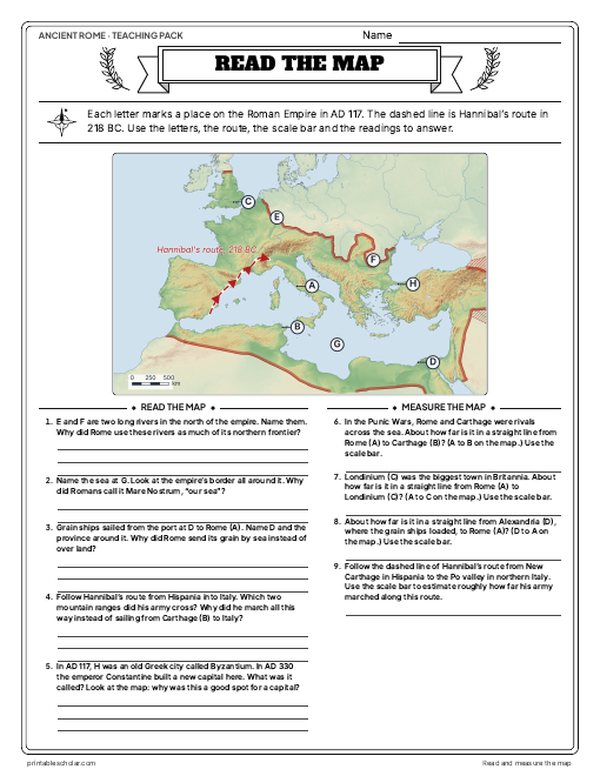
- Maps: labeled, blank, Read and Measure the Map with Hannibal's route, and a "Where would you found your city?" decision with the reveal
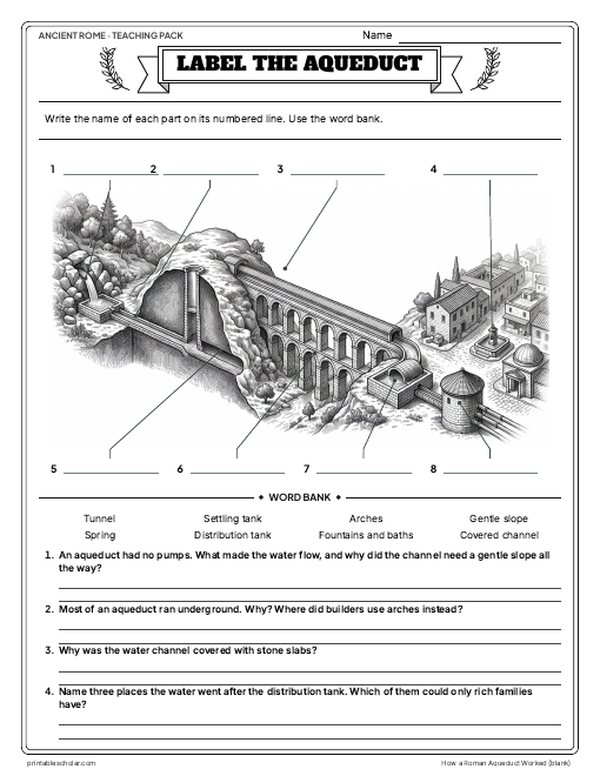
- Activities: picture studies of a Pompeii street and a Roman legionary, how an aqueduct worked (labeled, blank and the steps), who was who in Rome and how the Republic was run, Roman numerals on real inscriptions, the Twelve Tables, a timeline sort and Republic vs. Empire
- A 15-question quiz, a teacher guide with a two-week plan, and answer keys for everything
Every answer is in the pack. The readings, slides, maps and pictures teach everything the sheets and quiz ask, so no textbook is needed.
Get the Ancient Rome pack for $7One-time purchase. Instant download. Color and ink-saving black-and-white editions. Secure checkout by Stripe.
Who was who, and who ran the Republic
Patricians
Members of a few old, rich families. At first only they could be senators, consuls or priests.
Plebeians
Most citizens: farmers, craftspeople, traders and soldiers. They won their own officials, the tribunes, and by 367 BC could become consul.
Freedmen and freedwomen
People who had been enslaved and were set free. The men could vote but could not hold high office; their children were born free citizens.
Enslaved people
Often captured in war or born to enslaved mothers. They worked on farms, in mines and in homes, could be sold, and had no rights.
Consuls
Two men elected by the citizens each year; they served for only one year. Ran the government and led the army in war. Each of the two could block the other’s decisions.
Senate
About 300 men, most of them former officials, who served for life. Advised the consuls, controlled the treasury and dealt with other countries.
Assemblies
Male citizens meeting together to vote. Elected officials, passed laws and voted on war and peace.
Tribunes of the plebs
Ten plebeians elected each year. Protected ordinary citizens. Could stop an official or a law by saying "veto," which means "I forbid."
Frequently asked questions
What was the difference between patricians and plebeians?
Patricians were members of a few old, rich families; at first only they could be senators, consuls or priests. Plebeians were most citizens: farmers, craftspeople, traders and soldiers. Over time plebeians won their own officials, the tribunes, and by 367 BC the right to become consul.
How was the Roman Republic governed?
Two consuls elected for one year ran the government and led the army; the Senate of about 300 former officials advised them and controlled the treasury; assemblies of male citizens elected officials and passed laws; ten tribunes protected ordinary citizens and could veto an official or a law.
What does veto mean?
Veto is Latin for "I forbid." A Roman tribune could stop an official’s action or a new law by saying it.