 Printable Scholar
The Mummification Process: How Egyptians Made a Mummy
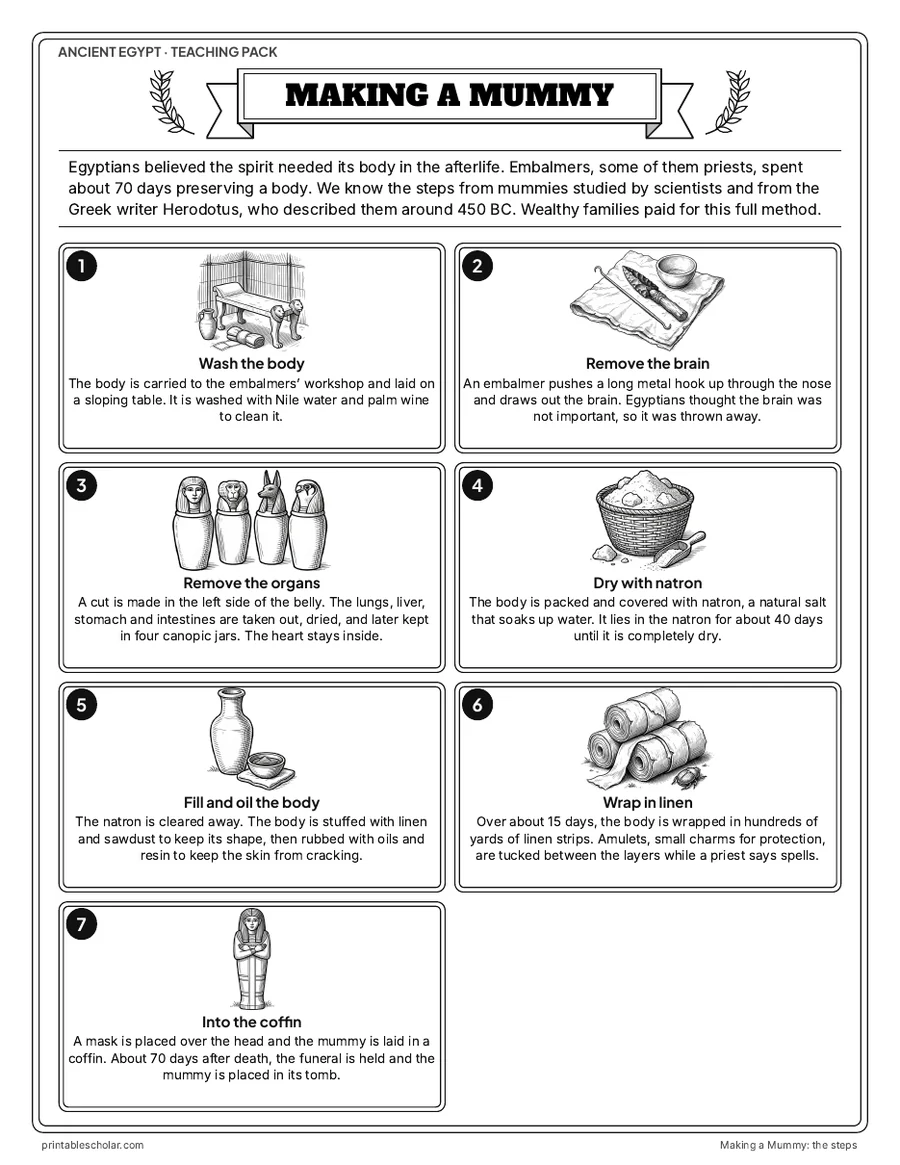
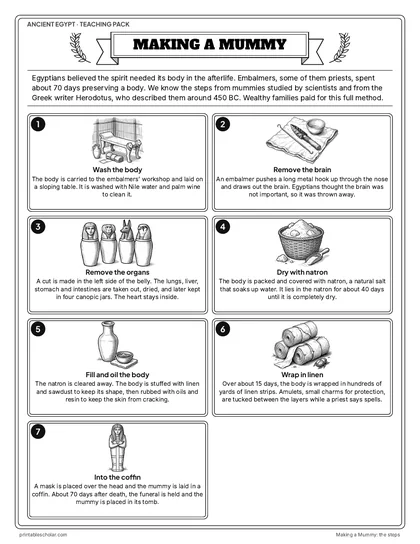
Egyptians believed the spirit needed its body in the afterlife. Embalmers, some of them priests, spent about 70 days preserving a body. We know the steps from mummies studied by scientists and from the Greek writer Herodotus, who described them around 450 BC. Wealthy families paid for this full method.
Free to print
The steps, and a sheet to put them in order
PDFs sized for US Letter paper, in color and black and white.
Making a Mummy: the 7 steps
Each step with an engraving-style picture and a short explanation, in order.
Download PDF Black and white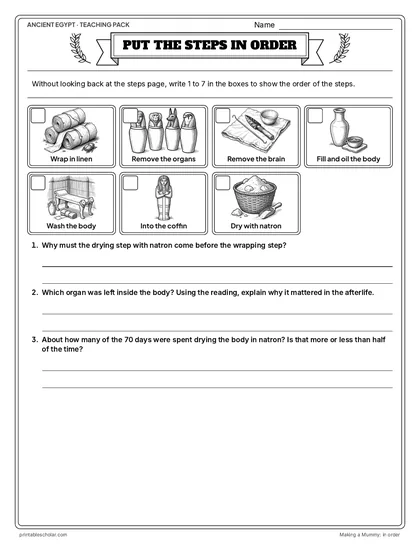
Put the Steps in Order
The same pictures out of order, with three questions. The answers are on the steps sheet.
Download PDF Black and white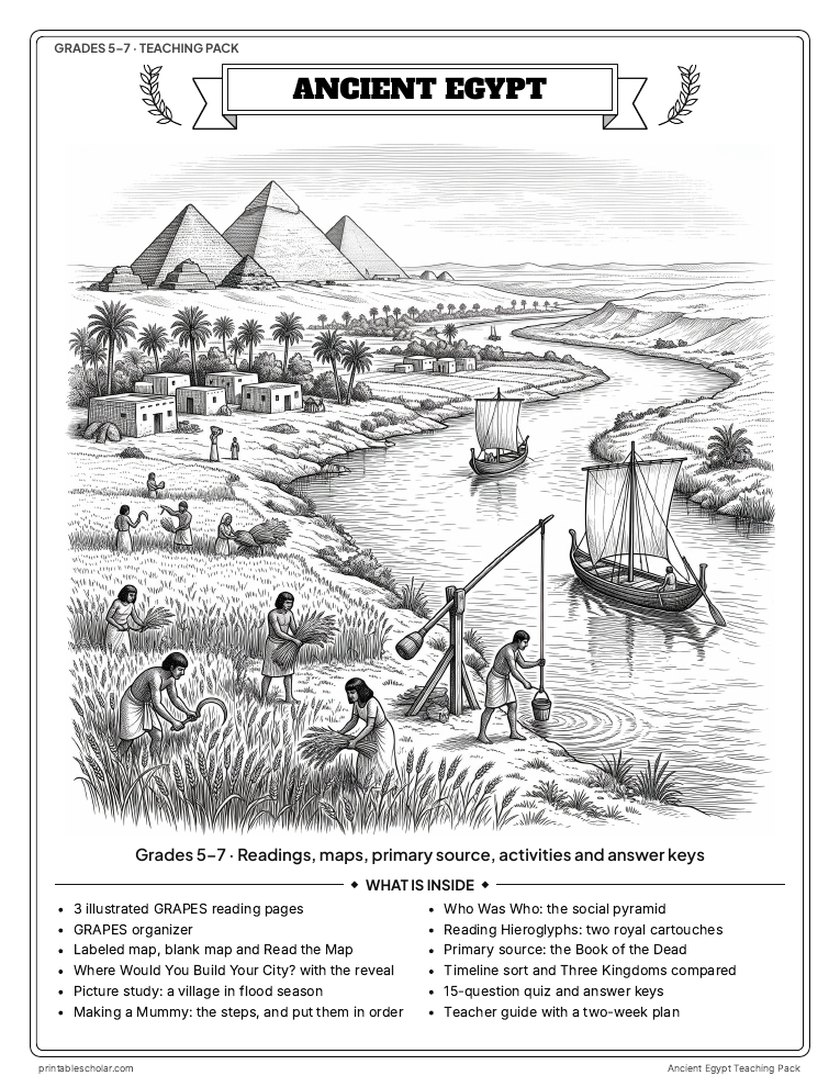
Teaching pack · Grades 5–7
Teaching Ancient Egypt? The whole unit, ready to teach.
Two weeks of lessons in one download: slides to present, notes for students to fill in, and printable pages that use these maps and pictures.
- 23 lesson slides (PowerPoint you can edit, teacher notes on every slide) and 2 pages of guided notes
- 3 illustrated reading pages and a GRAPES organizer
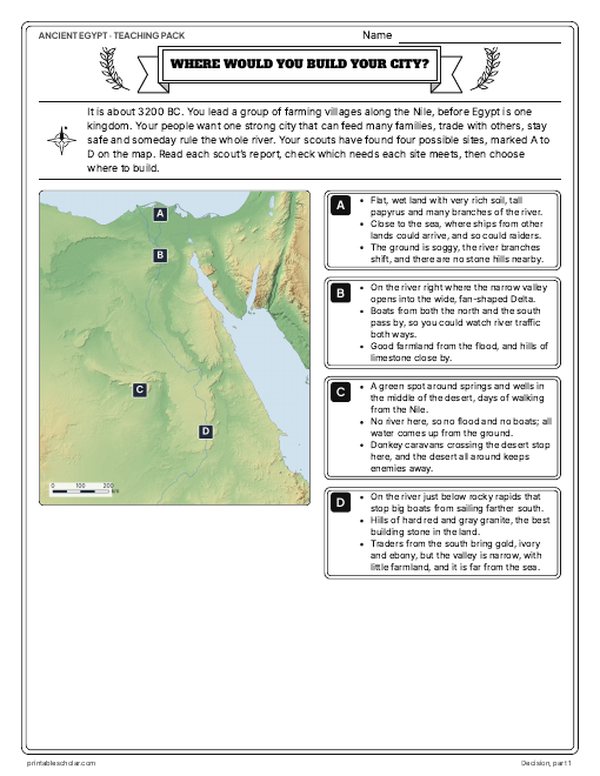
- Maps: labeled, blank, Read and Measure the Map, and a "Where would you build your city?" decision with the reveal
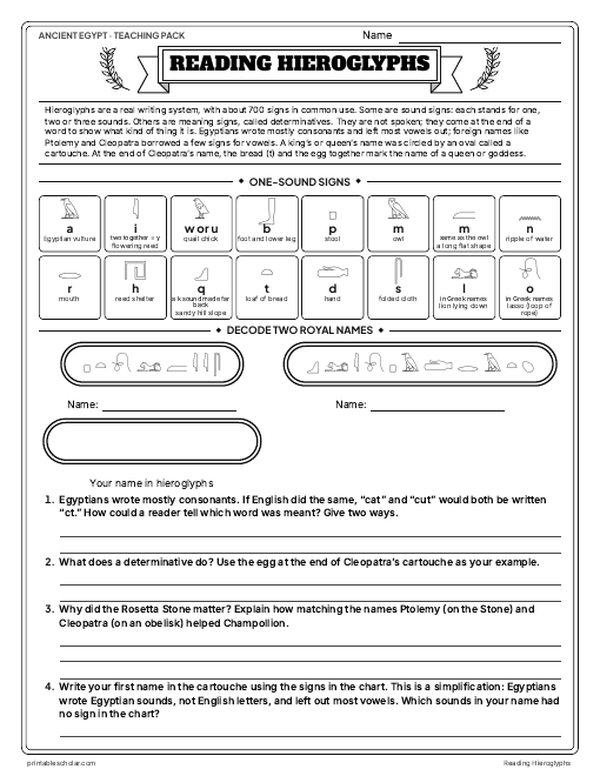
- Activities: a picture study, the steps of making a mummy, the social pyramid, reading hieroglyphs, a primary source and a timeline sort
- A 15-question quiz, a teacher guide with a two-week plan, and answer keys for everything
Every answer is in the pack. The readings, slides, maps and pictures teach everything the sheets and quiz ask, so no textbook is needed.
Get the Ancient Egypt pack for $7One-time purchase. Instant download. Color and ink-saving black-and-white editions. Secure checkout by Stripe.
The steps of mummification
1. Wash the body
The body is carried to the embalmers’ workshop and laid on a sloping table. It is washed with Nile water and palm wine to clean it.
2. Remove the brain
An embalmer pushes a long metal hook up through the nose and draws out the brain. Egyptians thought the brain was not important, so it was thrown away.
3. Remove the organs
A cut is made in the left side of the belly. The lungs, liver, stomach and intestines are taken out, dried, and later kept in four canopic jars. The heart stays inside.
4. Dry with natron
The body is packed and covered with natron, a natural salt that soaks up water. It lies in the natron for about 40 days until it is completely dry.
5. Fill and oil the body
The natron is cleared away. The body is stuffed with linen and sawdust to keep its shape, then rubbed with oils and resin to keep the skin from cracking.
6. Wrap in linen
Over about 15 days, the body is wrapped in hundreds of yards of linen strips. Amulets, small charms for protection, are tucked between the layers while a priest says spells.
7. Into the coffin
A mask is placed over the head and the mummy is laid in a coffin. About 70 days after death, the funeral is held and the mummy is placed in its tomb.
Frequently asked questions
How long did mummification take?
About 70 days from start to finish. About 40 of those days were spent drying the body in natron, a natural salt.
Why did Egyptians make mummies?
Egyptians believed the spirit needed its body in the afterlife, so the body was preserved to keep it whole.
Which organ stayed inside the body?
The heart. Egyptians believed it would be weighed against the feather of Maat in the final judgment.
What were canopic jars?
Four jars that held the dried lungs, liver, stomach and intestines. Their lids showed the heads of four protector gods.