 Printable Scholar
Ancient Egypt Social Structure: The Social Pyramid
Egyptian society was shaped like a pyramid: the pharaoh alone at the top, a few powerful officials and priests below, and most people farming the land. The chart shows rank, from the most power at the top to the fewest rights at the bottom.
Free to print
A labeled pyramid, and a blank one to fill in
PDFs sized for US Letter paper, in color and black and white.
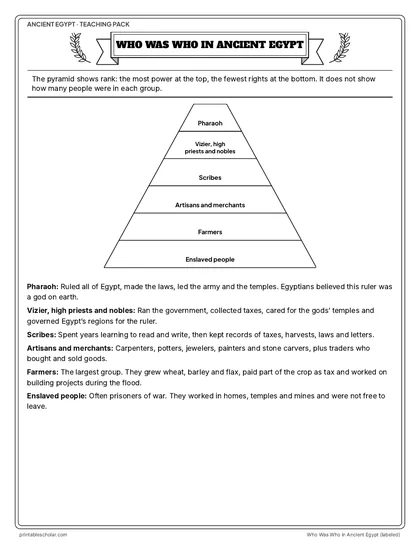
The social pyramid, labeled
Every group in its place, with what each group did.
Download PDF Black and white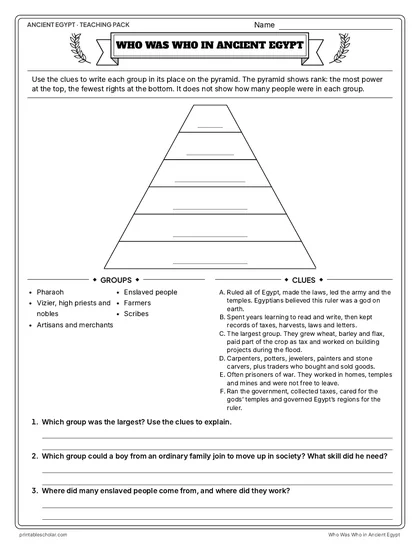
Who Was Who: fill it in
A blank pyramid with a word bank and clues, and three questions.
Download PDF Black and white
Teaching pack · Grades 5–7
Teaching Ancient Egypt? The whole unit, ready to teach.
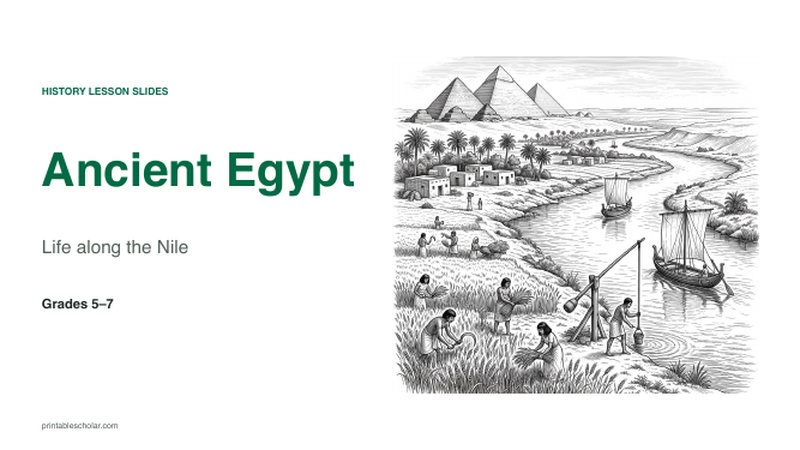
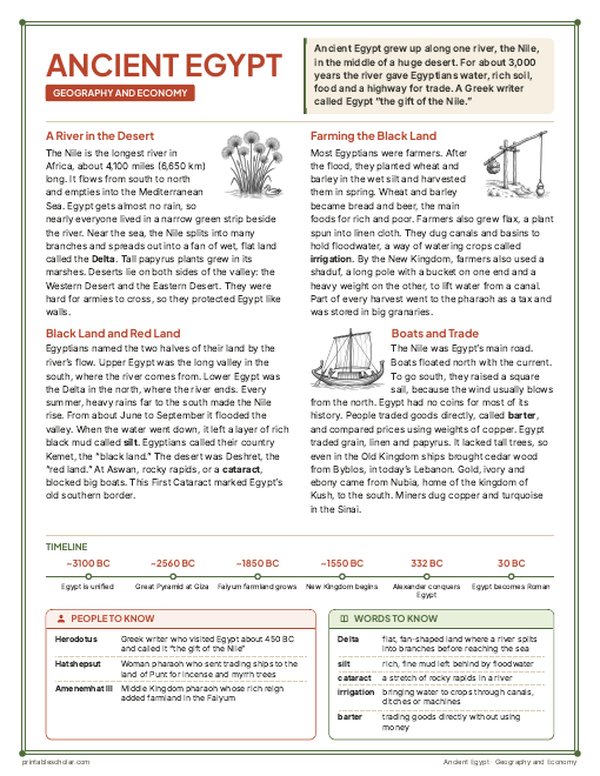
Two weeks of lessons in one download: slides to present, notes for students to fill in, and printable pages that use these maps and pictures.
- 23 lesson slides (PowerPoint you can edit, teacher notes on every slide) and 2 pages of guided notes
- 3 illustrated reading pages and a GRAPES organizer
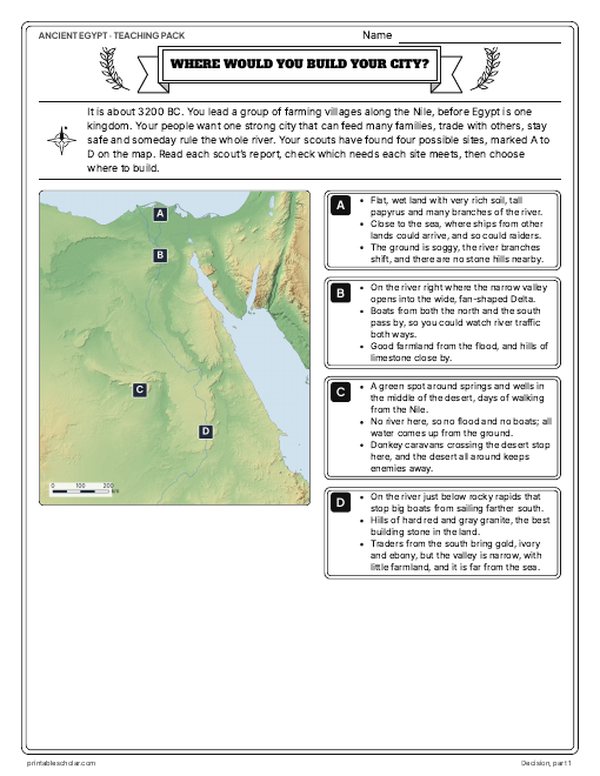
- Maps: labeled, blank, Read and Measure the Map, and a "Where would you build your city?" decision with the reveal
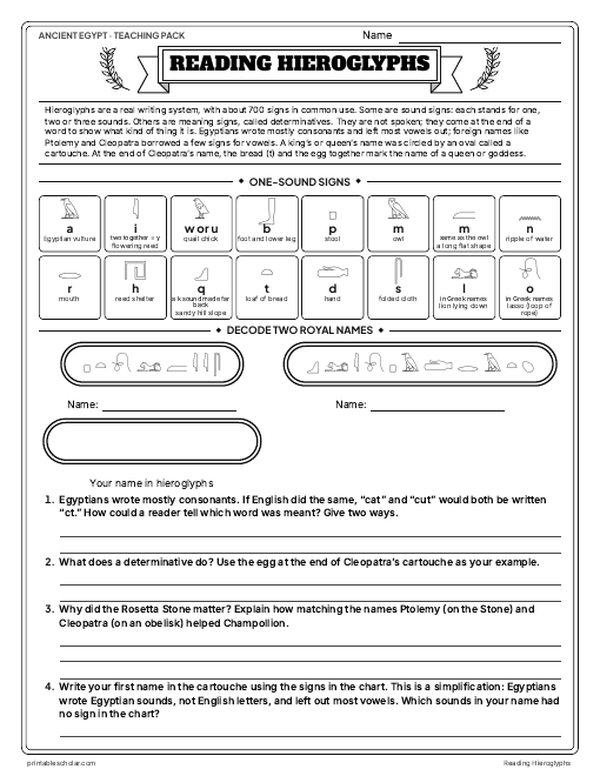
- Activities: a picture study, the steps of making a mummy, the social pyramid, reading hieroglyphs, a primary source and a timeline sort
- A 15-question quiz, a teacher guide with a two-week plan, and answer keys for everything
Every answer is in the pack. The readings, slides, maps and pictures teach everything the sheets and quiz ask, so no textbook is needed.
Get the Ancient Egypt pack for $7One-time purchase. Instant download. Color and ink-saving black-and-white editions. Secure checkout by Stripe.
Who was who in ancient Egypt
Pharaoh
Ruled all of Egypt, made the laws, led the army and the temples. Egyptians believed this ruler was a god on earth.
Vizier, high priests and nobles
Ran the government, collected taxes, cared for the gods’ temples and governed Egypt’s regions for the ruler.
Scribes
Spent years learning to read and write, then kept records of taxes, harvests, laws and letters.
Artisans and merchants
Carpenters, potters, jewelers, painters and stone carvers, plus traders who bought and sold goods.
Farmers
The largest group. They grew wheat, barley and flax, paid part of the crop as tax and worked on building projects during the flood.
Enslaved people
Often prisoners of war. They worked in homes, temples and mines and were not free to leave.
What the pyramid shows
The pyramid shows rank: the most power at the top, the fewest rights at the bottom. It does not show how many people were in each group.
Frequently asked questions
Who was at the top of Egyptian society?
The pharaoh, who ruled all of Egypt, made the laws and led the army and the temples. Egyptians believed the pharaoh was a god on earth.
Which group was the largest?
Farmers. They grew wheat, barley and flax, paid part of the crop as tax and worked on building projects during the flood.
Could people move up in Egyptian society?
Sometimes. A boy from an ordinary family could become a scribe if he spent years learning to read and write.