 Printable Scholar
How the Hagia Sophia Was Built
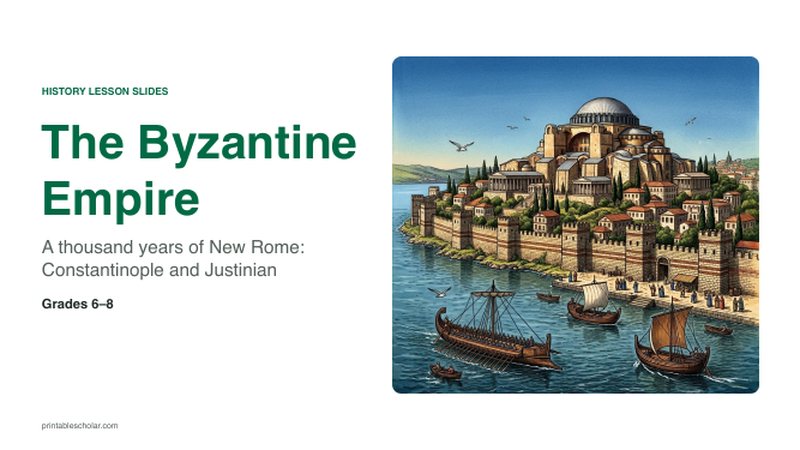
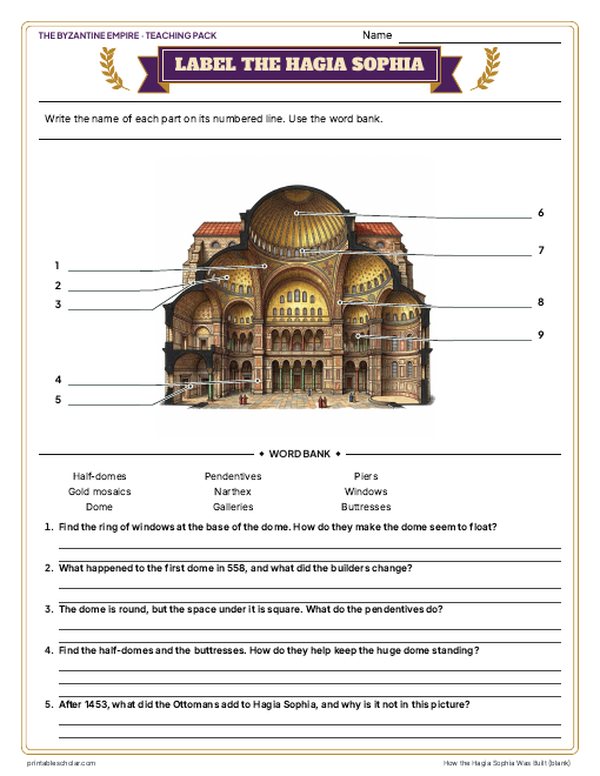
The emperor Justinian built the Hagia Sophia ("Holy Wisdom") in Constantinople between 532 and 537, after riots burned the church that stood there before. Its builders, Anthemius of Tralles and Isidore of Miletus, set a huge round dome over a square space, carried on four great piers and four curved triangles called pendentives, with a ring of 40 windows at its base. The first dome fell after earthquakes in 558, and a higher one was finished in 562. These free pages show the church as it stood in Justinian’s day, before the Ottomans made it a mosque in 1453 and added minarets.
Free to print
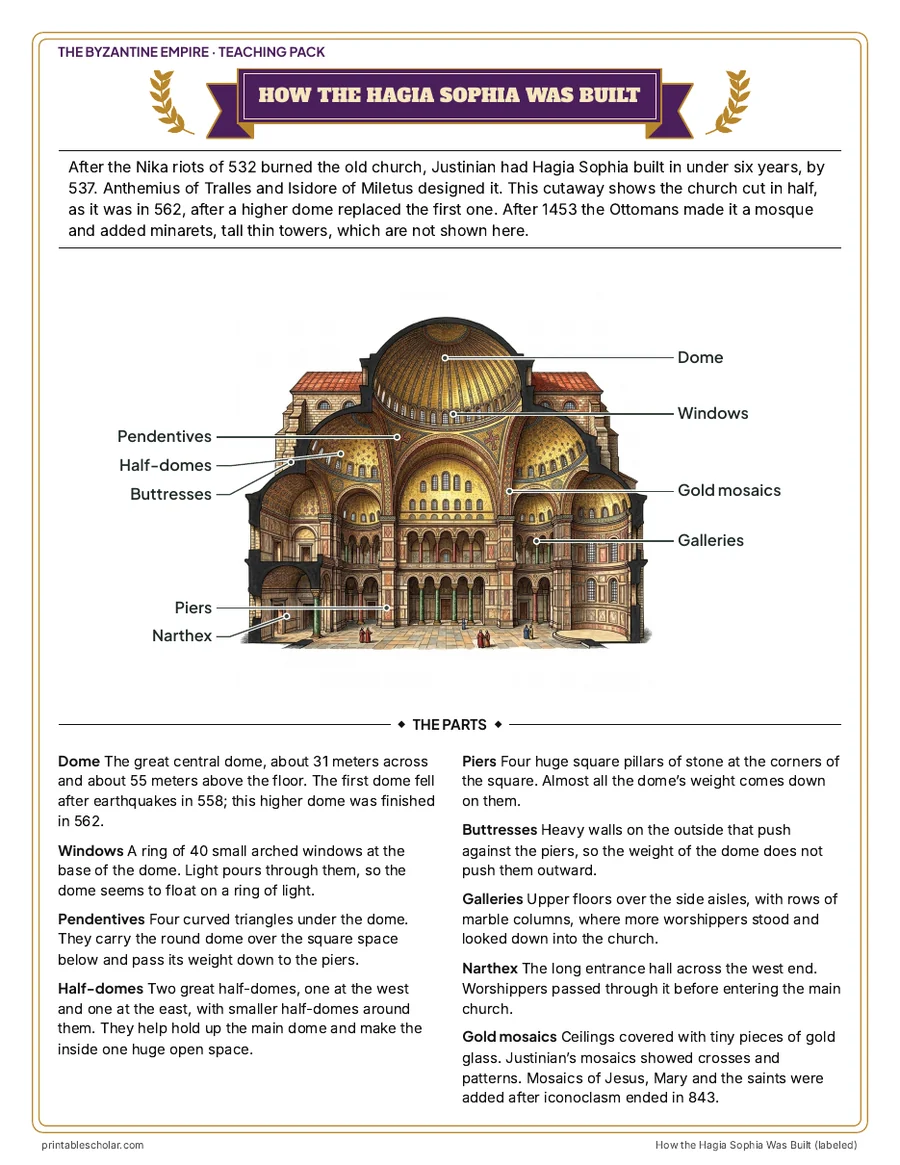
Labeled and blank Hagia Sophia cutaway
PDFs sized for US Letter paper, in color and black and white.
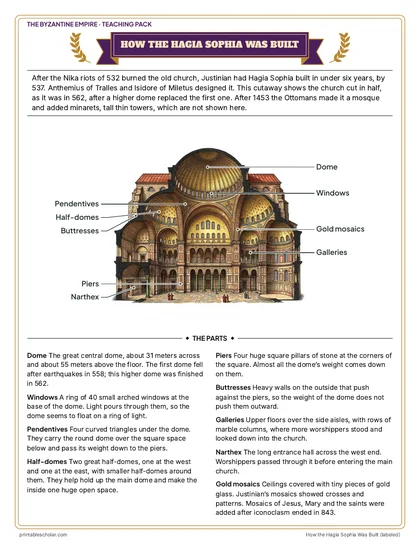
How the Hagia Sophia Was Built, labeled
A cutaway of the church as finished in 562 with nine parts labeled and what each one does.
Download PDF Black and white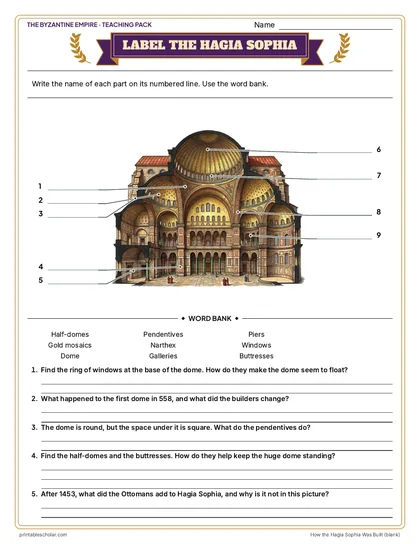
Label the Hagia Sophia
The same cutaway with numbered blank labels, a word bank and questions.
Download PDF Black and white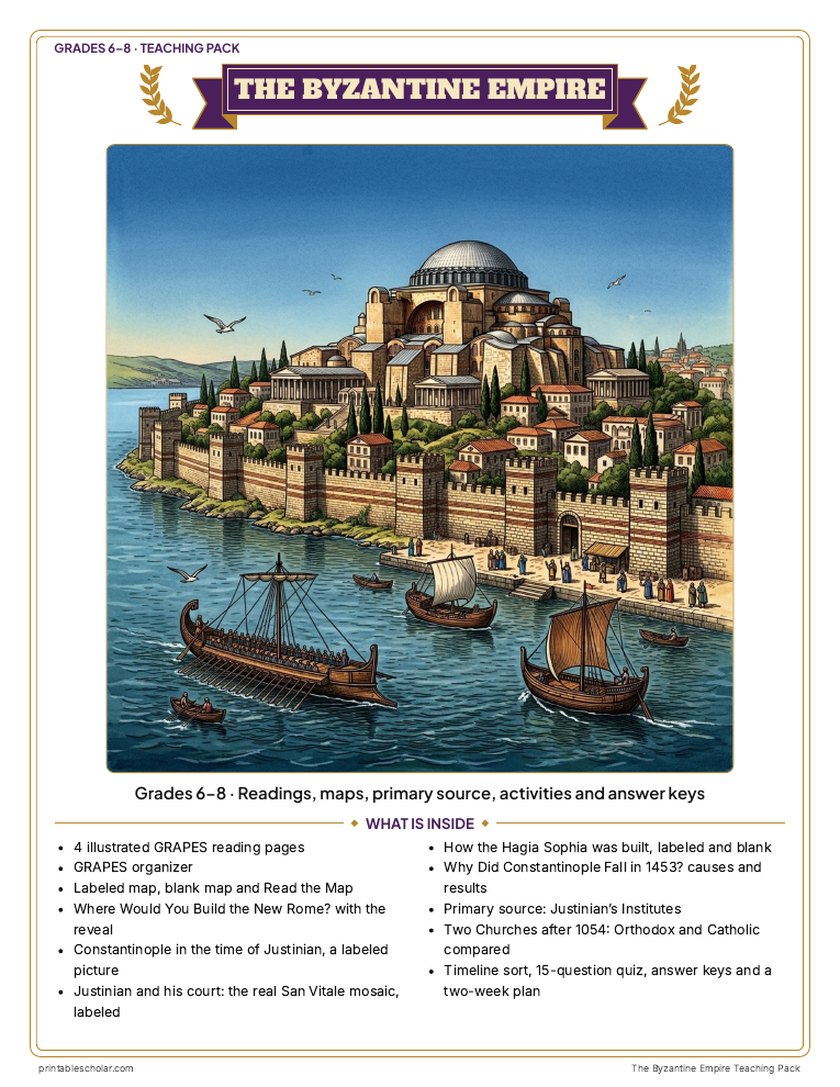
Teaching pack · Grades 6–8
Teaching the Byzantine Empire? The whole unit, ready to teach.
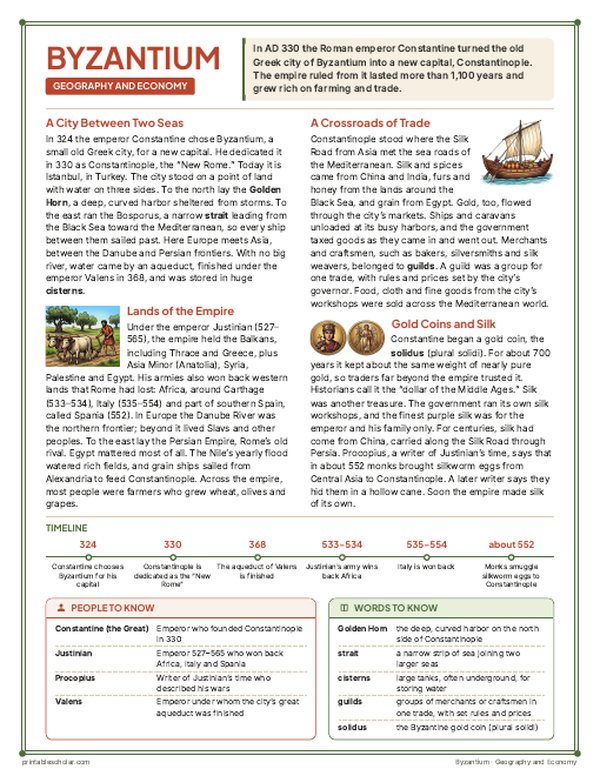
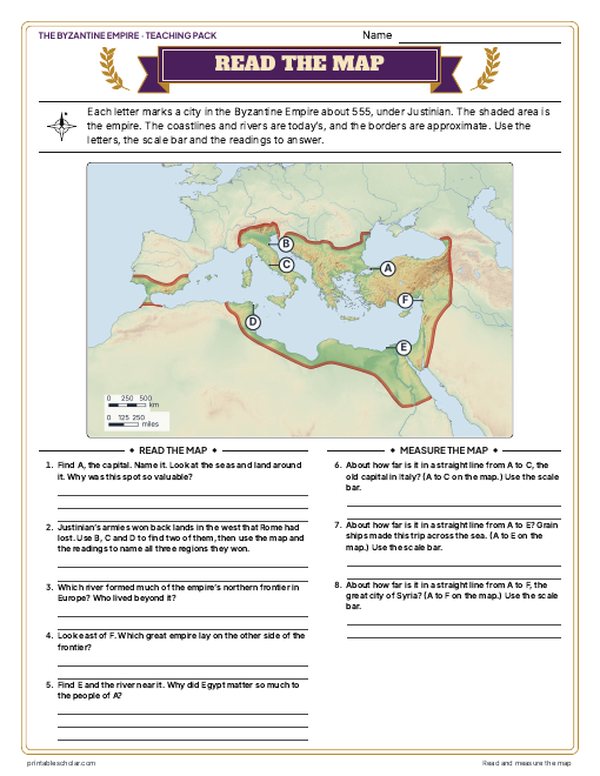
Two weeks of lessons in one download: slides to present, notes for students to fill in, and printable pages that use these maps and pictures.
- 41 lesson slides (PowerPoint you can edit, teacher notes on every slide) and 2 pages of guided notes
- 4 illustrated reading pages and a GRAPES organizer
- Maps: labeled, blank, Read and Measure the Map, and "Where Would You Build the New Rome?": choose a site for Constantine's capital on a real relief map of the straits, then the reveal
- Activities: a labeled view of Constantinople about 565, Justinian and his court on the real San Vitale mosaic, how the Hagia Sophia was built (labeled and blank), why Constantinople fell in 1453, Justinian's Institutes as a primary source, the Orthodox and Catholic churches after 1054 compared, and a timeline sort
- A 15-question quiz, a teacher guide with a two-week plan, and answer keys for everything
Every answer is in the pack. The readings, slides, maps and pictures teach everything the sheets and quiz ask, so no textbook is needed.
Get the Byzantine Empire pack for $7Teaching more than one? Get all four medieval world packs (West Africa, the Silk Road, the Byzantines and the Ottomans) for $19, with a bonus chart comparing all four: about eight weeks of lessons.
Get all 4 packs for $19See all four packsOne-time purchase. Instant download. Color and ink-saving black-and-white editions. Secure checkout by Stripe.
What made the Hagia Sophia special
A round dome on a square
Pendentives, curved triangles of brick between the four great arches, carry the round dome on a square plan. Half-domes on two sides make the space even longer.
A dome that seems to float
A ring of 40 windows runs around the base of the dome. Light pours in between the ribs, so the dome looks as if it hangs in the air.
Built fast, rebuilt higher
It took under six years. Earthquakes brought the first dome down in 558; the new dome, finished in 562, was higher and steeper.
One building, many lives
It was the main church of the Byzantine Empire for over 900 years. After 1453 the Ottomans made it a mosque and added minarets.
Frequently asked questions
When was the Hagia Sophia built?
Between 532 and 537, under the emperor Justinian. The dome was rebuilt after an earthquake collapse in 558 and finished again in 562.
What are pendentives?
Curved triangles between the arches that let a round dome sit on a square base. The Hagia Sophia’s pendentives are some of the largest ever built.
Why does the Hagia Sophia have minarets?
The Ottomans made it a mosque after they took Constantinople in 1453 and added the minarets later. Justinian’s church had none.