 Printable Scholar
Caravanserai: An Inn on the Silk Road
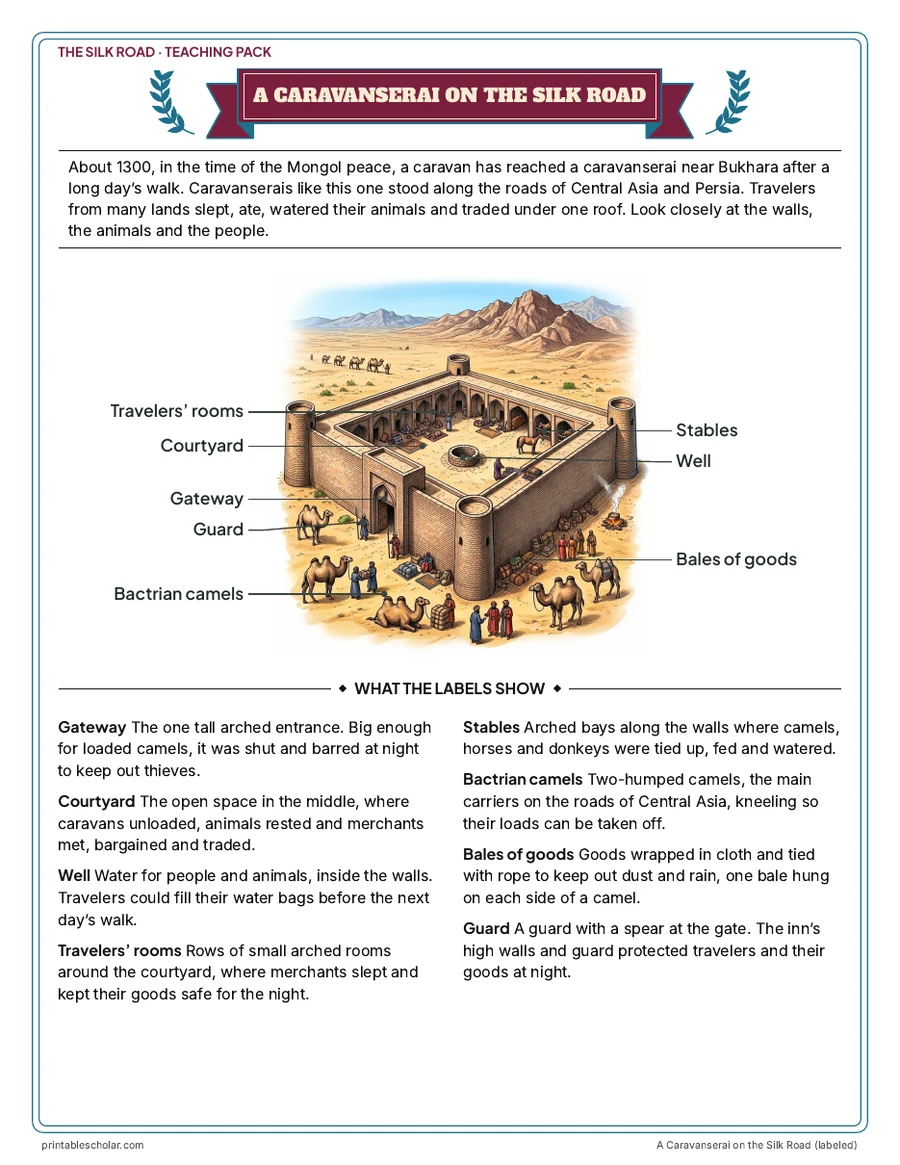
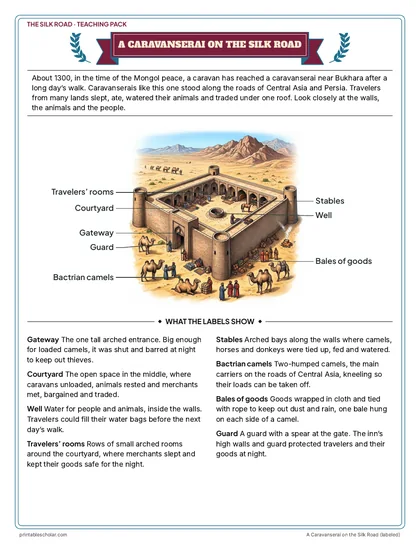
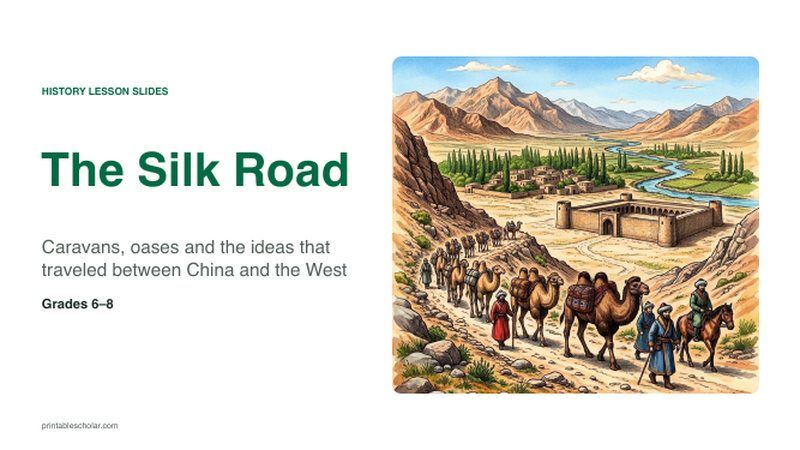
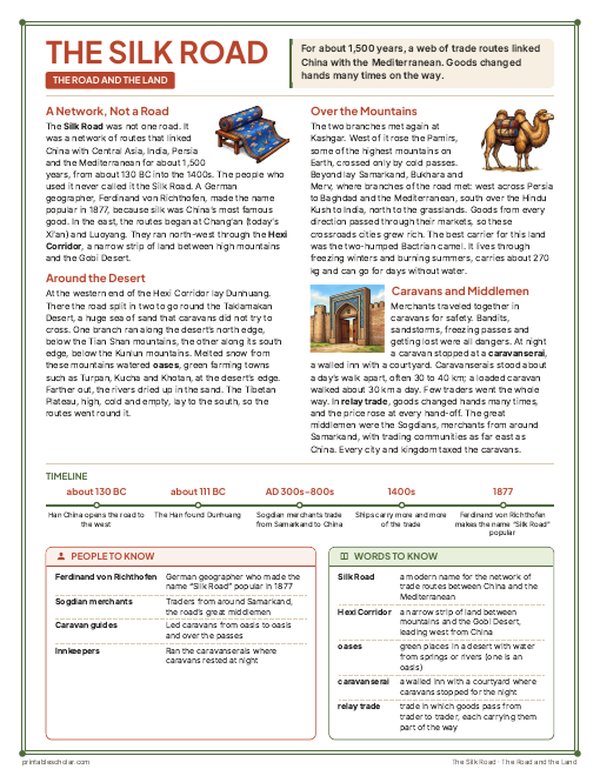
A caravanserai was a walled inn built along the trade routes of Central Asia, Persia and the Middle East. Merchants traveling the Silk Road in caravans of camels and horses stopped at one each night: caravanserais stood about a day’s walk apart, often 30 to 40 km. Behind high walls and one strong gate, travelers from many lands slept, ate, watered their animals and traded goods. This free labeled picture shows a caravanserai near Bukhara about 1300, in the time of the Mongol peace, with eight parts labeled and explained, plus a blank version to label.
Free to print
Labeled and blank caravanserai picture
PDFs sized for US Letter paper, in color and black and white.
A Caravanserai on the Silk Road, labeled
A caravanserai about 1300 with eight parts labeled and what each one was for.
Download PDF Black and white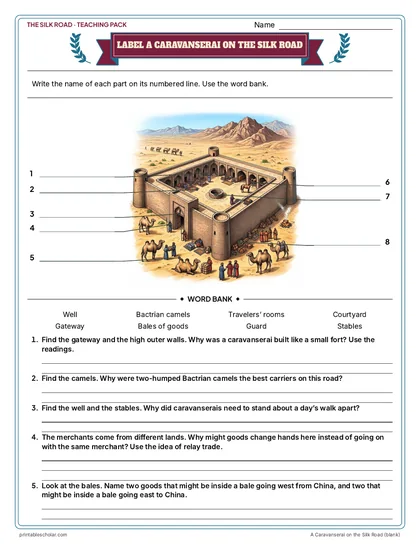
Label the Caravanserai
The same picture with numbered blank labels, a word bank and questions.
Download PDF Black and white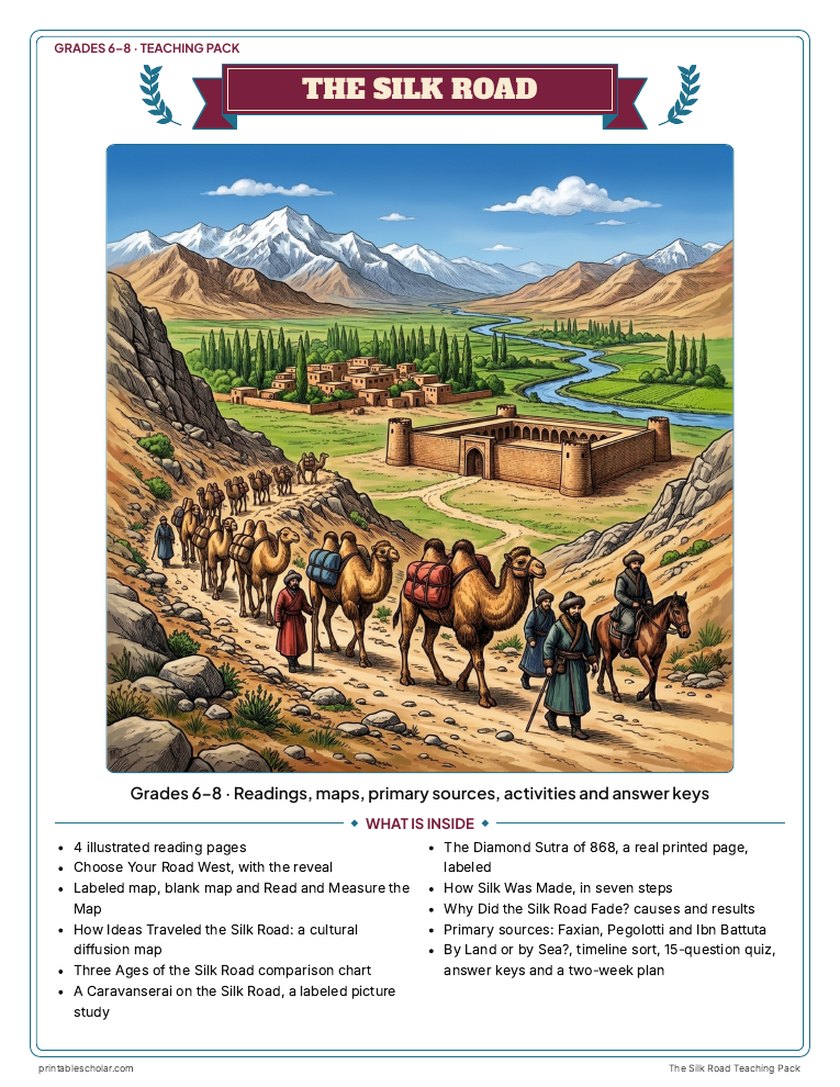
Teaching pack · Grades 6–8
Teaching the Silk Road? The whole unit, ready to teach.
Two weeks of lessons in one download: slides to present, notes for students to fill in, and printable pages that use these maps and pictures.
- 42 lesson slides (PowerPoint you can edit, teacher notes on every slide) and 2 pages of guided notes
- 4 illustrated reading pages and a Three Ages of the Silk Road comparison chart
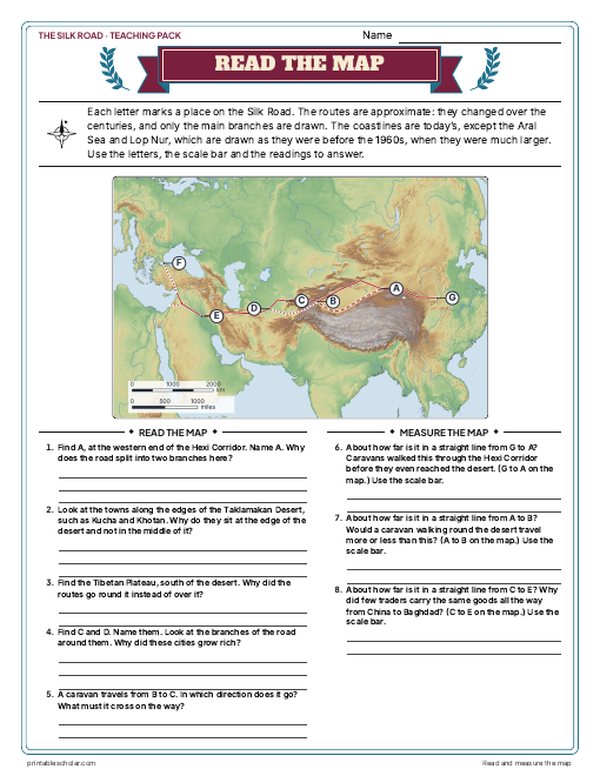
- Maps: labeled, blank, Read and Measure the Map, "Choose Your Road West": pick a route from Dunhuang to Balkh on a real relief map, then follow the monk Xuanzang's real journey, and How Ideas Traveled the Silk Road
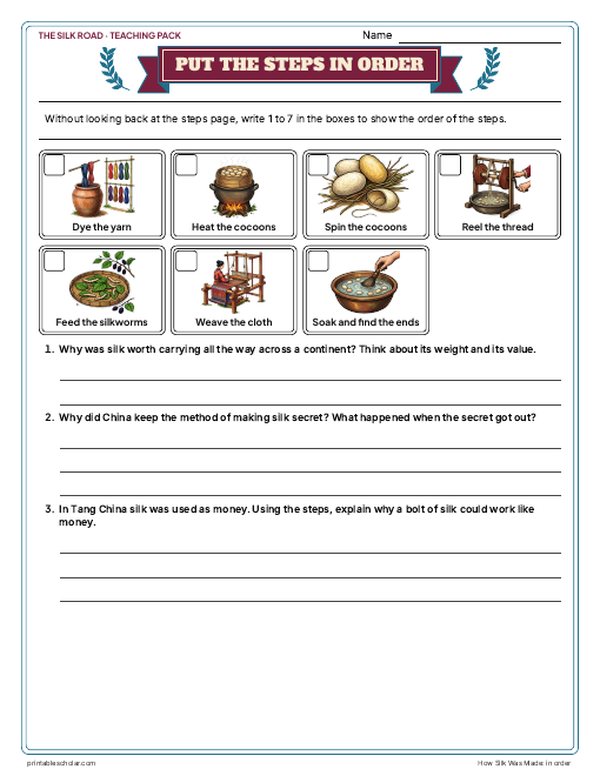
- Activities: a labeled caravanserai, the real Diamond Sutra of 868, how silk was made, why the Silk Road faded, Faxian, Pegolotti and Ibn Battuta, By Land or by Sea?, and a timeline sort
- A 15-question quiz, a teacher guide with a two-week plan, and answer keys for everything
Every answer is in the pack. The readings, slides, maps and pictures teach everything the sheets and quiz ask, so no textbook is needed.
Get the Silk Road pack for $7Teaching more than one? Get all four medieval world packs (West Africa, the Silk Road, the Byzantines and the Ottomans) for $19, with a bonus chart comparing all four: about eight weeks of lessons.
Get all 4 packs for $19See all four packsOne-time purchase. Instant download. Color and ink-saving black-and-white editions. Secure checkout by Stripe.
What a caravanserai was
A safe place for the night
Bandits, sandstorms and cold were all dangers on the road. A caravanserai’s high walls and one gate, barred at night and watched by a guard, kept travelers and their goods safe.
Built around a courtyard
Arched rooms for travelers and arched bays for animals lined an open courtyard with a well in the middle, where caravans unloaded and merchants met and traded.
A day’s walk apart
A loaded caravan walked about 30 km a day, so rulers and rich patrons built caravanserais about that far apart along the busiest roads.
Meeting places for the world
Merchants from China, Central Asia, Persia and beyond met in the same courtyard. Goods changed hands there, and so did news, languages and ideas.
Frequently asked questions
What is a caravanserai?
A walled roadside inn with a courtyard, where caravans of merchants and their animals stopped for the night along trade routes such as the Silk Road.
Why were caravanserais important to the Silk Road?
They gave travelers water, food, shelter and safety about every day’s walk, and they were places to trade and share news, which kept long-distance trade moving.
Why did Silk Road caravans use Bactrian camels?
Two-humped Bactrian camels live through freezing winters and burning summers, can go for days without water and carry heavy loads, about 270 kg.