Printable Scholar

Mexico Country Report Kit
Everything a student needs to research and write a report on Mexico: the reading, the maps and the pages to fill in. Nothing else to look up.
- 4 reading pages: Mexico fun facts with the flag, History, Land and Work, and Culture and Daily Life
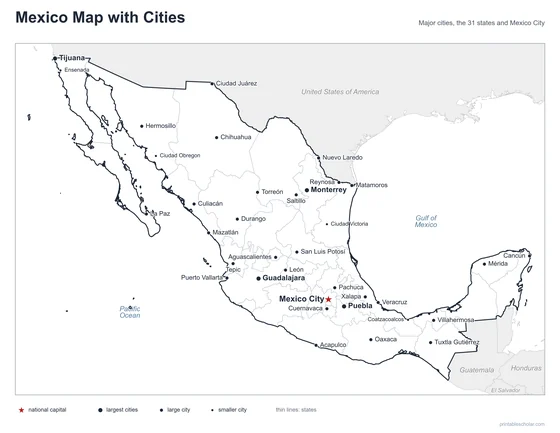
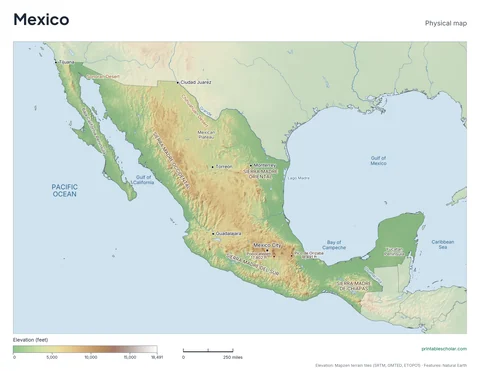
- 5 maps: landmarks, cities, Where in the World, outline, and rivers, lakes and neighbors
- A 9-page My Country Report booklet, from fast facts to a trip plan, a stamp to design and a written report
- A pennant to cut out and hang, two map skills sheets and a 10-question reading quiz
- Answer keys, a grading rubric and talking points for the teacher
- Two print-ready PDFs, 26 pages each, US Letter: color, and ink-saving black and white
Each student on a different country? Get every country kit for $24.
Look inside: all 26 pages
Read it, map it, write it.
The reading pages and maps hold every answer the booklet asks for. About one third of the booklet is looking things up. The rest asks students to choose, plan and explain.

What is in the Mexico kit
To read and study
- Mexico fun facts: six short true stories, the flag, By the Numbers and Did You Know
- History: the country’s story from its first peoples to today, with a timeline, people to know and words to know
- Land and Work: the land and climate, what people grow, make and mine, and how one leads to the other
- Culture and Daily Life: food, school, sports, holidays, music and crafts, with everyday words to say
- Five maps, including Where in the World with latitude and longitude, and a rivers, lakes and neighbors map with a letter key
To fill in and make
- My Country Report booklet: cover, Fast Facts, My Map, Culture and Daily Life, My Trip, Think Like a Geographer, Design a Stamp, Dig Deeper and My Report
- A pennant with the country’s name and outline, to color, cut out and hang
- Name the Cities and Name the Rivers and Lakes sheets, each with a word bank
- A 10-question reading quiz, answer keys, a rubric and talking points for the teacher
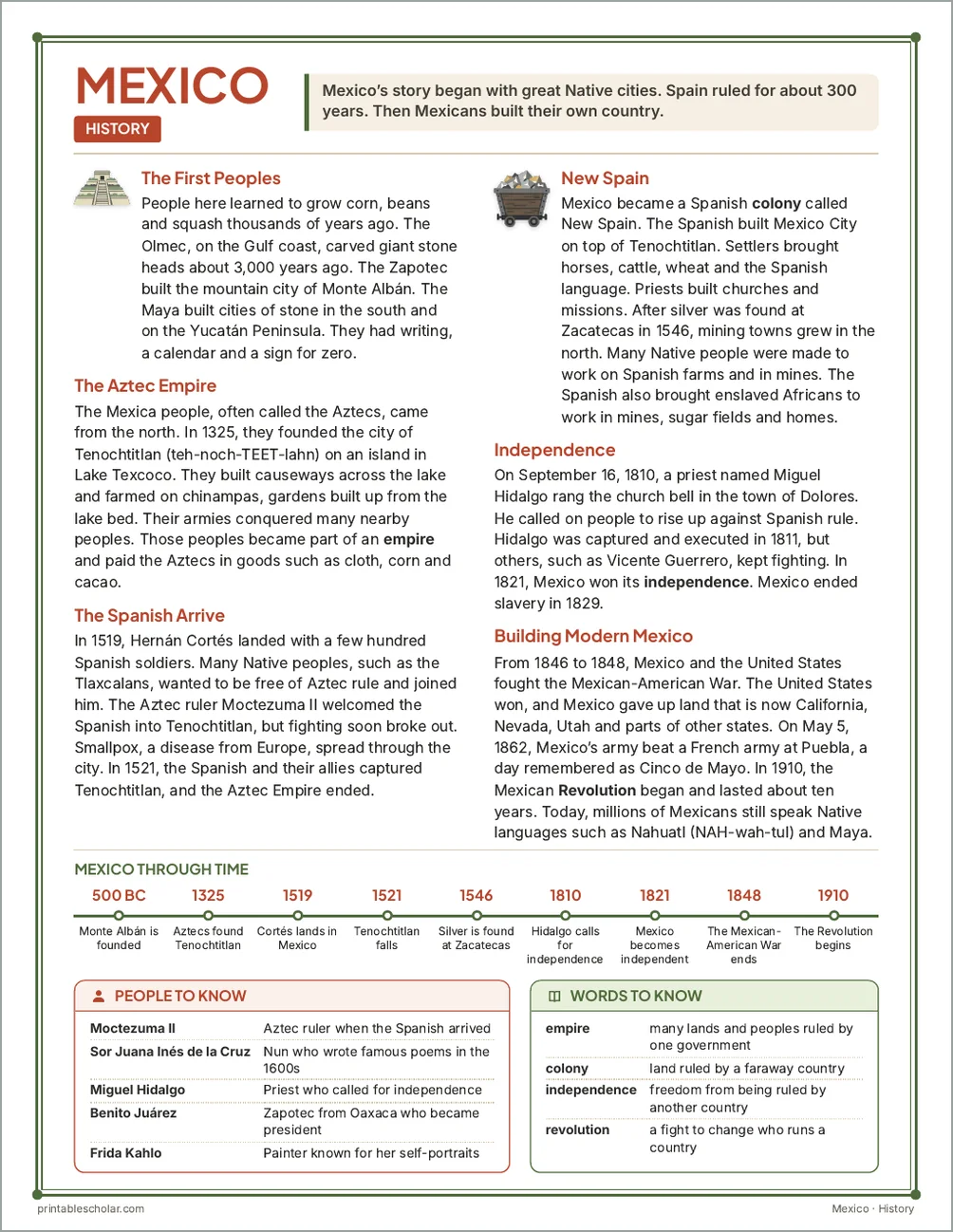
Free: the Mexico History reading page
One page on the history of Mexico for grades 3 to 5, free to print in color or black and white. It is the second reading page in the kit.
The First Peoples
People here learned to grow corn, beans and squash thousands of years ago. The Olmec, on the Gulf coast, carved giant stone heads about 3,000 years ago. The Zapotec built the mountain city of Monte Albán. The Maya built cities of stone in the south and on the Yucatán Peninsula. They had writing, a calendar and a sign for zero.
The Aztec Empire
The Mexica people, often called the Aztecs, came from the north. In 1325, they founded the city of Tenochtitlan (teh-noch-TEET-lahn) on an island in Lake Texcoco. They built causeways across the lake and farmed on chinampas, gardens built up from the lake bed. Their armies conquered many nearby peoples. Those peoples became part of an empire and paid the Aztecs in goods such as cloth, corn and cacao.
The Spanish Arrive
In 1519, Hernán Cortés landed with a few hundred Spanish soldiers. Many Native peoples, such as the Tlaxcalans, wanted to be free of Aztec rule and joined him. The Aztec ruler Moctezuma II welcomed the Spanish into Tenochtitlan, but fighting soon broke out. Smallpox, a disease from Europe, spread through the city. In 1521, the Spanish and their allies captured Tenochtitlan, and the Aztec Empire ended.
New Spain
Mexico became a Spanish colony called New Spain. The Spanish built Mexico City on top of Tenochtitlan. Settlers brought horses, cattle, wheat and the Spanish language. Priests built churches and missions. After silver was found at Zacatecas in 1546, mining towns grew in the north. Many Native people were made to work on Spanish farms and in mines. The Spanish also brought enslaved Africans to work in mines, sugar fields and homes.
Independence
On September 16, 1810, a priest named Miguel Hidalgo rang the church bell in the town of Dolores. He called on people to rise up against Spanish rule. Hidalgo was captured and executed in 1811, but others, such as Vicente Guerrero, kept fighting. In 1821, Mexico won its independence. Mexico ended slavery in 1829.
Building Modern Mexico
From 1846 to 1848, Mexico and the United States fought the Mexican-American War. The United States won, and Mexico gave up land that is now California, Nevada, Utah and parts of other states. On May 5, 1862, Mexico’s army beat a French army at Puebla, a day remembered as Cinco de Mayo. In 1910, the Mexican Revolution began and lasted about ten years. Today, millions of Mexicans still speak Native languages such as Nahuatl (NAH-wah-tul) and Maya.
Mexico through time
- 500 BC Monte Albán is founded
- 1325 Aztecs found Tenochtitlan
- 1519 Cortés lands in Mexico
- 1521 Tenochtitlan falls
- 1546 Silver is found at Zacatecas
- 1810 Hidalgo calls for independence
- 1821 Mexico becomes independent
- 1848 The Mexican-American War ends
- 1910 The Revolution begins
People to know
- Moctezuma II: Aztec ruler when the Spanish arrived
- Sor Juana Inés de la Cruz: Nun who wrote famous poems in the 1600s
- Miguel Hidalgo: Priest who called for independence
- Benito Juárez: Zapotec from Oaxaca who became president
- Frida Kahlo: Painter known for her self-portraits
Free Mexico maps
Each of these maps is free to print on its own. The kit puts its maps in one file with the reading pages and the booklet.