Free printable short e phonics worksheets. Five practice activities: decodable passage, word sort, phrasing cards, rapid naming chart, and word search.
A free illustrated mini-book for Short E, plus the same story as a passage sheet for highlighting.

A full-color picture book your student reads on their own. Skill: Short E. Print, cut and staple.
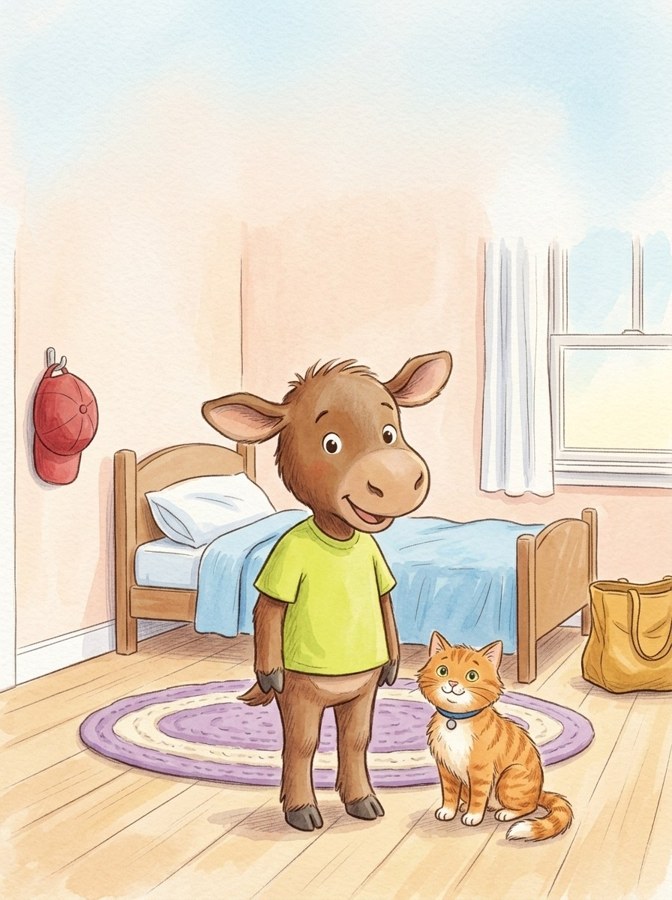 This book is one of 74 Level 1 mini-books.Every book is free to print one at a time, or get all 74 in one file for $14.
See all 74 books →
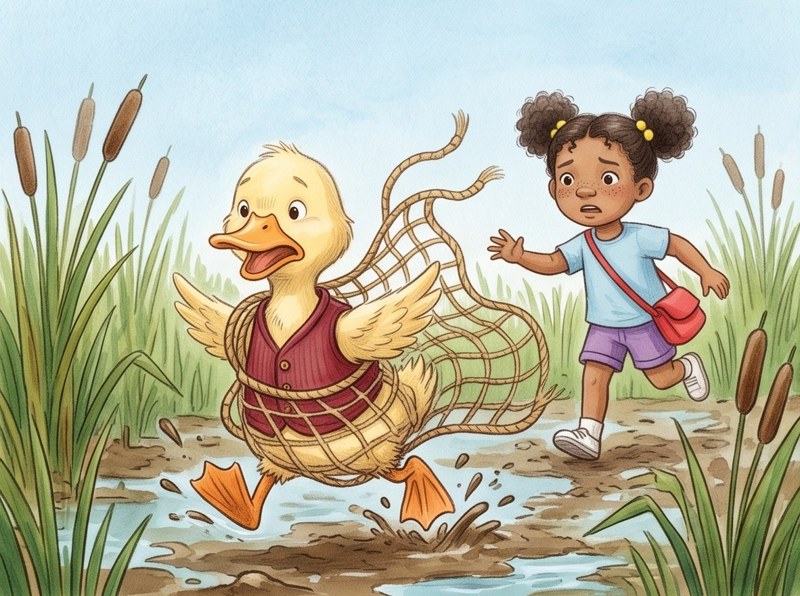
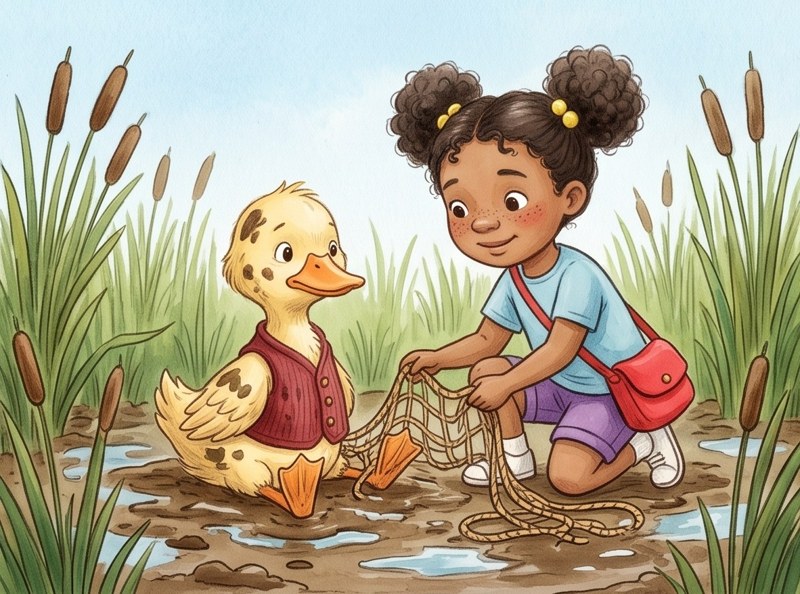
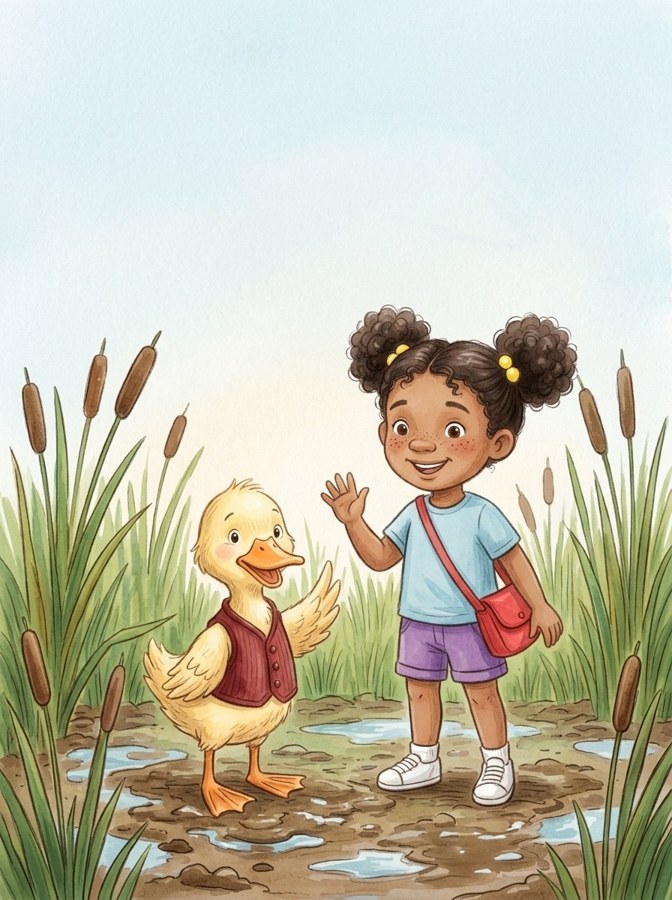
Pam ran to the bog. Don was in a big net! The net was on his legs and his tum. Don ran and ran. The net got in a big mess.
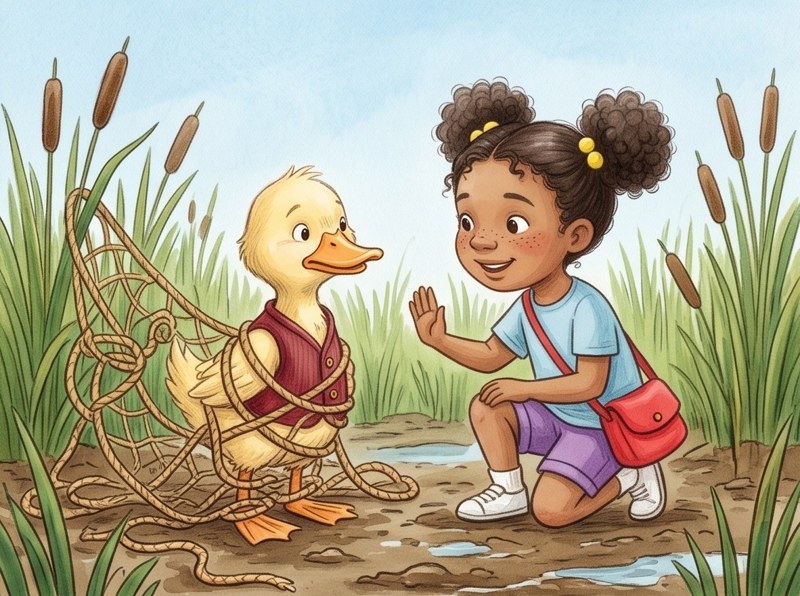
"Sit, Don!" said Pam. "Sit and let me get it off. Do not run."
Don sat in the wet mud. Pam got the net off his tum. Then she got it off his legs, one leg and then the next leg. Don was out!
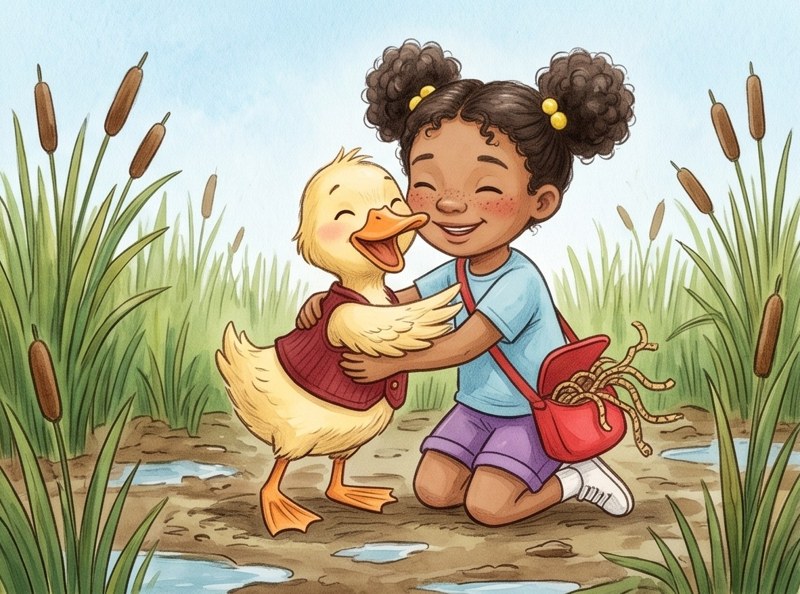
"Yes! I am not in a net!" said Don. Don hugs Pam. Pam put the net in her red bag.
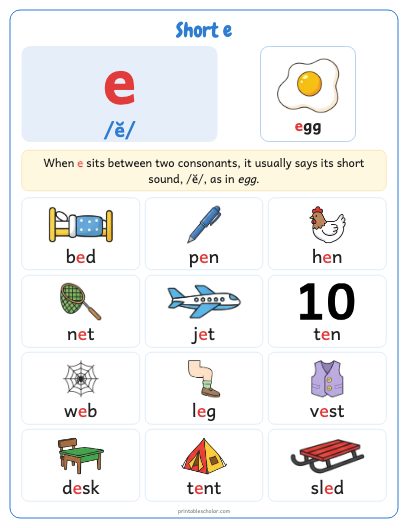
When e sits between two consonants, it usually says its short sound, /ĕ/, as in egg.
Print it full size for the wall, or smaller for a phonics notebook.
The words this story set practices, in the two groups used by the word sort.
bed, red, fed, led, wed, hen, pen, ten, men, den, pet
ped, hep, kem, teg, zeb, nen, bem, jev, wep, ked
Short E words to read, match and write, with pictures. Each PDF has its answer key on page 2.
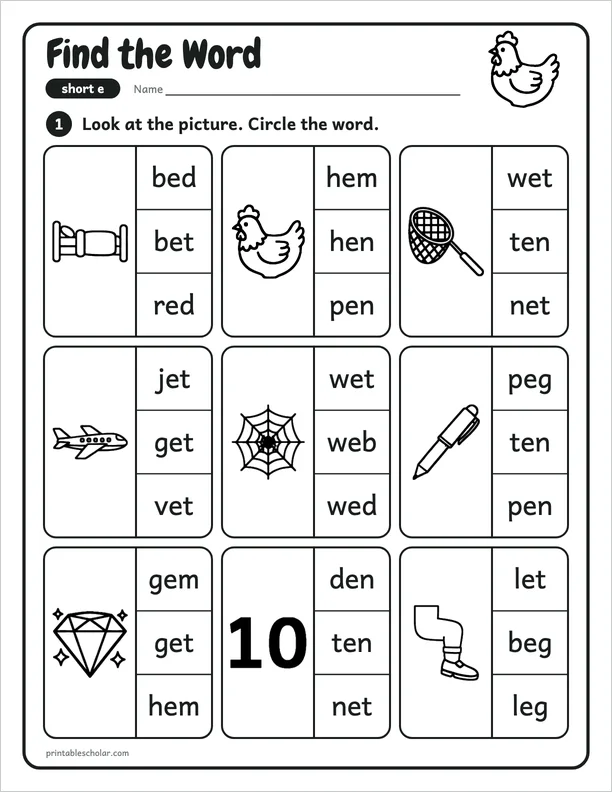
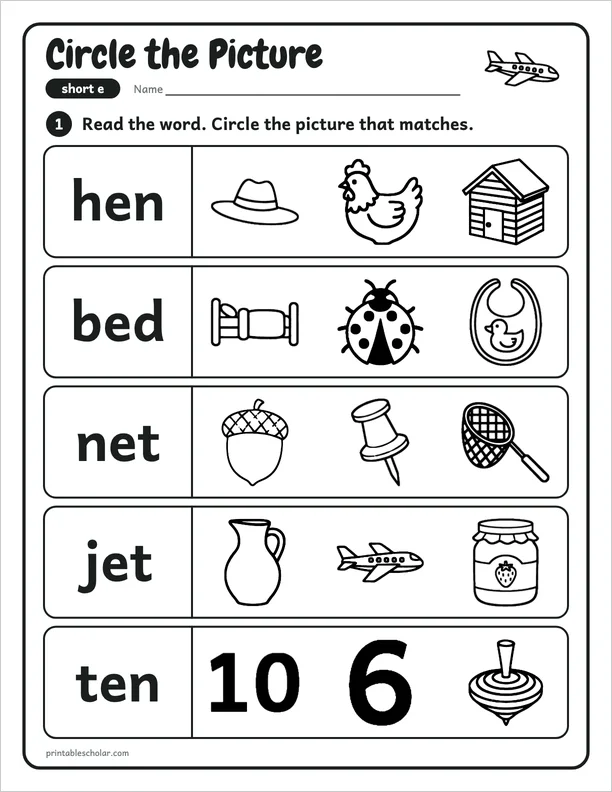
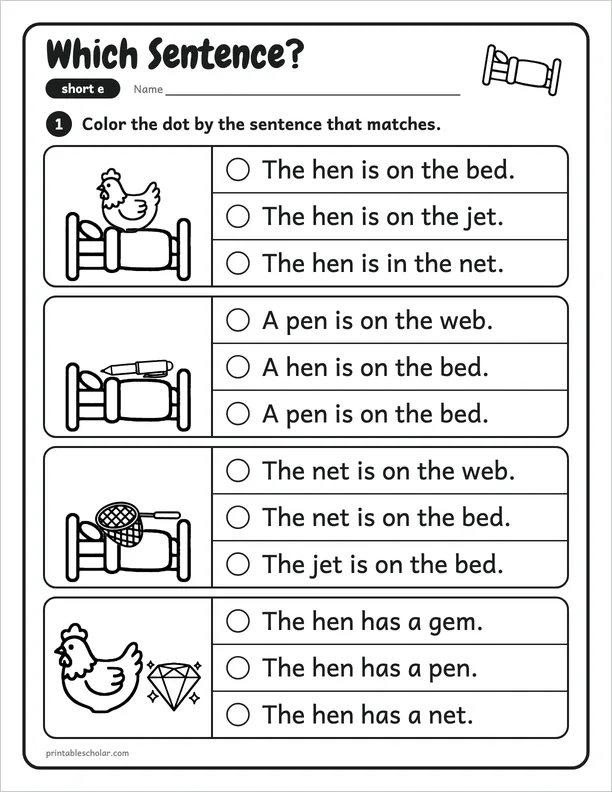
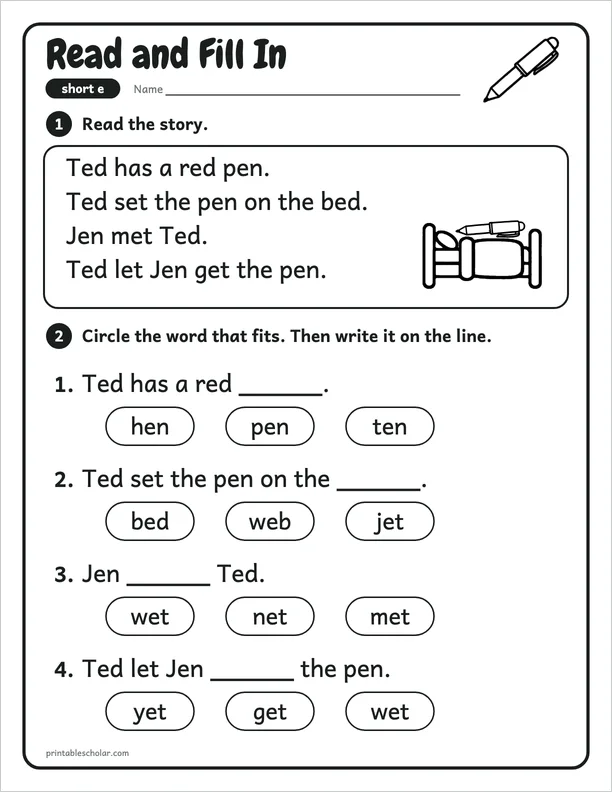
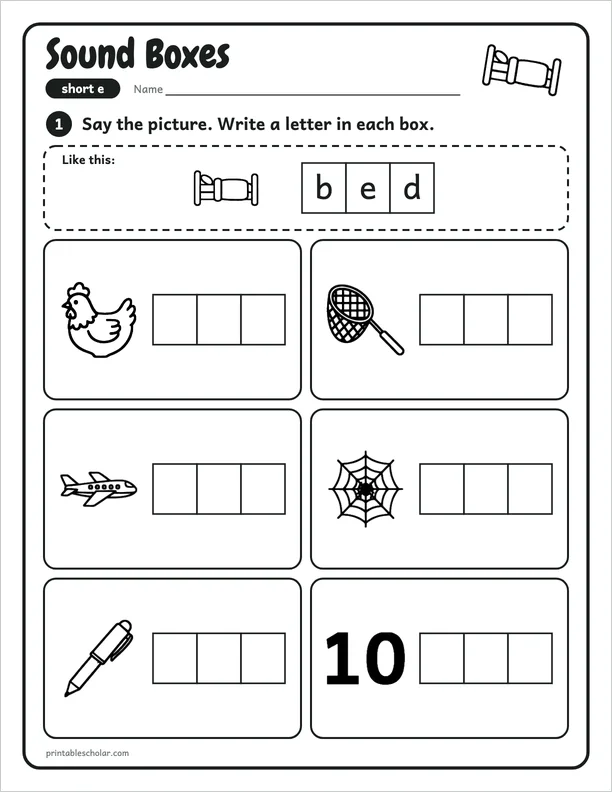
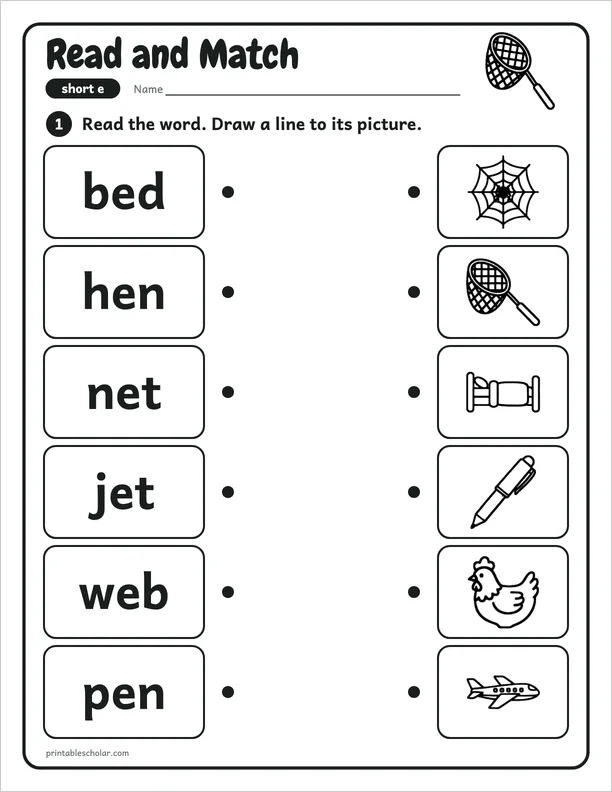
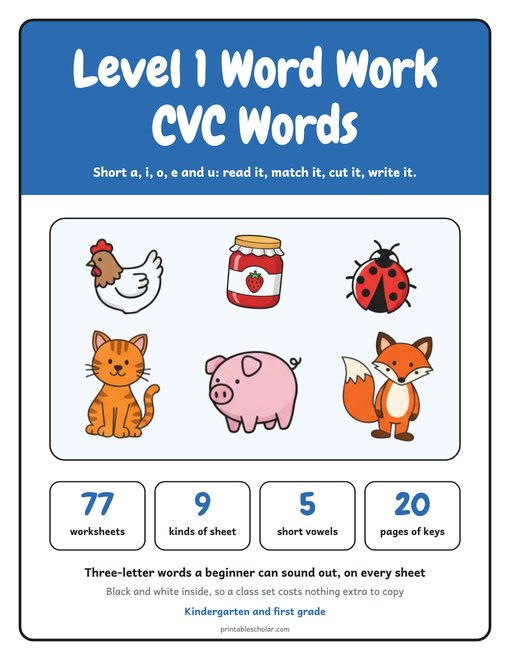
All 77 CVC worksheets in one file, with answer keys.
Get the pack for $7 All 6 levels (700+ sheets) for $194 ready-to-print PDFs for this story's short e words. Each one opens as its own file.
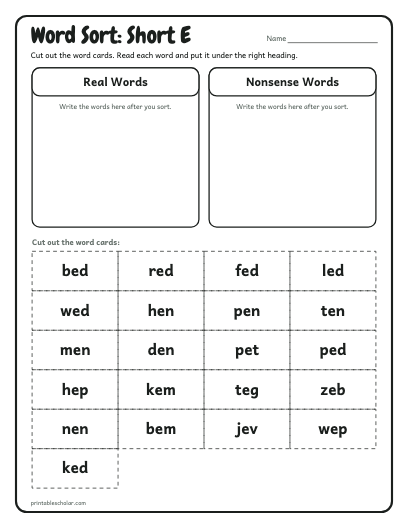
Cut-apart word cards to sort: Real Words or Nonsense Words. Answer key on page 2.
Download PDF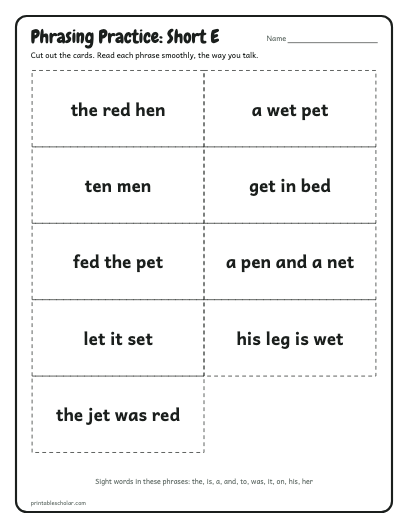
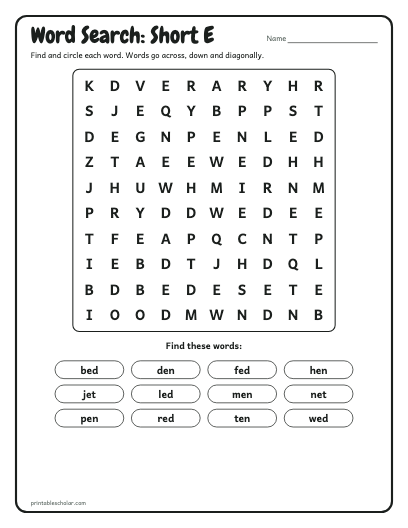
More picture worksheets: beginning sounds, ending sounds, rhyming and syllables — new pictures every time you print.
A new decodable story with the same short e sounds — each comes with its own set of worksheets.
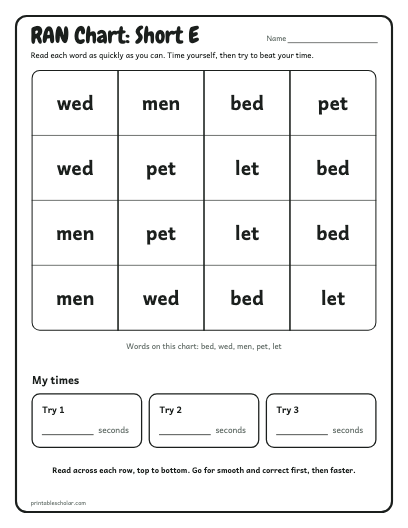
Learning short 'e' CVC words like "bed," "red," and "hen" is a crucial step in early phonics, typically following short 'a' and preceding other short vowels. For many kindergarteners, the short 'e' sound can be particularly tricky because it’s often confused with short 'i' (e.g., "pen" sounding like "pin") or even short 'a' (e.g., "men" sounding like "man"). The mouth position for short 'e' is relaxed, with the tongue slightly lower and further back than for short 'i', which requires a tighter, higher tongue position. Emphasizing the clear, relaxed "eh" sound in words like "jet," "wet," and "leg" helps children distinguish it from similar-sounding vowels, preventing common mispronunciations and strengthening their decoding accuracy. Mastering this distinction is fundamental for building a solid reading foundation. Our short 'e' CVC worksheets provide targeted practice to solidify this sound. Begin with the decodable passage, "Red the Hen," encouraging your child to sound out each word, focusing on the clear "eh" in words like "Red," "hen," "fed," and "men." After reading, use the word sort activity to categorize words by their short 'e' sound, perhaps contrasting them with previously learned short 'a' words if that’s a point of confusion. The phrasing cards are excellent for building fluency; have your child read phrases like "a red hen" or "wet jet" with expression. Finally, the Rapid Automatic Naming (RAN) chart helps build speed and recognition for these high-frequency short 'e' words, ensuring they become instantly recognizable for emergent readers.
For more early literacy resources, explore our sight word flashcards, tracing worksheets, handwriting worksheets, and coloring pages.
 Printable Scholar