 Printable Scholar
Maya Numbers: Dots, Bars and a Shell for Zero
The Maya wrote numbers with just three signs: a dot for 1, a bar for 5 and a shell for zero. Scribes painted numbers in their bark-paper books and carved them on stone monuments to count days, goods and tribute. Numbers were stacked in places, from the bottom up, and each place was worth 20 times the one below it. A sign for zero let the Maya show an empty place, an idea few ancient peoples had.
Free to print
A Maya numbers chart and a practice sheet
PDFs sized for US Letter paper, in color and black and white.
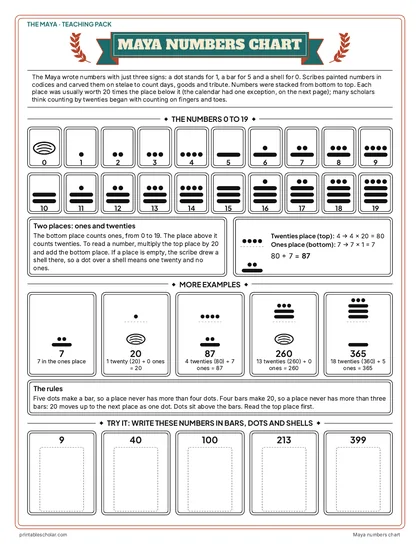
Maya Numbers Chart
The numbers 0 to 19 in bars, dots and shells, how the ones and twenties places work, worked examples and five numbers to write.
Download PDF Black and white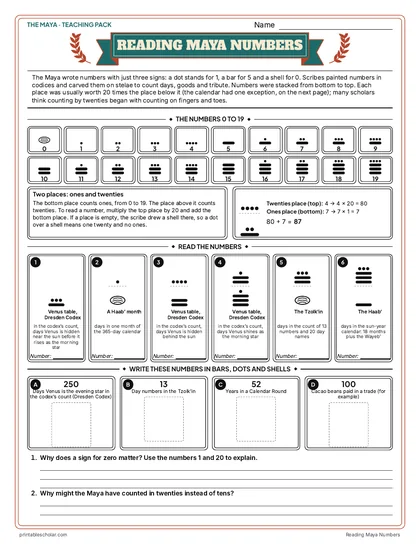
Reading Maya Numbers
Read six real numbers from the Dresden Codex and the Maya calendars, write four more in bars and dots, and two questions.
Download PDF Black and white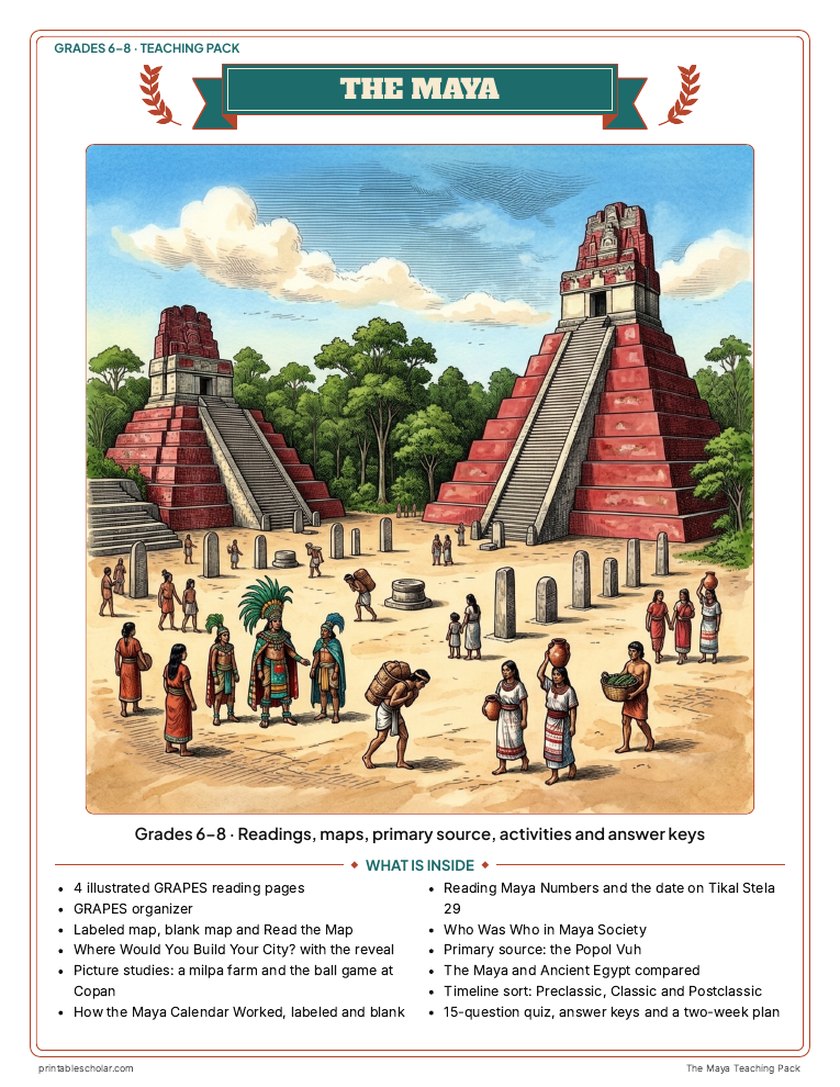
Teaching pack · Grades 6–8
Teaching the Maya? The whole unit, ready to teach.
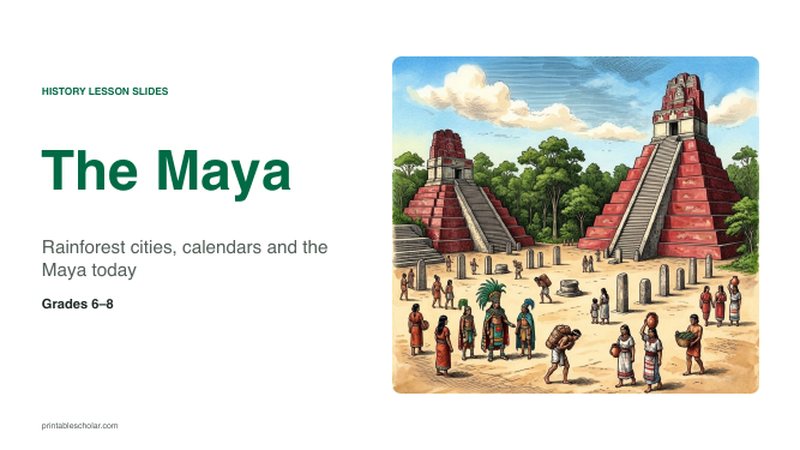
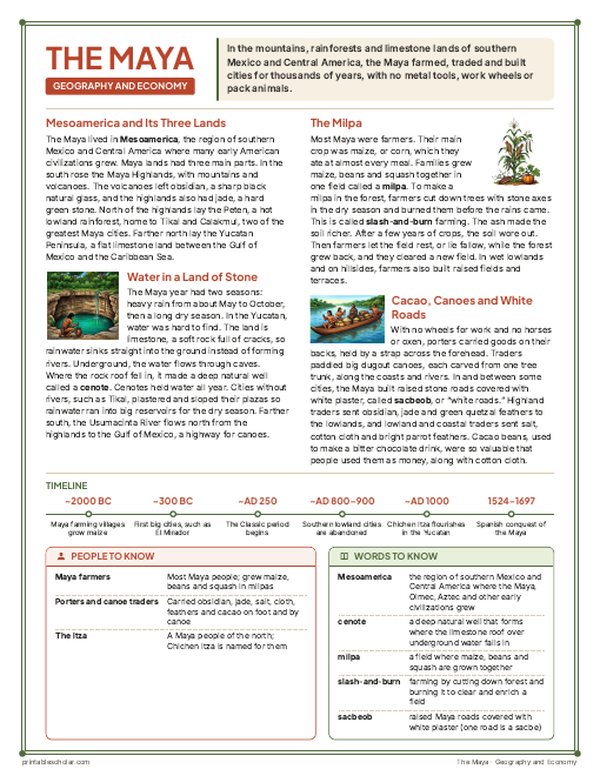
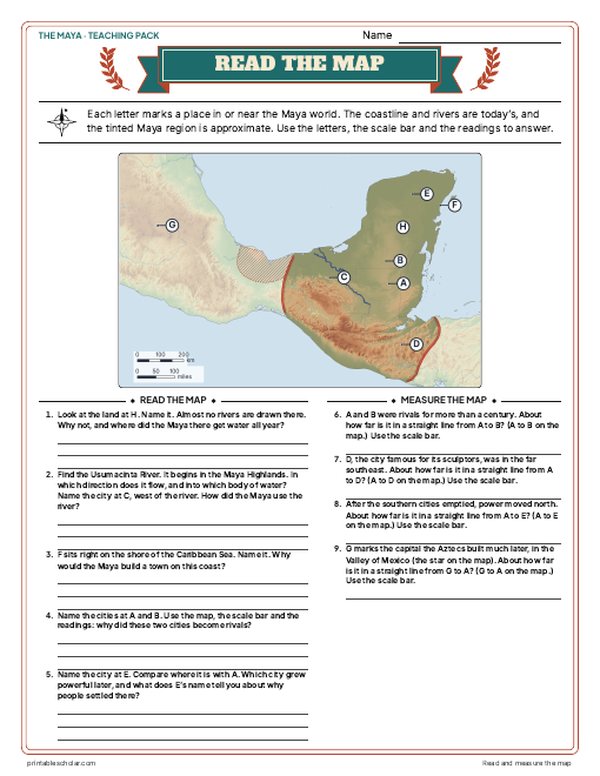
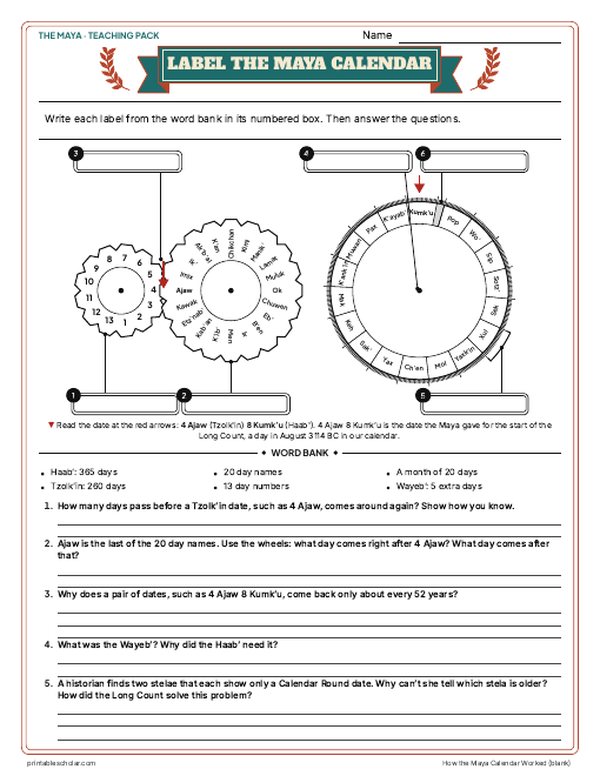
Two weeks of lessons in one download: slides to present, notes for students to fill in, and printable pages that use these maps and pictures.
- 35 lesson slides (PowerPoint you can edit, teacher notes on every slide) and 2 pages of guided notes
- 4 illustrated reading pages and a GRAPES organizer
- Maps: labeled, blank, Read and Measure the Map, and a "Where would you build your city?" decision with the reveal
- Activities: picture studies of a milpa farm and the ball game at Copan, the Maya calendar wheels (labeled and blank), Maya numbers and the date on Tikal Stela 29, who was who, the Popol Vuh, the Maya and Ancient Egypt compared, and a timeline sort
- A 15-question quiz, a teacher guide with a two-week plan, and answer keys for everything
Every answer is in the pack. The readings, slides, maps and pictures teach everything the sheets and quiz ask, so no textbook is needed.
Get the Maya pack for $7One-time purchase. Instant download. Color and ink-saving black-and-white editions. Secure checkout by Stripe.
How to read a Maya number
Dots, bars and the shell
A dot is 1 and a bar is 5. A place never has more than four dots (five dots make a bar) or three bars (four bars make 20, which moves up to the next place). A shell means zero: an empty place.
Places of ones and twenties
The bottom place counts ones, from 0 to 19. The place above counts twenties. To read a number, multiply the top place by 20 and add the bottom place: four dots over a bar and two dots is 4 × 20 + 7 = 87.
Zero holds a place
A dot over a shell is 20: one twenty and no ones. Without a zero sign, 20 and 1 would look the same.
The calendar exception
In the Long Count calendar the third place was 18 twenties, 360 days, close to a year. When counting goods, every place was worth 20 times the one below.
Frequently asked questions
What are the three Maya number symbols?
A dot for 1, a bar for 5 and a shell for zero.
Why did the Maya count in twenties?
Many scholars think counting by twenties began with counting on fingers and toes. Each place in a Maya number was usually worth 20 times the one below it.
Did the Maya invent zero?
The Maya used a sign for zero to hold an empty place, one of the few ancient peoples to do so, and they came to it on their own. Their Long Count calendar dates were written with it.