Free Printable Greek and Latin Roots Worksheets

Greek and Latin roots to meet, build on, take apart and use, with four suffixes and two prefixes, in 8 kinds of sheet. The 6 worksheets for the root port below are free PDFs with answer keys. No sign-up.

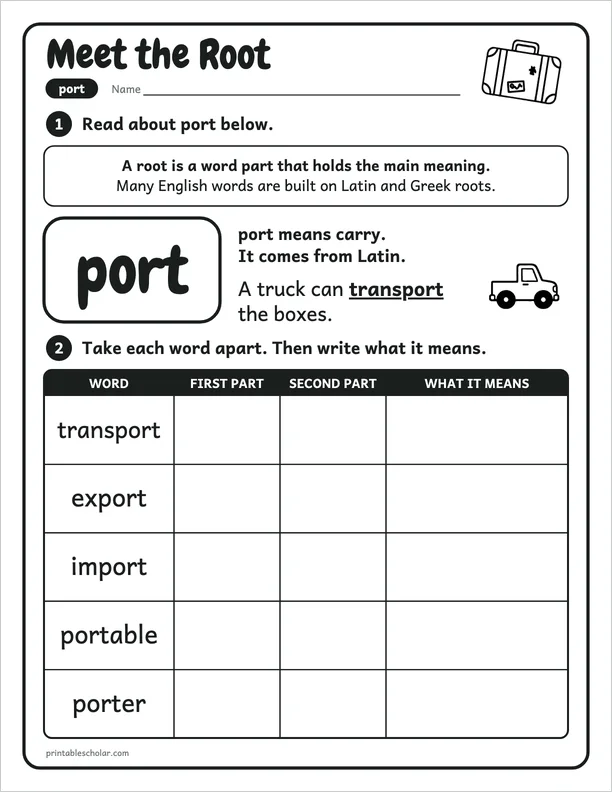
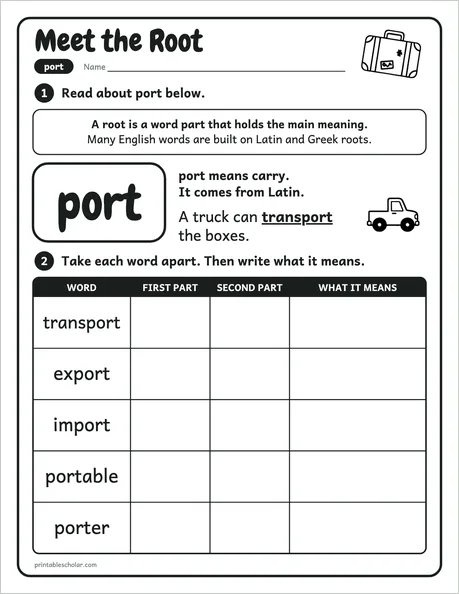
Meet the Root: port: a free root port word work worksheet

Meet the Root: port

root port

What the root means, a sentence, then five words to take apart.

Download PDF
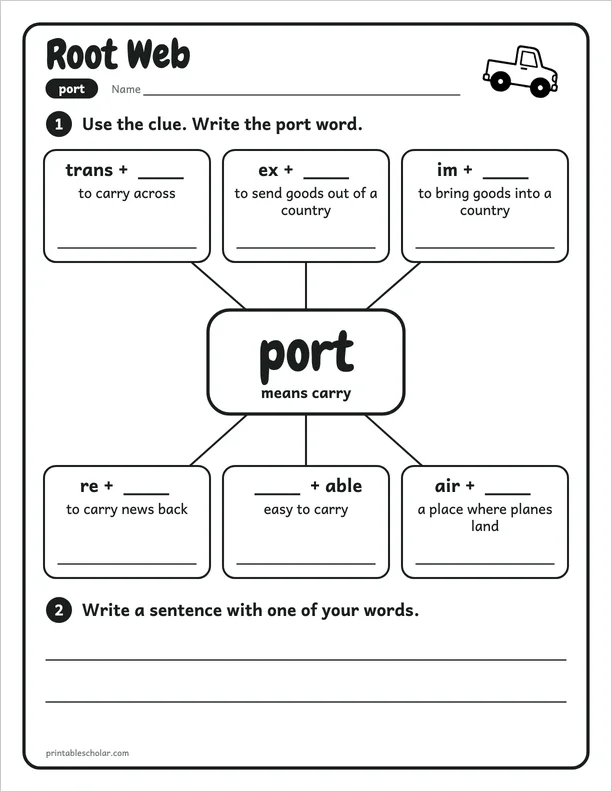
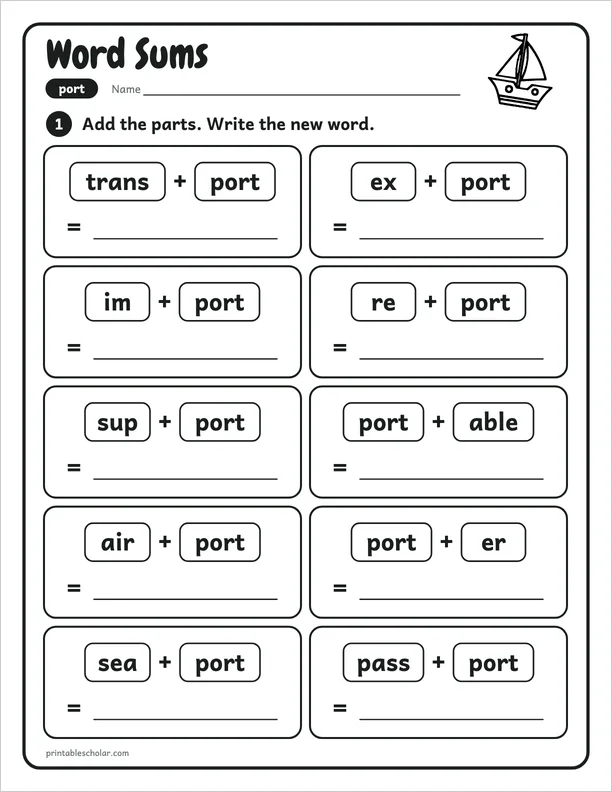
Root Web: a free root port word work worksheet

Root Web

root port

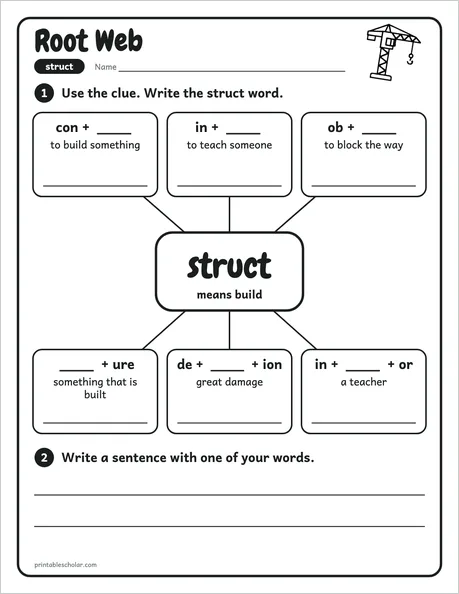
Six clues around one root: write the word for each, then a sentence.

Download PDF
Word Sums: a free root port word work worksheet

Word Sums

root port

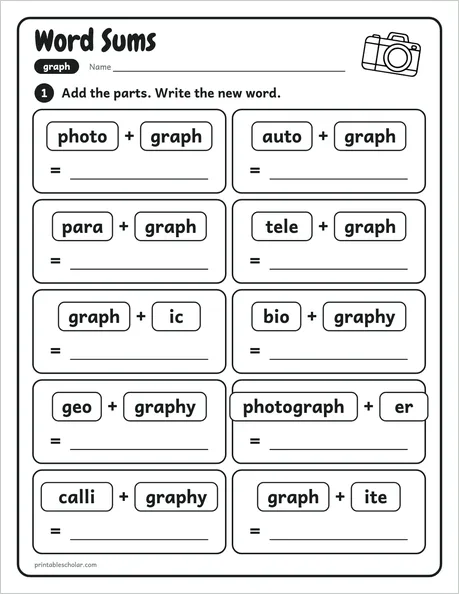
Add the two parts and write the new word.

Download PDF
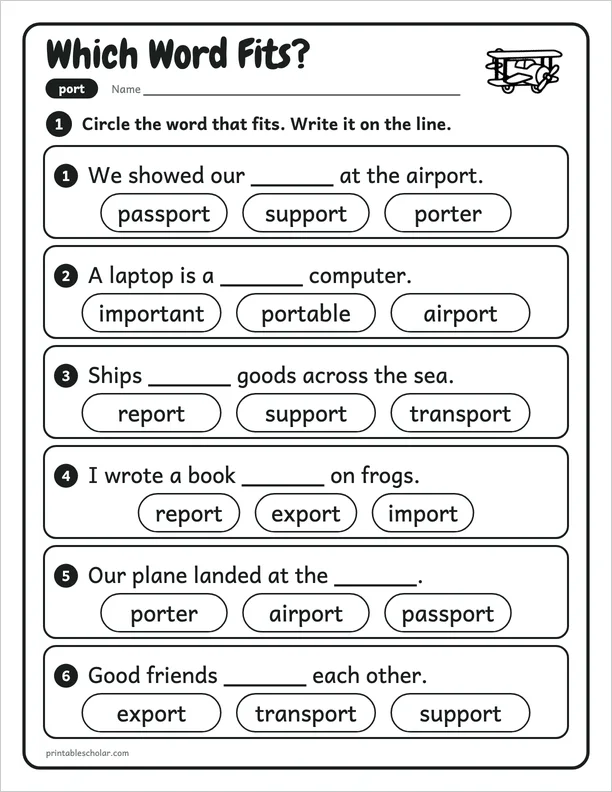
Which Word Fits?: a free root port word work worksheet

Which Word Fits?

root port

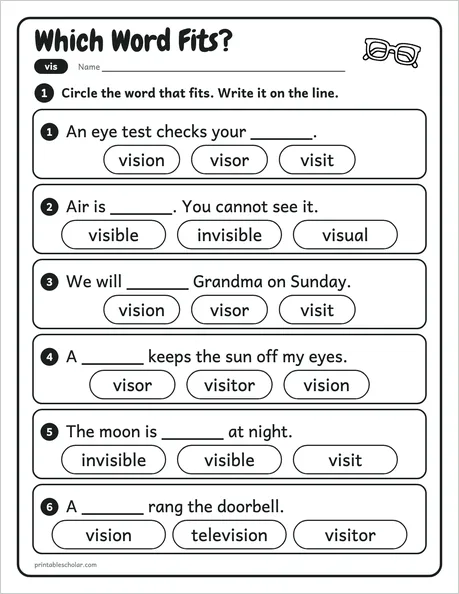
Pick the word that fits each sentence, then write it in.

Download PDF
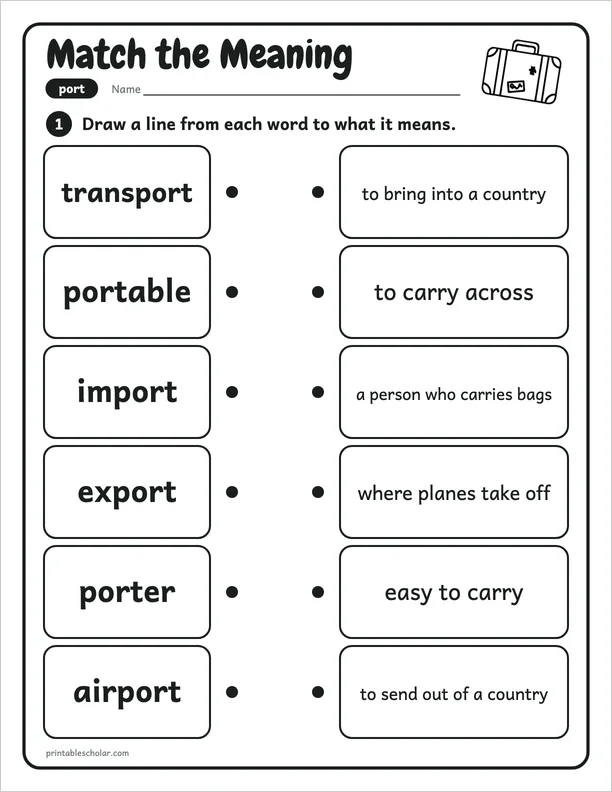
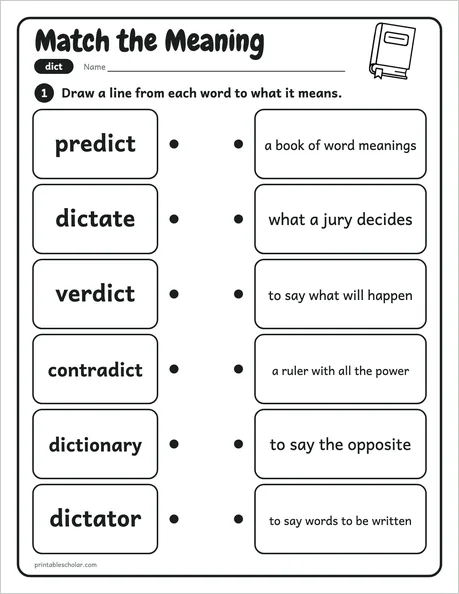
Match the Meaning: a free root port word work worksheet

Match the Meaning

root port

Draw a line from each word to what it means.

Download PDF
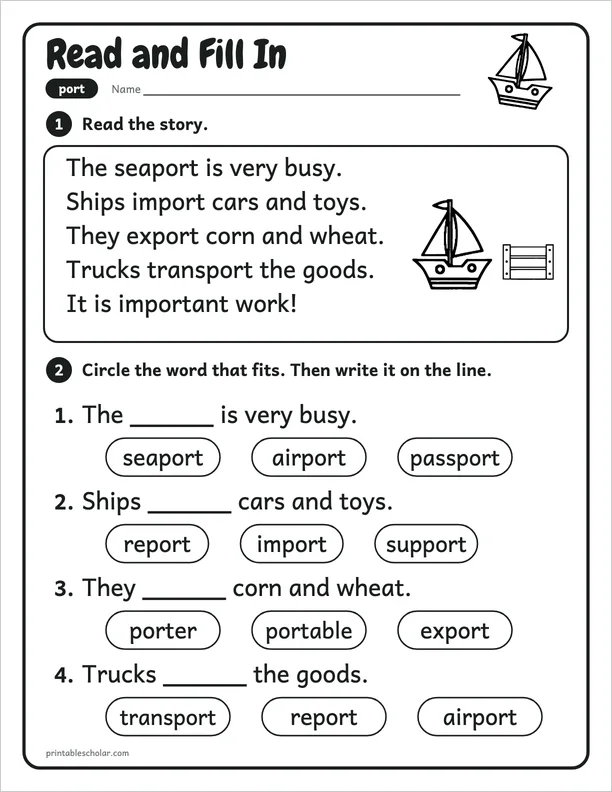
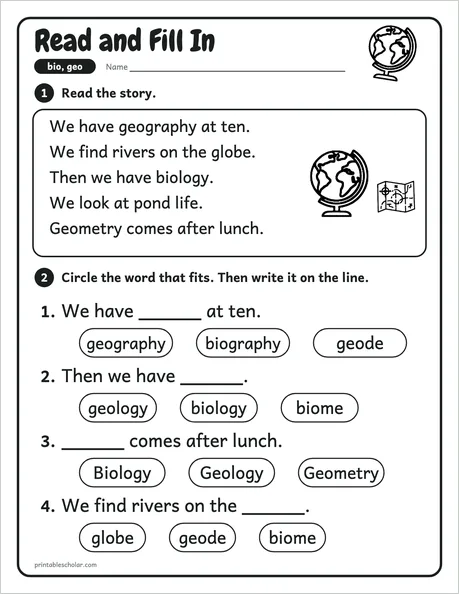
Read and Fill In: a free root port word work worksheet

Read and Fill In

root port

Read a short story, then fill in the missing words.

Download PDF
Level 6 Word Work: Greek and Latin Roots cover
Level 6 Word Work · Third grade

All 91 Greek and Latin roots worksheets in one file

Every sheet for every set in one file, in order, ready to print: the free ones and 25 more that are only in the pack.
Get the pack for $7All 6 levels for $19 One-time purchase. Instant download. Secure checkout by Stripe. All 6 levels are 609 worksheets, kindergarten to third grade, in 6 PDFs.

Reading these words? Next step: the Level 6 decodable readers, short illustrated books written with the same roots. Not there yet? Start with the prefix, suffix and syllable worksheets.

About the Greek and Latin Roots Worksheets

A root is the part of a word that holds its main meaning. Port means carry, so a portable radio is one you can carry, to transport is to carry across and to import is to carry in. A child who knows a few dozen Greek and Latin roots can work out thousands of longer words, which is why most programs teach them in third grade. These worksheets practice that, in 8 kinds of sheet.

There are eleven sets, one for each Level 6 phonics skill. Six are single roots: the Latin roots port (carry), struct (build), vis (see) and dict (say), and the Greek roots graph (write) and phon (sound). One set covers bio (life) and geo (earth) together. Then come the suffixes -ment and -ness, the suffixes -ous and -al, and the prefixes inter- and trans-. A review set comes last.

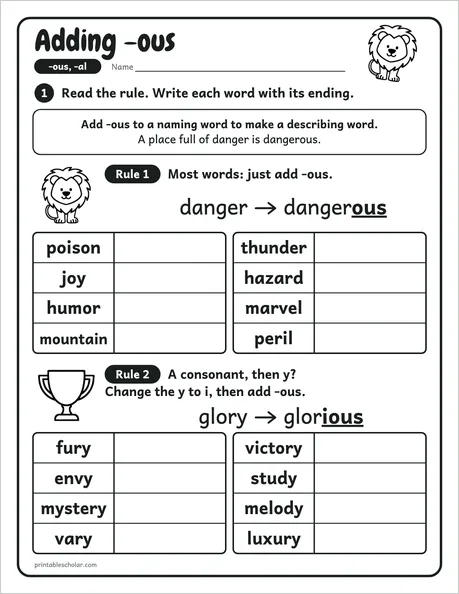
Each set starts with Meet the Root: a big tile with the root, what it means, a sentence, and five words to take apart. Root Web puts the root in the middle of the page with six clues around it, and the child writes the word that fits each clue. Word Sums run both ways (photo + graph, and photograph back into its parts). The suffix sets add a rule sheet for the spelling changes: happy becomes happiness, glory becomes glorious. Every set ends with sentences and two tiny stories.

The 6 port sheets on this page are free to print, each with its answer key, and every other set has six free sheets of its own on its phonics pages. The sheets are black and white, so a class set costs nothing extra to copy.

Frequently Asked Questions

What is a root word?
A root is the part of a word that carries its main meaning. Many English roots come from Latin and Greek: port means carry (transport, portable), vis means see (vision, visible), graph means write (autograph, paragraph). A root is often not a word by itself. It needs a prefix or a suffix.
Which Greek and Latin roots are in these worksheets?
Four Latin roots: port (carry), struct (build), vis (see) and dict (say or tell). Four Greek roots: graph (write or draw), phon (sound), bio (life) and geo (earth). The sets after those teach the suffixes -ment, -ness, -ous and -al and the prefixes inter- and trans-.
What grade are these for?
3rd grade, and 4th grade for review. They suit a child who already reads words with common prefixes and suffixes such as un-, re-, -ful and -less.
What order should I use them in?
The Latin roots first (port, struct, vis, dict), then the Greek roots (graph, phon, bio and geo), then the two suffix sets and the prefix set, and the review last. Inside a set, Meet the Root comes first and the story sheets come last.
Is there an answer key?
Yes. Each free PDF has its answer key as the second page. The pack has a key for every sheet, printed four to a page at the back.
What comes before and after these?
Before: the prefix, suffix and syllable worksheets. After: reading these words in books. The Level 6 decodable readers are short illustrated books written with the same roots, suffixes and prefixes.