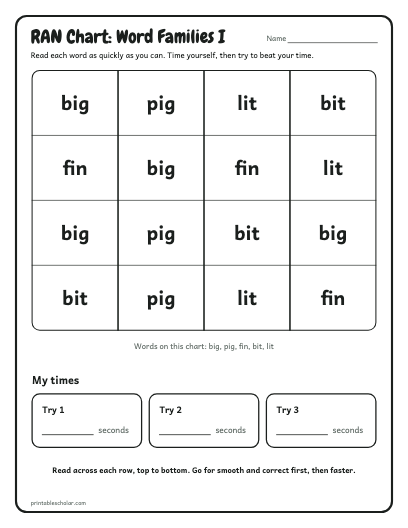
Free printable word families i phonics worksheets. Five practice activities: decodable passage, word sort, phrasing cards, rapid naming chart, and word search.
A free illustrated mini-book for Word Families I, plus the same story as a passage sheet for highlighting.

A full-color picture book your student reads on their own. Skill: Word Families I. Print, cut and staple.



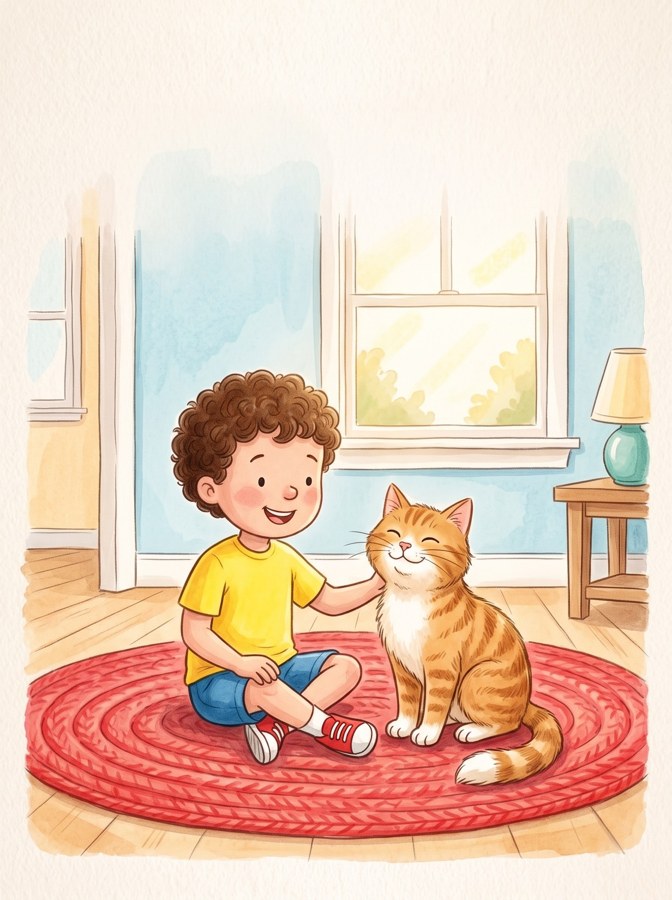
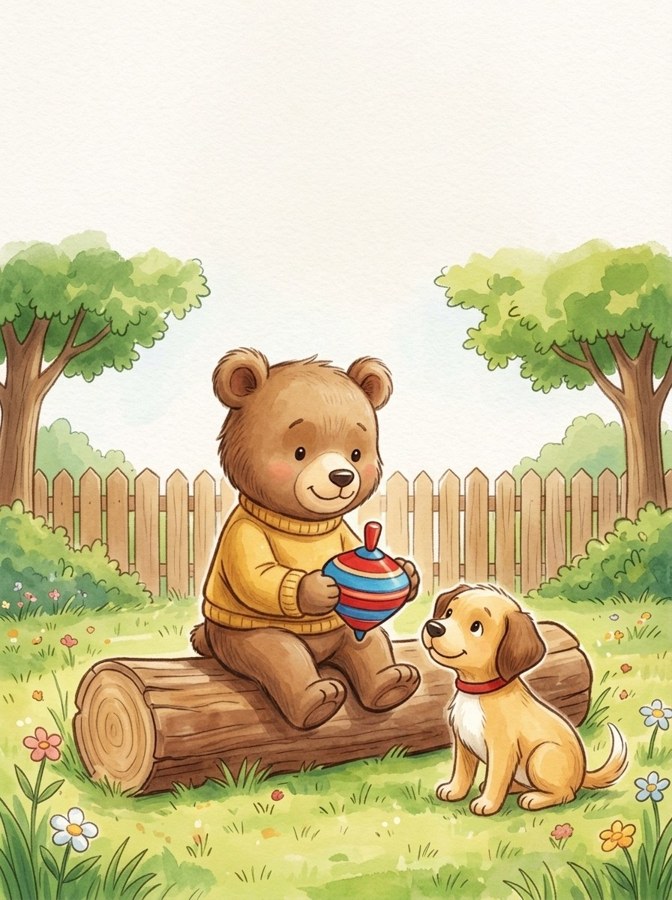 This book is one of 72 Level 1 mini-books.Every book is free to print one at a time, or get all 72 in one file for $14.
See all 72 books →
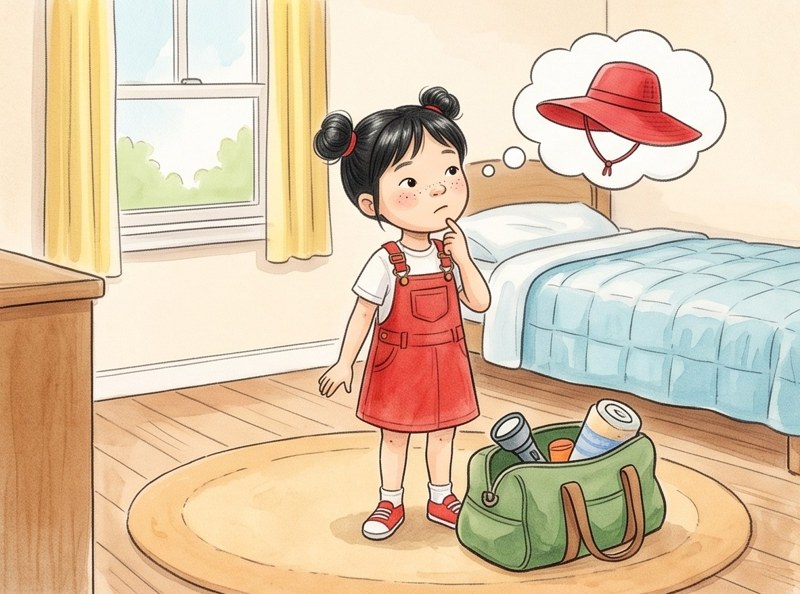
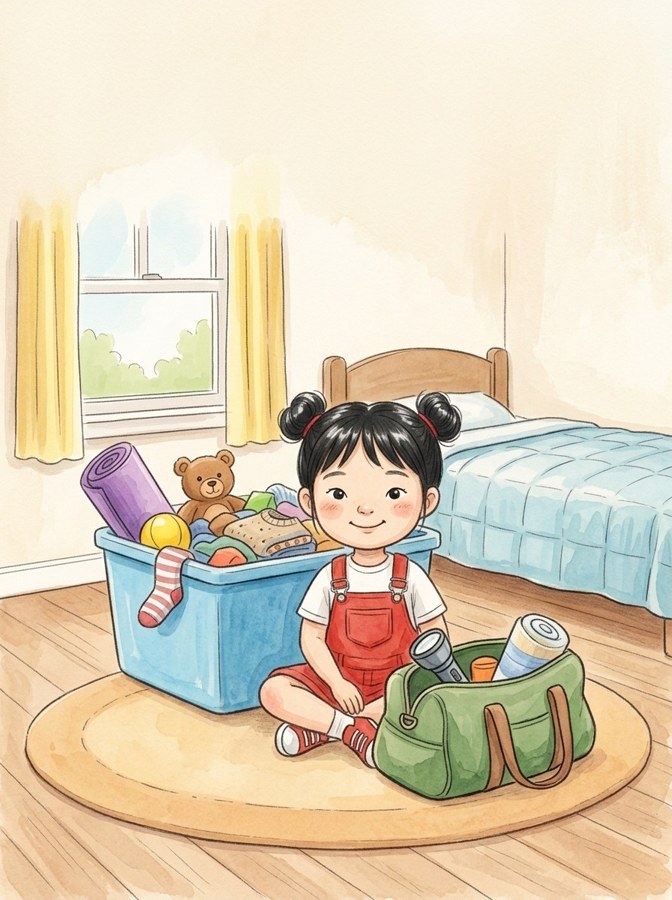
Kim had to pack a camp kit. "I must find my big red hat," said Kim. The hat was in a big bin. Kim had to dig and dig in the bin. Her hand hit a lump. She had to pull it a bit. "I got it!" said Kim. Kim put the hat in her kit.
The words this story set practices, in the two groups used by the word sort.
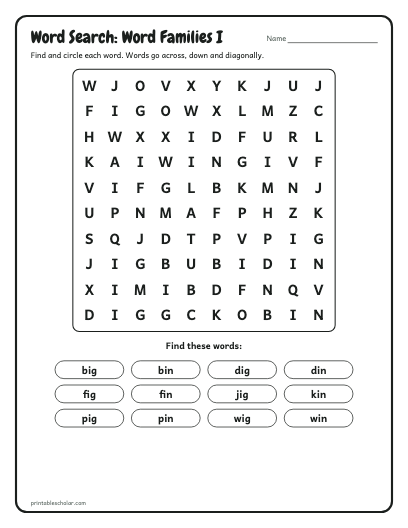
big, dig, fig, jig, pig, wig, bin, din, fin, kin, pin, win
bit, fit, hit, kit, lit, pit, sit, wit
Short I words to read, match and write, with pictures. Each PDF has its answer key on page 2.
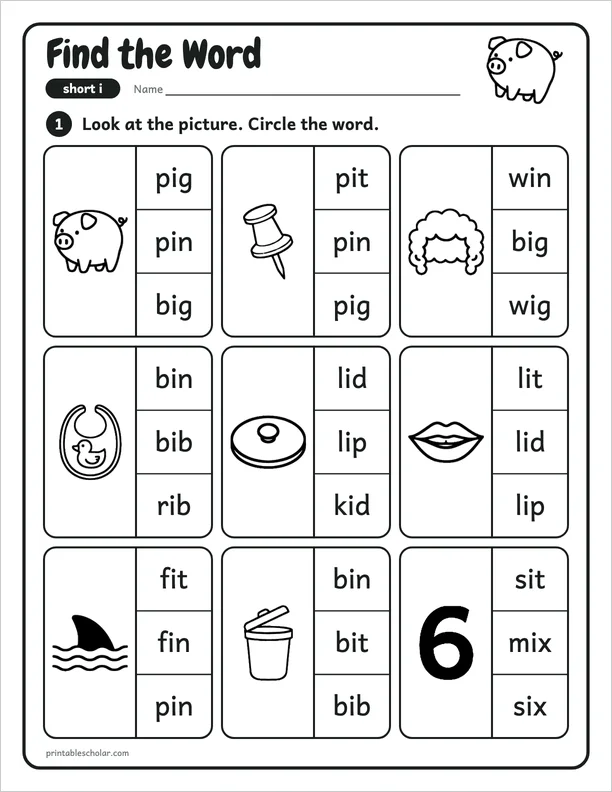
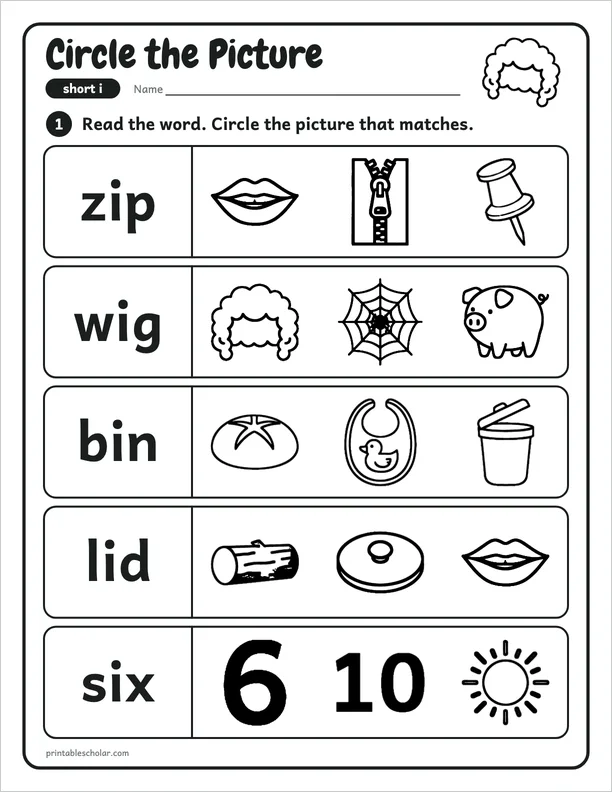
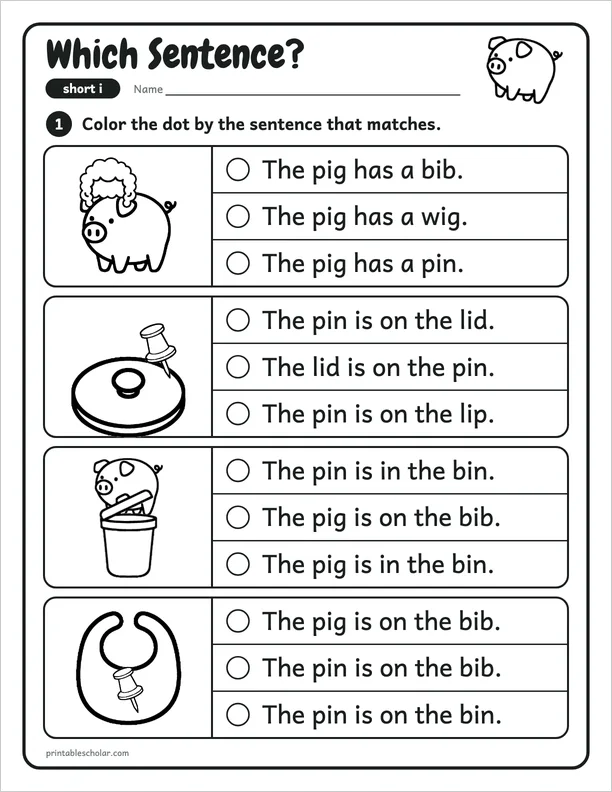
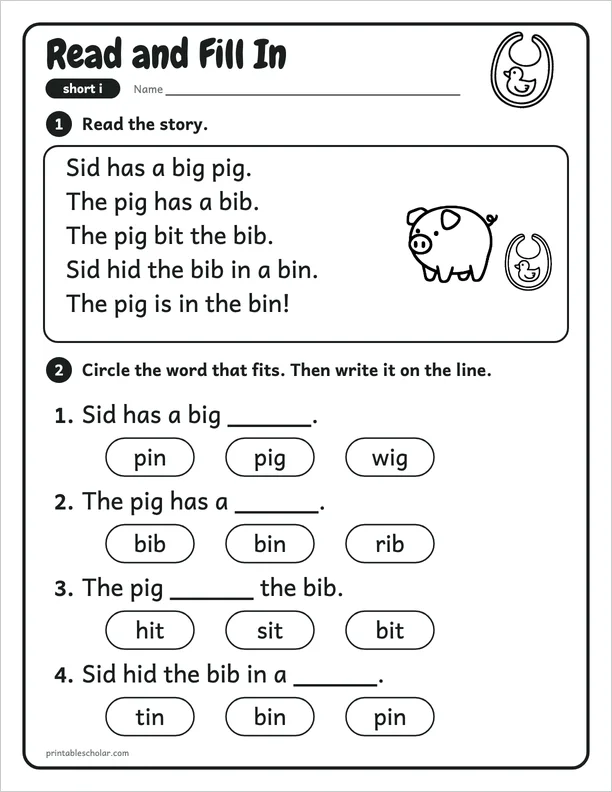
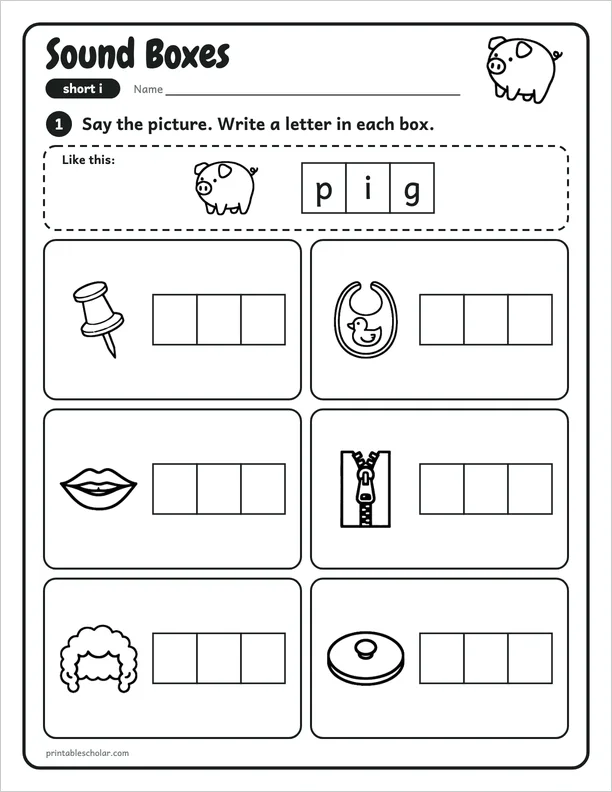
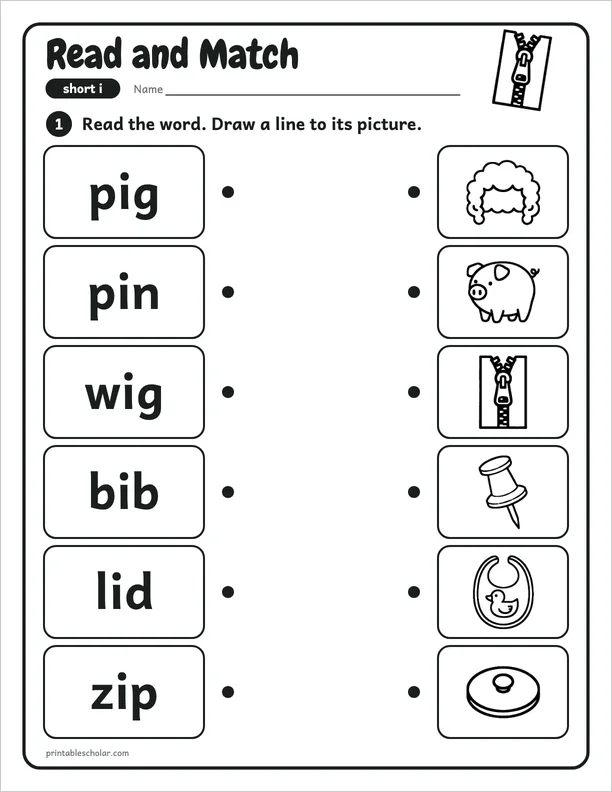
All 77 CVC worksheets in one file, with answer keys.
Get the pack for $7 All 6 levels (700+ sheets) for $194 ready-to-print PDFs for this story's word families i words. Each one opens as its own file.
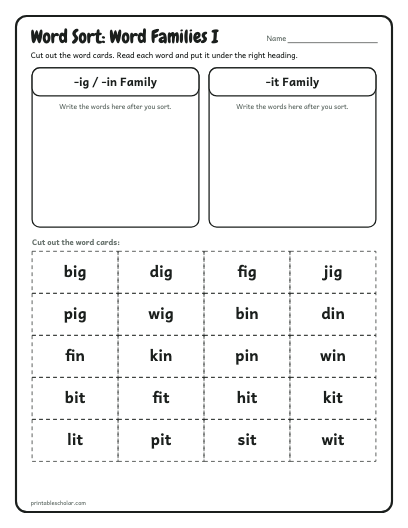
Cut-apart word cards to sort: -ig / -in Family or -it Family. Answer key on page 2.
Download PDF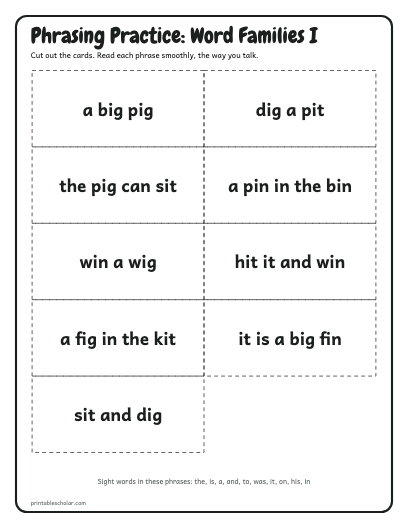
More picture worksheets: beginning sounds, ending sounds, rhyming and syllables — new pictures every time you print.
A new decodable story with the same word families i sounds — each comes with its own set of worksheets. Then the next skill: Word Families E.
Understanding CVC word families like -ig, -in, and -it is a crucial early step in phonics, falling right after students master individual letter sounds. These families introduce the concept of a consistent vowel and ending consonant sound, which helps children decode new words efficiently. A common challenge at this stage is differentiating the short 'i' sound in words like "pig" from other short vowels, particularly 'e' (as in "peg") or 'u' (as in "bug"). Young learners might also struggle to blend the initial consonant with the -ig, -in, or -it ending smoothly, sometimes pausing between sounds or dropping the final consonant, saying "pi" instead of "pin" or "bi" for "bit." The subtle difference between the 'g' and 'n' endings in "dig" versus "din" also requires careful auditory discrimination. To maximize learning with these word family worksheets, begin by reviewing the short 'i' sound and the individual sounds for 'g', 'n', and 't'. Use the decodable passage from "Pip's Red Ball" to help students practice reading words like "big," "pin," and "sit" in context. Encourage them to highlight or circle all the -ig, -in, and -it words they find. The word sort activity is excellent for reinforcing the different family endings; have students physically sort the target words into their respective groups. For fluency, use the phrasing cards to practice reading short phrases containing these words, focusing on smooth, connected speech. Finally, the Rapid Automatic Naming (RAN) chart provides a structured way to build speed and accuracy in recognizing and recalling these essential CVC words.
For more early literacy resources, explore our sight word flashcards, tracing worksheets, handwriting worksheets, and coloring pages.
 Printable Scholar