 Printable Scholar
Printable Thinking Maps
All eight thinking map templates, each matched to one kind of thinking. Print the whole set, or open a map to choose its size, type in a topic, and download it on its own. Free, no sign-up.
All eight thinking map templates, each matched to one kind of thinking. Print the whole set, or open a map to choose its size, type in a topic, and download it on its own. Free, no sign-up.
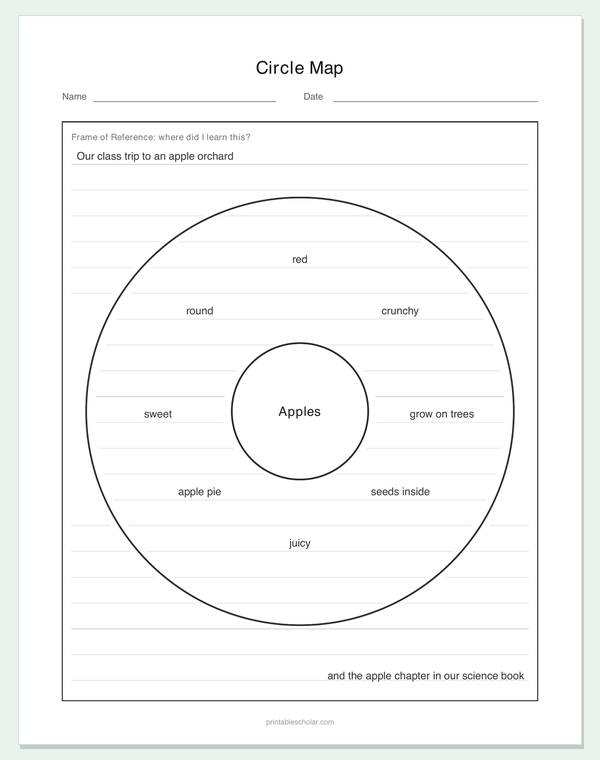
Defining in context
A topic in the middle, what you know around it, and where you learned it.
Open circle map →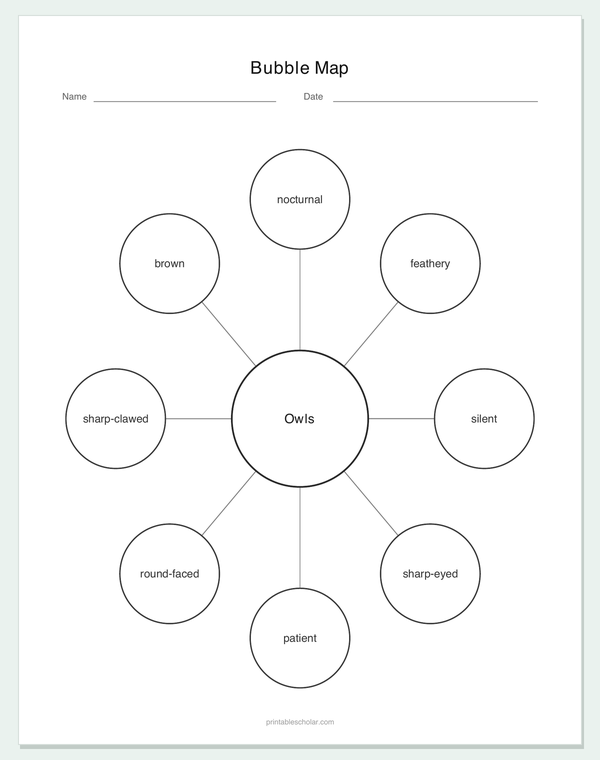
Describing
Describing words in bubbles around a topic.
Open bubble map →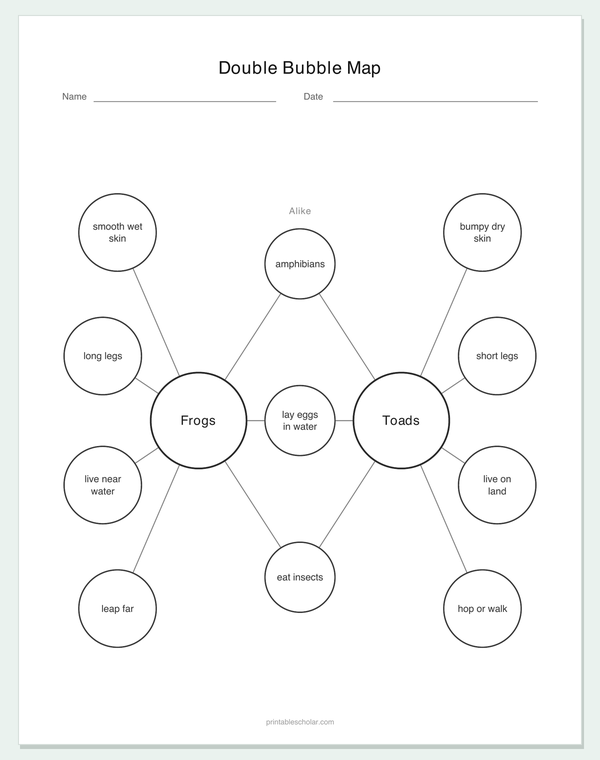
Comparing and contrasting
Two topics, what they share in the middle, and how each is different.
Open double bubble map →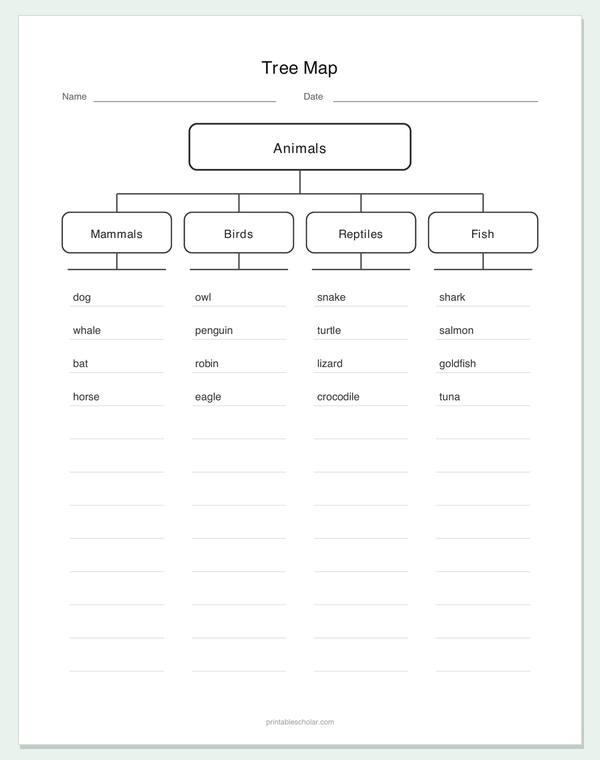
Classifying
Sort a topic into categories, with lines for the members of each.
Open tree map →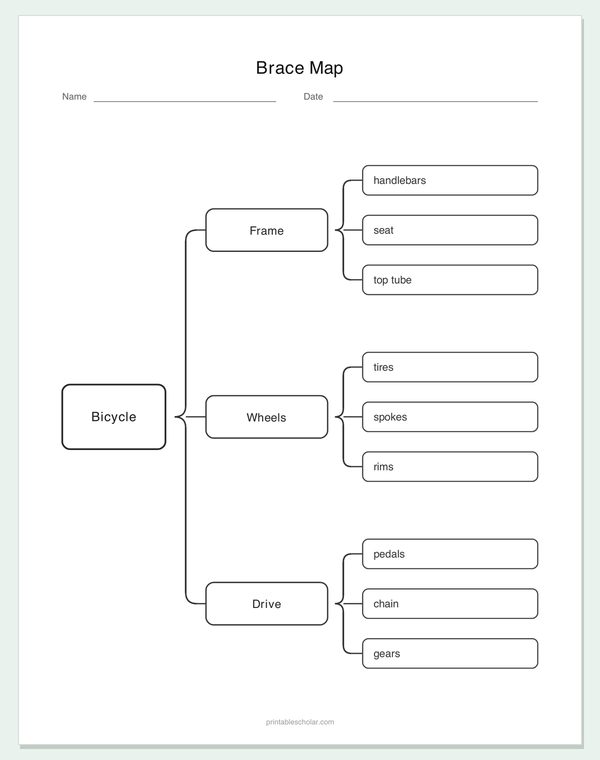
Whole and parts
Break something into its parts, then those parts into smaller parts.
Open brace map →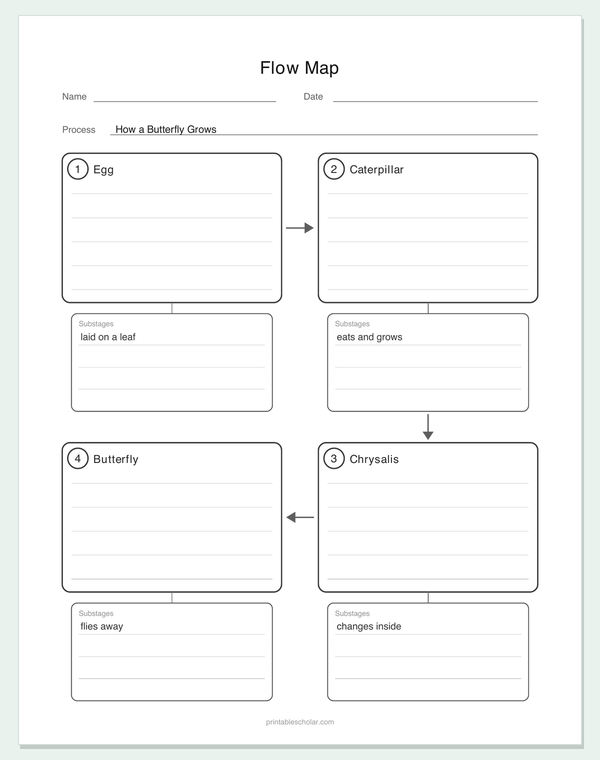
Sequencing
Numbered stages with arrows, each with a box for its smaller steps.
Open flow map →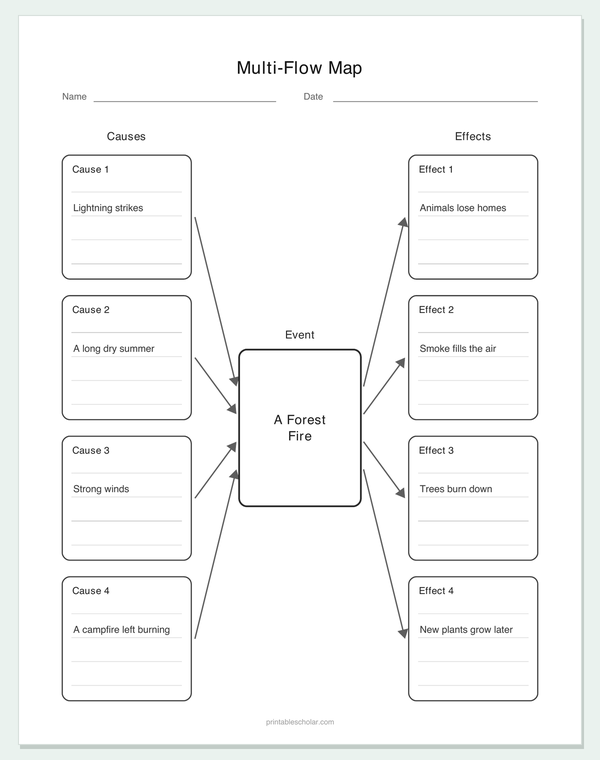
Cause and effect
Causes flow into an event on the left, effects flow out on the right.
Open multi-flow map →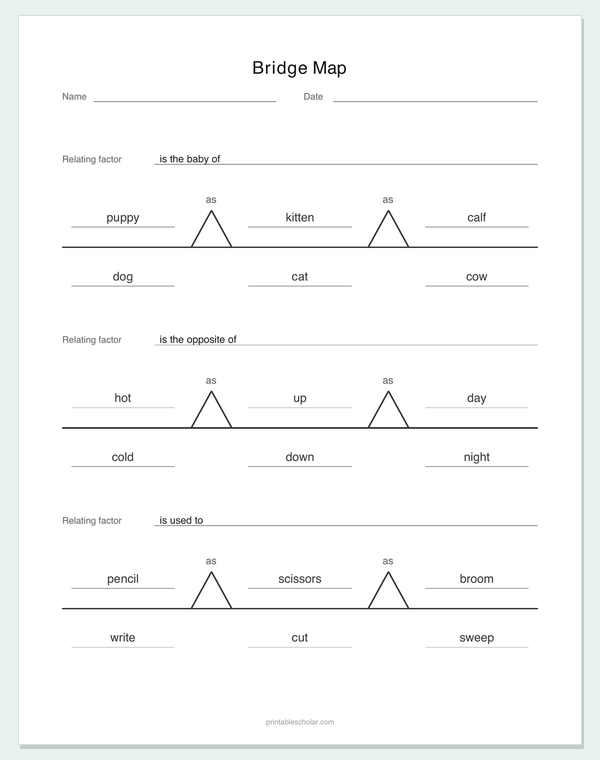
Seeing analogies
Three rows of analogies joined by "as", with the relating factor above each.
Open bridge map →Thinking maps are a set of eight graphic organizers, each tied to one thinking process. Because every map always means the same thing, students learn to pick the map that fits the question: a circle map to brainstorm what they know, a bubble map to describe, a double bubble map to compare, and a tree map to sort.
The other four cover structure and logic: a brace map for the parts of a whole, a flow map for the order of events, a multi-flow map for causes and effects, and a bridge map for analogies. Each template here comes blank and as a filled-in example, printed on US Letter paper.