Spelling Words for 6th Graders

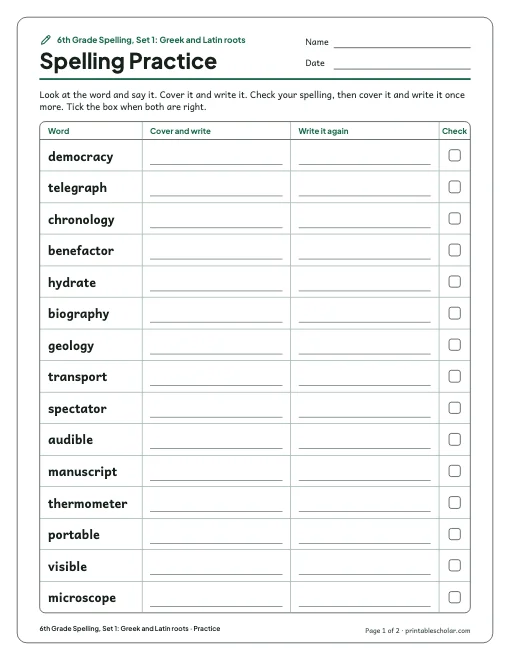
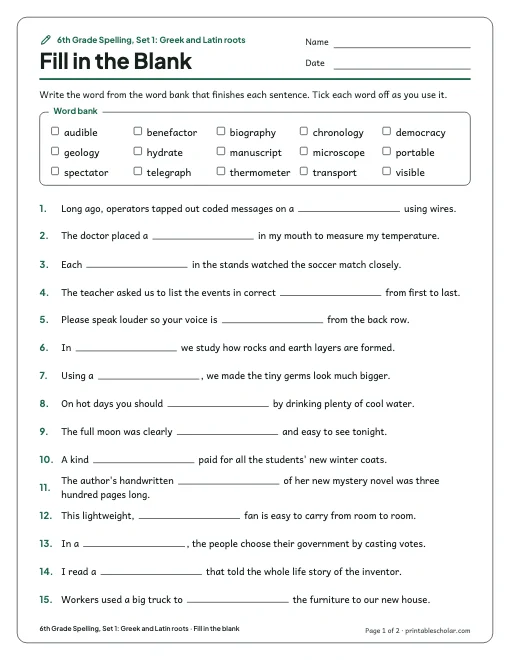
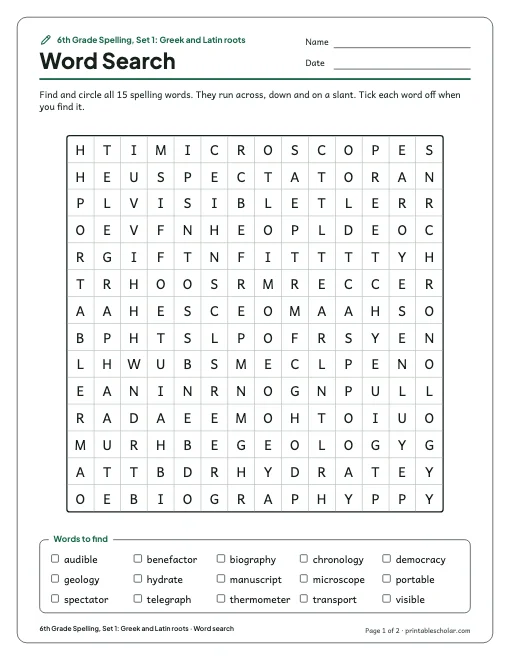
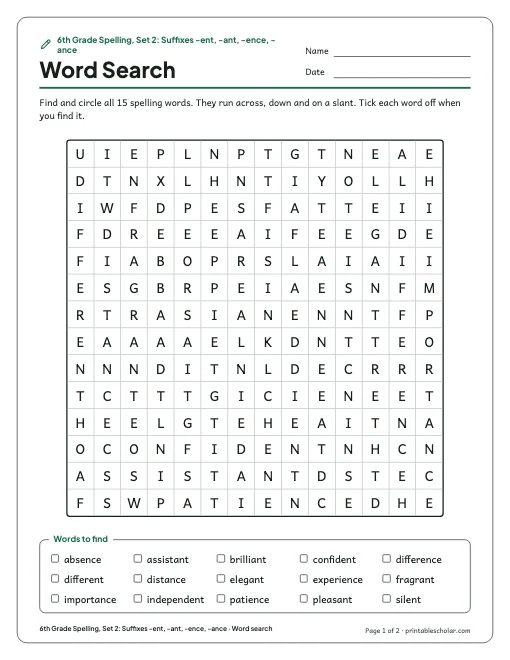
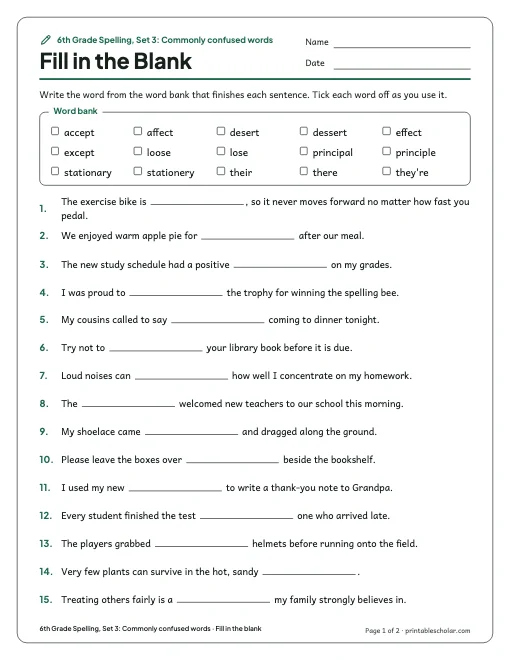
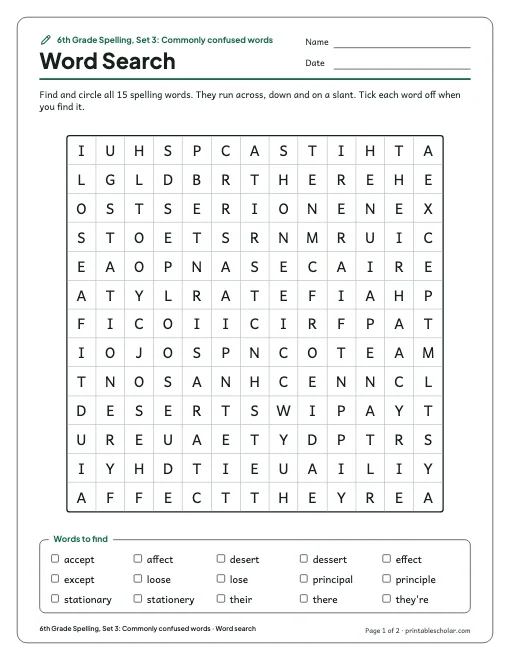
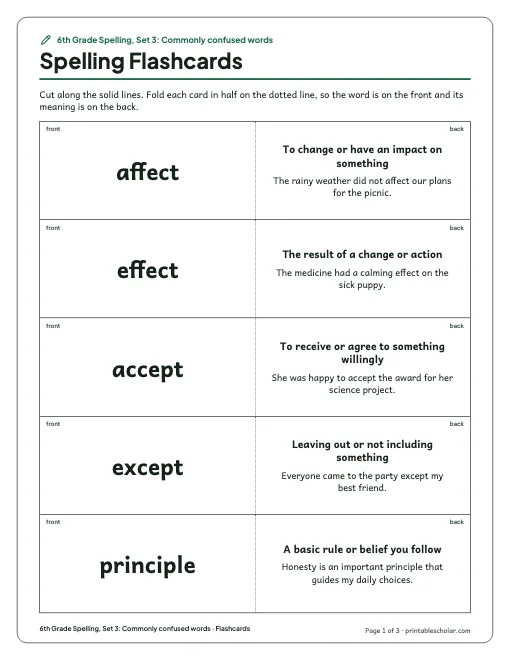
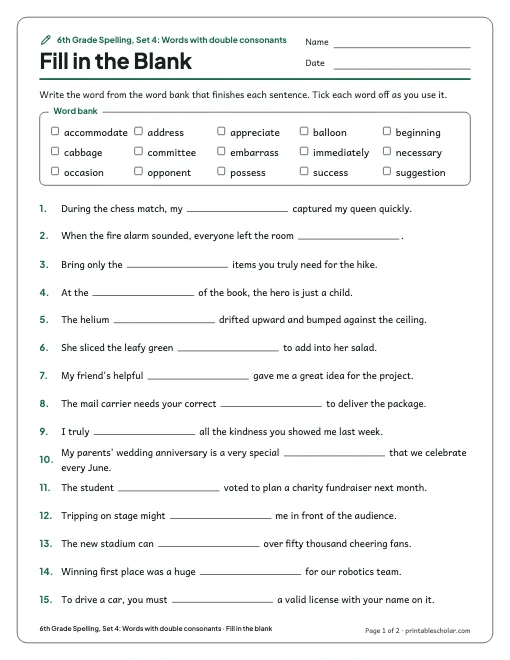
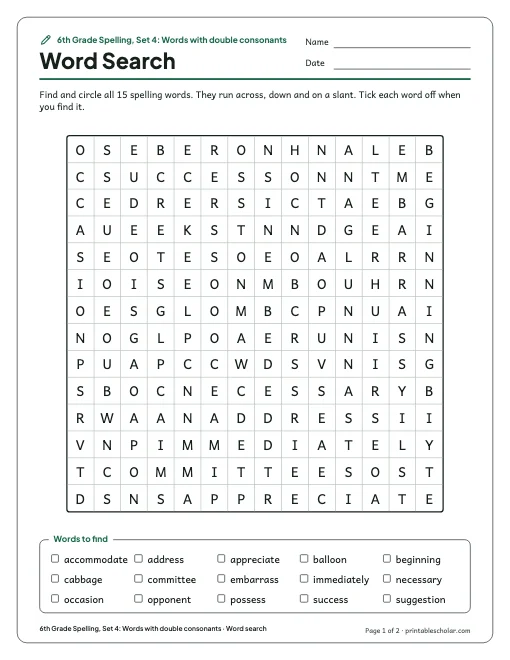
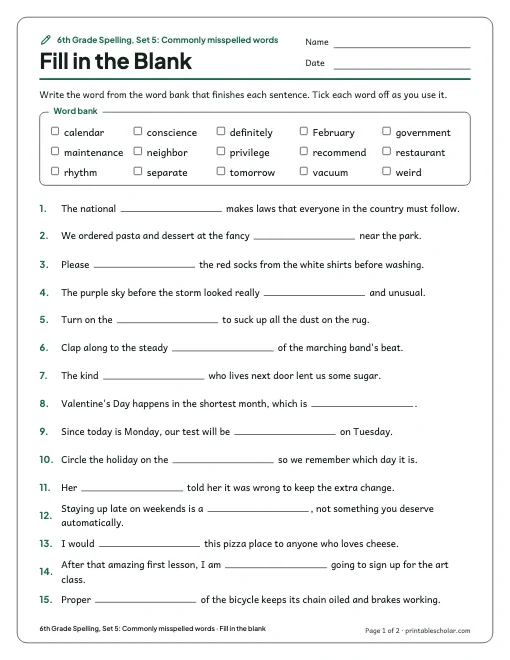
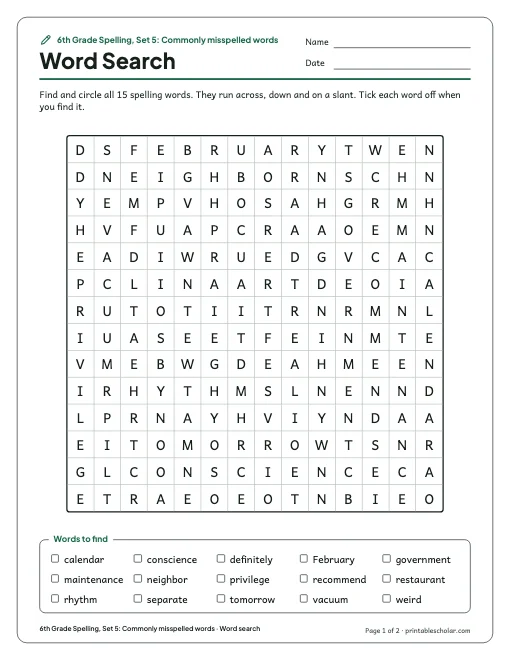
A complete list of spelling words for 6th graders — our 6th grade spelling words list pairs every word with a kid-friendly definition and example sentence, so students learn what each word means, not just how to spell it. These are the words a typical 6th grader covers across the school year, grouped into weekly sets you can print. Words are split into 5 sets of about 15 — assign one set a week. Each set has its own printables built from that set’s words: a word list (with definitions and example sentences), a word search, flashcards, and a fill-in-the-blank worksheet.

Greek and Latin roots

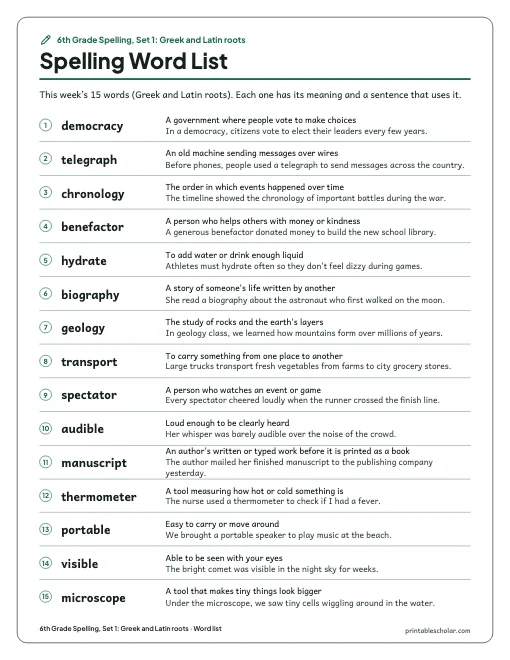
15 words
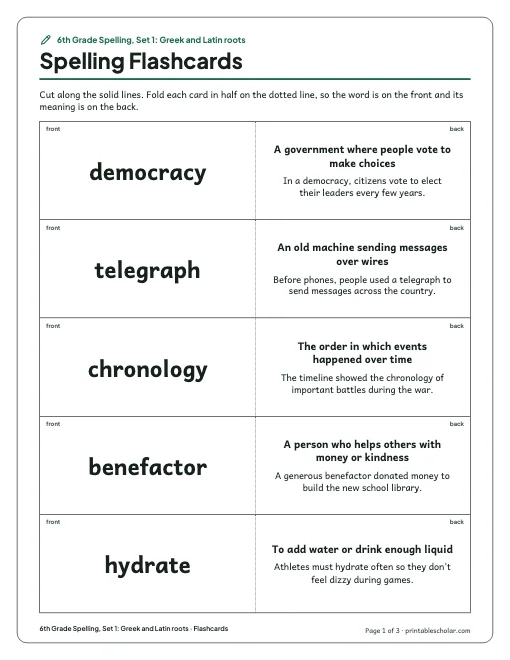
democracy
a government where people vote to make choices
“In a democracy, citizens vote to elect their leaders every few years.”
telegraph
an old machine sending messages over wires
“Before phones, people used a telegraph to send messages across the country.”
chronology
the order in which events happened over time
“The timeline showed the chronology of important battles during the war.”
benefactor
a person who helps others with money or kindness
“A generous benefactor donated money to build the new school library.”
hydrate
to add water or drink enough liquid
“Athletes must hydrate often so they don't feel dizzy during games.”
biography
a story of someone's life written by another
“She read a biography about the astronaut who first walked on the moon.”
geology
the study of rocks and the earth's layers
“In geology class, we learned how mountains form over millions of years.”
transport
to carry something from one place to another
“Large trucks transport fresh vegetables from farms to city grocery stores.”
spectator
a person who watches an event or game
“Every spectator cheered loudly when the runner crossed the finish line.”
audible
loud enough to be clearly heard
“Her whisper was barely audible over the noise of the crowd.”
manuscript
a document written or typed by hand
“The author mailed her finished manuscript to the publishing company yesterday.”
thermometer
a tool measuring how hot or cold something is
“The nurse used a thermometer to check if I had a fever.”
portable
easy to carry or move around
“We brought a portable speaker to play music at the beach.”
visible
able to be seen with your eyes
“The bright comet was visible in the night sky for weeks.”
microscope
a tool that makes tiny things look bigger
“Under the microscope, we saw tiny cells wiggling around in the water.”

Suffixes -ent, -ant, -ence, -ance

15 words
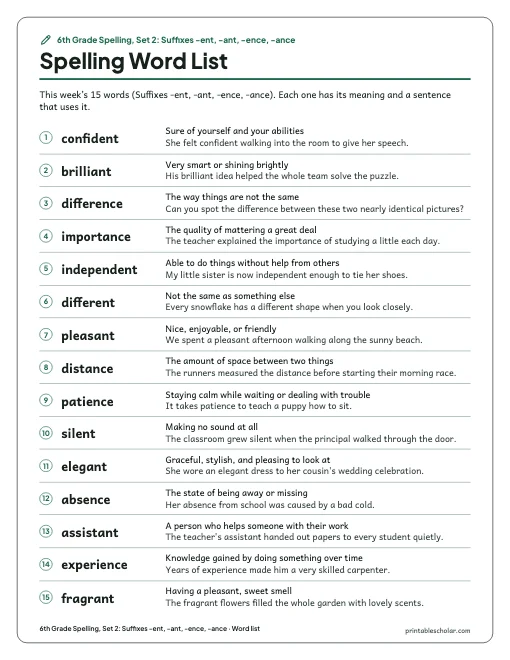
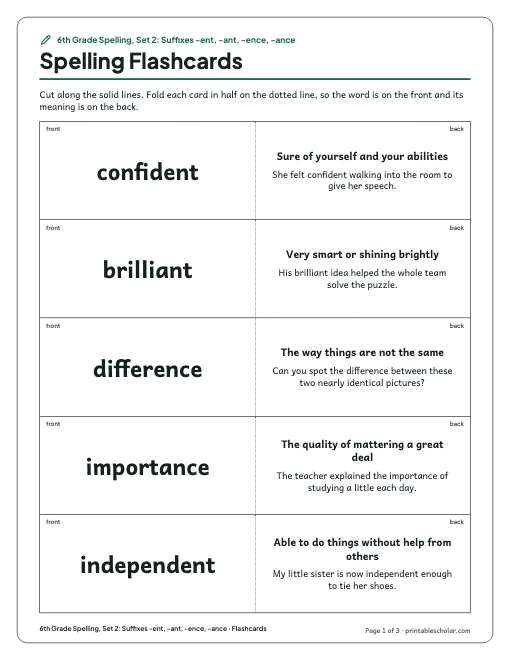
confident
sure of yourself and your abilities
“She felt confident walking into the room to give her speech.”
brilliant
very smart or shining brightly
“His brilliant idea helped the whole team solve the puzzle.”
difference
the way things are not the same
“Can you spot the difference between these two nearly identical pictures?”
importance
the quality of mattering a great deal
“The teacher explained the importance of studying a little each day.”
independent
able to do things without help from others
“My little sister is now independent enough to tie her shoes.”
different
not the same as something else
“Every snowflake has a different shape when you look closely.”
pleasant
nice, enjoyable, or friendly
“We spent a pleasant afternoon walking along the sunny beach.”
distance
the amount of space between two things
“The runners measured the distance before starting their morning race.”
patience
staying calm while waiting or dealing with trouble
“It takes patience to teach a puppy how to sit.”
silent
making no sound at all
“The classroom grew silent when the principal walked through the door.”
elegant
graceful, stylish, and pleasing to look at
“She wore an elegant dress to her cousin's wedding celebration.”
absence
the state of being away or missing
“Her absence from school was caused by a bad cold.”
assistant
a person who helps someone with their work
“The teacher's assistant handed out papers to every student quietly.”
experience
knowledge gained by doing something over time
“Years of experience made him a very skilled carpenter.”
fragrant
having a pleasant, sweet smell
“The fragrant flowers filled the whole garden with lovely scents.”

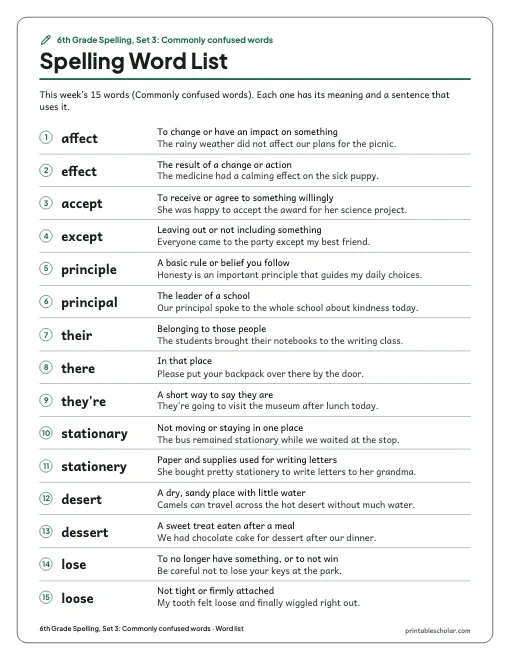
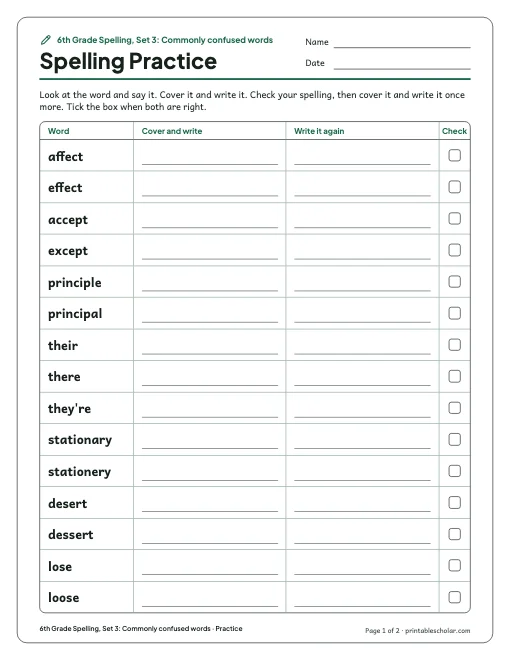
Commonly confused words

15 words
affect
to change or have an impact on something
“The rainy weather did not affect our plans for the picnic.”
effect
the result of a change or action
“The medicine had a calming effect on the sick puppy.”
accept
to receive or agree to something willingly
“She was happy to accept the award for her science project.”
except
leaving out or not including something
“Everyone came to the party except my best friend.”
principle
a basic rule or belief you follow
“Honesty is an important principle that guides my daily choices.”
principal
the leader of a school
“Our principal spoke to the whole school about kindness today.”
their
belonging to those people
“The students brought their notebooks to the writing class.”
there
in that place
“Please put your backpack over there by the door.”
they're
a short way to say they are
“They're going to visit the museum after lunch today.”
stationary
not moving or staying in one place
“The bus remained stationary while we waited at the stop.”
stationery
paper and supplies used for writing letters
“She bought pretty stationery to write letters to her grandma.”
desert
a dry, sandy place with little water
“Camels can travel across the hot desert without much water.”
dessert
a sweet treat eaten after a meal
“We had chocolate cake for dessert after our dinner.”
lose
to no longer have something or fail
“Be careful not to lose your keys at the park.”
loose
not tight or firmly attached
“My tooth felt loose and finally wiggled right out.”

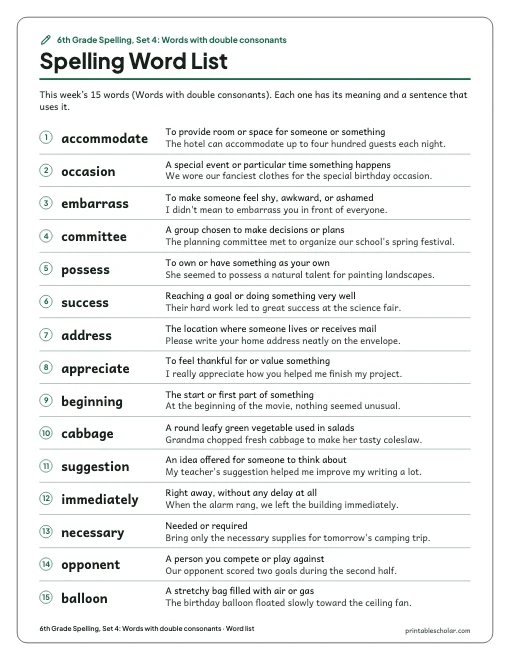
Words with double consonants

15 words
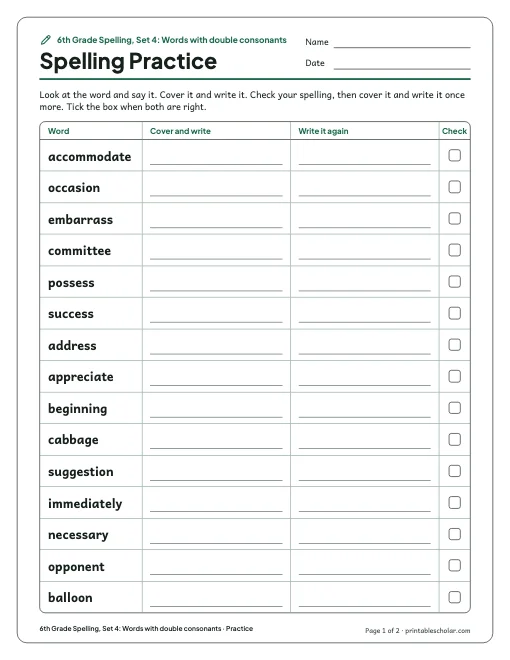
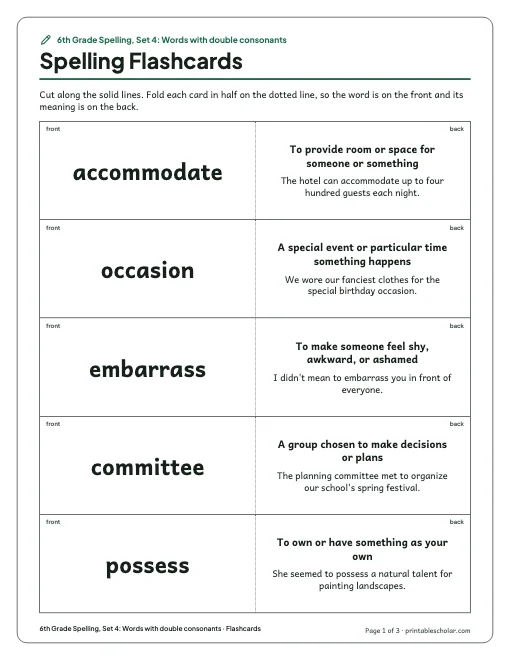
accommodate
To provide room or space for someone or something
“The hotel can accommodate up to four hundred guests each night.”
occasion
A special event or particular time something happens
“We wore our fanciest clothes for the special birthday occasion.”
embarrass
To make someone feel shy, awkward, or ashamed
“I didn't mean to embarrass you in front of everyone.”
committee
A group chosen to make decisions or plans
“The planning committee met to organize our school's spring festival.”
possess
To own or have something as your own
“She seemed to possess a natural talent for painting landscapes.”
success
Reaching a goal or doing something very well
“Their hard work led to great success at the science fair.”
address
The location where someone lives or receives mail
“Please write your home address neatly on the envelope.”
appreciate
To feel thankful for or value something
“I really appreciate how you helped me finish my project.”
beginning
The start or first part of something
“At the beginning of the movie, nothing seemed unusual.”
cabbage
A round leafy green vegetable used in salads
“Grandma chopped fresh cabbage to make her tasty coleslaw.”
suggestion
An idea offered for someone to think about
“My teacher's suggestion helped me improve my writing a lot.”
immediately
Right away, without any delay at all
“When the alarm rang, we left the building immediately.”
necessary
Something that is needed or required
“Bring only the necessary supplies for tomorrow's camping trip.”
opponent
A person you compete or play against
“Our opponent scored two goals during the second half.”
balloon
A stretchy bag filled with air or gas
“The birthday balloon floated slowly toward the ceiling fan.”

Commonly misspelled words

15 words
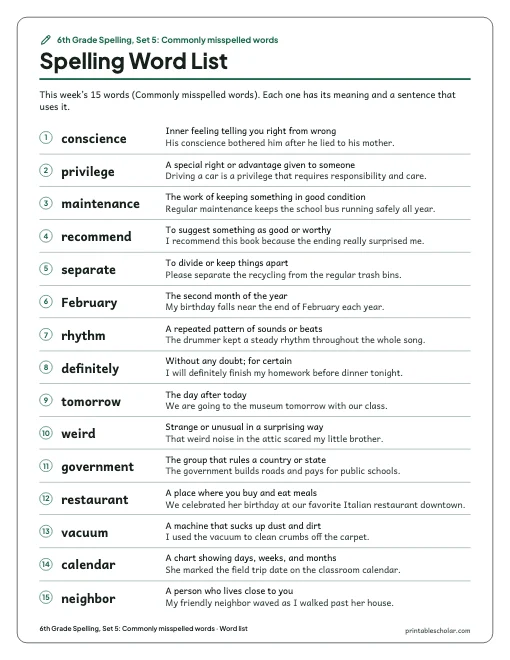
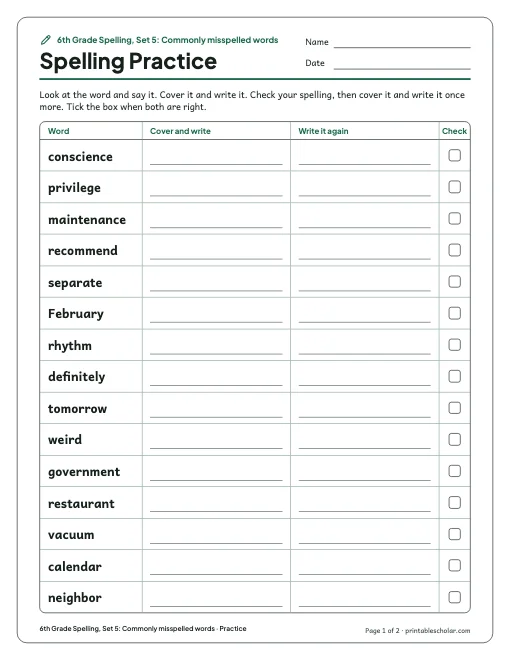
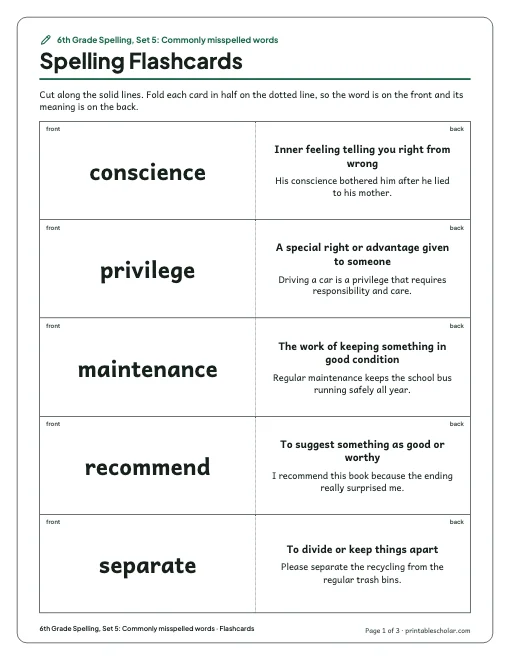
conscience
inner feeling telling you right from wrong
“His conscience bothered him after he lied to his mother.”
privilege
a special right or advantage given to someone
“Driving a car is a privilege that requires responsibility and care.”
maintenance
the work of keeping something in good condition
“Regular maintenance keeps the school bus running safely all year.”
recommend
to suggest something as good or worthy
“I recommend this book because the ending really surprised me.”
separate
to divide or keep things apart
“Please separate the recycling from the regular trash bins.”
February
the second month of the year
“My birthday falls near the end of February each year.”
rhythm
a repeated pattern of sounds or beats
“The drummer kept a steady rhythm throughout the whole song.”
definitely
without any doubt; for certain
“I will definitely finish my homework before dinner tonight.”
tomorrow
the day after today
“We are going to the museum tomorrow with our class.”
weird
strange or unusual in a surprising way
“That weird noise in the attic scared my little brother.”
government
the group that rules a country or state
“The government builds roads and pays for public schools.”
restaurant
a place where you buy and eat meals
“We celebrated her birthday at our favorite Italian restaurant downtown.”
vacuum
a machine that sucks up dust and dirt
“I used the vacuum to clean crumbs off the carpet.”
calendar
a chart showing days, weeks, and months
“She marked the field trip date on the classroom calendar.”
neighbor
a person who lives close to you
“My friendly neighbor waved as I walked past her house.”

Frequently Asked Questions

What spelling skills do 6th graders learn?

Sixth-grade spelling becomes word study for middle school: Greek and Latin roots, the -ent/-ant and -ence/-ance suffixes, commonly confused words and homophones, tricky double consonants, and the words students most often misspell.

How many spelling words should a 6th grader learn each week?

About 15 words a week is typical for sixth grade. Each set on this page holds roughly 15 words — assign one set per week.

Do these 6th grade spelling words come with definitions?

Yes — every word on the list has a kid-friendly definition and an example sentence, so 6th graders learn what each word means, not just how to spell it. They appear on the printable Word List and on the flashcards.

Can I use these for a classroom spelling bee?

They work well for an informal classroom or grade-level spelling bee — read each word aloud and have students spell it, using the definition and example sentence as clues. (Official events like the Scripps National Spelling Bee use their own, more advanced word lists.)

More spelling word lists

2nd Grade Spelling Words  ·  3rd Grade Spelling Words  ·  4th Grade Spelling Words  ·  5th Grade Spelling Words

For the sound patterns behind these words, see our phonics worksheets; for high-frequency reading words, see sight words.