Free printable r-blends phonics worksheets. Five practice activities: decodable passage, word sort, phrasing cards, rapid naming chart, and word search.
A free illustrated mini-book for R-Blends, plus the same story as a passage sheet for highlighting.

A full-color picture book your student reads on their own. Skill: R-Blends. Print, cut and staple.
 Want the whole level? 58 Level 2 mini-books in one file, $14Every book stays free to print one at a time.
See the pack →
Want the whole level? 58 Level 2 mini-books in one file, $14Every book stays free to print one at a time.
See the pack →
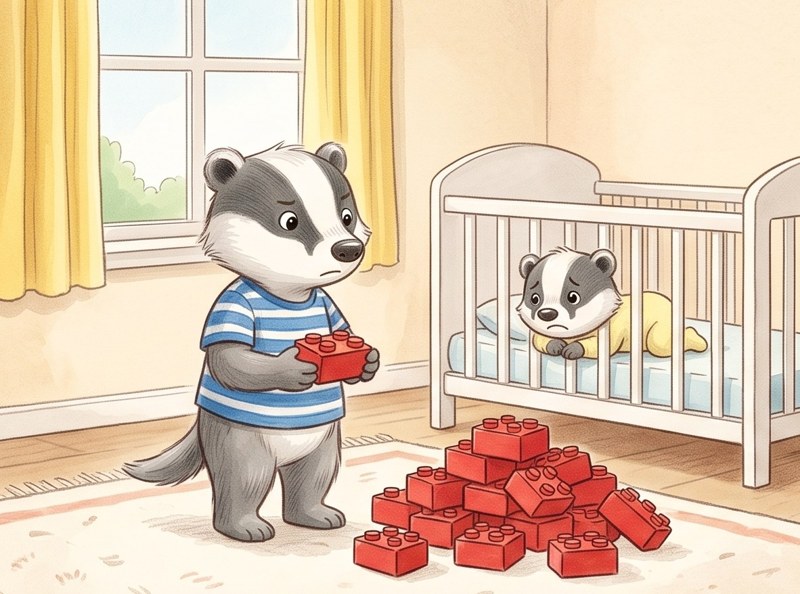
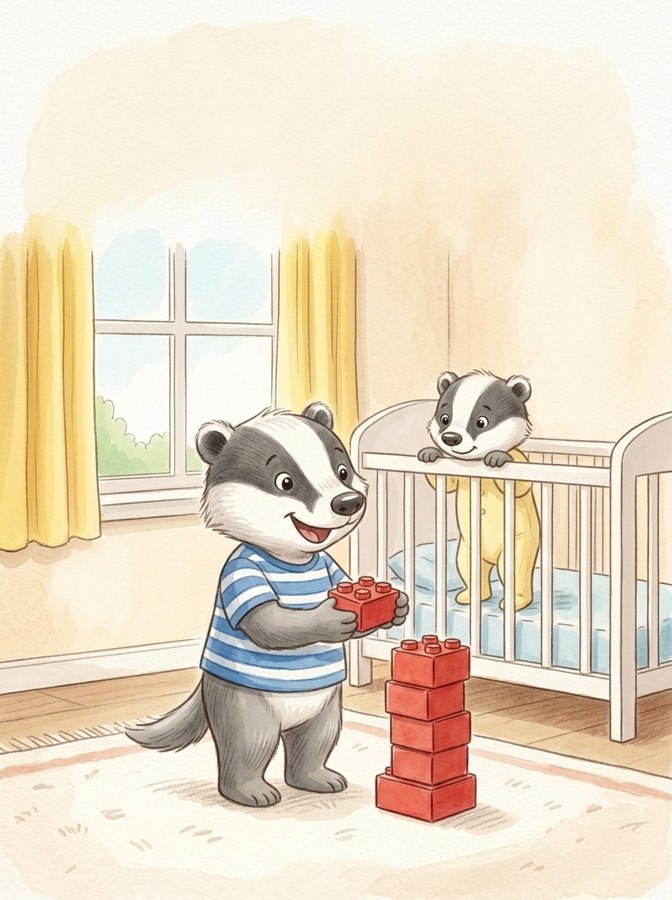
Chad had a big stack of red brick. He had a plan for the little cub. The cub was in his crib and was sad.
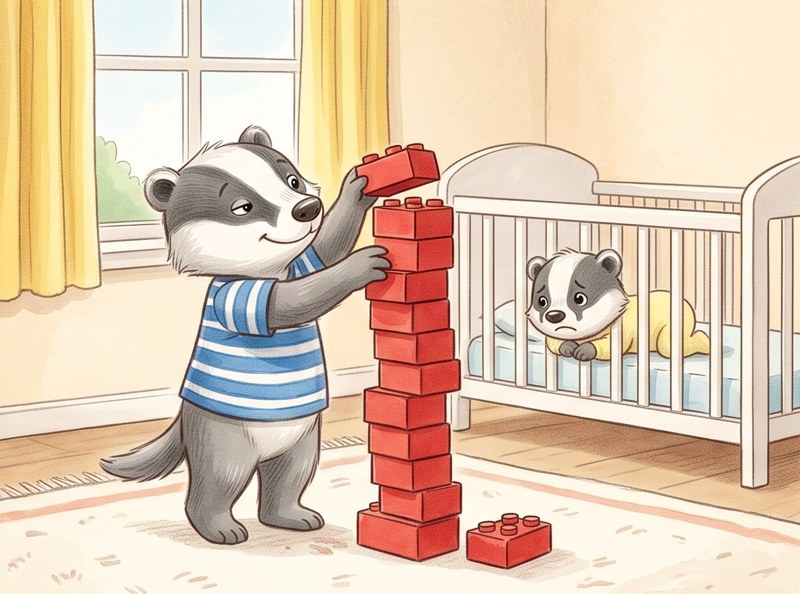
Chad set a brick up. Then he set up the rest of his big stack. The stack was so tall.
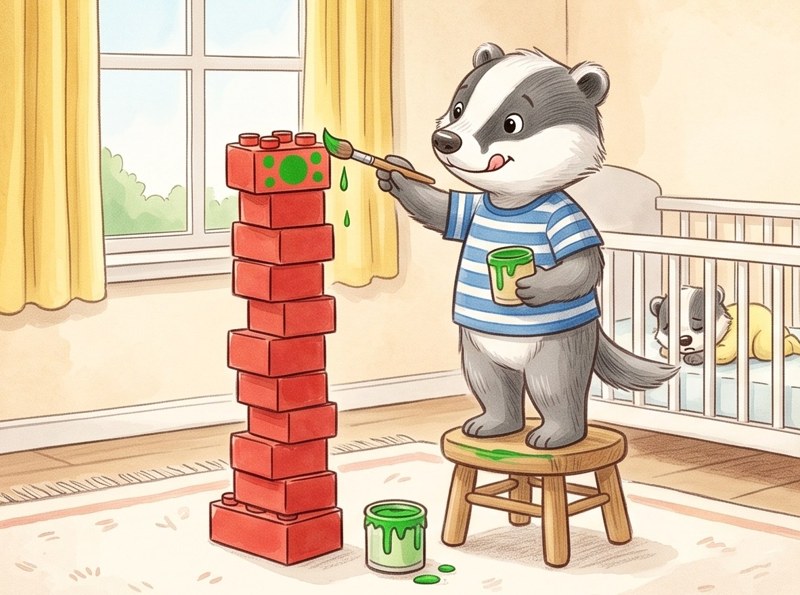
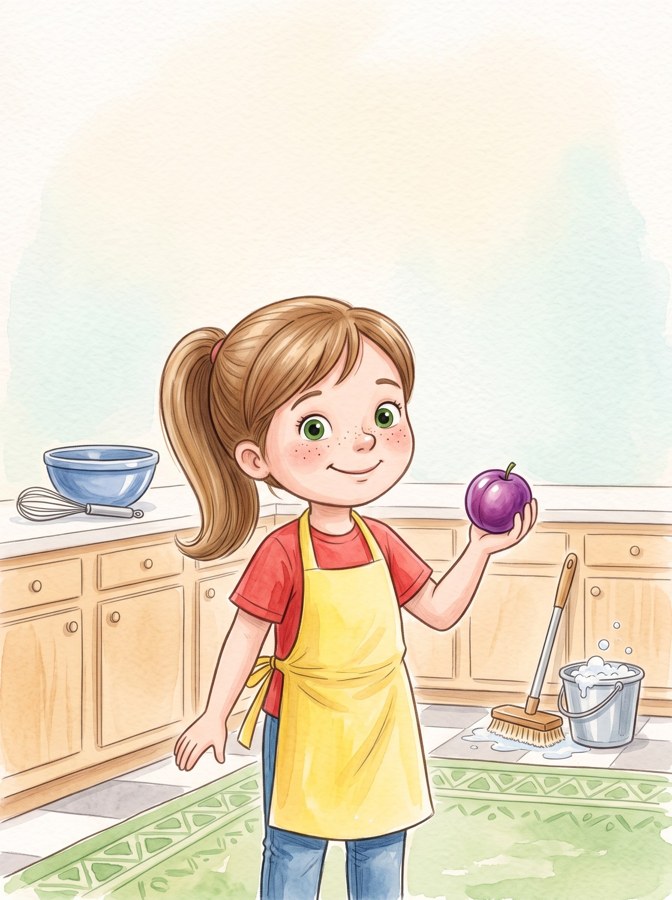
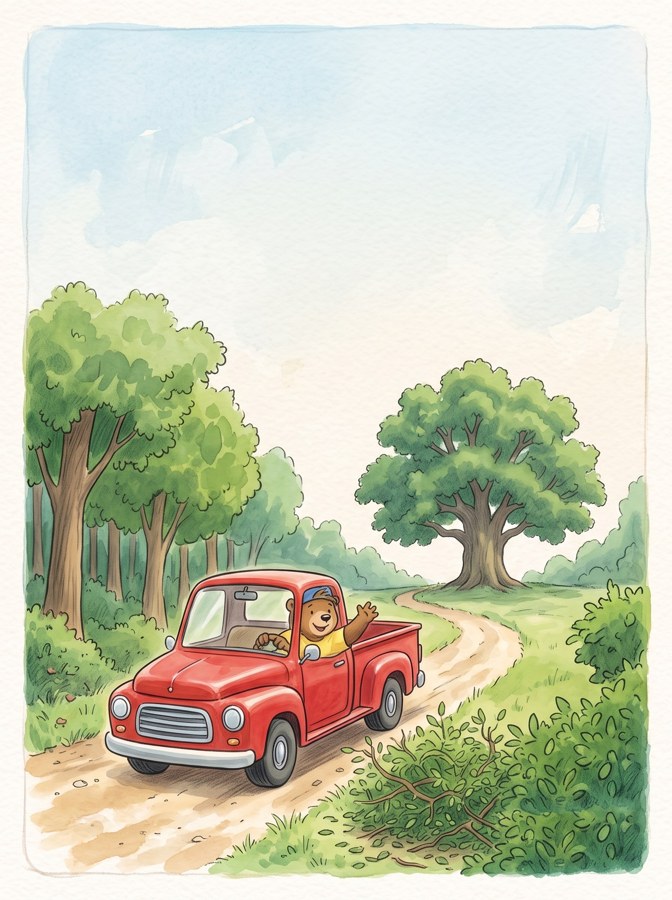
Then, Chad had a trick to get a grin. He got a brush. Chad got some green slop and put it on his brush. He put a spot on the top brick, and then two dots. It was a frog!
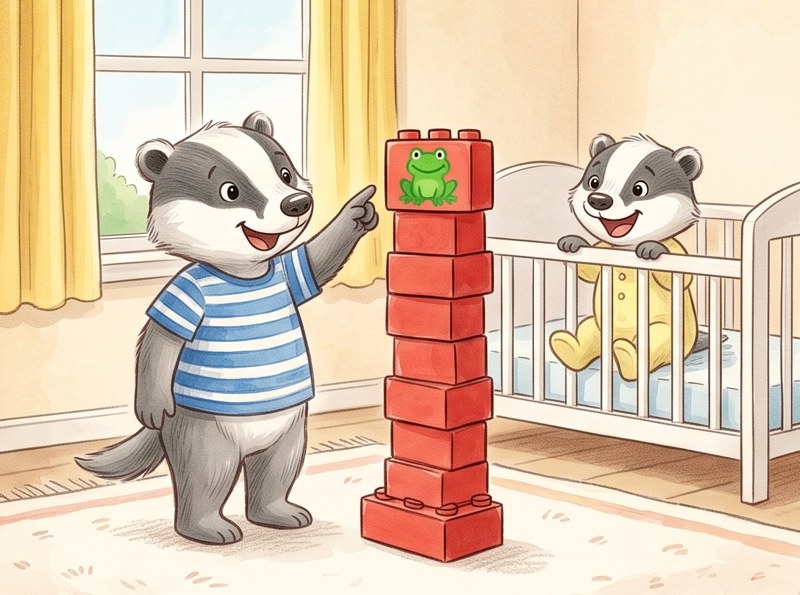
"Look!" said Chad.
The cub sat up in his crib. He had a big grin for the frog on the brick.
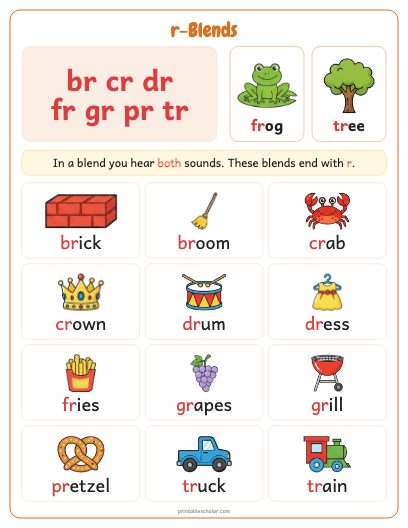
In a blend you hear both sounds. These blends end with r.
Download poster (PDF)Print it full size for the wall, or smaller for a phonics notebook.
See all 63 phonics rules posters → · or get all 63 in one file for $7, with a notebook-size copy
The words this story set practices, in the two groups used by the word sort.
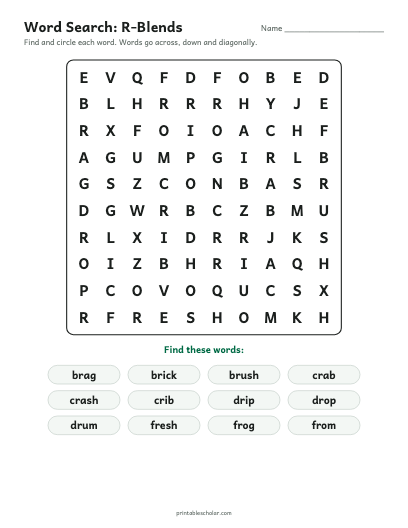
brag, brick, brush, crab, crash, crib, drum, drip, drop
frog, fresh, from, grab, grin, grip, press, print, trap, trick, truck
R Blend words to read, match and write, with pictures. Each PDF has its answer key on page 2.
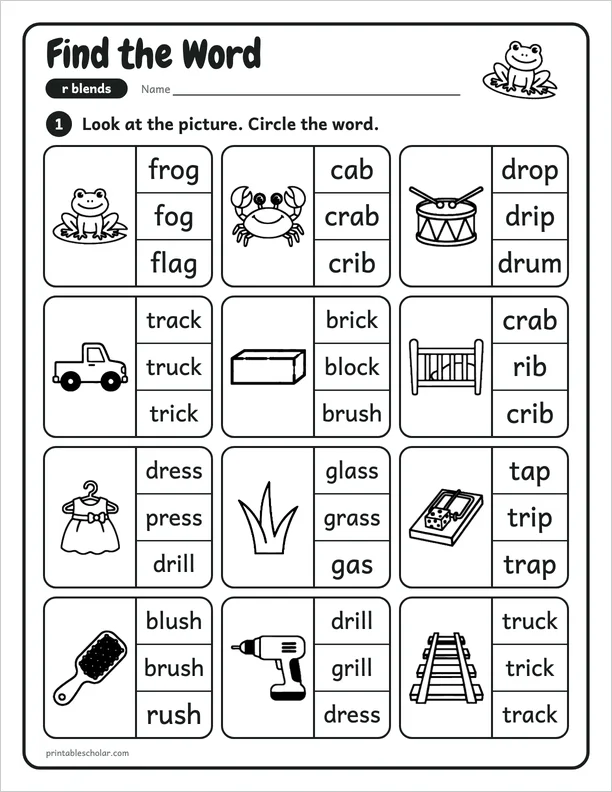
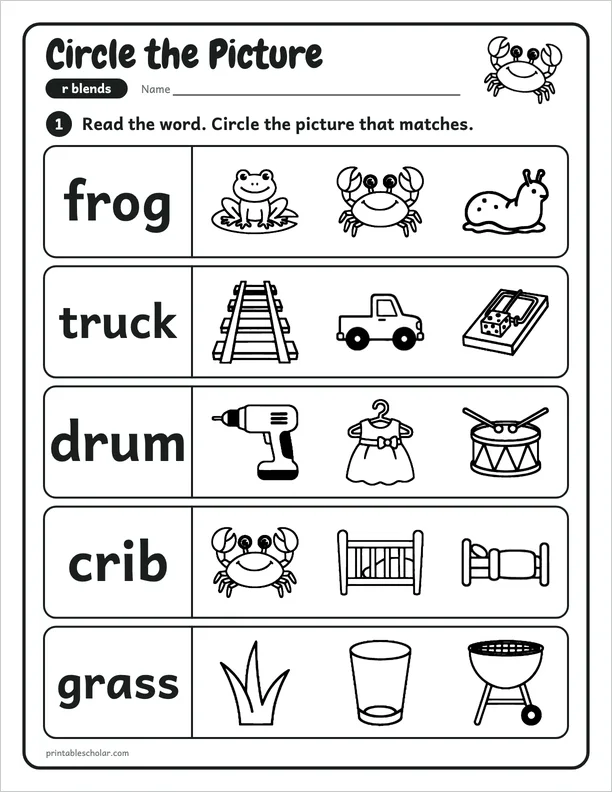
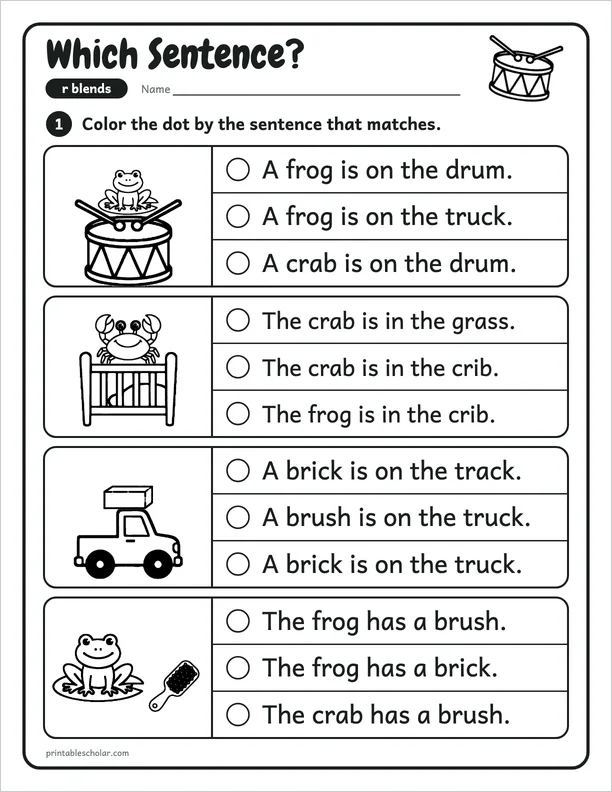
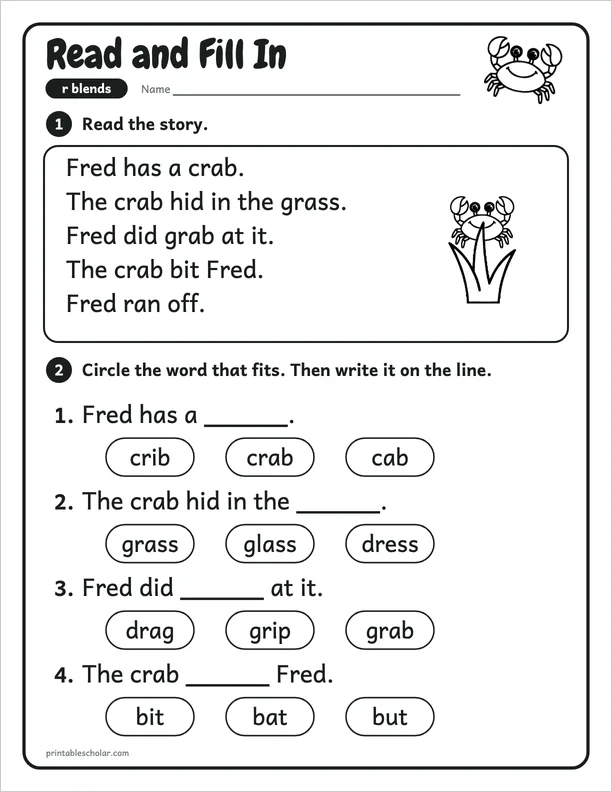
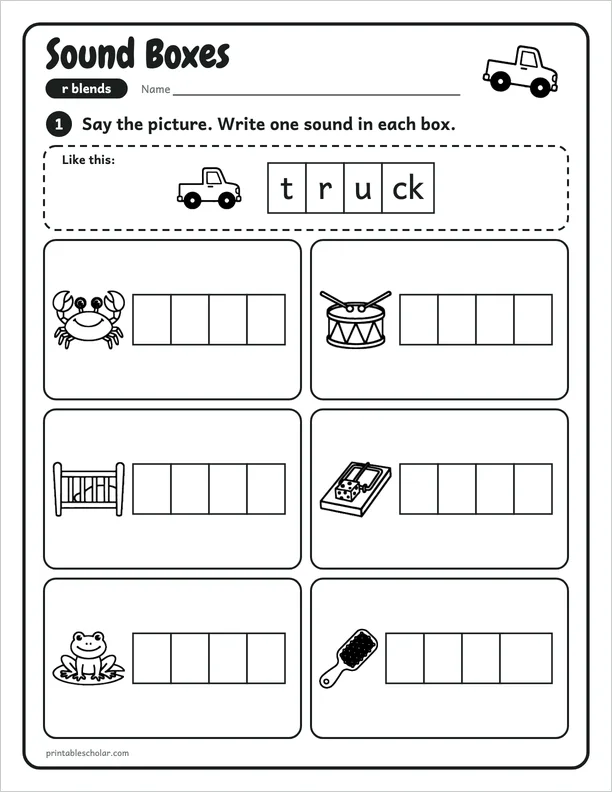
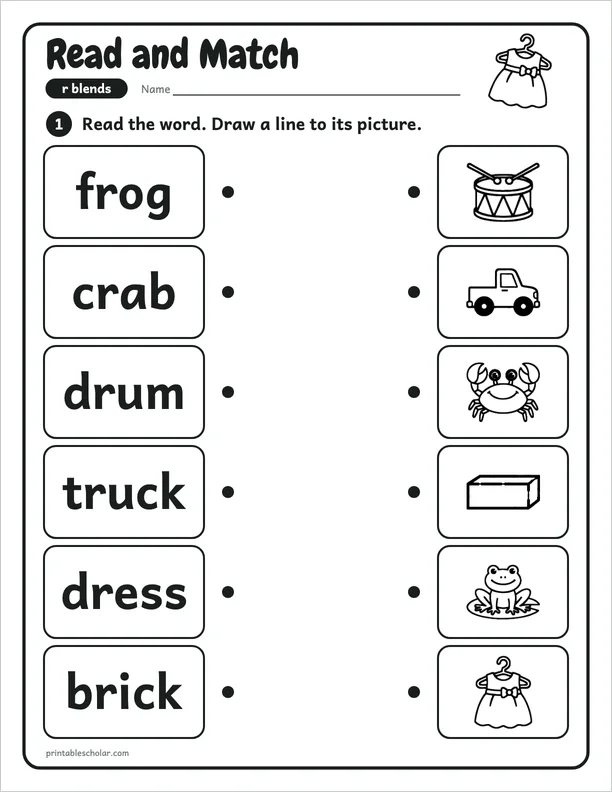
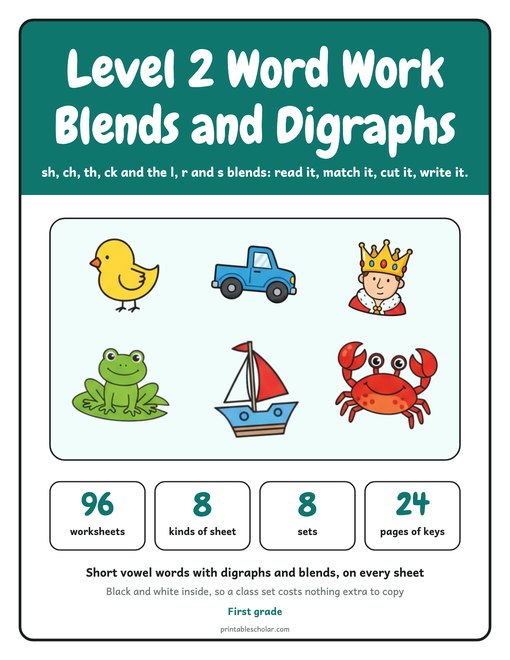
The sheets above are free. The pack is every sheet for sh, ch, th, ck and the l, r and s blends in order, a review set and all the answer keys, ready to print.
Get the pack for $7 See every kind of sheetTeaching more than one level? All 6 levels, 600+ worksheets, for $19.
4 ready-to-print PDFs for this story's r-blends words. Each one opens as its own file.
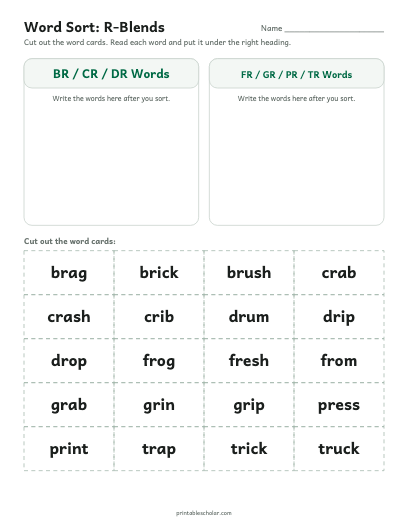
Cut-apart word cards to sort: BR / CR / DR Words or FR / GR / PR / TR Words. Answer key on page 2.
Download PDF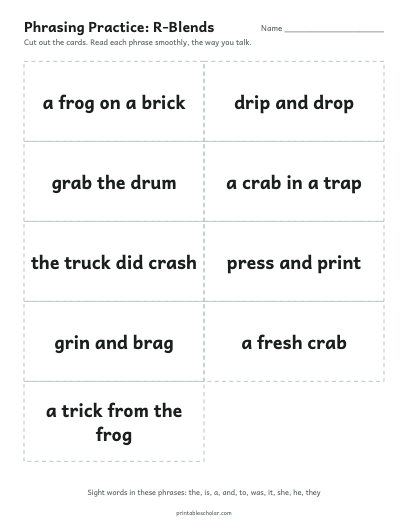
A new decodable story with the same r-blends sounds — each comes with its own set of worksheets.
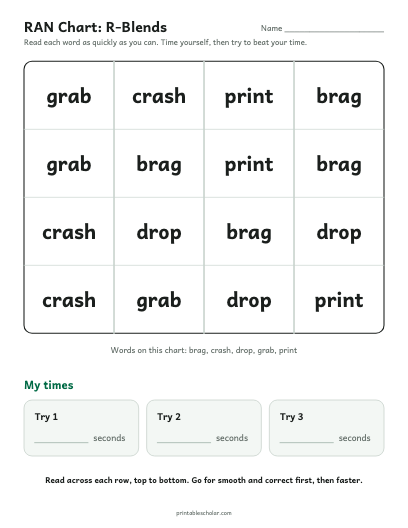
R-blends, like br, cr, dr, fr, gr, pr, and tr, are consonant blends where the 'r' sound immediately follows another consonant, creating a single, smooth sound unit. This skill often follows CVC words and introduces children to more complex word structures. Young learners frequently struggle with articulating both sounds distinctly and smoothly together. For instance, "brick" might be pronounced as "bick" or "rick," missing the blend entirely. Similarly, "crab" could become "cab" or "rab," and "drum" might be heard as "dum." The 'r' sound itself can be challenging for some children, and blending it after another consonant requires precise mouth movements and auditory discrimination. They need to hear and produce both the initial consonant and the 'r' without adding a vowel sound in between, which is a common error. To effectively use these R-blend worksheets, begin by having your student carefully trace and say the blend sounds. When working with the "Chad's Brick Tower" story, encourage them to identify and circle all the R-blend words they find. The decodable passage is perfect for repeated readings, focusing on smooth pronunciation of words like "grab," "trick," and "truck." Utilize the word sort activity to help students categorize words by their initial R-blend, reinforcing visual and auditory patterns. The phrasing cards are excellent for building fluency; have them read the phrases aloud, paying attention to how the R-blends flow within sentences. Finally, use the Rapid Automatic Naming (RAN) chart to build speed and accuracy in recognizing and saying R-blend words quickly, solidifying their mastery of this tricky sound pattern.
For more early literacy resources, explore our sight word flashcards, tracing worksheets, handwriting worksheets, and coloring pages.
 Printable Scholar
