Phonics vs. Sight Words: Why It's the Wrong Question
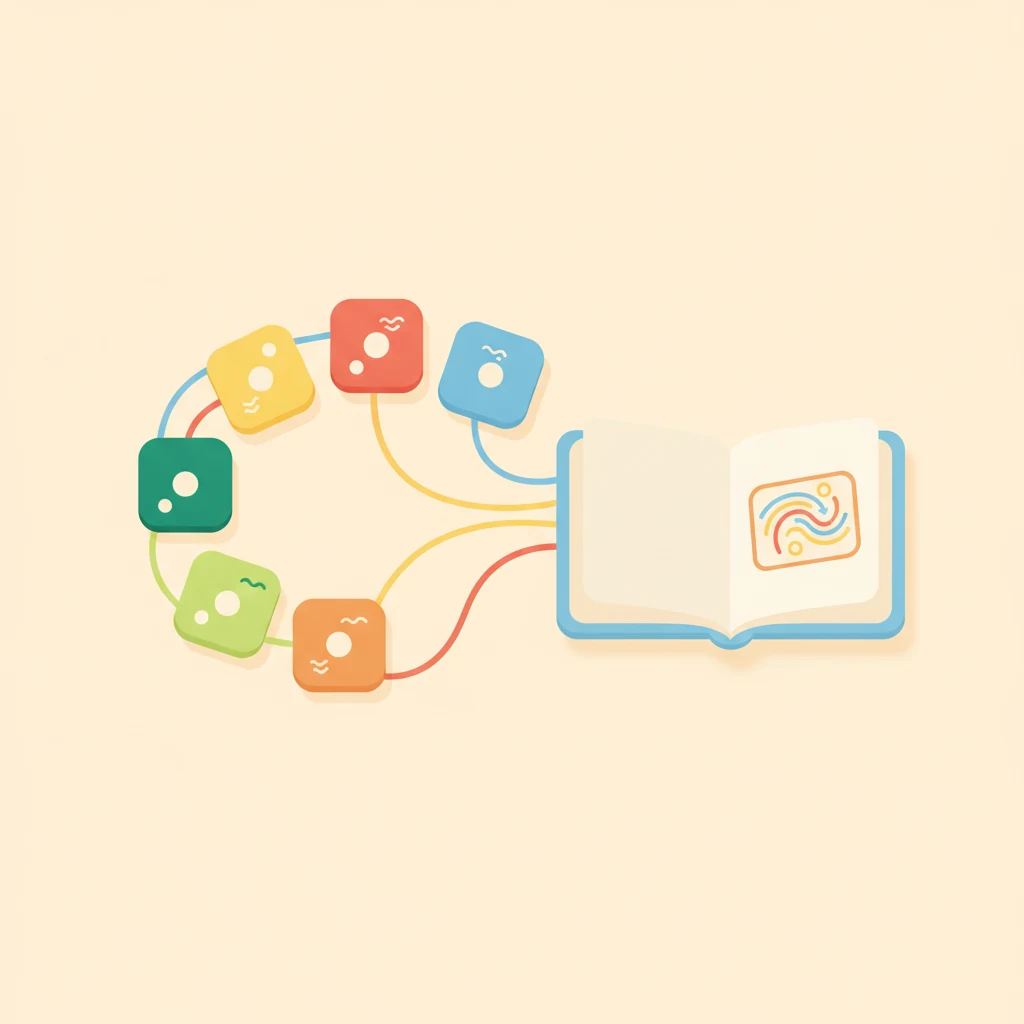
The short version: "Should I teach phonics or sight words?" is a question almost every parent asks — and it's built on a mix-up. A "sight word" isn't a method that competes with phonics. It's the finish line: any word your child reads instantly, without stopping to sound it out. Phonics is how words get to that finish line. So you're not choosing between them. You're using one to produce the other.
The confusion is understandable, because the phrase "sight word" is used to mean two very different things. Untangling them is the whole ballgame.
- The reading-science meaning: any word a reader recognizes instantly, however they first learned it. By second grade, a fluent reader has thousands of these.
- The old classroom meaning: a short list of common words (the, was, said) that kids were told to memorize as whole shapes — like logos — often before they'd learned the sounds.
How a word actually becomes a "sight word"
The mechanism has a name: orthographic mapping. When a child sounds out a word a few times — matching each sound to its letters — the brain files that specific letter string away for instant retrieval. The next time the word appears, there's no sounding-out step; it's just known. Reading researcher Linnea Ehri spent decades showing that this is how the brain builds its store of instantly-read words. Reading Rockets — Orthographic Mapping; Ehri, Scientific Studies of Reading (2014).
Notice what that means: decoding isn't the slow alternative to sight-reading. Decoding is the on-ramp to it. Every word your child can now read in a flash was, at some point, a word they sounded out. That's why a strong phonics foundation quietly produces a huge sight vocabulary — the two aren't rivals, they're the same road at different mile markers. If you want the sequence that builds this, our guide to teaching phonics at home walks through it, and the free phonics worksheets follow the same sound-by-sound order.
So what was actually discredited?
You may have heard that "sight words are bad now," especially after the podcast Sold a Story (Emily Hanford / APM Reports, 2022) reached millions of parents. But the villain of that story wasn't practicing common words. It was two specific habits:
- Treating words as pictures. Memorizing a word by its overall shape — as an unanalyzed blob — instead of connecting its letters to sounds. Shape-memory doesn't scale; there are too many words, and too many that look alike (house / horse, where / were).
- Guessing. The "three-cueing" habit of telling kids to figure out a hard word from the picture, the first letter, or what "makes sense" — instead of reading the letters. Guessing feels like reading and isn't.
The correction has been sweeping: more than 30 states have now passed science-of-reading laws, and a growing number specifically restrict three-cueing in classrooms. Education Week — Where States Stand on the Science of Reading. This isn't a new fad; the National Reading Panel (2000) found the same thing a generation ago: systematic, explicit phonics beats the alternatives.
The three kinds of "sight words" on those lists
Open any Dolch or Fry list and you'll find it's not one thing. High-frequency words fall into three buckets, and each is taught a little differently. Reading Rockets — High-Frequency Words.
| Bucket | Examples | How to teach it |
|---|---|---|
| Fully decodable | at, in, it, and, run, can | Just sound them out. They follow the rules your child already knows — no memorizing needed. |
| Temporarily irregular | said, have, come, from | Decodable once your child learns a later rule. Until then, map the regular parts and flag the one tricky spot. |
| Truly irregular | of, one, eye, the | A small group with a genuinely odd spelling. Map the parts that behave, and mark the part that has to be remembered — the "heart" of the word. |
That last technique — sometimes called teaching "heart words" — is the practical bridge. Even the weirdest word is mostly regular. Said is /s/ /ai/ /d/ with just the middle to remember. You map the letters that play by the rules and put a little heart over the one that doesn't. That's a world away from memorizing the whole word as a shape.
How to teach a "tricky" word the right way
Here's the whole routine, whether the word is said or because:
- Say it. Read the word to your child and use it in a sentence, so the meaning is clear.
- Stretch the sounds. Say it slowly and count the sounds — not the letters. Said has three sounds.
- Match sounds to letters. Point to the letters that make each sound. Most of them will line up.
- Mark the tricky part. Draw a heart (or just underline) the one spot that has to be remembered.
- Practice to speed. Now — and only now — drill it: a flashcard, a quick write, a decodable passage that repeats it. This is the step that turns "mapped" into "instant."
If your child sails through steps 1–4 but the word still comes out slowly in a real book, that's normal — it just needs more mileage, not more memorizing. That gap between "knows it" and "reads it fast" is what we mean by fluency, and it's covered in why fluency isn't the same as speed.
The bottom line
Don't pick a team. Teach the sounds, use them to map words — including the common ones on the sight-word list — and then practice those words until they're automatic. "Phonics vs. sight words" dissolves the moment you realize sight words are what phonics makes. The only real choice is how you teach the common words: by sound (which lasts) or by shape and guesswork (which doesn't).
Want to put it into practice? Start with the free phonics worksheets for the sound-by-sound foundation, add sight-word practice for the high-frequency words, and let your child log the miles with decodable readers that reuse the same words in real sentences.
Frequently asked questions
Should I throw out our sight-word flashcards?
No. Just change when you use them. Flashcards are great for practicing a word your child has already mapped by sound — they're a bad way to introduce a word as a shape to memorize. Same cards, different job.
Are the Dolch and Fry lists still useful?
Yes — as a list of which common words to prioritize, not as instructions to memorize them whole. Most words on those lists are decodable or nearly so. Use the list to choose targets; use phonics to teach them.
My child reads the word on the flashcard but not in a book. What's wrong?
Usually nothing's wrong — the word is mapped but not yet automatic, or it was memorized on the card without being connected to its sounds. Re-map it (steps 1–4 above), then give it more exposure in connected text, where real reading actually sticks.
How many sight words should my kindergartner know?
Chase the skill, not a number. A kindergartner who can decode simple words and has mapped a couple dozen common ones is in far better shape than one who's memorized a hundred as shapes but can't sound out a new word. Depth of decoding beats length of the memorized list every time.