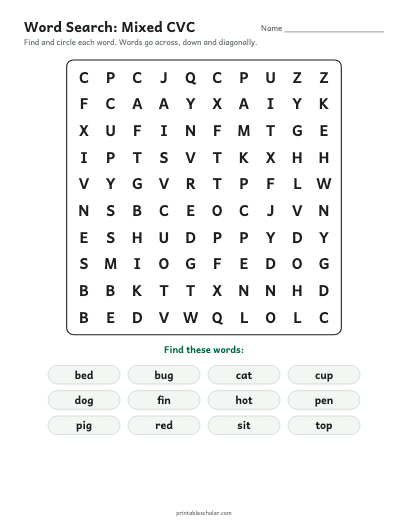
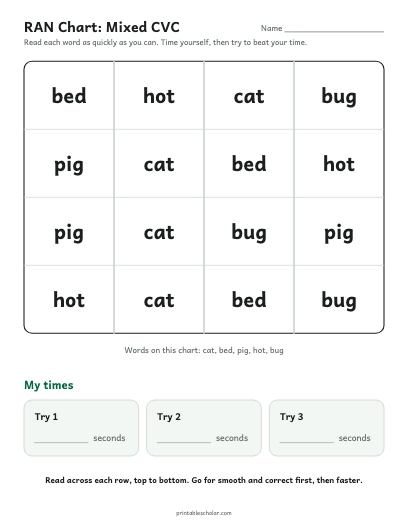
Free printable mixed cvc phonics worksheets. Five practice activities: decodable passage, word sort, phrasing cards, rapid naming chart, and word search.
A free illustrated mini-book for Mixed CVC, plus the same story as a passage sheet for highlighting.

A full-color picture book your student reads on their own. Skill: Mixed CVC. Print, cut and staple.
 Want the whole level? 62 Level 1 mini-books in one file, $14Every book stays free to print one at a time.
See the pack →
Want the whole level? 62 Level 1 mini-books in one file, $14Every book stays free to print one at a time.
See the pack →
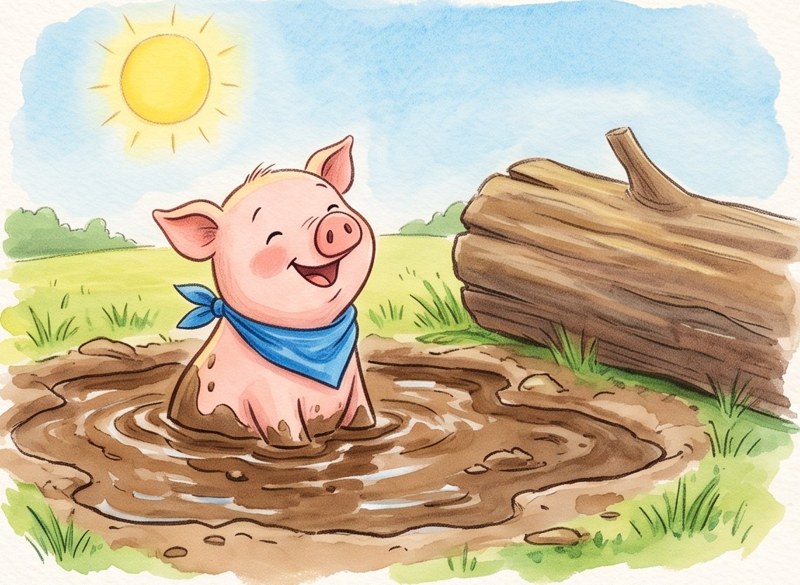
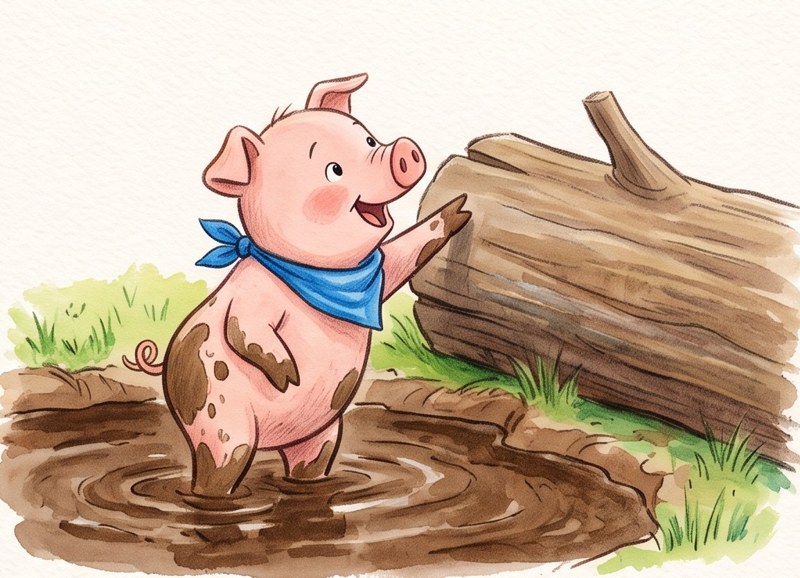
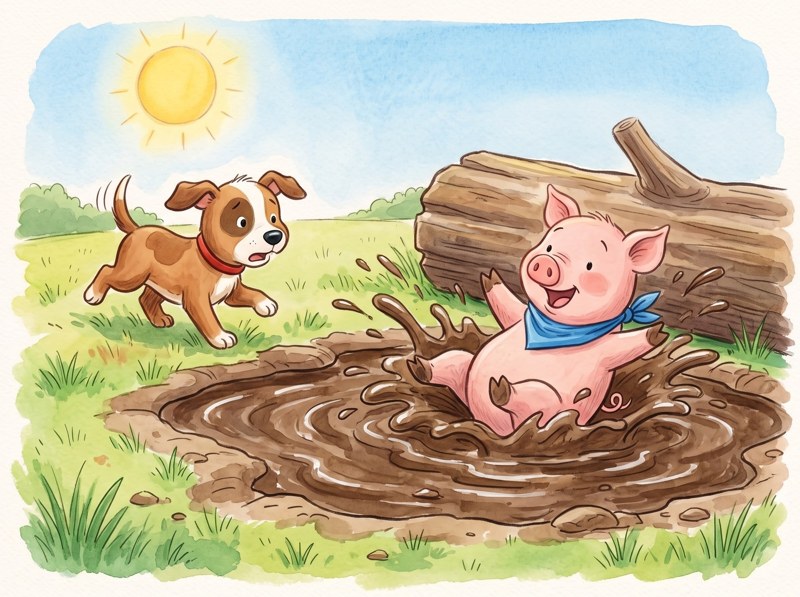
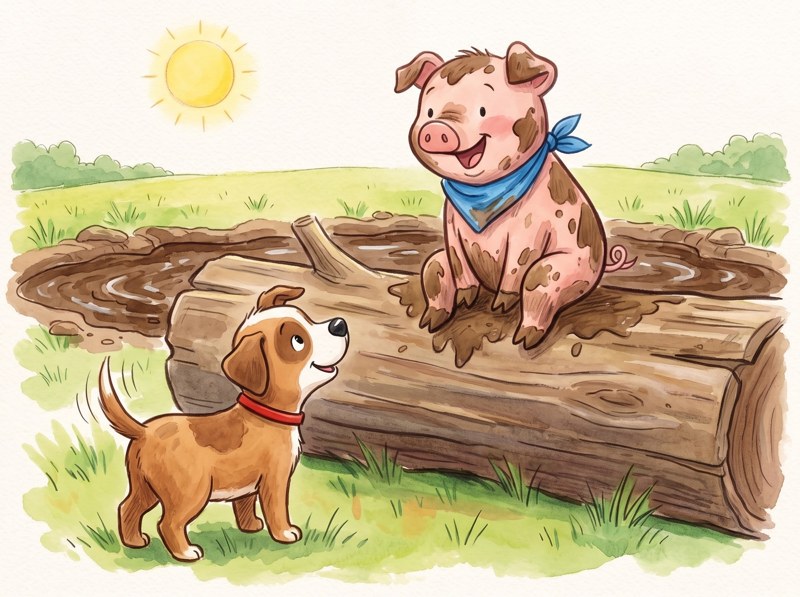
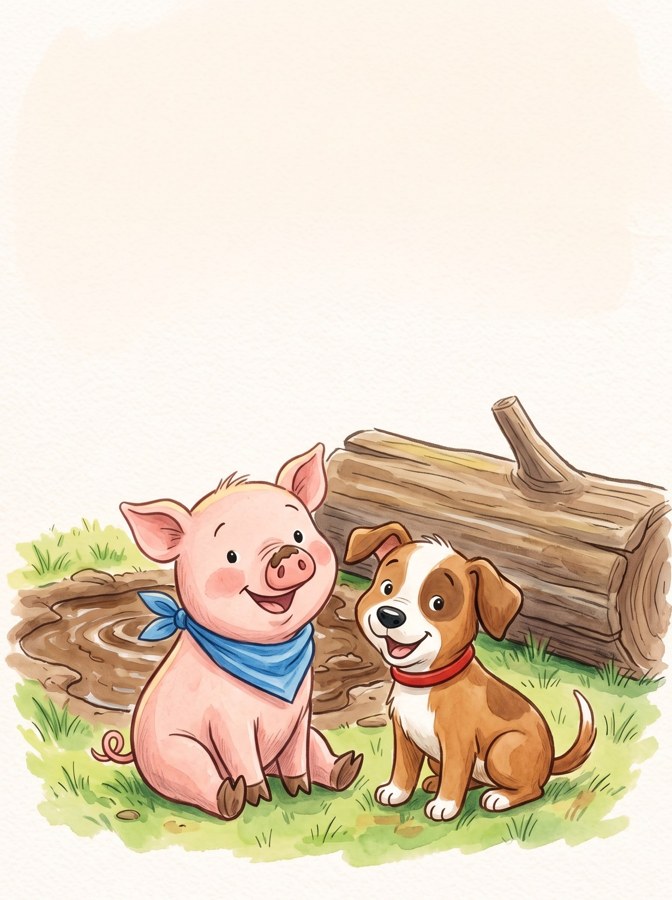
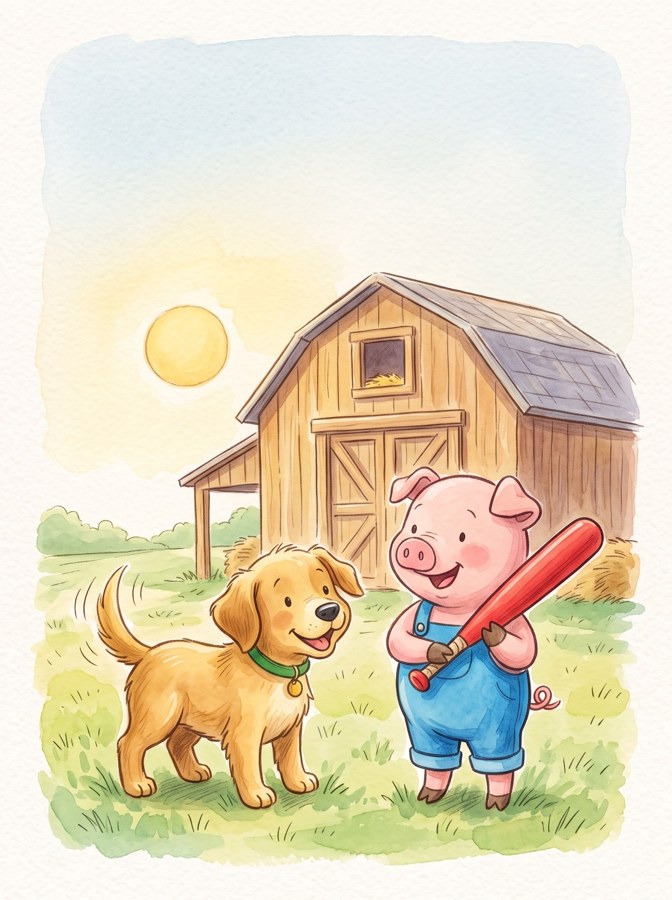
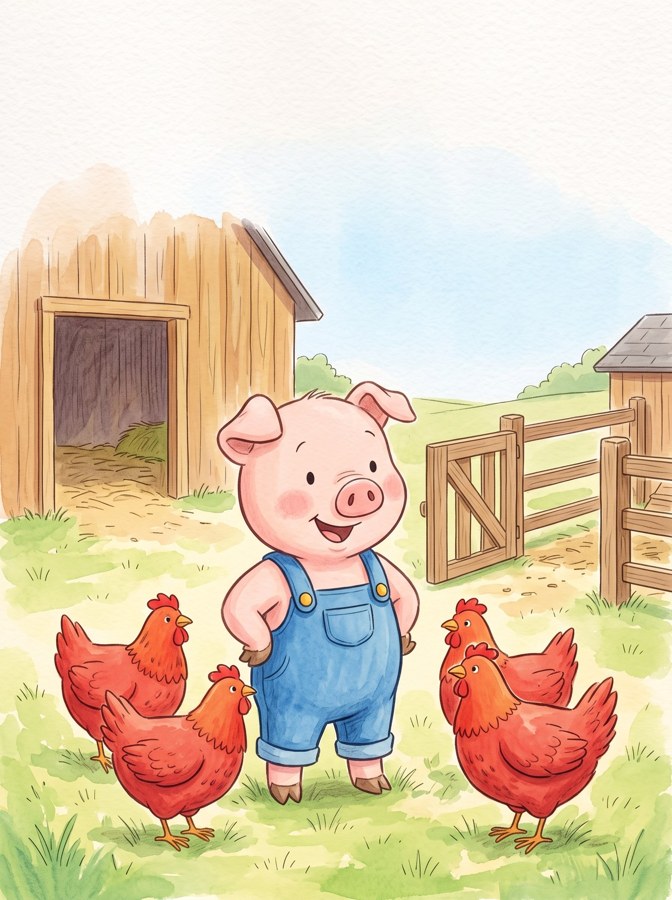
Pip the pig was hot in the sun. A pit of wet mud sat by a log. Pip ran to it. The mud was fun to sit in! Pip got mud on his legs and on his back. Then Pip had a wish. “I will get on top of the log!” he said. Pip got up on the log, but he fell back in the mud! His pal Gus the dog ran to help. Pip got up. He did not stop. At last, Pip sat on top of the log! Gus did a big wag. “That was fun!” said Pip.
The words this story set practices, in the two groups used by the word sort.
cat, bed, pen, red, net, web
sit, hot, bug, pig, top, cup, dog, fin, run, hug, bus, rip, log, mud
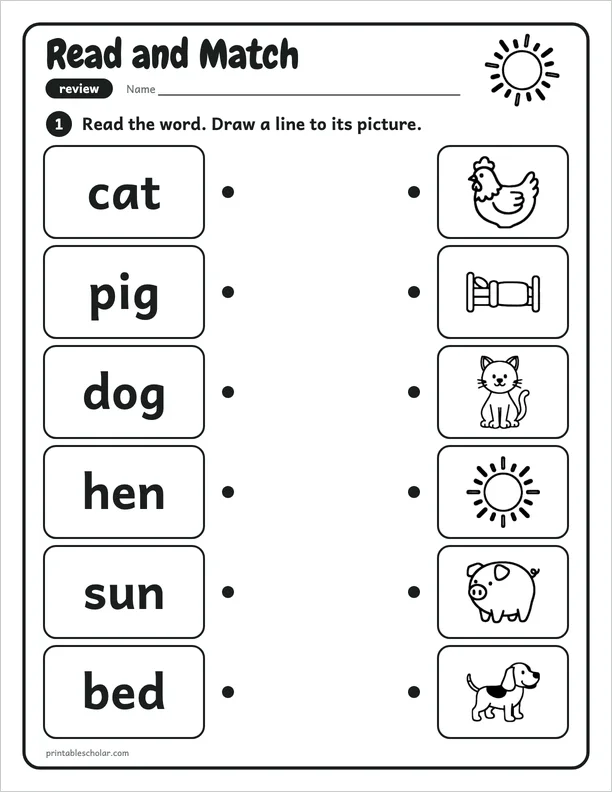
Short vowel words to read, match and write, with pictures. Each PDF has its answer key on page 2.
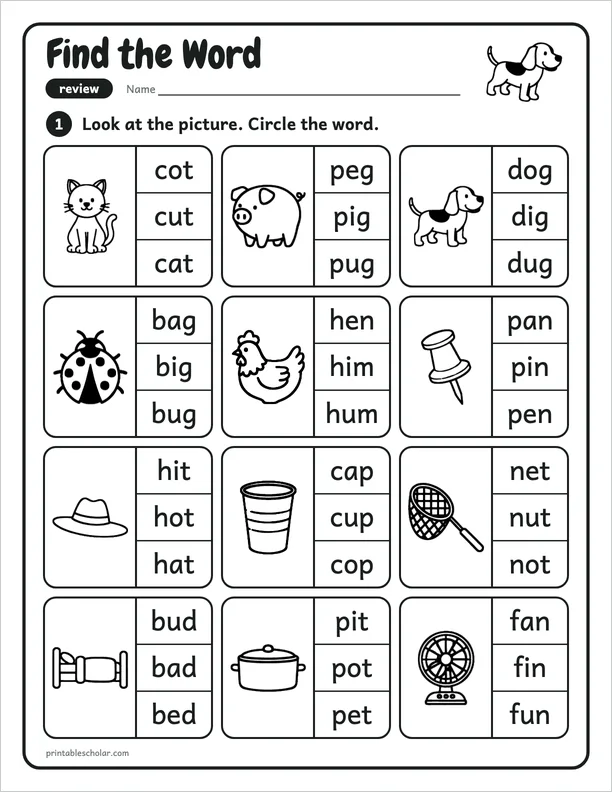
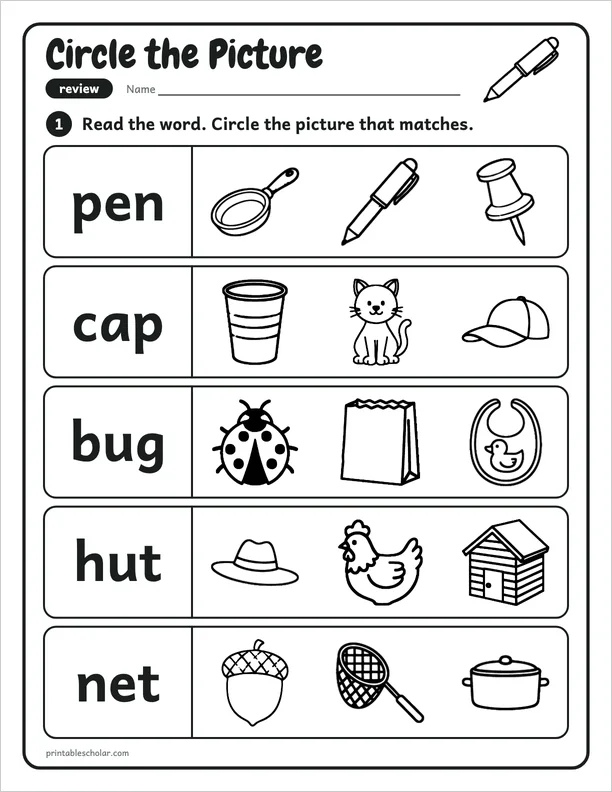
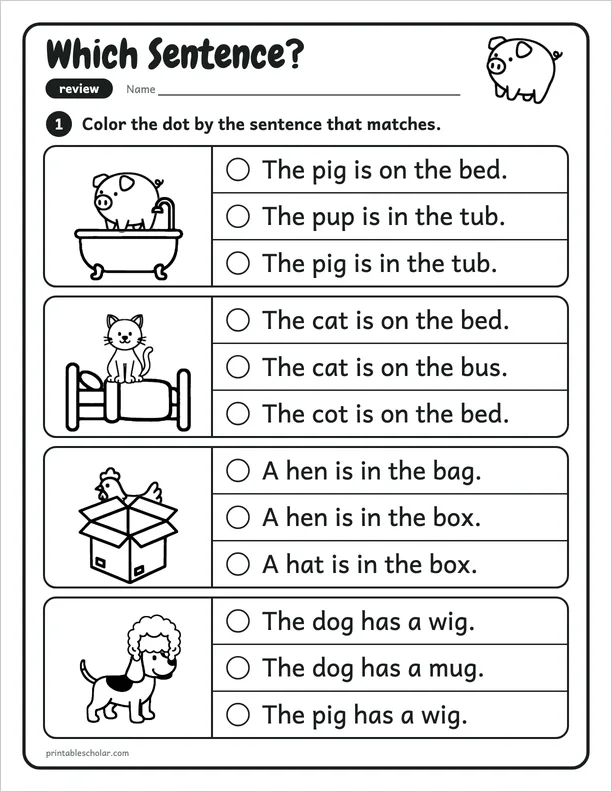
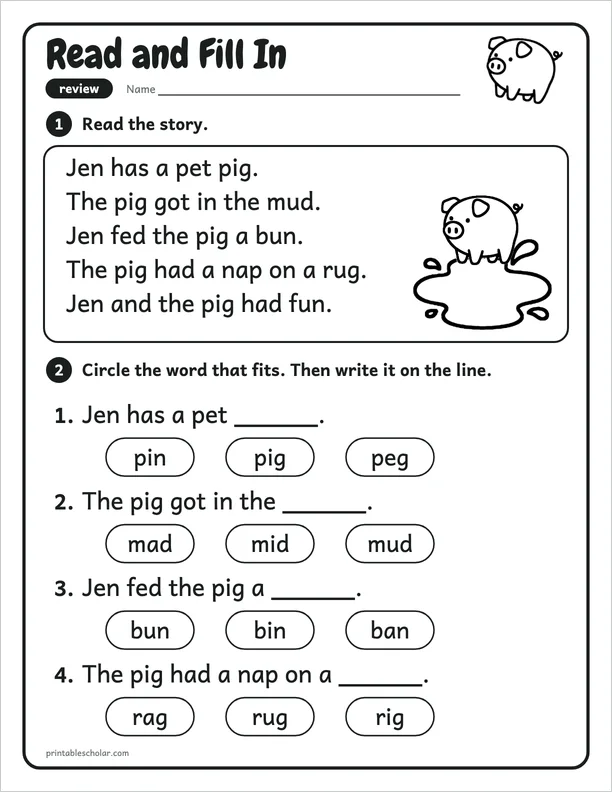
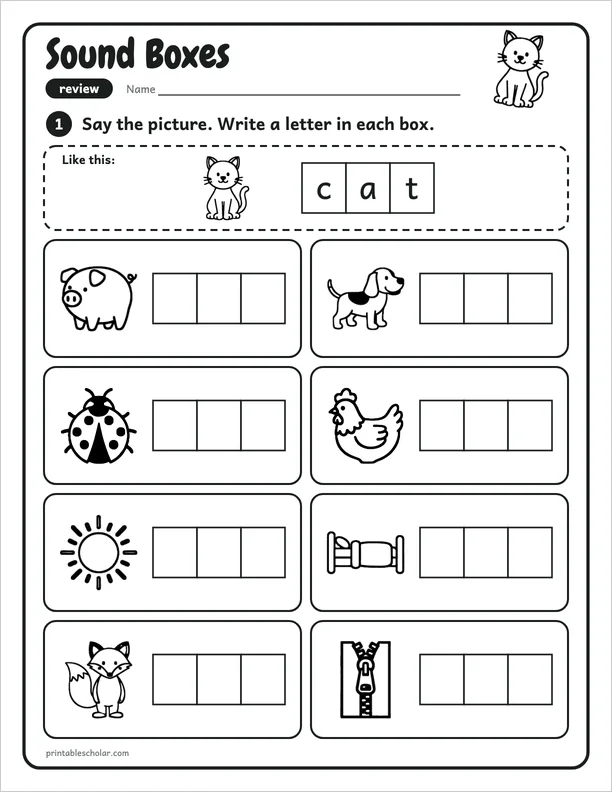
The sheets above are free. The pack is every sheet for short a, i, o, e and u in order, a review set and all the answer keys, ready to print.
Get the pack for $7 See every kind of sheetTeaching more than one level? All 6 levels, 600+ worksheets, for $19.
4 ready-to-print PDFs for this story's mixed cvc words. Each one opens as its own file.
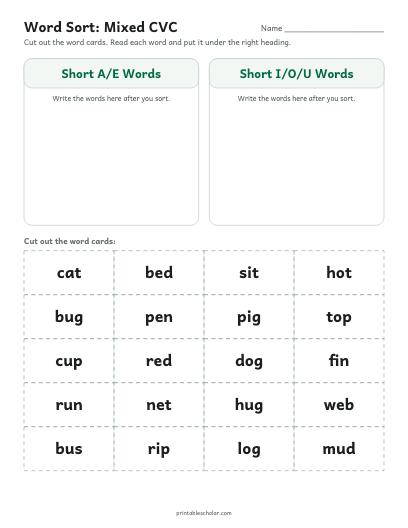
Cut-apart word cards to sort: Short A/E Words or Short I/O/U Words. Answer key on page 2.
Download PDF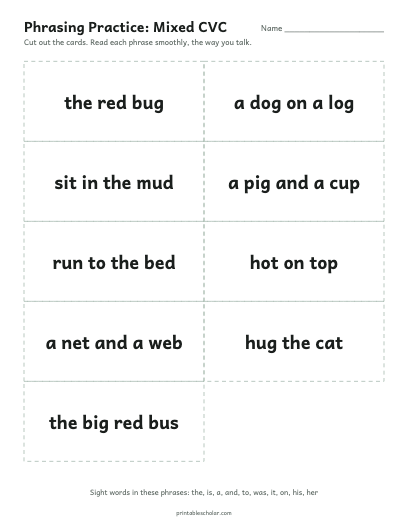
More picture worksheets: beginning sounds, ending sounds, rhyming and syllables — new pictures every time you print.
A new decodable story with the same mixed cvc sounds — each comes with its own set of worksheets.
Mixed CVC words are fundamental for kindergarteners, representing a crucial step where children blend three sounds to form a word, using all five short vowels. This pattern follows initial sound recognition and precedes digraphs or blends. The trickiness for young learners often lies in differentiating the subtle differences between short vowel sounds, especially /a/ versus /u/ (as in "cat" vs. "cup" or "bug"), or /e/ versus /i/ ("bed" vs. "sit" or "fin"). Children might mispronounce "hot" as "hut" or struggle to isolate the middle sound in words like "dog" or "run." Mastering this requires careful listening and precise articulation of each sound, then fluidly blending them together without adding extra sounds. Our mixed CVC worksheets are designed to reinforce these essential skills. When working with "Pip in the Mud," encourage your child to first identify and say each sound in words like "mud," "bug," and "rip" before blending them. The decodable passage provides context for reading these words in sentences, building fluency. Use the word sort activity to group words by their middle vowel sound, helping to differentiate them, perhaps sorting "bed," "red," and "web" together, then "sit," "pig," and "fin." Phrasing cards help children practice reading short CVC phrases naturally, while the RAN chart builds automaticity for quick recall of these foundational words, making reading smoother and more confident.
For more early literacy resources, explore our sight word flashcards, tracing worksheets, handwriting worksheets, and coloring pages.
 Printable Scholar
