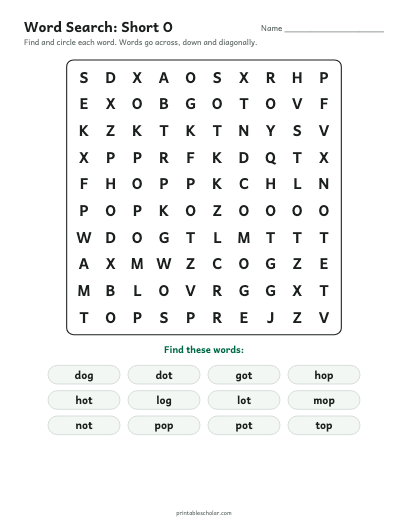
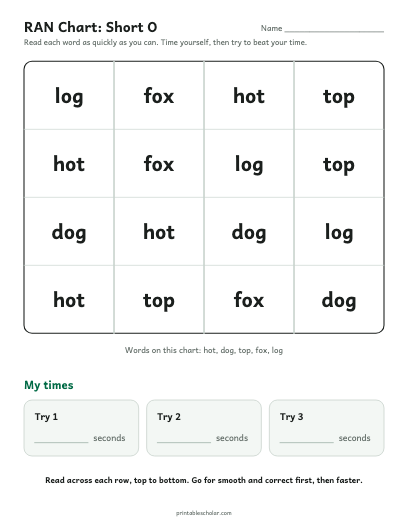
Free printable short o phonics worksheets. Five practice activities: decodable passage, word sort, phrasing cards, rapid naming chart, and word search.
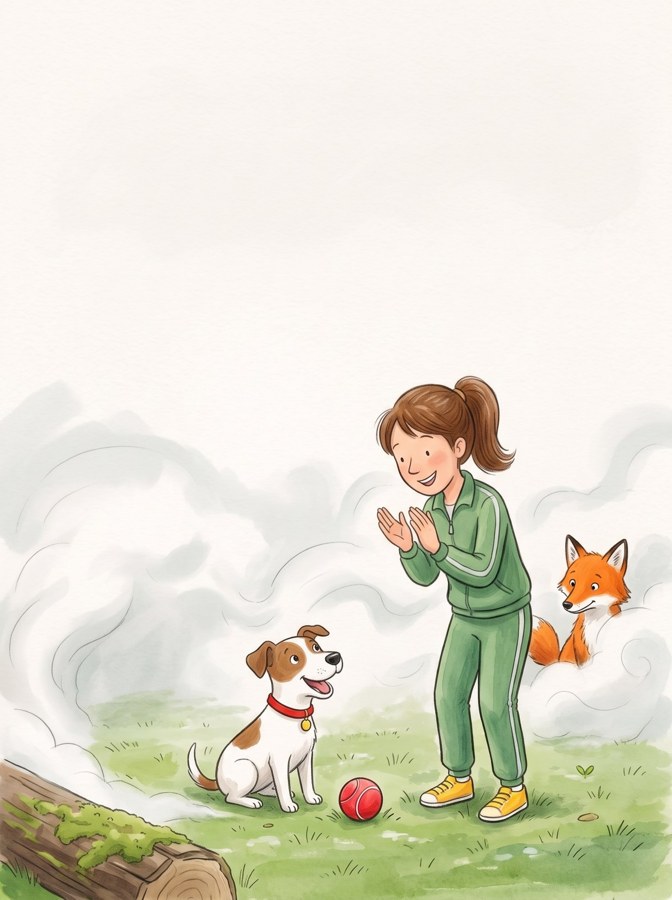
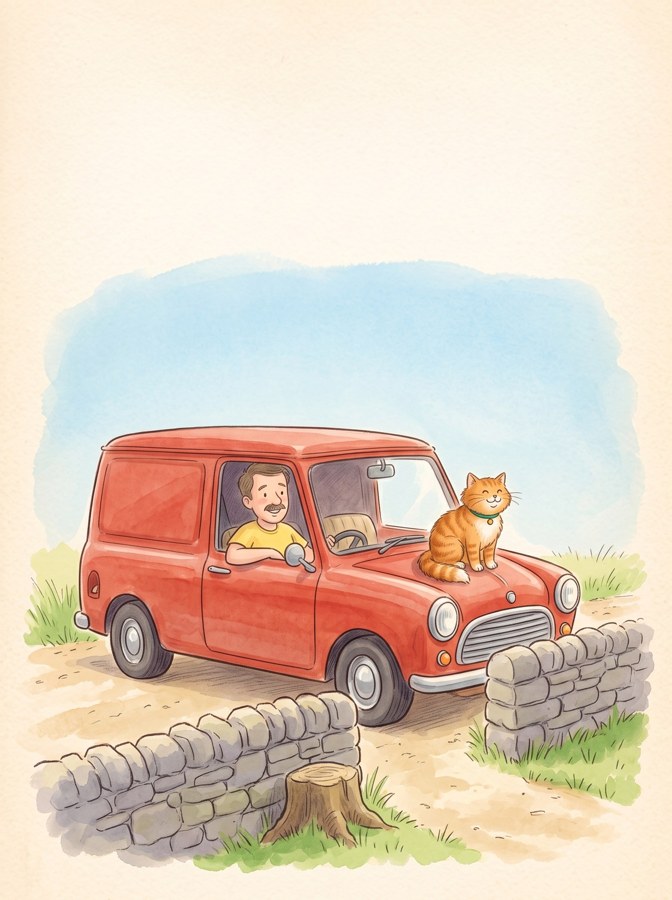
A free illustrated mini-book for Short O, plus the same story as a passage sheet for highlighting.

A full-color picture book your student reads on their own. Skill: Short O. Print, cut and staple.
 Want the whole level? 62 Level 1 mini-books in one file, $14Every book stays free to print one at a time.
See the pack →
Want the whole level? 62 Level 1 mini-books in one file, $14Every book stays free to print one at a time.
See the pack →
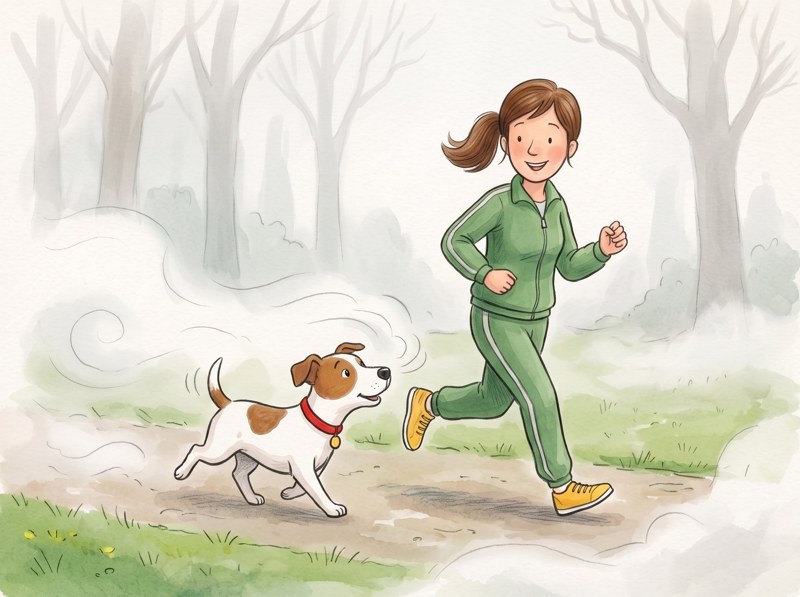
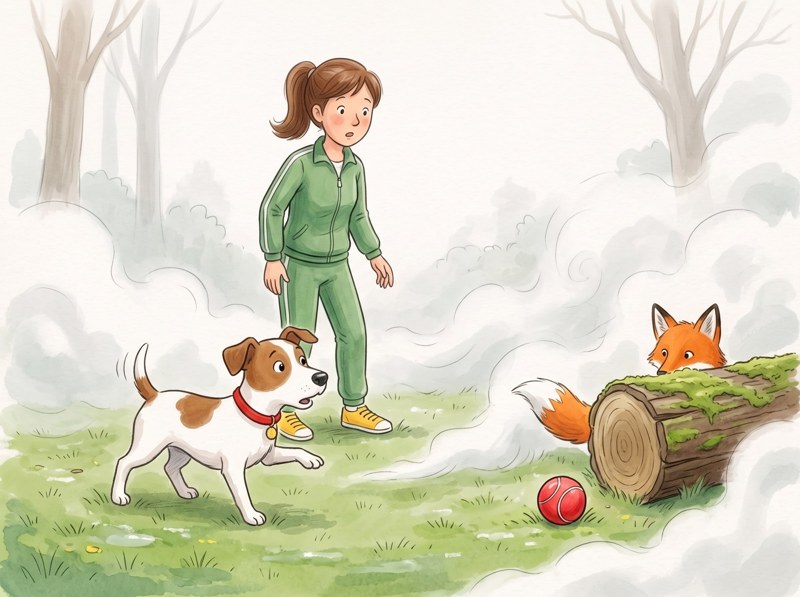
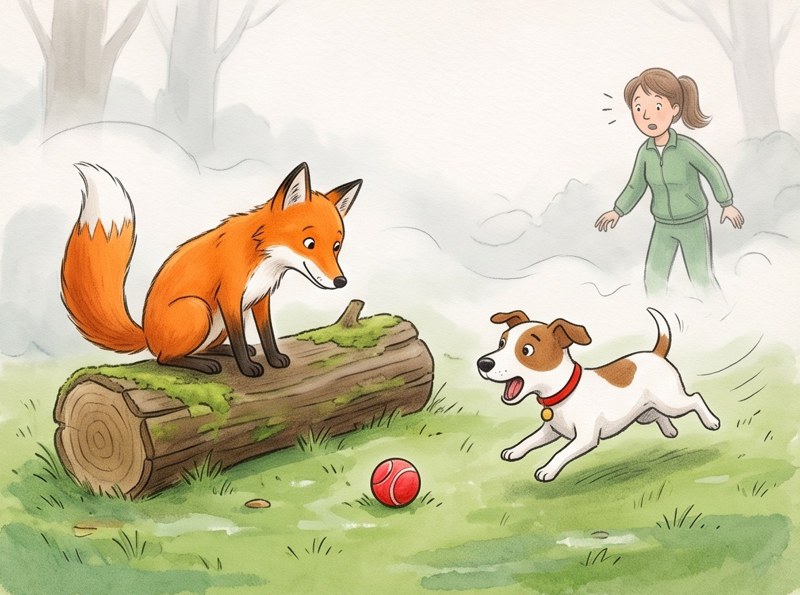
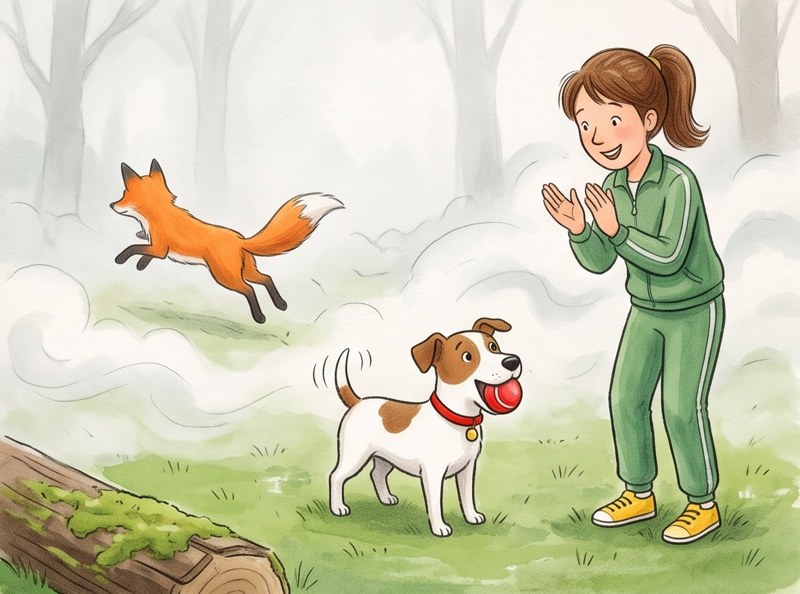
Dot the dog got to jog with Mom. A lot of fog was on the sod. Dot did not see a lot. Then, a red dot was in the fog. It was her red ball! Dot had to get it. A fox sat on a log. The fox had his eye on the ball. "That is my ball," said Dot. She ran and ran. The fox did hop off the log. But Dot got her ball! "Hot dog," said Mom. Dot was not sad. She had her ball.
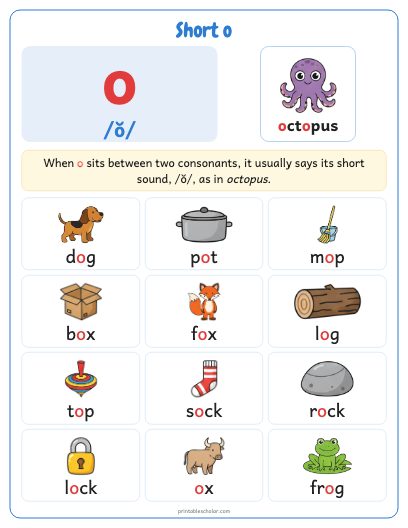
When o sits between two consonants, it usually says its short sound, /ŏ/, as in octopus.
Download poster (PDF)Print it full size for the wall, or smaller for a phonics notebook.
See all 63 phonics rules posters → · or get all 63 in one file for $7, with a notebook-size copy
The words this story set practices, in the two groups used by the word sort.
hot, pot, dot, got, top, hop, mop, dog, log, fox, bop, nob
zot, nop, rog, fom, gop, vot, tob, jop
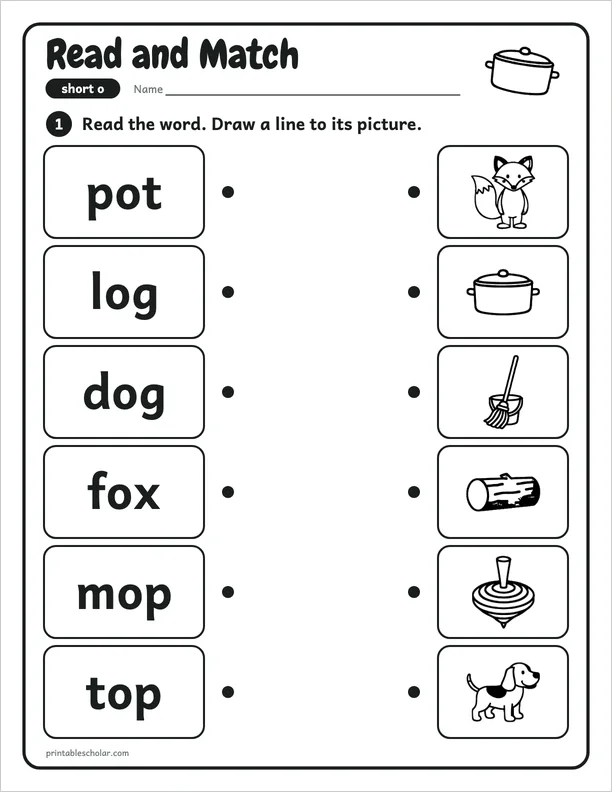
Short O words to read, match and write, with pictures. Each PDF has its answer key on page 2.
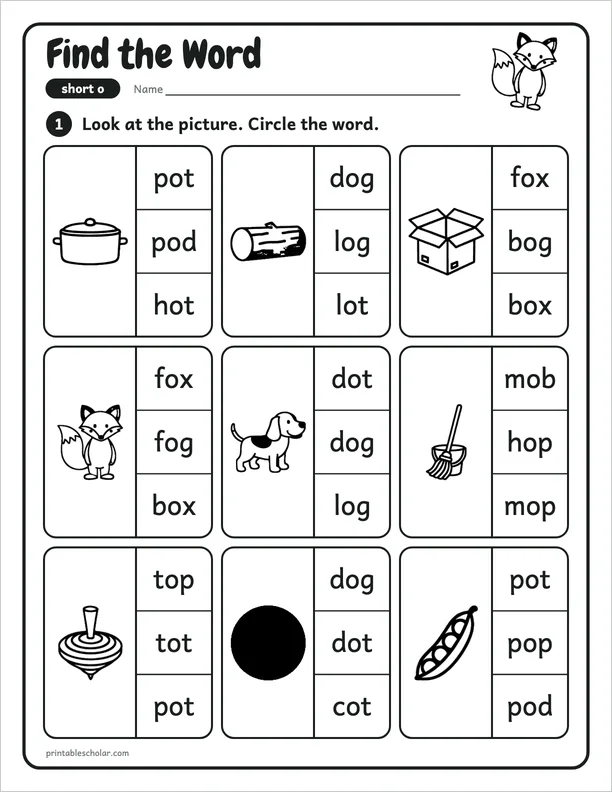
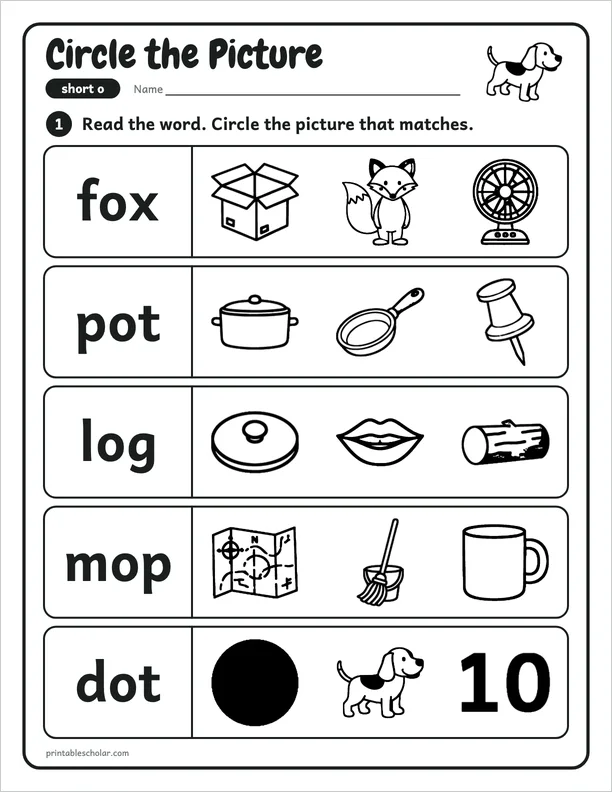
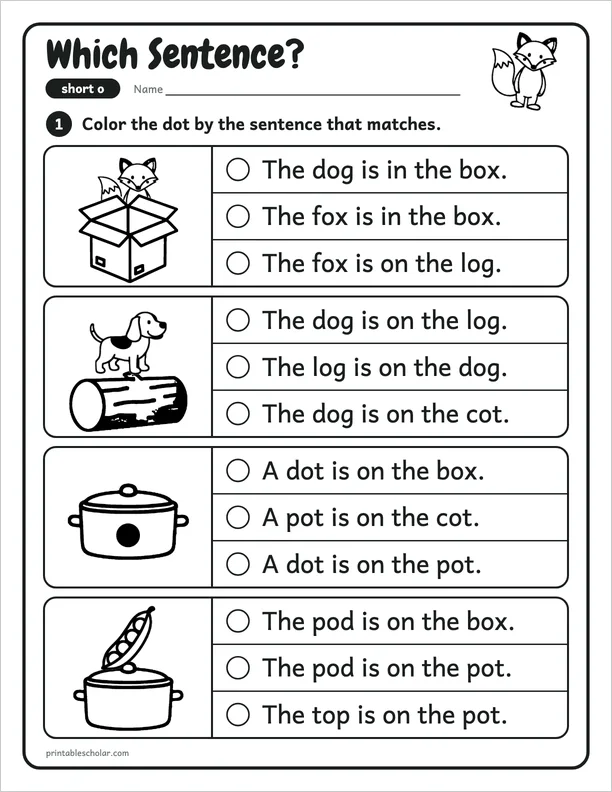
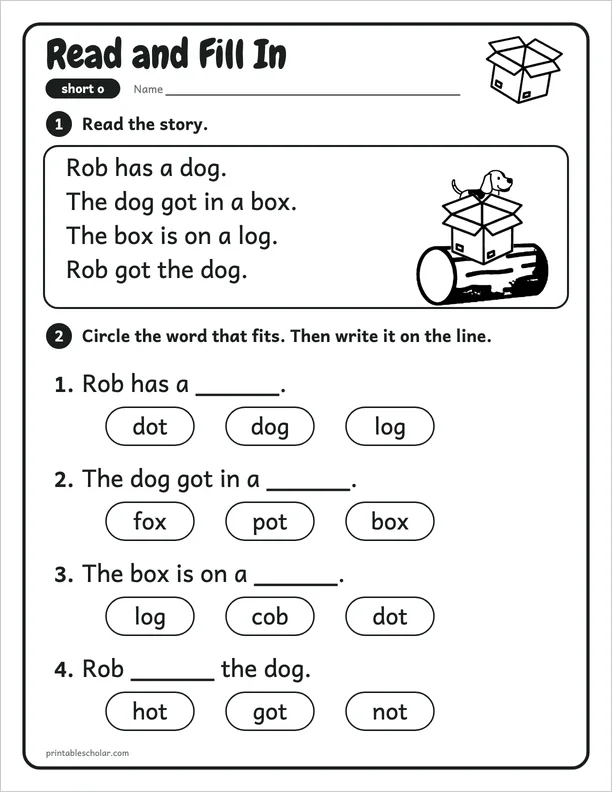
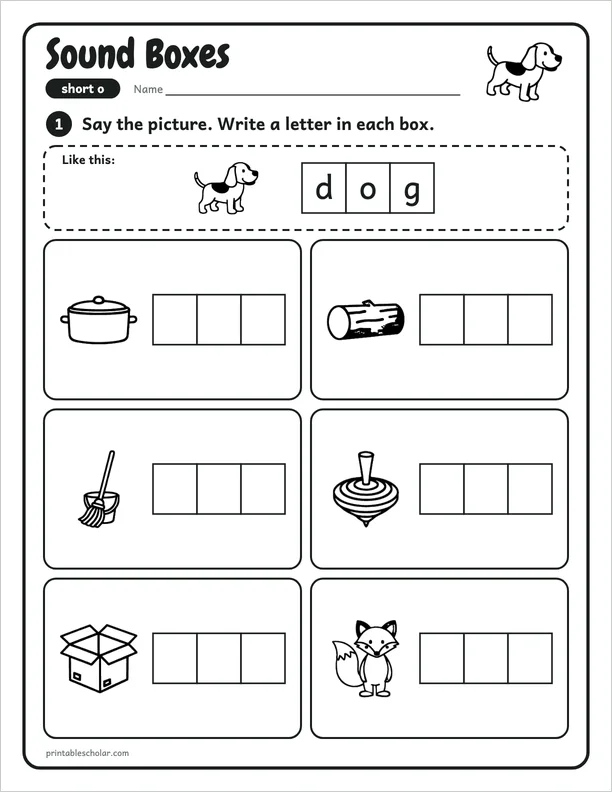
The sheets above are free. The pack is every sheet for short a, i, o, e and u in order, a review set and all the answer keys, ready to print.
Get the pack for $7 See every kind of sheetTeaching more than one level? All 6 levels, 600+ worksheets, for $19.
4 ready-to-print PDFs for this story's short o words. Each one opens as its own file.
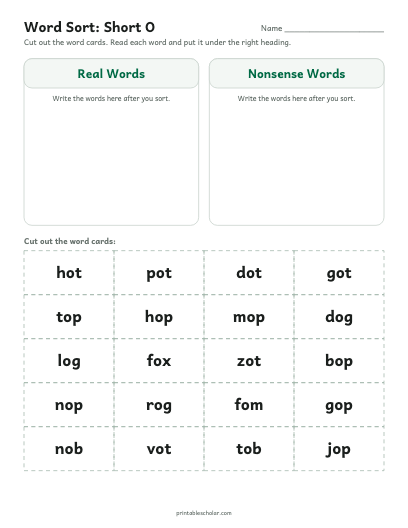
Cut-apart word cards to sort: Real Words or Nonsense Words. Answer key on page 2.
Download PDF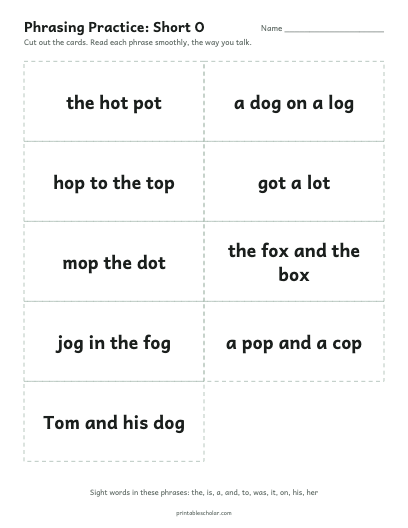
More picture worksheets: beginning sounds, ending sounds, rhyming and syllables — new pictures every time you print.
A new decodable story with the same short o sounds — each comes with its own set of worksheets.
The short 'o' sound, as heard in words like "hot," "dog," and "box," is a crucial consonant-vowel-consonant (CVC) pattern for kindergarteners, often introduced after short 'a' and 'i'. Mastering short 'o' can be tricky because its open-mouth production sometimes leads to confusion with other vowel sounds, particularly short 'a' (e.g., "pot" vs. "pat") or even a long 'o' sound if the vowel is over-emphasized. Young learners might mispronounce "dog" as "dag" or struggle to differentiate "hop" from "hap." The quick, crisp articulation of the 'o' requires careful attention to lip rounding and tongue position to avoid flattening it into another vowel. Focusing on the distinct, brief "ah" sound at the center of words like "log," "mop," and "fox" is essential for accurate decoding. Our short 'o' worksheets provide targeted practice to build fluency and accuracy. Begin by using the decodable passage, "Dot in the Fog," encouraging students to point to each word as they read, sounding out words like "dot," "fog," and "rob." The word sort activity helps children categorize words based on their initial or final consonants, reinforcing the consistent short 'o' sound in the middle. Phrasing cards group short 'o' words into small, meaningful units (e.g., "a hot dog," "on the top"), promoting fluent reading beyond individual words. Finally, the Rapid Automatic Naming (RAN) chart for short 'o' words helps build automaticity, allowing students to quickly identify and pronounce words like "pot," "cop," and "box" without hesitation, strengthening their foundational decoding skills.
For more early literacy resources, explore our sight word flashcards, tracing worksheets, handwriting worksheets, and coloring pages.
 Printable Scholar


