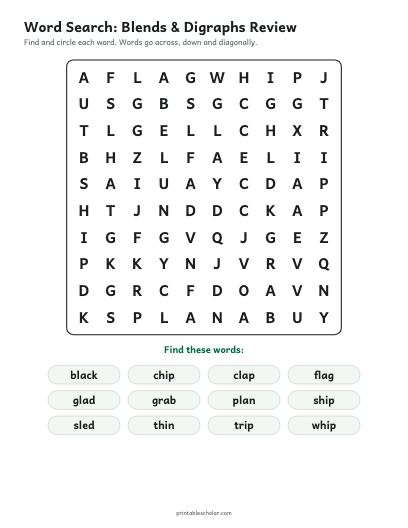
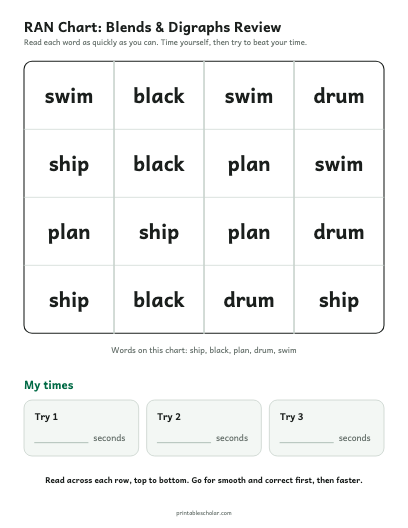
Free printable blends & digraphs review phonics worksheets. Five practice activities: decodable passage, word sort, phrasing cards, rapid naming chart, and word search.
A free illustrated mini-book for Blends & Digraphs Review, plus the same story as a passage sheet for highlighting.

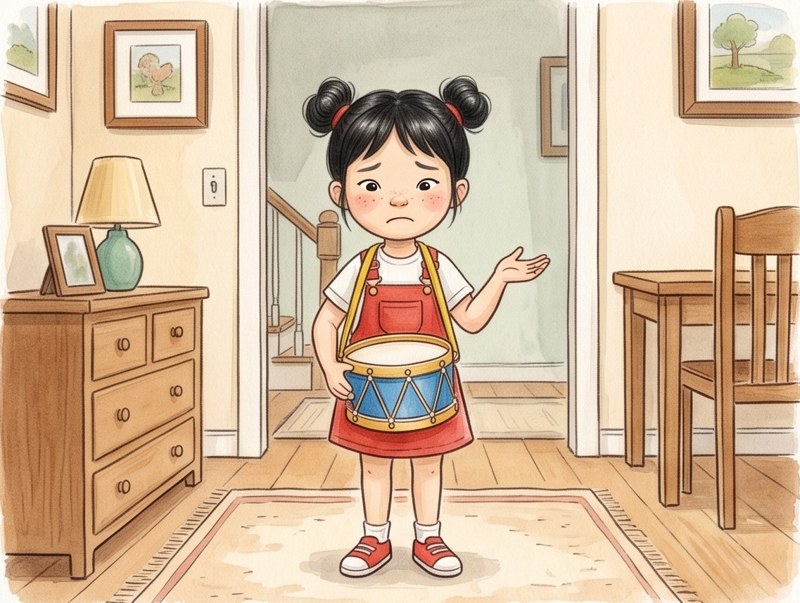
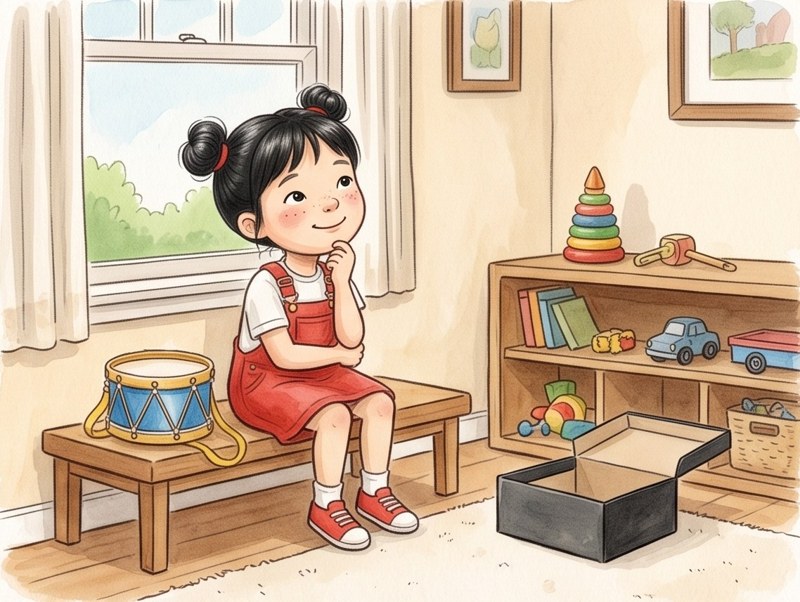
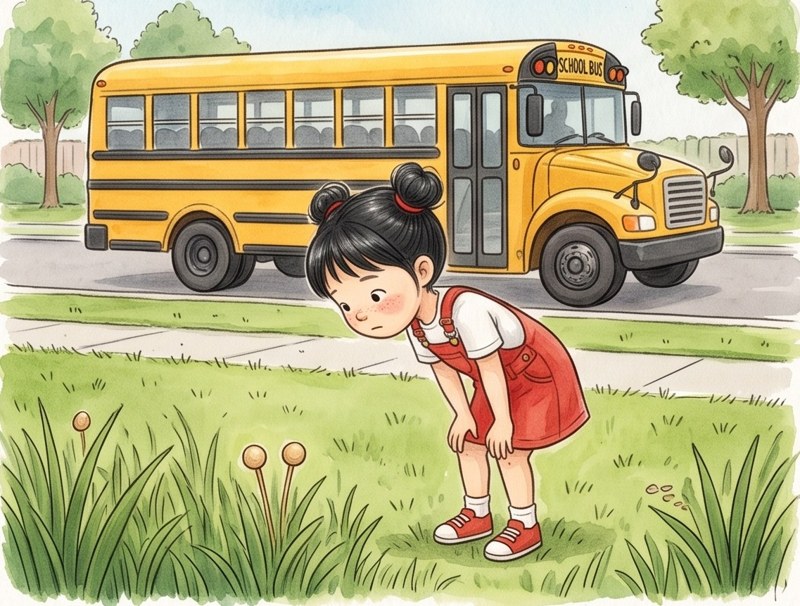
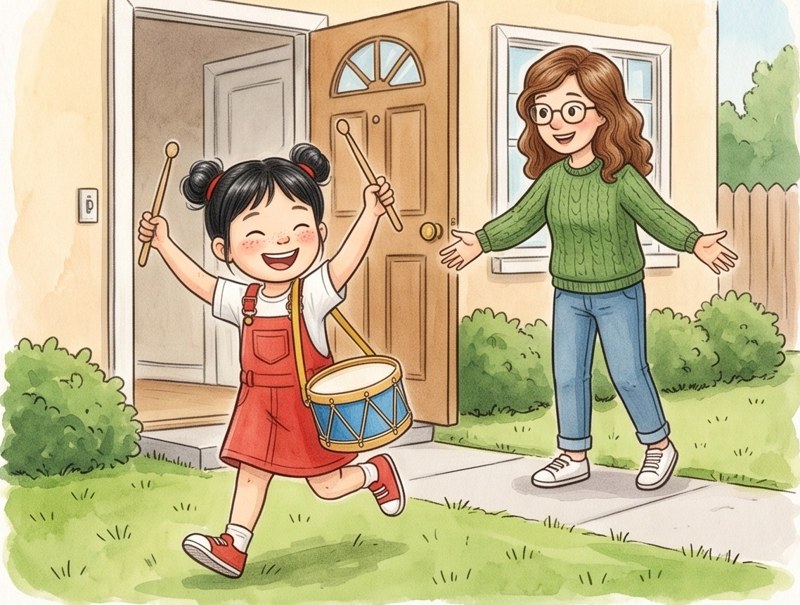
A full-color picture book your student reads on their own. Skill: Blends & Digraphs Review. Print, cut and staple.
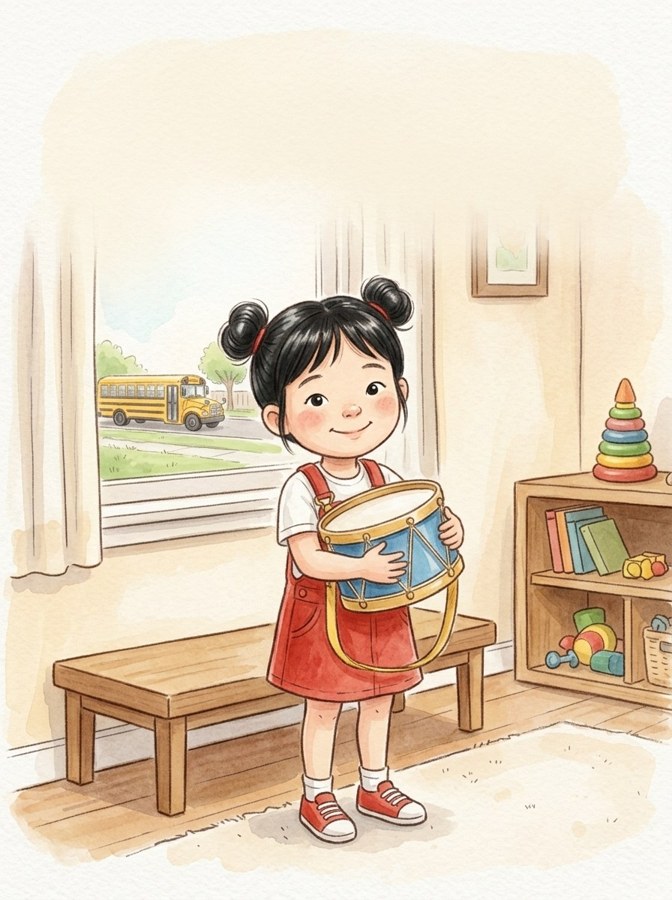
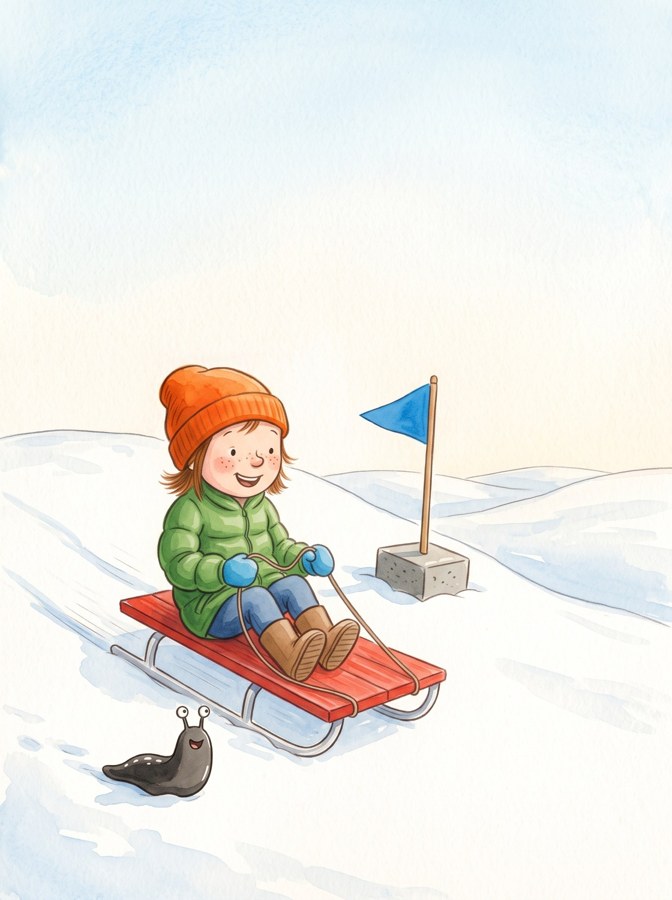
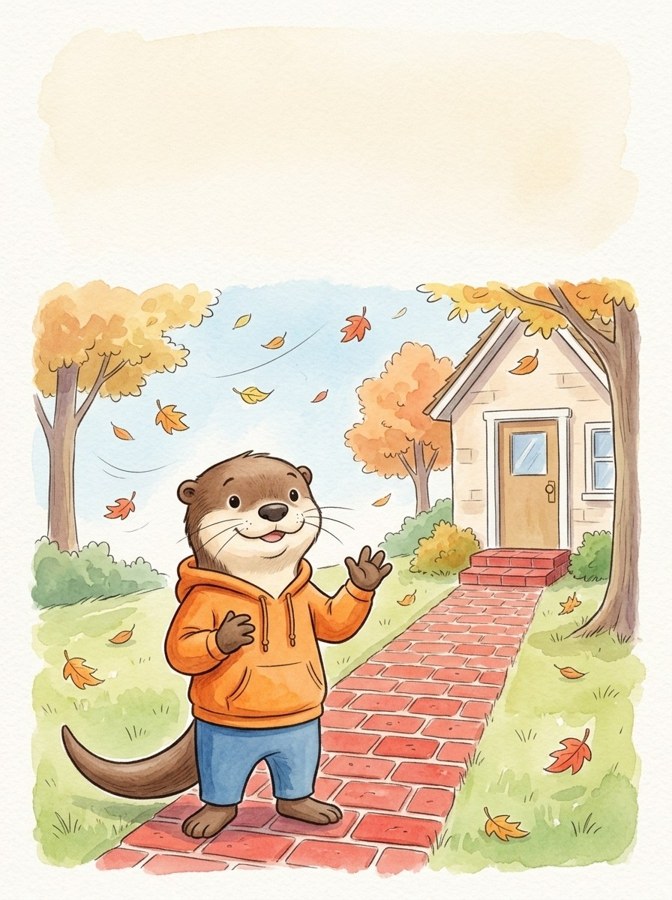 Want the whole level? 58 Level 2 mini-books in one file, $14Every book stays free to print one at a time.
See the pack →
Want the whole level? 58 Level 2 mini-books in one file, $14Every book stays free to print one at a time.
See the pack →
Kim had a small drum. The drum was for her mom. But Kim had lost her sticks. She did not have them. She had a check on the shelf and in a black box. "I must have a plan," said Kim. She sat on the bench. Just then, a big truck was still. It was the yellow bus. Kim had a look at a thing in the grass. She bent down. It was her two thin sticks! "I got them!" said Kim. Kim was so glad. She got her drum and ran to her mom to play.
The words this story set practices, in the two groups used by the word sort.
ship, chip, thin, whip, check, shell
black, clap, flag, glad, plan, sled, grab, trip, drum, snap, spin, stop, swim, truck
Blend and digraph words to read, match and write, with pictures. Each PDF has its answer key on page 2.
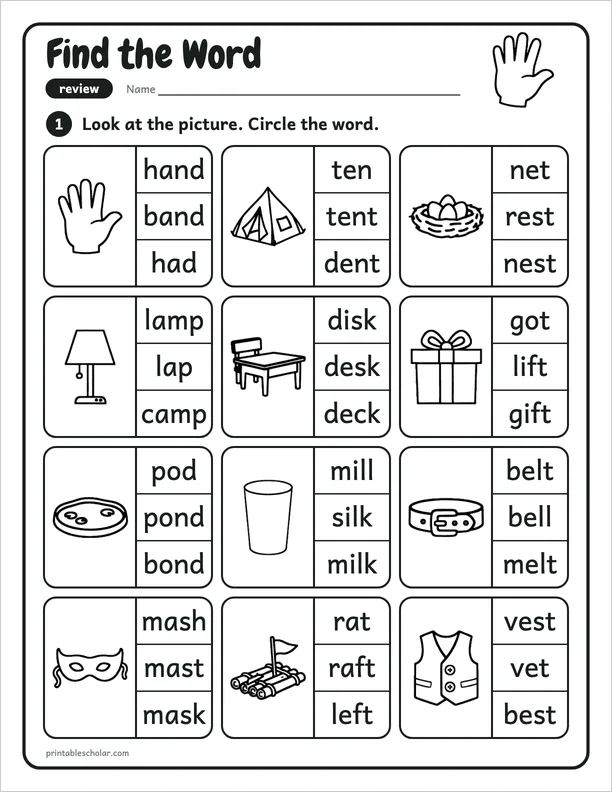
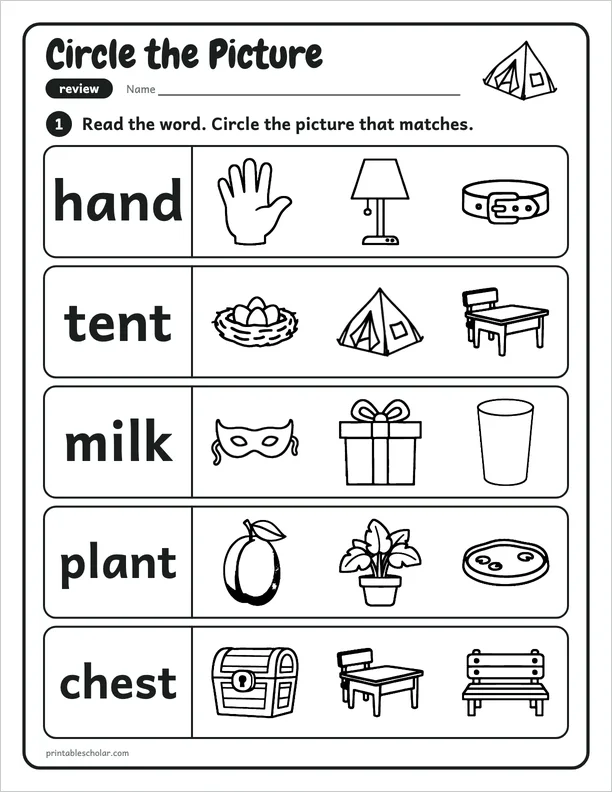
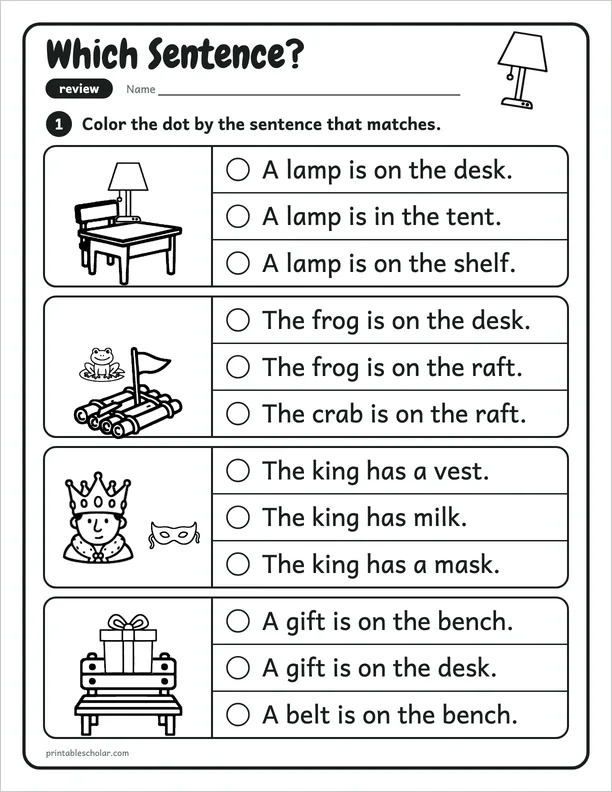
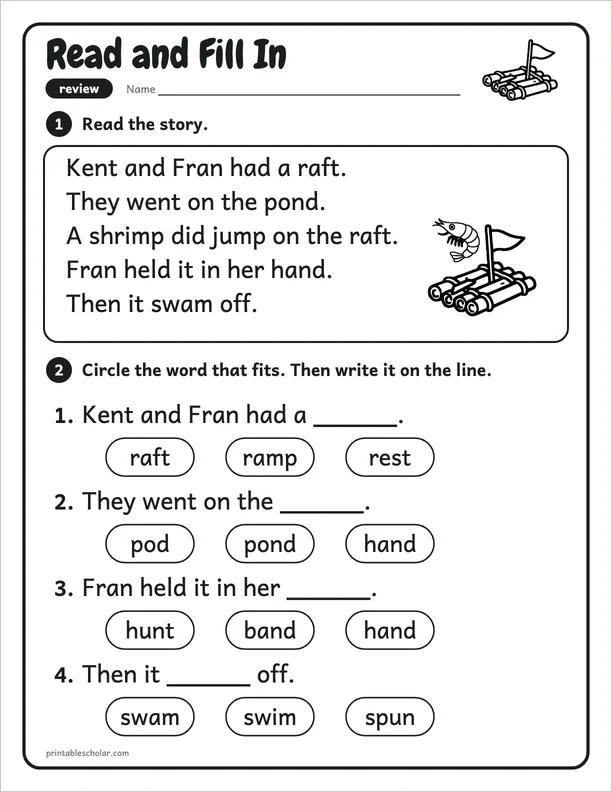
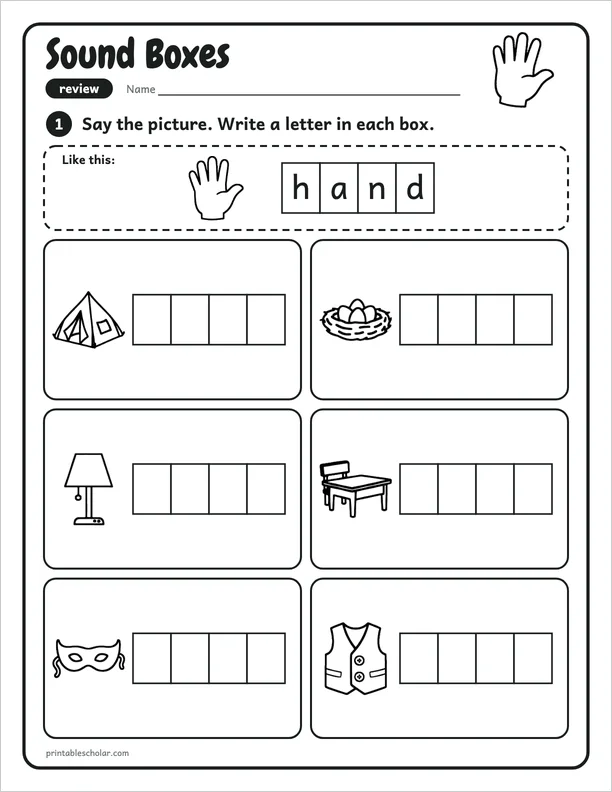
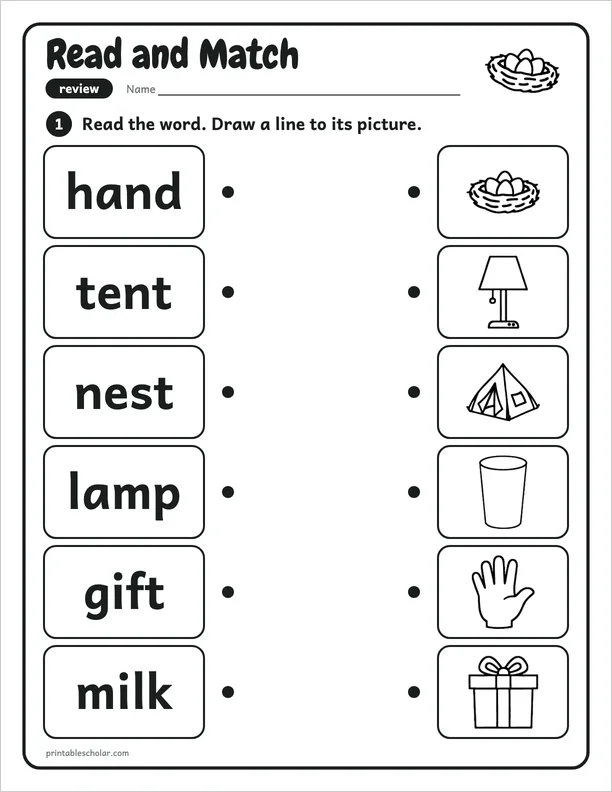
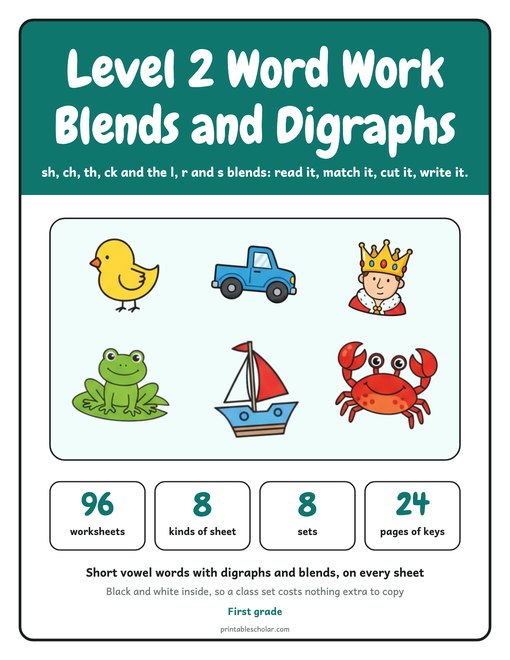
The sheets above are free. The pack is every sheet for sh, ch, th, ck and the l, r and s blends in order, a review set and all the answer keys, ready to print.
Get the pack for $7 See every kind of sheetTeaching more than one level? All 6 levels, 600+ worksheets, for $19.
4 ready-to-print PDFs for this story's blends & digraphs review words. Each one opens as its own file.
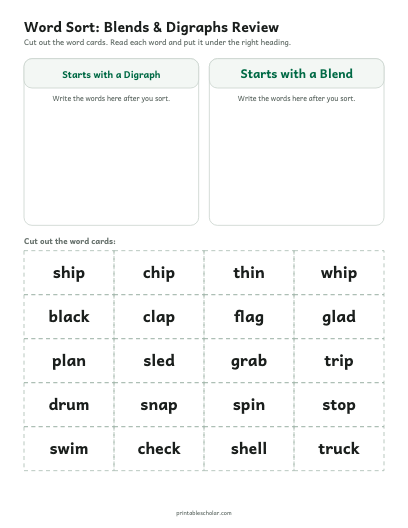
Cut-apart word cards to sort: Starts with a Digraph or Starts with a Blend. Answer key on page 2.
Download PDF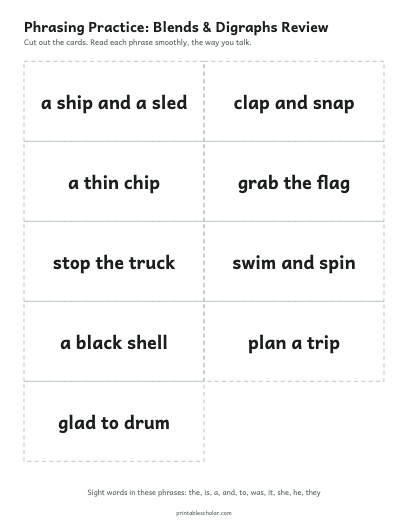
A new decodable story with the same blends & digraphs review sounds — each comes with its own set of worksheets.
Reviewing blends and digraphs is a crucial step in early literacy, building on foundational single letter sounds. Blends like "bl" in black or "gr" in grab involve two consonants whose sounds are both heard, just blended together smoothly. Digraphs, conversely, combine two letters to create a single new sound, such as "sh" in ship or "ch" in chip. Young learners often confuse these two categories, sometimes adding an extra vowel sound between blend consonants (like "buh-lack" instead of black) or failing to recognize the single sound of a digraph, trying to sound out each letter individually (like "s-h-ip" instead of ship). Distinguishing between sounds like "sh" (shell) and "ch" (check), or "th" (thin) and "wh" (whip) requires careful listening and practice, as these subtle differences can significantly impact reading accuracy. Our blends and digraphs review worksheets provide targeted practice to solidify these essential skills. Begin with the decodable passage, "Kim's Drum Sticks," encouraging your child to identify and highlight all the target blend and digraph words like "drum," "snap," and "truck." Next, use the word sort activity to help them categorize words by their blend or digraph, reinforcing the distinction between, for example, "clap" and "ship." Phrasing cards can then build fluency, allowing them to read short phrases containing these words, like "glad to plan" or "spin and stop." Finally, utilize the Rapid Automatized Naming (RAN) chart to quickly identify and name the target words, improving automaticity and recall for both blends and digraphs. Consistent practice with these varied activities will strengthen their decoding abilities.
For more early literacy resources, explore our sight word flashcards, tracing worksheets, handwriting worksheets, and coloring pages.
 Printable Scholar
